Choosing a garage heater for a workshop is mostly about matching heat output, power source, and installation style to the space you actually use. A small insulated shop may only need a portable 120V unit, while a larger detached garage often calls for a hard-wired 240V heater or a gas unit with much higher output. The wrong choice can leave cold corners, drive up operating costs, or create installation headaches that do not fit the space.
The options below are organized to help you compare those trade-offs clearly. Some are better for compact workshops and occasional use, others are better for large bays, ceiling mounting, or situations where floor space matters. The goal is to narrow the field by use case, not to pretend one heater works equally well for every garage.
Quick Answer
If you want the best garage heater for workshop use, the right pick depends on the size of the space and how it is powered. For a larger workshop with 240V service, a hard-wired ceiling-mounted electric heater is usually the most practical choice. For very large or poorly insulated spaces, a gas unit heater can make more sense. For smaller enclosed garages, a portable electric model may be enough if you only need heat while you are working.
Comparison Table
| Product | Heat Source | Best For | Notable Trade-Off |
|---|---|---|---|
| Comfort Zone CZ230ER 7,500W | Electric, 240V | Medium to large workshops that need ceiling mounting | Requires hard-wired installation |
| Mr. Heater 50,000 BTU | Propane or natural gas | Very large garages and barns | Needs gas setup and proper clearance |
| Comfort Zone CZ260ER 10,000W | Electric, 240V | Larger insulated workshops | Higher electrical demand |
| TEMPWARE 7,500W | Electric, 240V | Value-focused ceiling mount buyers | Hard-wired setup required |
| DR. INFRARED Heater | Electric infrared | Flexible use in garages, patios, and work areas | Heats people and objects more than air |
| Comfort Zone 5,000W | Electric, 240V | Smaller workshops with limited floor space | Less output than 7,500W or 10,000W models |
| VEVOR 5,000W | Electric, 240V | Compact wall or ceiling-mounted workshops | Best for moderate-sized spaces |
| Comfort Zone 1500W Milkhouse Style | Electric, portable | Small garages and spot heating | Not enough for large or drafty spaces |
| Dura Heat 3,750W | Electric, 240V | Small to medium workshops | Lower output than larger ceiling units |
How We Chose These Picks
These heaters were selected to cover different workshop sizes, installation styles, and power sources. Some are aimed at buyers who want a ceiling-mounted electric unit that keeps the floor clear. Others are better suited to larger garages that can support gas heat, or to smaller spaces where a portable heater is enough. The list also includes a few budget-friendly options so readers can compare practical value, not just raw heating output.
Our Top Picks
The recommendations below are not ranked as if one model fits every garage. Instead, each one serves a different kind of workshop setup. Before choosing, think about ceiling height, insulation, breaker capacity, and whether you want portable heat or a fixed installation.
Comfort Zone Hard-Wired Ceiling Mount Garage Space Heater with Remote, 7,500 Watt

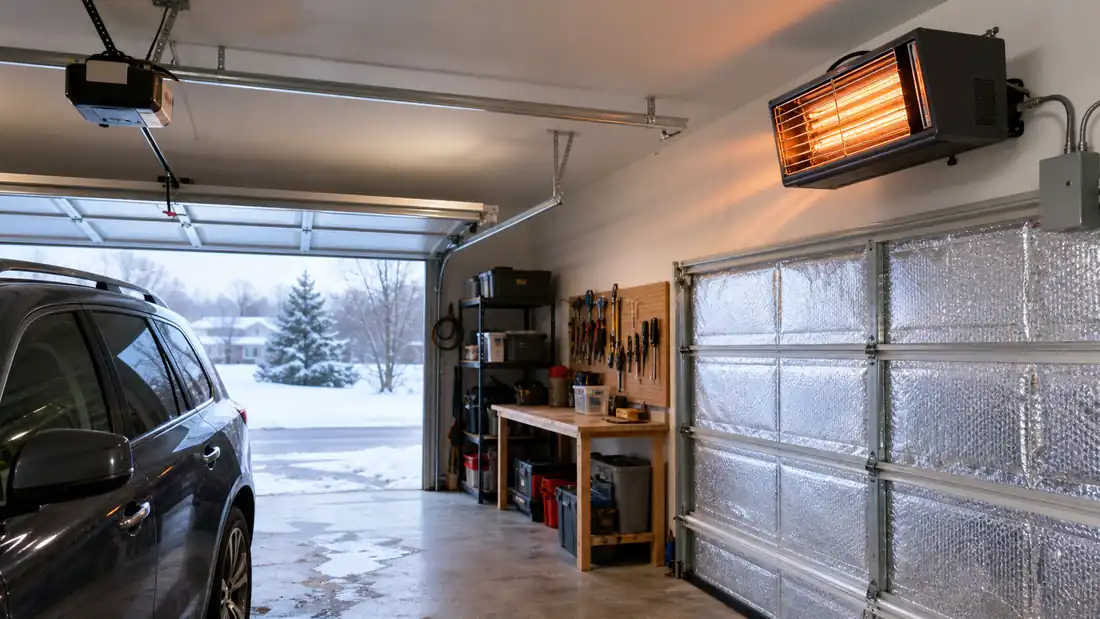
This ceiling-mounted electric heater is built for workshops where floor space matters as much as warmth. With 240V hard-wired installation, fan-forced airflow, and adjustable louvers, it is designed to push heat across a wide area rather than sit in one corner. The claimed coverage is up to 1,250 square feet, which puts it in the range for many two-car garages and medium-sized workshops, assuming the space is reasonably insulated.
It stands out as a balanced option for buyers who want more output than a small portable heater without moving all the way up to a 10,000W model. The digital thermostat, timer, remote control, and overheat protection make it practical for regular use. It is also a reasonable fit for readers who want a fixed heater that stays out of the way while they work on cars, tools, or woodworking projects.
Pros:
- Ceiling mount keeps the floor clear for tools, vehicles, and storage.
- 7,500 watts is a useful middle ground for many workshop sizes.
- Digital thermostat and remote improve day-to-day convenience.
- Adjustable louvers help direct airflow where you need it.
- Overheat protection adds a basic safety layer.
Cons:
- Requires hard-wired 240V installation.
- Not a casual plug-in option for temporary use.
- May be more heater than a very small insulated garage needs.
This is a sensible pick for shoppers who want dependable overhead heat without jumping into a high-output commercial-style unit. It offers a good mix of output, controls, and space savings for a working garage.
Best for: Medium workshops and garages that need fixed ceiling-mounted heat.
Mr. Heater 50,000 BTU Forced-Air Unit Heater

This gas-fired unit heater is aimed at bigger workspaces that need a lot of heat, not just a little support on the coldest days. Rated at 50,000 BTUs, it can handle garages, barns, and larger workshops, with the manufacturer citing coverage of roughly 1,667 square feet. Because it is ceiling mounted and forced air, it is meant to heat an entire space rather than warm one small zone.
It earns a place here because it serves a different need from the electric ceiling heaters. If your workshop is large, drafty, or already set up for propane or natural gas, this model can be more practical than trying to stretch a smaller electric heater beyond its limit. The trade-off is installation complexity and the need to respect clearance requirements. It makes the most sense for buyers who are comfortable planning around fuel supply, thermostat compatibility, and proper mounting height.
Pros:
- High BTU output suits large garages and barns.
- Ceiling-mounted design keeps floor space open.
- Works with propane or natural gas.
- Includes high-temperature and flame safety shutoffs.
- Good choice for spaces that are too large for typical electric shop heaters.
Cons:
- Requires gas infrastructure and proper venting or installation planning.
- Needs significant ceiling height and clearance.
- More involved setup than an electric garage heater.
If your workshop is large enough to justify gas heat, this heater offers a much higher ceiling of performance than most electric units in this list. It is a better fit for size and output than for simple installation.
Best for: Large garages, barns, and workshops that already have gas service.
Comfort Zone Hard-Wired Digital Ceiling Mount Heater, 10,000 Watt

This 10,000W ceiling-mounted electric heater is built for larger workshops that need stronger heat distribution. Like the 7,500W version, it uses fan-forced airflow, adjustable vents, a digital thermostat, a remote, and a timer. The main difference is output. That extra wattage can make a meaningful difference in taller garages, longer bays, or spaces where winter temperatures stay low for long periods.
It is a strong option for readers who want a fixed electric heater and are willing to support the electrical load. The heavy-gauge steel body, sheathed heating elements, and enclosed motor suggest a design intended for harsher workshop conditions, including dust and temperature swings. Compared with smaller units, this one is better suited to people who need more consistent heat coverage rather than just spot comfort while standing near the heater.
Pros:
- 10,000 watts offers stronger output than midrange ceiling heaters.
- Digital thermostat, remote, and timer make it easy to use.
- Ceiling installation preserves floor space.
- Heavy-duty construction suits demanding workshop environments.
- Adjustable airflow helps reduce cold spots.
Cons:
- Requires hard-wired 240V installation.
- Higher electrical demand than 5,000W or 7,500W units.
- May be more capacity than a small insulated garage needs.
This model makes sense when a standard shop heater feels undersized and you want a more serious electric solution. It is especially useful for larger workshops where ceiling mounting and stronger airflow both matter.
Best for: Larger garages and workshops that need more heat output from an electric unit.
TEMPWARE 7500W Electric Garage Heater

TEMPWARE’s 7,500W heater targets shoppers who want a fixed garage heater with practical controls and a lower upfront price than some better-known alternatives. It is hard-wired for 240V use, mounts to the ceiling, and offers two heat settings, a digital thermostat, a 12-hour timer, and remote control. The manufacturer lists heating coverage up to 1,250 square feet, which places it in the same general category as other midrange workshop heaters.
Where it separates itself is value and flexibility. The two heat settings can make it easier to match output to the season, while the adjustable mounting angle and louvers help direct heat into a work zone instead of wasting it on unused corners. It does require professional electrical installation, so this is not a casual DIY plug-in solution. For buyers comparing ceiling-mounted heaters at similar power levels, it offers a straightforward feature set without a higher price tag.
Pros:
- Two heat settings give you more control over output.
- Remote and timer improve convenience.
- Ceiling-mounted design saves floor space.
- Adjustable louvers help aim heat where needed.
- Heavy-duty steel construction adds durability.
Cons:
- Requires hard-wired installation by an electrician.
- Power cord is not included.
- Less output than 10,000W models for very large spaces.
This is a practical midrange pick for workshop owners who want useful controls and solid coverage without paying for more output than they will use. It is a good example of a heater that focuses on function rather than extras.
Best for: Buyers who want a value-oriented 7,500W ceiling-mounted workshop heater.
DR. INFRARED HEATER Portable Infrared Space Heater

This infrared heater takes a different approach from the fan-forced ceiling models. Instead of relying on air movement to warm the whole room, it uses infrared heat to warm people and objects more directly. That makes it useful in garages and workshops where you are often standing in one area for a while and do not need the entire room brought up to a comfortable temperature. It can be used as a freestanding unit or mounted to a wall or ceiling, which gives it unusual flexibility.
It stands out for buyers who want one heater that can move between spaces or be installed in different ways over time. The 900W, 1200W, and 1500W settings, along with the timer and remote, make it easier to adjust output to the job at hand. It is not the right choice if you want to heat a large drafty garage evenly, but it can be a smart fit for spot heating, mixed-use spaces, or workshops where mounting flexibility matters more than raw capacity.
Pros:
- Can be used freestanding, wall-mounted, or ceiling-mounted.
- Infrared heat is useful for direct, targeted warmth.
- Multiple power settings allow more control.
- Timer and remote add convenience.
- Portable format works in more than one space.
Cons:
- Not ideal for heating large drafty garages evenly.
- Lower output than hard-wired 240V shop heaters.
- Best when you are heating people or work areas, not the whole room.
This is a flexible option for readers who want to move heat around or use the same heater in different settings. It is more versatile than most fixed garage heaters, though not as powerful for full-room heating.
Best for: Small workshops, mixed-use spaces, and buyers who want mounting flexibility.
Comfort Zone 5000W Ceiling Mounted Garage Heater

This 5,000W ceiling-mounted heater is a simpler, lower-output option for smaller workshops that still want fixed installation. It uses 240V power, fan-forced heat, adjustable louvers, and a dual-knob thermostat. The compact design is a good match for garages where floor space is already tight and the goal is to take the edge off cold air while working.
Compared with the more powerful 7,500W and 10,000W models, this heater is easier to justify for smaller spaces or lighter seasonal use. It is also less expensive than many larger hard-wired units. That said, the lower wattage means it is not the right choice for big, poorly insulated garages. If your workshop is modest in size and you mainly want an overhead heater for comfort during projects, this model offers a straightforward and affordable setup.
Pros:
- Lower price than many larger ceiling-mounted heaters.
- Ceiling mount helps preserve floor space.
- Simple dual-knob controls are easy to use.
- Adjustable louvers help direct heat.
- Steel construction is suited to workshop conditions.
Cons:
- Less output than 7,500W and 10,000W models.
- Requires hard-wired 240V installation.
- May struggle in large or drafty garages.
This is a sensible choice for smaller workshop owners who want a fixed heater without paying for more output than they need. It is practical, simple, and aimed at modest spaces rather than oversized bays.
Best for: Smaller garages and workshops that need a basic ceiling-mounted electric heater.
VEVOR Electric Garage Heater, 5000 Watt

The VEVOR 5,000W heater is another ceiling or wall-mounted electric option for smaller to mid-sized workshops, but it adds a remote, a timer, and adjustable installation angles. It is designed to cover about 50 square meters, which is enough for many single-bay garages and compact work areas. Like other hard-wired units in this group, it aims to keep the floor open while moving warm air through the room.
Its appeal is mostly in the control package. Temperature stability, remote operation, and the 9-hour timer make it more convenient than basic manual heaters. The unit also uses a steel housing and overheat protection, which are important considerations in dusty workshop environments. It does not have the output of larger 7,500W or 10,000W models, but it is a sensible fit for buyers who want modern controls in a moderate-capacity heater.
Pros:
- Wall or ceiling mounting saves floor space.
- Remote control and timer improve convenience.
- Two heat levels offer some flexibility.
- ETL listing and overheat protection add peace of mind.
- Good for moderate-sized garages and workshops.
Cons:
- 5,000W output is limited for larger spaces.
- Requires hardwired installation.
- Best suited to moderate heating demands rather than heavy winter use.
For buyers who want a compact fixed heater with a few convenience features, this is a solid middle-ground choice. It is not the most powerful option here, but it is practical for many smaller shops.
Best for: Small to medium workshops that need remote control and flexible mounting.
Comfort Zone 1500W Milkhouse Style Utility Space Heater

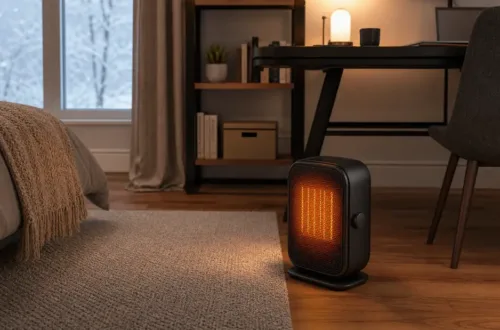
This portable milkhouse-style heater is a basic spot-heating option for small garages and enclosed workshops. At 1,500 watts, it is far less powerful than the hard-wired ceiling heaters in this list, but it also requires no special installation. The all-metal housing, fan setting, adjustable thermostat, and carry handle make it easy to move where you need it, which is useful if you only heat one part of the space at a time.
It deserves a spot because not every workshop needs a ceiling-mounted 240V system. Some readers just want a simple heater they can plug in, move, and store when they are done. This model is better for localized warmth than for whole-room heating, and that limitation matters. Still, for a small enclosed garage, occasional use, or a workspace where portability matters more than output, it can be a practical and low-cost choice.
Pros:
- Very affordable compared with hard-wired shop heaters.
- Portable design is easy to move and store.
- All-metal housing adds durability.
- Tip-over and overheat protection improve safety.
- Simple controls are easy to understand.
Cons:
- Much lower output than 240V garage heaters.
- Not suitable for large or badly insulated workshops.
- Best for spot heating rather than full-room comfort.
If you need something inexpensive and portable, this model can be enough for lighter workshop use. It is not a replacement for a full-size garage heater, but it fills a useful budget niche.
Best for: Small garages, occasional use, and buyers who want a portable heater.
Dura Heat 240V Electric Industrial Garage Heater
This Dura Heat unit sits toward the smaller end of the hard-wired 240V category, which makes it useful for workshops that need a fixed heater but do not require a huge output. The manufacturer lists 3,750 watts and heating coverage up to 500 square feet, so it fits best in compact to mid-sized garages, especially when the space is reasonably enclosed. It is wall- or ceiling-mountable, which helps preserve floor space in a crowded shop.
Its value is in being straightforward. There is no long feature list to sort through, just a practical forced-air heater with overheat protection and enough power for many single-bay spaces. That simplicity makes it appealing to buyers who want a reliable workhorse rather than a heater packed with extras. It is not the strongest option here, but it can be the right size when larger models would be overkill or difficult to power.
Pros:
- Good fit for smaller workshops and garages.
- Wall or ceiling mounting keeps the floor clear.
- Simple forced-air design is easy to live with.
- Lower power demand than larger 240V heaters.
- Overheat protection adds a useful safety feature.
Cons:
- Less heating capacity than 5,000W, 7,500W, and 10,000W models.
- Still requires 240V hard-wired installation.
- May be undersized for larger or draftier garages.
This is a practical smaller-capacity choice for readers who want a mounted electric heater without jumping to a bigger, more demanding unit. It works best when the workshop is modest and the goal is steady supplemental heat.
Best for: Compact garages and workshops that need a basic mounted electric heater.
Buying Guide
When you compare garage heaters for a workshop, the most useful starting point is not brand or price. It is space, insulation, and power. A heater that is too small will run constantly and still leave you cold. One that is too large may cost more to install and use than your workshop really needs. The right balance depends on how often you work in the space and how much warmth you expect during the coldest part of the season.
Electric vs. Gas Heat
Electric heaters are usually easier to place, especially in smaller garages or shops where you already have 240V service. They do not need fuel storage, and ceiling-mounted units can keep the floor open. Gas heaters make more sense for very large spaces or garages with poor insulation, but they need more planning around installation and safety clearances. If you are heating a modest workshop, electric is often simpler. If you are heating a three-car garage or larger, gas may be the more efficient choice in practice.
Mounted vs. Portable
Mounted heaters are a good fit when you want permanent heat and do not want the unit taking up floor space. They also tend to distribute heat better in a workshop setting. Portable heaters are easier to move and cheaper to start with, but they are usually better for spot heating or occasional use. If you regularly work under a vehicle, around cabinets, or at a central bench, a ceiling or wall-mounted unit is often more convenient.
Output and Room Size
Wattage and BTU ratings matter, but only in relation to the space. Smaller enclosed workshops may do fine with 1,500W to 5,000W. Medium shops often benefit from 7,500W models. Larger spaces, especially those with high ceilings or weaker insulation, often need 10,000W or a gas heater. If the garage has air leaks, bare concrete, or a lot of overhead volume, assume you need more heating capacity than the square footage alone suggests.
Controls and Convenience
Remote controls, timers, and digital thermostats are not just nice extras. In a workshop, they can make the heater easier to use safely and efficiently. A timer can prevent a unit from running longer than needed. A thermostat helps avoid constant cycling. Louvers and adjustable mounting angles matter too, because they let you direct heat toward a work area rather than wasting it across a storage corner.
Safety and Installation
Any hard-wired 240V heater should be installed according to the manufacturer instructions and local electrical code, usually by a qualified electrician. Gas models also need the right clearances and fuel setup. Look for overheat protection, sturdy housing, and clear indicator lights. In a workshop, dust and debris are normal, so durable construction is more than a cosmetic feature.
Frequently Asked Questions
How big of a heater do I need for a workshop?
It depends on insulation, ceiling height, and how cold the space gets. Small enclosed garages may be fine with 1,500W to 5,000W. Medium workshops often work better with 7,500W. Larger or poorly insulated spaces may need 10,000W or a gas unit heater.
Is a ceiling-mounted heater better than a portable one?
For a workshop, a ceiling-mounted heater is usually better if you want to save floor space and heat the room more evenly. A portable heater is easier to move, but it is usually better for spot heating or occasional use.
Can I install a 240V garage heater myself?
Some homeowners may be familiar with electrical work, but hard-wired garage heaters usually require proper circuit sizing, grounding, and code compliance. In many cases, hiring a qualified electrician is the safer choice.
Are infrared heaters good for garages?
Yes, if your goal is to warm people and work areas rather than the whole room. Infrared heat can feel useful quickly, but it is not always the best option for large drafty garages that need more even air heating.
Do garage heaters need ventilation?
Electric heaters generally do not need fuel ventilation the way gas heaters do. Gas unit heaters have different requirements and should be installed according to the manufacturer’s instructions and local codes.
Final Recommendations
If you want the most balanced option for a typical workshop, a 7,500W ceiling-mounted electric heater is usually the easiest place to start. If the garage is larger or colder than average, move up to a 10,000W model or a gas unit heater. For smaller spaces, portable and lower-output heaters can still work well if you only need supplemental warmth while you are actually in the room.
The key is to choose the heater that matches the way you use the space, not the one with the highest number on the box. A workshop heater should fit the room, the electrical setup, and the kind of work you do in cold weather.