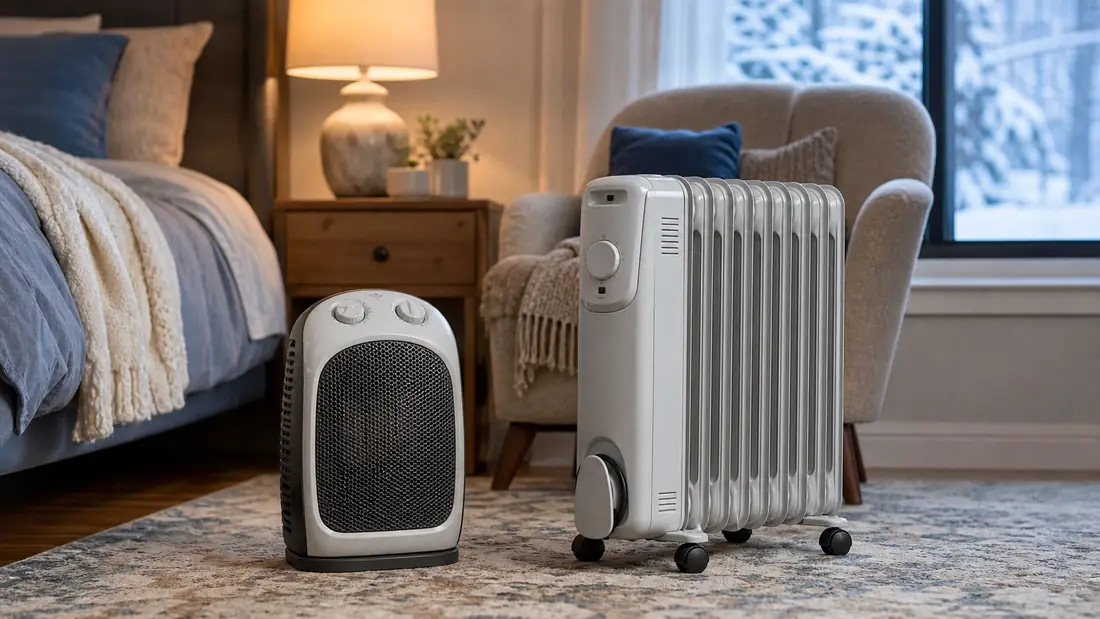
When comparing a ceramic heater vs oil filled heater, the most useful question is not which one gets hot faster. It is which one fits the room, the noise level you can tolerate, and how long you want the heat to stay in the space after the unit cycles off. Ceramic heaters usually rely on a fan to push warm air quickly, while oil-filled heaters warm more slowly but tend to hold and release heat for a longer period. That difference affects comfort, noise, and energy use in daily life.
Ceramic heaters are often chosen for quick, targeted warmth in smaller areas, such as a desk, bedroom corner, or bathroom, where fast heat matters more than lingering warmth. Oil-filled heaters are usually a better match for longer sessions in bedrooms, offices, and larger rooms where quiet operation and steady heat are more important. Safety, portability, and thermostat control also matter, but the basic trade-off is simple: ceramic models heat faster, while oil-filled radiators usually heat more steadily and quietly.
Quick Answer
If you want heat to feel immediate, a ceramic heater is usually the better fit. If you want quieter, steadier warmth that continues after the unit turns off, an oil-filled heater is usually the better choice. For short bursts of warmth, ceramic often makes more sense. For all-day comfort in a room you use regularly, oil-filled heaters are often easier to live with.
How Ceramic Heaters and Oil Filled Heaters Work
Ceramic heaters use an electric heating element paired with ceramic plates. A fan moves air across the heated surface and sends warm air into the room. This design makes them feel responsive, which is helpful when you want to take the chill off quickly. The fan, however, adds noise, and the warmth tends to fade once the heater shuts off.
Oil-filled heaters work differently. They heat internal oil sealed inside the unit, and that heat radiates outward through the metal fins or panels. Because the oil retains heat, the heater can continue warming the room even after the power cycles off. That slower pace is not a drawback for every user. In many cases, it is the reason people prefer oil-filled radiators in sleeping areas or quiet workspaces.
Practical Differences That Matter Most
| Factor | Ceramic Heater | Oil Filled Heater |
|---|---|---|
| Warm-up speed | Usually faster | Usually slower |
| Noise | Fan noise is common | Usually quiet or fanless |
| Heat style | Direct, targeted airflow | Steady, radiant warmth |
| Afterheat | Minimal | Longer lasting |
| Best use | Short-term or spot heating | Longer room heating |
| Portability | Often lighter | Often heavier |
When a Ceramic Heater Makes More Sense
A ceramic heater is often the better option when you need warmth quickly and only for a limited time. That includes home offices, a drafty bathroom before a shower, or a bedroom you want to warm for a short period before bedtime. The fan helps distribute heat fast, so you do not have to wait long to notice the effect.
That same fan is also the main trade-off. Ceramic heaters are generally less appealing if you are sensitive to noise or want a heater that does not stir the air. They can also feel less consistent in larger rooms because the heat is delivered in a more concentrated way. For people who want immediate comfort and frequent on-off use, though, ceramic heaters remain practical and easy to understand.
When an Oil Filled Heater Is the Better Choice
Oil-filled heaters tend to work well when you want a room to stay comfortable for hours without constant attention. Bedrooms, living rooms, and small to medium spaces often benefit from the slow, even heat these radiators provide. Since there is usually no fan, the unit runs quietly, which can matter a lot at night or during focused work.
They are not as fast to warm up as ceramic heaters, so they are less useful when you need instant heat. They are also typically bulkier, which makes them less convenient to carry around every day. Even so, for steady background warmth and lower noise, many buyers find oil-filled heaters easier to live with over a full season.
Safety and Energy Considerations
Both heater types can be safe when used correctly, but they rely on different design choices. Look for tip-over protection, overheat protection, and clear thermostat controls in either category. With ceramic heaters, the fan and exposed air movement mean placement matters, especially around curtains, bedding, or clutter. With oil-filled heaters, the exterior can still get hot, so children and pets should be kept away from direct contact.
Energy use depends more on how you run the heater than on the label alone. A ceramic heater may use less energy for short sessions because it gets to work quickly. An oil-filled heater may be more efficient in practice for longer use because it retains heat and does not need to cycle as aggressively. The right choice depends on whether you heat briefly, or keep a room warm for extended periods.
Common Buying Mistakes
- Choosing based on wattage alone instead of the way the heater delivers heat.
- Ignoring noise if the heater will be used in a bedroom or office.
- Buying a ceramic heater for long, continuous heating when a quieter radiator may be more comfortable.
- Assuming an oil-filled heater is too slow for every situation, even when steady heat is the goal.
- Overlooking safety features and using the heater too close to furniture or fabrics.
How to Decide Between Ceramic and Oil Filled
If your priority is speed, smaller footprint, and short-term warmth, start with a ceramic heater. If your priority is quiet operation, steadier comfort, and longer-lasting heat, an oil-filled heater is usually the more practical option. Room size matters too. Ceramic heaters often make more sense in compact spaces or for personal heating, while oil-filled heaters are often better when you want a whole room to feel evenly comfortable.
Think about your routine before you buy. A heater for early-morning bathroom use is a different purchase from one meant to keep a bedroom warm through the night. Matching the heater type to the way you actually live is usually more useful than chasing the highest heat output on the box.
FAQ
Which heater is cheaper to run?
Either type can be economical depending on how you use it. Ceramic heaters may be better for short sessions, while oil-filled heaters can be a stronger choice for longer, steady heating.
Which one is quieter?
Oil-filled heaters are usually quieter because they do not need a fan. Ceramic heaters commonly make some fan noise.
Which one heats a room faster?
Ceramic heaters usually provide heat more quickly. Oil-filled heaters warm up more gradually.
Which is better for a bedroom?
Oil-filled heaters are often better for bedrooms because they are quieter and provide steady warmth. A ceramic heater can still work well if you want fast heat and do not mind fan noise.
Bottom Line
The better choice depends on how you plan to use the heater. A ceramic model is usually the smarter pick for fast, short-term warmth and spot heating. An oil-filled heater is often the better long-run option for quiet, steady comfort in a room you use for hours at a time. If you compare the two by speed, noise, and heat retention rather than just by price, the right answer becomes much clearer.