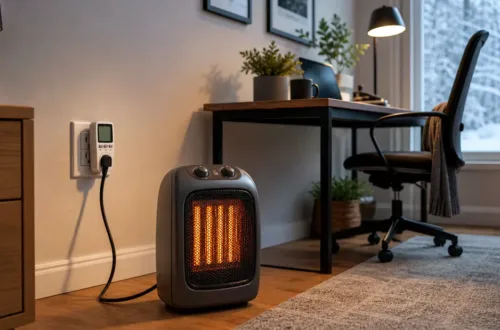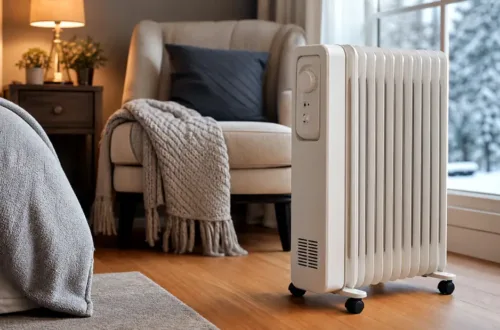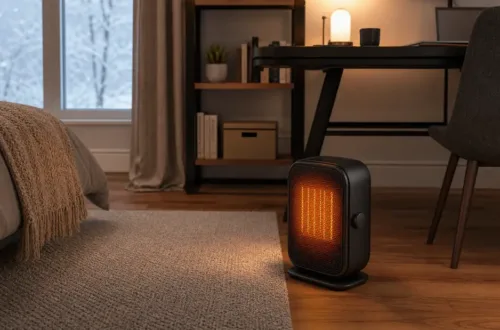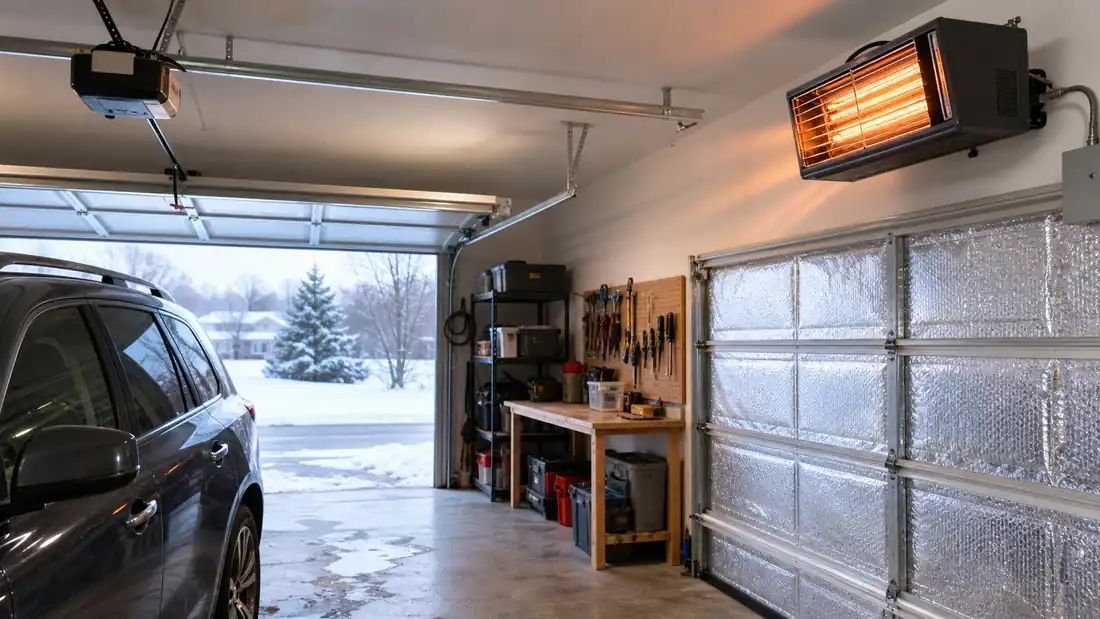
A portable garage heater can solve a very specific problem. You do not need to heat the whole house, but you do need enough warmth to make a cold workshop, detached garage, or hobby space usable. The challenge is that many heaters marketed for garages are really just small indoor space heaters with different styling, while some true utility heaters are better suited to tougher spaces and longer work sessions.
The best portable garage heater for you depends on three things first: how large and insulated the garage is, whether you want electric or propane heat, and whether you need whole-room warmth or just direct spot heating near a workbench or vehicle bay. Safety features, cord length, noise level, and thermostat control matter just as much as raw wattage.
Quick Answer
For most people shopping for the best portable garage heater, a compact 1500W electric utility heater is the most practical choice because it is simple to use, affordable to run in short sessions, and easy to move where heat is needed. The Dura Heat EUH1465 is a strong fit for small to medium enclosed garages, while the Comfort Zone Milkhouse Style Utility Heater is a good budget pick. If you want direct radiant warmth instead of fan-forced heat, a DR. INFRARED HEATER model makes more sense. For larger or less insulated spaces, a propane heater can provide more usable heat output, but it requires more care around ventilation and fuel handling.
Comparison Table
| Product | Type | Power Source | Best Use | Main Strength | Main Limitation |
|---|---|---|---|---|---|
| Dura Heat EUH1465 | Forced-air ceramic | Electric | Small enclosed garages | Rugged steel utility design | Limited to smaller spaces |
| Comfort Zone Milkhouse Heater | Utility fan heater | Electric | Budget workshop heating | Low cost and simple controls | No premium features |
| DR. INFRARED HEATER Freestanding/Mountable | Infrared radiant | Electric | Spot heating for work areas | Direct heat on people and objects | Less whole-room heating effect |
| Dreo Space Heater | Oscillating ceramic | Electric | Shared garage and indoor use | Quiet operation and safety features | Less rugged than utility models |
| OKF Propane Heater | Propane cabinet heater | Propane | Larger or under-insulated garages | Higher heat output without relying on electricity | Requires ventilation and fuel management |
| DR. INFRARED HEATER Mounted | Infrared radiant | Electric | Garage bays and semi-open spaces | Indoor/outdoor rated design | No built-in thermostat |
| AOBMAXET Portable Garage Heater | Ceramic utility heater | Electric | Greenhouses and compact garages | Fast warm-up and quiet use | Coverage is still modest |
| Buyplus Portable Garage Heater | Ceramic utility heater | Electric | Value-focused everyday use | Long cord and easy portability | Best for smaller work areas |
How We Chose These Picks
These heaters were selected for different garage situations rather than ranked for every reader in the same way. A small insulated hobby garage, a drafty two-car workspace, and a semi-open bay used for short jobs all need something different. The picks below focus on practical factors such as heating style, portability, safety features, build quality, thermostat control, noise, and whether the heater is better for room heating or direct personal warmth.
Our Top Picks
Before choosing, compare the intended use as much as the specs. Some of the heaters below are better for enclosed garages where warm air can build up, while others work better when you want direct heat on your body or work area. A few options also make sense for people who want to avoid electric-only heating. The goal is not to find one universal winner, but to match the heater to the way your garage is actually used.
Dura Heat EUH1465 Electric Forced Air Heater
The Dura Heat EUH1465 is a compact electric forced-air heater designed more like a utility tool than a decorative room heater. It uses 1500 watts of PTC ceramic heat and pushes that warmth with a high-velocity fan, which helps in small enclosed garages where still air can make the room feel colder than it is. The steel housing is an important detail here. In a garage or workshop, plastic-bodied heaters can feel out of place, while a metal cabinet and stable base are often better suited to a rougher environment. The pivoting base also helps aim heat toward a workbench, tool area, or the part of the garage where you actually spend time.
This model earns its place because it balances price, durability, and simplicity unusually well. It is not built for a large, poorly insulated garage, and no 120V 1500W electric heater really is. But for one-car garages, hobby rooms, and moderate cold, it offers the kind of straightforward performance many people want. The built-in thermostat and fan-only mode add flexibility, and the size makes it easy to store when winter ends. If your priority is practical heating rather than extra features, this is one of the more sensible places to start.
Pros:
- Rugged steel construction suits garages and workshops better than many plastic heaters
- Compact size is easy to move and store
- Pivoting base helps direct heat where it is needed
- Built-in thermostat and fan-only mode improve day-to-day usability
- Good fit for small enclosed spaces up to about 250 square feet
Cons:
- Like other 1500W electric heaters, it is limited in larger or drafty garages
- Forced-air operation can be more noticeable than quieter indoor-style heaters
If you want a dependable utility heater for a modest garage, this model covers the basics well without pretending to do more than a standard 120V heater can. It is a practical match for work areas that need targeted, portable heat and a tougher build.
Best for: Small enclosed garages, workshops, and utility spaces where durability matters more than extra features.
Comfort Zone 1500W Milkhouse Style Utility Space Heater

The Comfort Zone Milkhouse Style Utility Heater follows a very familiar garage-heater formula. It is a compact 1500W electric heater with an all-metal housing, two heat settings, a fan-only mode, and an adjustable thermostat. That combination works well for people who want basic heat without digital controls, apps, or extra setup. In a garage, simple rotary controls can actually be an advantage because they are easy to use with gloves or dirty hands. The metal body and oversized carry handle also make more sense in a utility setting than many sleek tower heaters designed mainly for bedrooms or living rooms.
Its main appeal is value. This is one of the lower-cost ways to add portable heat to an enclosed garage work area, especially for short sessions like weekend projects, tool maintenance, or cold-weather storage access. The tip-over switch and overheat protection are meaningful safety additions, and the fan-only setting can help with light air circulation in warmer months. The trade-off is that you are getting a straightforward heater, not a refined one. It will not heat a large detached garage evenly, and it does not offer the quieter or more feature-rich experience of higher-priced alternatives.
Pros:
- Affordable entry point for garage heating
- All-metal housing feels appropriate for workshop use
- Adjustable thermostat and two heat settings are simple and useful
- Fan-only mode adds year-round utility
- Tip-over and overheat protection improve safety
Cons:
- Heating reach is limited to smaller enclosed spaces
- Basic design means fewer comfort and convenience features
For buyers who just want a low-cost, portable heater for a garage bench area or compact workspace, this is a sensible budget pick. It does not try to be refined. It focuses on simple operation, utility-style construction, and enough heat for smaller enclosed areas.
Best for: Budget-conscious buyers who want a basic electric garage heater with simple controls.
DR. INFRARED HEATER Portable Infrared Indoor and Outdoor Space Heater

This DR. INFRARED HEATER takes a different approach from the typical fan-forced utility heater. Instead of mainly heating the air, it uses a carbon infrared element and reflective housing to warm people and objects more directly. That matters in garages where doors open often, insulation is limited, or you work in one fixed area and do not need the entire room heated evenly. The three-way mounting flexibility is one of its strongest practical advantages. You can use it as a portable freestanding heater with wheels and weighted base, or mount it on a wall or ceiling to free up floor space.
It belongs on this list because radiant garage heating solves a different problem than ceramic forced air. If you are standing at a workbench, detailing a vehicle, or working in a bay that loses warm air quickly, direct infrared warmth can feel more useful than trying to build room temperature with a small electric fan heater. The included remote, timer, and multiple power levels also make it easier to tailor the heat output. The trade-off is that this style is less effective if your goal is to warm all corners of a closed garage over time.
Pros:
- Infrared heat warms people and objects directly
- Freestanding, wall-mounted, and ceiling-mounted use adds flexibility
- Remote control and timer improve convenience
- Suitable for indoor and outdoor use
- Helpful in drafty garages where warm air does not stay put
Cons:
- Not the best choice for even whole-room heating
- Usually works best when aimed carefully at the occupied area
If your garage use is centered around one work zone, this model may feel more effective than a small fan heater with similar wattage. It is especially useful when direct personal warmth matters more than raising the overall air temperature throughout the room.
Best for: Spot heating in garages, workshops, patios, and semi-open work areas.
Dreo Space Heater

The Dreo Space Heater is more polished than a typical garage utility heater, but it can still make sense in the right garage setting. This 1500W ceramic heater adds features such as oscillation, remote control, multiple modes, timer functions, and an ECO mode that adjusts output based on room temperature. It is designed more like a versatile indoor heater that can also handle a garage, rather than a steel-bodied shop heater built for rough use. In an insulated garage office, hobby room, home gym corner, or attached garage workspace, that can be a real advantage. It also has a broad safety package, including tip-over and overheat protection.
This is a strong option for people who split the heater’s use between the garage and the house, or who want quieter operation than many utility-style models provide. The manufacturer lists noise output as low, and the oscillation helps spread warm air more evenly in a contained space. The trade-off is durability and intended environment. If your garage is dirty, damp, or heavily used for mechanical work, a metal utility heater may be a more natural fit. But for cleaner, more finished spaces, the added comfort features are worthwhile.
Pros:
- Quiet operation compared with many garage-style heaters
- Oscillation helps distribute warmth more evenly
- Remote, timer, and multiple modes add convenience
- ECO mode may help with energy-conscious use
- Strong package of built-in safety features
Cons:
- Less rugged than metal utility heaters for harsher garage environments
- Still limited by standard 1500W electric output
This is one of the better choices for an attached or insulated garage where comfort, lower noise, and feature depth matter. It is not the first pick for a rough workshop, but it fits well in multipurpose spaces that need more refined heating.
Best for: Insulated garages, hobby rooms, and users who want quiet operation plus home-friendly features.
OKF Propane Heater

The OKF Propane Heater is the pick here for readers who know a standard 1500W electric heater will not be enough. With adjustable output from 6,000 to 18,000 BTU, it is built for situations where you need more serious heat in a larger garage, shop, patio-adjacent area, or other well-ventilated space. It runs from a 20-pound propane tank and includes a regulator and hose, which simplifies the initial setup. The cabinet-style design with wheels makes it easier to move than many propane heaters, and the lower-noise operation is useful when you are working for extended periods.
The main reason to consider propane is heat output and independence from household electrical circuits. If your garage is drafty, detached, or used during power interruptions, propane can be a more realistic option than a plug-in heater. That said, it comes with responsibilities. Ventilation, oxygen depletion protection, safe fuel handling, and local code considerations all matter more with propane than with electric heat. This is not the right fit for every reader, but it serves an important role for those who need stronger portable garage heating than 120V electric models can provide.
Pros:
- Much higher heating output than standard portable electric heaters
- Three heat settings provide flexibility
- Useful during power outages or in garages with limited electrical capacity
- Includes ODS and tip-over shutoff for added safety
- Wheeled design improves portability for a propane unit
Cons:
- Requires careful ventilation and safe propane handling
- Less convenient than plug-in electric heaters for quick casual use
When a garage is too large, too drafty, or too cold for a small electric heater to make much difference, a propane model like this is the more realistic tool. It is best suited to users comfortable with fuel-based heating and the extra safety attention that comes with it.
Best for: Larger garages, under-insulated workspaces, and users who need higher output than 120V electric heaters provide.
DR. INFRARED HEATER Portable Infrared Indoor and Outdoor Space Heater

This DR. INFRARED HEATER version is another radiant option, but it is a little more stripped down and installation-focused than the freestanding model above. It is designed for indoor and outdoor use, includes wall and ceiling mounting brackets, and provides three power settings up to 1500W. In garage terms, this is useful for people who want overhead or wall-mounted warmth near a bay door, workbench, or frequently used standing area. Because infrared heating warms surfaces and people directly, it can be particularly effective in semi-open spaces where fan-forced warm air escapes too quickly.
Its value lies in the use case rather than extra features. There is no thermostat here, so it is less about maintaining a precise room temperature and more about giving you a dependable source of directional heat. The weather-resistant aluminum body and IP55 approval broaden where it can be used, including garages that are partially exposed or regularly opened to the outside. If you want a plug-and-go electric heater that stays out of the way and focuses on comfort in a specific zone, this style has a clear purpose.
Pros:
- Good choice for direct zone heating in garages and open bays
- Wall and ceiling mounting hardware included
- Indoor/outdoor rating adds flexibility
- Three heat settings allow some output control
- Durable aluminum housing is better suited to exposed areas
Cons:
- No built-in thermostat for room-temperature regulation
- Less useful if you want broad, even air heating throughout the garage
This heater is a practical match for people who know exactly where they need warmth and prefer to mount the unit out of the way. It works best as targeted radiant heat, not as a whole-garage climate control solution.
Best for: Mounted zone heating in garages, patios, and workspaces with frequent airflow loss.
AOBMAXET Portable Garage Heater

The AOBMAXET portable garage heater is a compact 1500W ceramic model aimed at smaller spaces such as compact garages, greenhouses, utility rooms, and work corners. It offers three modes, including fan-only, 750W low heat, and 1500W high heat, with a thermostat knob for basic control. According to the manufacturer, it is designed to heat areas up to around 215 square feet. That places it in the same broad category as other small electric garage heaters, but with an emphasis on fast warm-up and relatively quiet use. For readers who want something more garage-oriented than a tower heater without moving all the way to propane, this is a reasonable middle option.
What makes it worth considering is the balance between compact size, simple operation, and broader placement flexibility. It can serve in a garage during winter and move to another workspace when needed. The quiet operation may matter if you use the heater for longer sessions while reading manuals, making repairs, or doing focused bench work. As with similar electric units, expectations need to stay realistic. It is still most appropriate for enclosed, smaller spaces rather than large detached garages with poor insulation.
Pros:
- Fast ceramic heating for small spaces
- Three operating modes improve flexibility
- Relatively quiet performance may suit longer work sessions
- Thermostat knob keeps controls simple
- Useful in garages, greenhouses, and other compact work areas
Cons:
- Heating coverage remains limited compared with propane or 240V options
- Best suited to smaller enclosed areas rather than large garages
For a compact workspace that needs steady electric heat without much fuss, this model makes sense. It does not break the limits of a 1500W heater, but it offers a workable feature set for small garage and utility use.
Best for: Small garages, greenhouse use, and compact work areas that need simple portable electric heat.
Buyplus Portable Garage Heater

The Buyplus portable garage heater is another compact ceramic unit, but it separates itself a bit through convenience features that can matter in everyday garage use. It offers three modes, including fan-only, 750W, and 1500W heat, plus overheat protection and a claimed low operating noise level. One practical detail is the longer 7.8-foot cord, which may make placement easier in garages where outlets are not exactly where you want the heater. The carry handle and non-slip base also support the kind of occasional repositioning common in a workshop, from workbench to vehicle side to storage corner.
This heater fits readers who want a simple, portable electric model and value ease of placement more than a heavy-duty metal body. It is not the strongest choice for harsh shop conditions, and it is not meant for very large spaces, but for moderate garage tasks it is serviceable. Compared with some bare-bones budget heaters, the longer cord and stability-focused base give it a little more day-to-day usability. If your garage needs are modest and you want something easy to move and simple to operate, it is worth considering.
Pros:
- Three modes provide useful seasonal flexibility
- Longer power cord can make placement easier in a garage
- Portable handle and non-slip base support repositioning
- Overheat protection adds a necessary safety feature
- Works in garages as well as bedrooms, offices, and utility areas
Cons:
- Not as rugged as steel-bodied utility heaters
- Heating capacity is best for smaller spaces and targeted use
This is a reasonable value pick for light-duty garage heating, especially when convenience matters more than workshop-grade construction. It is best approached as a compact, flexible electric heater for modest spaces rather than as a heavy-duty cold-weather solution.
Best for: Value-focused buyers who want a compact electric heater for a small garage or multipurpose workspace.
Buying Guide: How to Choose the Best Portable Garage Heater
1. Start With Garage Size and Insulation
This is the biggest factor. A small insulated one-car garage is much easier to heat than a detached two-car garage with an uninsulated metal door and visible drafts. Many portable electric heaters on 120V household current top out at 1500W, which means their real-world performance is broadly similar even when marketing language differs.
- Small, enclosed, insulated garage: A 1500W electric utility heater can be enough for comfort.
- Medium garage with average insulation: A stronger fan-forced heater or targeted infrared heater may work, depending on where you stand.
- Large or poorly insulated garage: A propane heater often makes more sense than a small plug-in electric model.
2. Understand the Different Heater Types
Forced-air electric heaters
These use a heating element and fan to warm the air. They are easy to use and widely available. They work best in enclosed garages where warm air can gradually build up.
Infrared heaters
These warm people and objects directly instead of mainly heating the air. They are useful in drafty garages, semi-open bays, or fixed workstations where directional heat matters more than room temperature.
Propane heaters
These provide higher heat output than standard 120V electric heaters and can be useful in larger garages or during outages. They need more careful ventilation and fuel handling.
3. Do Not Overestimate 1500W Electric Heat
A common buying mistake is expecting a small 120V heater to fully heat a large garage in very cold weather. Many portable garage heaters sold online use the same basic electrical limit. A better design can improve airflow, noise, safety, and usability, but it cannot bypass the practical ceiling of standard household plug-in power.
If your garage is large or very cold, a small electric heater may still help, but it will usually function as spot heating rather than full-space heating.
4. Check Safety Features Carefully
Garage heaters often run near tools, shelves, cardboard boxes, paint supplies, and vehicle-related materials, so safety matters a lot.
- Overheat protection should be standard
- Tip-over protection is important for floor models
- Stable bases help prevent accidental knocks
- For propane units, oxygen depletion shutoff is important
- Always keep the heater away from flammable liquids and clutter
Also follow the manufacturer’s guidance about plugging directly into a wall outlet rather than using extension cords unless the manual explicitly allows it.
5. Think About Where the Heat Needs to Go
If you spend most of your time at one bench, one side of the vehicle, or one tool station, a directional or radiant heater may serve you better than a room heater. If you walk around the garage and want the air to feel warmer everywhere, a fan-forced electric or higher-output propane model is more suitable.
6. Noise Can Matter More Than You Expect
Some garage heaters use stronger fans and create more noticeable noise, which may be fine for quick jobs but annoying during long work sessions. Quieter ceramic models are easier to live with if you use the garage for hobbies, desk work, or anything that requires concentration.
7. Portability Means More Than Weight
A heater can be light and still inconvenient if the handle is awkward, the base is unstable, or the power cord is too short. In garages, portability often means how easily the heater can be repositioned around tools, cars, benches, and shelves without becoming a hassle.
Common Mistakes to Avoid
- Choosing by wattage alone: Most plug-in electric heaters share similar watt limits, so build quality and heating style matter too.
- Ignoring insulation: Even a good heater struggles in a drafty garage with poor door seals.
- Using indoor decorative heaters in rough shop conditions: A utility heater may last longer in dusty or demanding spaces.
- Placing the heater too far away: Portable heaters work best when positioned intentionally.
- Using propane without proper ventilation awareness: Fuel-based heat requires more caution than electric heat.
- Expecting whole-garage heating from a small electric unit: Match expectations to the actual size and condition of the space.
Frequently Asked Questions
What type of portable heater is best for a garage?
For small to medium enclosed garages, a 1500W electric utility heater is often the most practical and simplest option. For larger, draftier, or semi-open garages, infrared or propane heaters can be more effective depending on the setup and ventilation.
Can I use a regular space heater in a garage?
Sometimes, yes, especially in an attached or insulated garage. But many regular indoor space heaters are not built for rougher garage conditions. A utility-style model with a sturdier housing is often a better fit.
Is propane or electric better for a garage heater?
Electric is easier, cleaner, and simpler for enclosed small spaces with nearby outlets. Propane can provide more heat and does not rely on household electrical circuits, but it requires fuel handling and closer attention to ventilation and safety.
How many watts do I need for a portable garage heater?
Most portable electric heaters on standard household current use up to 1500 watts. That is usually enough for spot heating or warming a small enclosed garage, but not for fully heating a large, poorly insulated space in very cold weather.
Are infrared heaters good for garages?
Yes, especially if you want direct warmth where you work. Infrared heaters are useful in garages that lose warm air quickly because they heat people and surfaces rather than relying only on warming the surrounding air.
Can I leave a portable garage heater on unattended?
It is safer not to unless the manufacturer specifically allows the use pattern and the surrounding area is clear. Even with safety shutoffs, portable heaters should be used carefully and monitored whenever possible.
Final Recommendations
If you want the most balanced option for a typical enclosed garage, the Dura Heat EUH1465 is one of the strongest all-around choices because it combines utility-grade construction, straightforward controls, and practical spot heating. If keeping cost low is the priority, the Comfort Zone Milkhouse Heater is a sensible budget option. If your garage loses warm air too quickly for fan heat to be effective, either DR. INFRARED HEATER model is more logical. And if your space is simply too large or too cold for a standard electric heater, the OKF Propane Heater is the pick to look at first.
The right decision comes down to using an honest description of your garage, not the one you wish you had. Measure the space, think about insulation and airflow, and decide whether you need room heating or direct personal warmth. That approach will get you closer to the best portable garage heater for your actual winter setup.