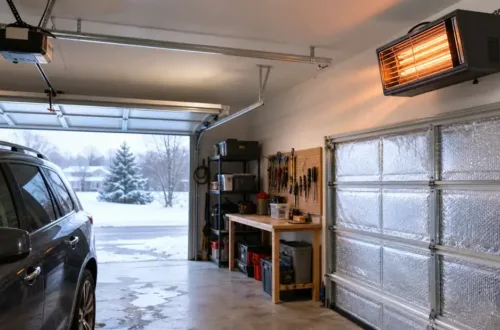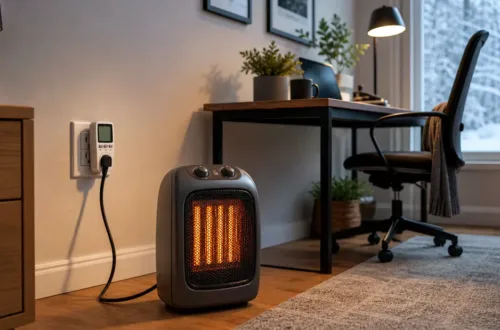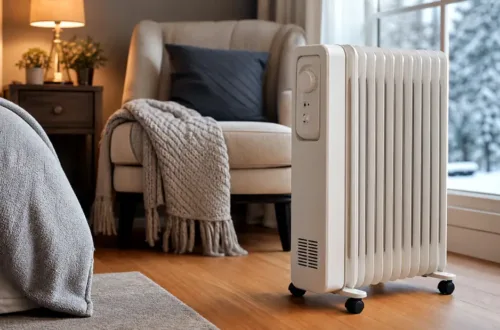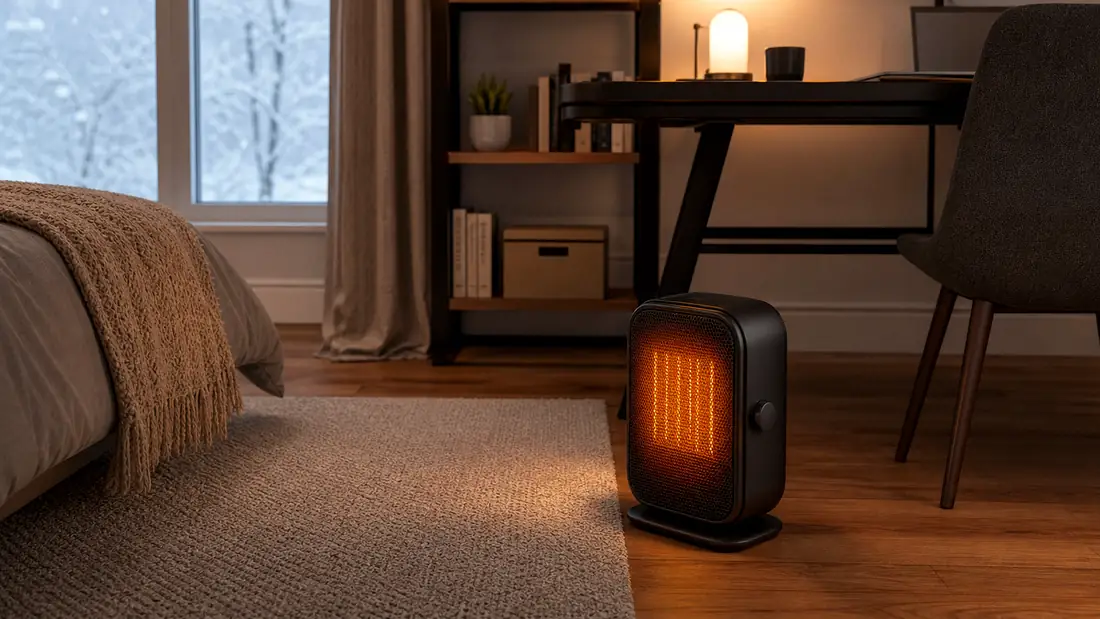
Choosing the best space heater for an apartment is less about chasing the highest wattage and more about matching the heater to apartment realities. Most renters need something compact, quiet enough for shared walls, simple to move from room to room, and safe to run while working or relaxing nearby. They also need to think about outlet limitations, room size, and whether they want spot heating for a desk or broader coverage for a living room.
The good news is that many apartment-friendly heaters now include practical features such as thermostats, oscillation, remote controls, timers, and tip-over protection. The harder part is sorting out which ones are worth considering, and which ones are just slight variations of the same idea.
Quick Answer
If you want the best space heater for apartment use in most situations, the DREO Space Heater (B0C6FCKQML) is the strongest all-around pick because it combines quiet operation, precise thermostat control, strong safety features, and a compact size that fits bedrooms, home offices, and smaller living areas. For a lower-cost option, the GiveBest Portable Electric Space Heater is a practical pick for small rooms and desk-side use. If you need broader coverage in a larger apartment room, the Dreo 1500W Oscillating Heater (B095PP1GZR) is the better fit.
Comparison Table
| Product | Best for | Key strengths | Possible trade-offs | Price |
|---|---|---|---|---|
| DREO Space Heater | Best overall for most apartments | Quiet, compact, precise thermostat, strong safety features | Not the cheapest option | $39.99 |
| GiveBest Portable Electric Space Heater | Best budget pick | Low price, simple controls, compact size | No remote or oscillation | $26.99 |
| Dreo 1500W Oscillating Heater | Best for larger apartment rooms | 270 sq. ft. coverage claim, quiet, ECO mode, oscillation | Costs more than compact models | $74.99 |
| DREO Atom One | Best value with oscillation | Balanced feature set, remote, thermostat, oscillation | Not as strong for bigger rooms as the larger Dreo | $49.99 |
| Amazon Basics Ceramic Space Heater | Best simple heater | Compact, recognizable brand, straightforward controls | Non-oscillating, fewer convenience features | $24.29 |
| JIBUFI Small Portable Space Heater | Best low-cost heater with oscillation | Oscillation, ECO mode, remote, low price | Less established brand support | $27.97 |
| DREO Tilt Desk Heater | Best for desk and directional heating | Adjustable tilt, quiet, compact, precise controls | Designed more for personal heating than room-wide coverage | $49.99 |
| WINHL 17-Inch Space Heater | Best tall compact option | Taller format, oscillation, multiple power settings, remote | Less proven brand than Dreo or Amazon Basics | $39.99 |
How We Chose These Picks
Apartment heaters have to do more than produce heat. We looked for models that make sense in smaller living spaces, especially where noise, safety, portability, and energy use matter. Manufacturer-listed features such as thermostat range, tip-over protection, overheat protection, oscillation, timer functions, and heat settings were all considered.
We also tried to avoid a list filled with nearly identical products. Some readers need a basic low-cost heater for a bedroom corner. Others want quieter operation for a studio apartment, or a wider-coverage unit for an open living area. These picks were chosen to cover those different situations rather than to force a single winner for everyone.
Our Top Picks
These recommendations are not arranged as if one model suits every renter. Instead, each heater below fills a different role, such as best overall, best budget, best for a larger room, or best for desk-side use. Compare them by room size, noise level, features, and portability before deciding which one fits your apartment layout and routine.
DREO Space Heater

This DREO model is one of the most balanced apartment heaters in the group. It uses a 1500W PTC ceramic heating system, includes a digital thermostat with a 41 to 95 degree Fahrenheit range, and adds convenience features that matter in daily apartment use such as a remote, timer, child lock, mute setting, and memory function. The compact body and carry handle make it easy to move between a bedroom, desk area, and living room corner without taking up much floor space.
What makes it especially practical for apartment living is the mix of comfort and control. DREO lists a 34 dB noise level, which is helpful for bedrooms, work-from-home use, and shared-wall spaces where loud fan noise becomes annoying quickly. The safety package is also stronger than what you get from many low-cost heaters, with ETL certification, flame-retardant materials, overheat protection, and an upgraded tilt-detection sensor. It is not the least expensive heater here, but it does more than many budget options without jumping into premium pricing.
Pros:
- Very good feature set for the price
- Precise digital thermostat with 1 degree adjustments
- Quiet operation suited to bedrooms and offices
- Strong safety features for apartment use
- Compact and easy to move room to room
Cons:
- Costs more than basic dial-control heaters
- Still best suited to small and medium rooms rather than very large open spaces
If you want one heater that can handle most apartment needs without feeling too stripped down or too expensive, this is the clearest middle-ground choice. It offers enough control to help with comfort and energy use, while staying compact and renter-friendly.
Best for: Most apartment renters who want a quiet, compact heater with modern controls and dependable safety features.
GiveBest Portable Electric Space Heater

The GiveBest Portable Electric Space Heater is a straightforward budget option for renters who want basic personal or small-room heat without paying for extra electronics. It offers two heat settings, 1500W and 750W, plus a fan-only mode. That simple setup works well in apartments where the goal is to warm a small bedroom, desk area, or TV corner rather than heat a larger open-plan space. It also includes thermostat control and a compact body with a carry handle, so it is easy to reposition as needed.
Compared with digital tower-style units, this heater is more stripped down, but that is part of its appeal. There is less to learn, fewer menu-style controls, and a lower upfront cost. The trade-off is that you do not get a remote, oscillation, or a highly precise digital temperature display. Still, for renters who want a compact heater for occasional cold mornings or targeted heating near where they sit, it remains a practical option. The manufacturer also lists tip-over protection, overheat shutoff, and flame-retardant material, which are important basics in apartment settings.
Pros:
- Affordable entry point for small-space heating
- Compact size works well in apartments
- Includes fan-only mode for added versatility
- Simple controls are easy to use
- Safety features include tip-over and overheat protection
Cons:
- No remote control or oscillation
- Less precise temperature control than digital models
This is a sensible pick for renters who want to keep costs low and avoid feature overload. It is best treated as a personal or small-room heater, not as a solution for heating an entire apartment living area.
Best for: Budget-conscious renters who need simple heat for a bedroom, desk area, or other small apartment space.
Dreo 1500W Oscillating Heater

This Dreo model is the strongest choice here for renters trying to warm a larger apartment room. According to the manufacturer, it is designed for spaces up to 270 square feet and combines 1500W ceramic heating with 70-degree oscillation for wider distribution. That makes it better suited to a living room, larger bedroom, or studio layout than many small personal heaters. It also includes a thermostat, remote, timer, ECO mode, and multiple safety protections, including tip-over protection and overheat protection.
Another reason it stands out is that it tries to combine broader coverage with quieter performance. Dreo lists noise at 34 dB, which is unusually low for a heater aimed at more than just desk-side use. The ECO mode can also help in apartments where energy costs matter, since it adjusts output based on room temperature rather than blasting full power constantly. The main compromise is price. It costs more than simpler compact heaters, so it makes the most sense if you actually need wider heat coverage or want a more feature-rich model for everyday winter use.
Pros:
- Better suited to larger apartment rooms than compact personal heaters
- 70-degree oscillation helps spread heat more evenly
- Quiet operation for its size class
- ECO mode can help manage power use
- Strong safety feature list from the manufacturer
Cons:
- Higher price than many small apartment heaters
- Takes up more space than ultra-compact models
For renters with an open living room, a large bedroom, or a studio that needs broader heat distribution, this is one of the more convincing options in the group. Smaller apartments may not need this much heater, but larger rooms may benefit from it.
Best for: Apartments with larger bedrooms, living rooms, or studio layouts that need wider heat coverage.
DREO Atom One
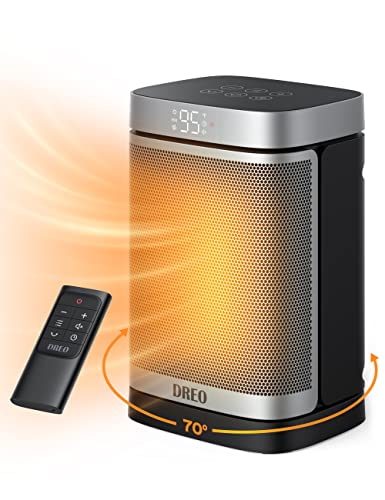
The DREO Atom One sits in a useful middle category for apartment shoppers who want a modern heater with more features than a budget model, but without moving up to the largest or most expensive Dreo unit. It uses 1500W ceramic heating, includes a digital thermostat from 41 to 95 degrees Fahrenheit, offers 70-degree oscillation, and comes with a remote and 12-hour timer. Its format is small enough for everyday apartment use while still feeling more capable than a basic fixed-direction heater.
This is a particularly good fit for renters who want better room circulation than a non-oscillating model can provide. The oscillation helps avoid the hot-spot effect that smaller personal heaters often create, where one chair gets warm but the rest of the room stays chilly. DREO also lists quiet operation and multiple safety protections, which are meaningful advantages for bedrooms and home offices. The main trade-off is that, while it is versatile, it is not quite as purpose-built for larger spaces as the more expensive Dreo 270-square-foot model.
Pros:
- Well-rounded feature set for apartment living
- Oscillation improves heat distribution
- Remote and timer add everyday convenience
- Digital thermostat allows more precise control
- Compact enough for small and medium rooms
Cons:
- Priced above very basic heaters
- Not the strongest option for larger living rooms
This is a good value choice when you want a heater that feels more refined than entry-level options but does not require paying for the biggest unit in the category. It suits many one-bedroom and studio apartment setups well.
Best for: Renters who want a good balance of oscillation, quiet operation, thermostat control, and compact size.
Amazon Basics Ceramic Space Heater

The Amazon Basics Ceramic Space Heater is aimed at shoppers who want a small, familiar, no-frills heater for apartment use. It provides three settings, high, low, and fan only, along with thermostat control, tip-over protection, and overheat protection. At about 3 pounds, it is also one of the more portable options here. That light weight can be helpful if you routinely move a heater from a bedroom to a desk space or want something easy to store when the weather warms up.
Where this model makes sense is in apartments that do not need many extras. It is non-oscillating, does not include a remote, and is more basic than the digital Dreo models. On the other hand, some renters specifically want that simplicity. There is less to fail, the controls are straightforward, and the price stays modest. Amazon also notes that it should not be used in humid environments such as bathrooms or laundry rooms, which is a reminder worth taking seriously with any portable heater.
Pros:
- Compact and lightweight for easy portability
- Simple controls with no learning curve
- Includes thermostat, overheat, and tip-over protection
- Fan-only mode adds flexibility
- Reasonable price from a recognizable brand
Cons:
- No oscillation or remote control
- Not suitable for humid areas according to the manufacturer
If your main goal is to add targeted warmth without paying for a digital display, remote, or advanced programming, this heater covers the basics well. It is better for small-room or personal use than for heating a large apartment area evenly.
Best for: Renters who want a basic, portable ceramic heater with simple controls and a recognizable brand name.
JIBUFI Small Portable Space Heater

The JIBUFI Small Portable Space Heater is one of the more budget-friendly ways to get features that are often reserved for pricier models. It offers 1500W ceramic heating, 70-degree oscillation, remote control, a timer, ECO mode, and several operating modes including fan-only. For apartment renters who want more than a simple manual heater but do not want to spend much, that combination is appealing on paper. Its compact size also makes it practical for bedrooms, desk areas, and smaller living rooms.
The main reason to consider this model is value. Many low-cost heaters only give you basic high and low settings, but this one adds broader coverage and more control options. That said, this is still a lower-priced heater from a less established brand than DREO or Amazon Basics, so some shoppers may prefer paying a little more for a brand with a longer track record. If budget matters most and you still want oscillation and ECO mode, though, it fills a clear role in the apartment heater market.
Pros:
- Low price for a heater with oscillation and remote
- ECO mode may help reduce unnecessary full-power heating
- Multiple heating modes improve flexibility
- Compact shape suits smaller apartments
- Includes ETL-listed safety features per manufacturer information
Cons:
- Less established brand than some competing picks
- Best treated as a small-space heater despite broad marketing claims
This is a reasonable fit for renters who want a feature-rich heater on a tighter budget and are comfortable choosing a value-oriented brand. It is most convincing in small and medium apartment rooms where portability and low cost matter more than premium refinement.
Best for: Apartment shoppers who want oscillation and a remote at a lower price.
DREO Tilt Desk Heater

This DREO heater is aimed more at personal comfort than at filling a whole room with warm air. Its standout feature is the manually adjustable tilt, which lets you direct heat upward or outward depending on whether the heater is on the floor beside a chair or on a desk near your hands. In an apartment, that can be especially useful if you mostly need warmth while working, reading, or sitting in one place instead of trying to raise the temperature across an entire room.
Beyond the directional design, it also includes features that make it feel more polished than a bare-bones desk heater. DREO lists a 34 dB noise level, a digital thermostat with 1 degree increments, remote control, three heat and three fan settings, and multiple safety protections. The trade-off is that this is still a compact directional heater first. If your goal is wide room coverage, an oscillating tower-style model makes more sense. If your goal is efficient spot heating in an apartment office or bedroom corner, this design is easier to live with.
Pros:
- Adjustable tilt helps target heat where you actually sit
- Quiet operation for office and bedroom use
- Precise thermostat and multiple settings
- Compact size fits desk-side and floor placement
- Good safety feature set
Cons:
- Less suited to heating an entire room evenly
- No oscillation for broader air distribution
For renters who spend long hours at a desk or want direct heat aimed at a sofa or bedside area, this model fills a niche that standard tower heaters do not. It is a better personal heater than whole-room heater.
Best for: Desk setups, bedside use, and renters who want directional personal heating.
WINHL 17-Inch Space Heater

The WINHL 17-Inch Space Heater offers a taller, slimmer format than many compact cube-style heaters, which may appeal to renters who want something that takes up less visual space on the floor. It includes 70-degree oscillation, a thermostat, remote control, timer, and three power levels of 700W, 1000W, and 1500W. That range can be useful in apartments where full-power heating is not always necessary and lower settings may be enough for mild chill or smaller rooms.
This model makes sense as a mid-priced alternative if you want more coverage and flexibility than a basic low-cost heater but are not set on buying from DREO. Manufacturer-listed safety features are solid, including ETL certification, tip-over protection, overheat protection, flame-retardant materials, and automatic shutoff after inactivity. The main hesitation is brand familiarity. There is less brand recognition here than with some other picks, so many shoppers will compare it directly against similarly priced DREO options before deciding.
Pros:
- Taller design may fit apartment layouts neatly
- Oscillation helps distribute heat more evenly
- Three power levels provide better control
- Remote and thermostat add convenience
- Comprehensive safety features listed by the manufacturer
Cons:
- Less established brand than leading alternatives
- Value depends on whether you prefer its shape over similar-priced rivals
This heater is worth considering if you like the idea of a compact tower-style shape and want a decent set of features without moving into premium pricing. It is most attractive for small and medium apartment rooms where oscillation is useful.
Best for: Renters who want a taller compact heater with oscillation and multiple power levels.
Buying Guide: How to Choose the Best Space Heater for an Apartment
Start with the room, not the product
The most common mistake is buying a heater based on features alone and ignoring the room it needs to heat. A small bedroom or office nook can do well with a compact ceramic heater. A larger living room or studio usually benefits more from oscillation and stronger air circulation. If you only need warmth where you sit, a personal heater may be more efficient than trying to heat the whole room.
Check apartment-safe placement
Portable heaters need open space around them. Follow the product manual for clearance requirements and keep the heater on a flat, stable floor or surface. Do not place it near curtains, bedding, upholstered furniture, paper, or clothing. In apartments, where space can be limited, safe placement matters as much as heater performance.
Look for the right safety features
For apartment use, the most useful safety features include:
- Tip-over shutoff
- Overheat protection
- Flame-retardant materials
- ETL listing or similar third-party safety certification
- Timer or auto shutoff features
You should also plug a space heater directly into a wall outlet unless the manufacturer specifically states otherwise. Do not use extension cords or power strips with most portable heaters.
Think about noise
Noise matters more in apartments than many shoppers expect. A heater that is technically effective can still become frustrating if it runs loudly beside a bed or desk. If the heater will be used in a bedroom, studio apartment, or work-from-home setup, quieter models with published low-decibel claims are worth considering.
Digital thermostat vs. manual thermostat
A digital thermostat usually gives you better control. Some models let you set a specific temperature in 1 degree increments, which can help prevent the room from swinging between too hot and too cold. Manual thermostat heaters are simpler and often cheaper, but they are less precise.
Oscillation is useful, but not mandatory
Oscillation helps spread warm air through a room instead of pushing it in one fixed direction. That is helpful for living rooms and larger bedrooms. For desk-side or bedside use, though, a fixed-direction heater can work just as well and sometimes more efficiently if you only want personal heat.
Power use and energy costs
Most full-size portable electric heaters top out at 1500 watts. In practical terms, many heaters draw similar maximum power, so energy savings often come more from how you use the heater than from the heater itself. Thermostat control, ECO mode, and targeted heating can help reduce unnecessary run time. Heating the room you are using instead of turning up central heat for the whole apartment may also help control costs.
Common Mistakes to Avoid
- Buying a personal heater for a large open room and expecting full-room comfort
- Using a heater with an extension cord or power strip
- Placing the heater too close to bedding, curtains, or furniture
- Ignoring noise levels when the heater will be used in a bedroom
- Paying for extra features you will never use
- Assuming all 1500W heaters perform exactly the same in real rooms
Frequently Asked Questions
What type of space heater is best for an apartment?
For most apartments, a compact ceramic heater with a thermostat, tip-over protection, overheat protection, and a stable base is the most practical choice. Oscillating models are often better for living rooms or larger bedrooms, while small directional heaters are better for desk or bedside use.
Are space heaters safe in apartments?
They can be, if you use them correctly and follow the manufacturer’s instructions. Choose a model with modern safety features, keep it on a flat surface, maintain proper clearance from flammable materials, and plug it directly into a wall outlet.
Can a space heater lower heating costs in an apartment?
It can help in some situations, especially if you use it to warm the room you are actively using instead of raising the central heat for the entire apartment. Savings depend on your local electricity rates, your building’s insulation, and how often the heater runs.
Do I need oscillation in an apartment heater?
Not always. Oscillation is useful when you want broader room coverage. If you mainly want heat aimed at your desk, couch, or bed area, a non-oscillating or directional model may be enough.
What size heater should I buy for an apartment bedroom?
Most apartment bedrooms do well with a standard 1500W ceramic heater, but the design matters. Small bedrooms may only need a compact model, while larger bedrooms benefit from oscillation and stronger airflow. Published room-size claims should be treated as general guidance rather than a guarantee.
Final Recommendations
If you want the best space heater for apartment living in the broadest sense, the DREO Space Heater (B0C6FCKQML) is the most balanced choice. It is compact, quiet, safety-focused, and easy to live with day to day. If your priority is cost, the GiveBest Portable Electric Space Heater keeps things simple and affordable. For a larger apartment room or studio, the Dreo 1500W Oscillating Heater (B095PP1GZR) is the stronger fit.
The right choice depends on where you feel cold, how much space you need to cover, and whether you care more about quiet operation, portability, or extra controls. Match the heater to the room and your daily routine, and you are more likely to end up with something that actually improves comfort instead of just adding another appliance to the floor.