Choosing a propane garage heater is mostly about matching the heater to the space, the way you use the garage, and how much installation you are willing to take on. A small hobby space, a detached workshop, and a large multi-car garage all call for different heating styles. Some heaters are portable and easy to set up. Others are meant to be mounted permanently and sized for bigger areas. Safety, ventilation, and fuel use matter just as much as raw heat output.
If you are comparing the best propane garage heater options, the right choice usually comes down to three things: how much space you need to heat, whether you want portable or mounted equipment, and whether you need vented or vent-free operation. The picks below cover a range of needs, from compact portable heaters to higher-capacity unit heaters for larger garages and workshops.
Quick Answer
The best propane garage heater for many users depends on the space and the installation you want. Portable models are easier to move and cheaper to start with, while ceiling-mounted unit heaters are better for larger garages and more regular use. Vent-free models can work well in appropriate indoor spaces, but they still require careful attention to ventilation and safety instructions.
Comparison Table
| Product | Heater Type | Heat Output | Best For |
|---|---|---|---|
| Mr. Heater 50,000 BTU Forced-Air Unit Heater | Ceiling-mounted forced air | 50,000 BTU | Three-car garages and larger workspaces |
| OKF Propane Heater | Portable vented-style cabinet heater | 6,000 to 18,000 BTU | Smaller garages, patios, and flexible use |
| Mr. Heater 60,000 BTU Quiet Burner Technology Forced Air Propane Heater | Portable forced air | 30,000 to 60,000 BTU | Moderate-size garages where noise matters |
| 150,000 BTU Forced Air Propane Heater | Portable torpedo heater | 120,000 to 150,000 BTU | Large garages, jobsites, and temporary high-heat needs |
| Mr. Heater 80,000 BTU Forced-Air Unit Heater | Ceiling-mounted forced air | 80,000 BTU | Larger garages and workshops |
| Mr. Heater 30,000 BTU Vent Free Blue Flame Propane Heater | Vent-free blue flame | 30,000 BTU | Indoor spaces where vent-free operation is allowed |
| Mr. Heater Original 540-Degree 45,000 BTU Tank Top Radiant Propane Heater | Tank-top radiant | 30,000 to 45,000 BTU | Outdoor or open-air use only |
| ProCom Dual Fuel Ventless Blue Flame Garage Heater | Vent-free blue flame | 30,000 BTU | Garage air heating with dual-fuel flexibility |
| Reznor 75,000 BTU Gas Unit Propane Garage Heater | Ceiling-mounted unit heater | 75,000 BTU | Commercial-style garages and serious workshop use |
How These Picks Were Selected
These heaters were chosen to cover different garage sizes, heating styles, and budgets rather than to rank one product as the answer for everyone. Some are better for portable spot heating, some are meant for mounted installation, and others are designed for spaces that need more consistent whole-garage warmth. The trade-offs are important, especially when you factor in ventilation, noise, fuel use, and installation requirements.
Our Top Picks
Mr. Heater 50,000 BTU Forced-Air Unit Heater

This ceiling-mounted forced-air heater is built for garages, barns, and workshops that need more than a small portable unit can provide. With 50,000 BTUs and coverage listed up to about 1,667 square feet, it is sized for larger garages, including many three-car spaces. Because it mounts overhead, it keeps floor space open, which matters in work areas where vehicles, tools, and storage already compete for room.
It stands out because it offers a more permanent heating setup without moving into the very high cost of some commercial-grade systems. Compatibility with standard 24-volt or Wi-Fi thermostats gives it more control flexibility than many basic propane heaters. The trade-off is installation complexity, since it needs proper ceiling height, clearance, and a fixed mounting plan.
Pros:
- Good coverage for larger garages and workshops
- Ceiling mount helps preserve floor space
- Works with compatible thermostats for better control
- Includes safety shut-off features
Cons:
- Requires proper ceiling height and clearance
- Installation is more involved than with portable heaters
- Not the right choice for a small garage
This is a practical option when you want a more permanent garage heating solution and have the space to install it correctly.
Best for: Large garages, workshops, and users who want a mounted heater with thermostat control
OKF Propane Heater

The OKF propane heater is a portable cabinet-style heater with adjustable heat levels from 6,000 to 18,000 BTUs. It connects to a 20-pound propane tank and is designed for spaces up to about 450 square feet, which makes it a better fit for smaller garages, workshops, patios, and other well-ventilated areas. Its caster wheels and carry handle make it easy to move where heat is needed most.
It earns a place here because it gives users a flexible, lower-cost way to add heat without committing to a permanent install. The low-noise operation and adjustable output are helpful if you want something quieter than a torpedo-style heater. The main limitation is that it is not built for large garages, so shoppers with more square footage will likely need something more powerful.
Pros:
- Portable and easy to move between spaces
- Adjustable heat output for different conditions
- Low noise compared with many forced-air heaters
- Includes ODS and tip-over protection
Cons:
- Limited heating capacity for larger garages
- Requires a propane tank and space for safe operation
- Not ideal for fast heating of wide open areas
This is a sensible choice for smaller spaces or for users who want a heater they can move around as needed.
Best for: Small garages, patios, and users who want a portable heater with modest heat output
Mr. Heater 60,000 BTU Quiet Burner Technology Forced Air Propane Heater

This portable forced-air heater offers variable output from 30,000 to 60,000 BTUs, which gives it more flexibility than fixed-output models. It is designed to heat up to about 1,500 square feet and uses quiet burner technology that Mr. Heater says is about 50% quieter than a standard propane heater. That can matter in a garage where people are working, talking, or listening to music.
It belongs on this list because it splits the difference between compact portable heaters and larger mounted units. Users who want stronger heat but still need portability will find that useful. The runtime on a 20-pound tank is another practical feature, although the exact fuel use depends on the setting and conditions. It is a strong middle-ground option for garages that are more than small but do not need a high-capacity industrial heater.
Pros:
- Variable output gives more control over heat level
- Quieter than many standard propane forced-air heaters
- Portable enough for temporary use
- Good balance of output and price
Cons:
- Still requires ventilation and safe placement
- Not as neat or permanent as a mounted unit heater
- May be more heater than a small garage needs
This heater fits well if you want stronger garage heat without moving into a large installed system.
Best for: Medium-size garages, workshops, and users who want a quieter portable propane heater
150,000 BTU Forced Air Propane Heater

This torpedo-style heater is aimed at large jobsites, open garages, and other spaces that need a lot of heat quickly. With an adjustable range of 120,000 to 150,000 BTUs, it is much more powerful than the typical garage heater, and the seller lists coverage up to 4,305 square feet. It includes a hose and regulator for connection to a propane tank, along with casters and a handle for transport.
It stands out for pure heating output, but that kind of capacity comes with a clear trade-off. This is not the heater to buy for occasional light use or for a tightly sealed space. It makes the most sense when you need fast, temporary heat in a well-ventilated garage, workshop, or construction area. The safety notes are important, especially around ventilation and placement near combustible materials.
Pros:
- Very high heat output for large spaces
- Portable despite its size
- Multiple heat settings
- Includes overheat and tip-over protection
Cons:
- Too powerful for many small garages
- Requires careful ventilation and placement
- Shorter runtime at higher settings
This is the kind of heater to consider when lower-output models simply will not cover the area you need to warm.
Best for: Large garages, barns, construction sites, and short-duration high-heat needs
Mr. Heater 80,000 BTU Forced-Air Unit Heater
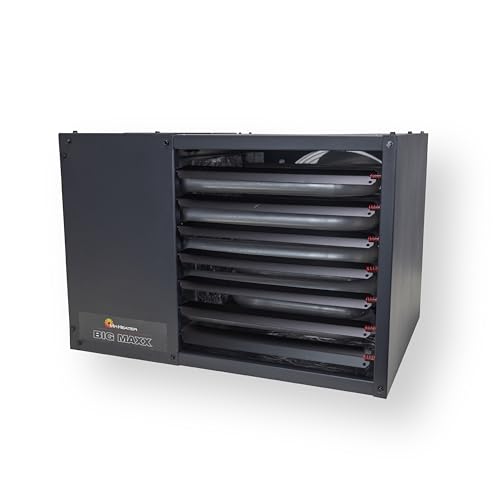
This ceiling-mounted unit heater raises the output to 80,000 BTUs and is listed for spaces up to about 2,667 square feet. It is meant for garages, barns, and workshops where a mounted propane heater is a better fit than a portable one. Like the 50,000 BTU version, it preserves floor space and is compatible with standard 24-volt or Wi-Fi thermostats, sold separately.
It deserves attention if your garage is larger or more exposed to cold air than a 50,000 BTU model can handle. The extra capacity helps when the space has higher ceilings, more draft, or a bigger footprint. The limitations are similar to other installed heaters, though. You need the right ceiling clearance, and setup is more involved than plugging in a portable unit and turning it on.
Pros:
- Stronger output for larger garages and workshops
- Mounted design keeps the floor clear
- Thermostat compatibility improves convenience
- Built-in safety shut-off features
Cons:
- Requires proper installation space and clearance
- Higher cost than smaller portable heaters
- More than many average-sized garages need
If you want a fixed garage heater with more power than a mid-size unit, this is a solid place to look.
Best for: Larger garages, workshops, and users who need a mounted heater with more output
Mr. Heater 30,000 BTU Vent Free Blue Flame Propane Heater

This vent-free blue flame heater produces 30,000 BTUs and is rated for up to 1,000 square feet. It uses a built-in thermostat and battery-powered ignition, so it does not need electricity to operate. For garages or indoor work areas where vent-free propane heat is allowed, that can make the heater appealing during outages or in spaces without easy electrical access.
It is included because it offers a simpler installation path than many forced-air models, while still providing steady room heat rather than a narrow hot spot. The blue flame design warms the air in the space, which is useful when you want more even comfort across a garage. The trade-off is that vent-free heaters demand careful attention to indoor use rules, oxygen depletion protection, and local code requirements.
Pros:
- No electricity required
- Thermostatic control adds convenience
- Good output for medium-size spaces
- Includes low-oxygen safety shut-off
Cons:
- Vent-free use is not appropriate in every setting
- Not ideal for large, drafty garages
- Blower fan kit is sold separately
This is a practical option when you want a steady indoor propane heater and your space is suitable for vent-free operation.
Best for: Indoor garages and shops that can safely use vent-free propane heat
Mr. Heater Original 540-Degree 45,000 BTU Tank Top Radiant Propane Heater

This tank-top radiant heater mounts directly to a 20-pound propane cylinder, which makes it easy to move and set up quickly. It offers three output levels from 30,000 to 45,000 BTUs and is designed to radiate heat outward in multiple directions. That makes it useful for outdoor tasks, jobsite work, and other open-air situations where you want direct warmth near the heater.
It is on the list because it is one of the simplest propane heating options for short-term use. There is no installation work, and the heater travels with the tank. The downside is important, though. This is for outdoor use only, so it should not be treated as a garage heater for enclosed spaces. It is better understood as a portable radiant heater for open or semi-open areas.
Pros:
- Very portable and easy to set up
- Multiple heat settings
- Useful for outdoor tasks and temporary heat
- Tip-over safety shut-off included
Cons:
- Outdoor use only
- Not suitable for enclosed garages
- Radiant heat is directional and limited in coverage
This is a good match if you need portable propane heat, but it should not be confused with a true indoor garage heater.
Best for: Outdoor work areas, patios, and open-air task heating
ProCom Dual Fuel Ventless Blue Flame Garage Heater
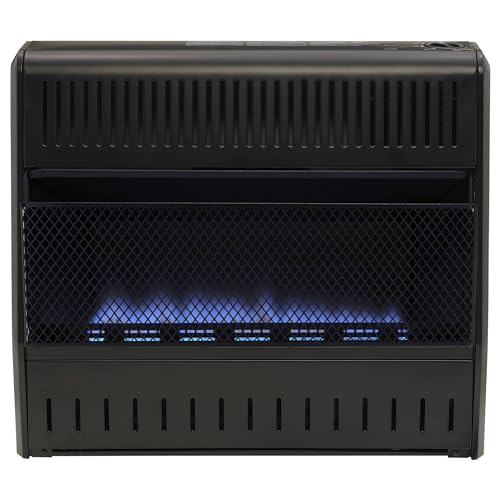
The ProCom dual-fuel blue flame heater is designed for indoor spaces that can use vent-free gas heat. It runs at 30,000 BTUs and can operate on either natural gas or propane, which gives it flexibility if fuel access changes over time. Its thermostatic control and cool-touch cabinet make it more convenient for everyday garage use than many basic portable heaters.
It belongs here because dual-fuel capability is genuinely useful for buyers who want to keep more than one fuel option open. The heater warms the air in the room rather than pushing a strong stream of forced air, so it can feel more even in some garages. As with other ventless heaters, the trade-off is that installation and local safety rules matter, and it is not the right choice for every enclosed space.
Pros:
- Works with propane or natural gas
- Thermostatic control for easier temperature management
- Vent-free design can simplify setup in approved spaces
- Cool-touch cabinet adds a safety-minded design detail
Cons:
- Not suitable where vent-free heating is restricted
- Limited to 30,000 BTUs
- Less portable than a small freestanding heater
This is a good fit if you want a garage heater with dual-fuel flexibility and a room-heating style of warmth.
Best for: Approved indoor garages and users who want propane or natural gas flexibility
Reznor 75,000 BTU Gas Unit Propane Garage Heater

The Reznor UDXC-75 is a ceiling-mount unit heater built for workshops, warehouses, and other serious indoor workspaces. It is rated at 75,000 BTUs with an 83% thermal efficiency rating, and the listing includes an LP conversion kit for propane use. Because it is designed as a suspended unit, it is aimed at users who want a more permanent heating setup rather than a portable appliance.
This model stands out for buyers who want commercial-style construction and are willing to pay more for it. The efficiency rating, heat exchanger design, and integrated control features place it in a different category from budget garage heaters. It is not the most accessible choice for casual users, but for a dedicated garage or workshop, it offers a level of build quality and heating consistency that cheaper portable models cannot match.
Pros:
- Built for demanding garage and workshop use
- Strong efficiency rating for a unit heater
- Ceiling or wall mount options with proper hardware
- Commercial-style build quality
Cons:
- High price compared with most garage heaters
- Mounting and venting setup are more involved
- More heater than many home garages need
This is the type of heater to consider when you want a durable, installed propane heating solution and budget is not the main concern.
Best for: Dedicated workshops, commercial garages, and buyers who want a premium mounted heater
Buying Guide
The right propane garage heater starts with the size of the space. A small single-car garage may only need a modest portable heater, while a bigger two- or three-car garage often calls for a mounted unit or a much higher BTU output. It also helps to think about how often you use the space. Occasional weekend work usually does not justify the same heater as a garage you use every day in cold weather.
Safety should come first. Propane heaters produce combustion byproducts, so ventilation requirements matter. Vent-free models may be appropriate in some indoor applications, but only when the product instructions and local rules allow it. For any heater that sits in a garage, consider clearance from walls, floors, tools, and vehicles. If you need portability, a freestanding heater may make more sense. If you want consistent whole-space heat, a mounted unit heater is usually the better path.
Heat output and room size
BTU rating is one of the most useful numbers to check, but it should not be treated as the only factor. A drafty garage, high ceiling, or poorly insulated workshop will need more heat than a closed, insulated space of the same square footage. Portable heaters are often better for localized warmth, while mounted unit heaters are better for heating the whole room over time.
Portable versus mounted designs
Portable heaters are easier to buy, move, and replace. They are usually the better choice if you use the garage only sometimes or need heat in more than one place. Mounted heaters take more effort to install, but they keep the floor clear and usually provide more even coverage for a dedicated work area. If you are parking vehicles in the same space, the ceiling-mounted approach can be easier to live with day to day.
Vent-free and vented considerations
Vent-free heaters can be convenient, but they are not right for every garage. They should only be used where the product is approved and where ventilation and safety guidance are followed. Vented or forced-air systems are often a better fit for enclosed garages because they move combustion exhaust out of the space. If you are unsure, it is safer to choose a design that has a clear venting path and to follow the manufacturer instructions closely.
Noise, controls, and convenience
If you spend time working in the garage, noise can matter more than many shoppers expect. Quiet burner models are easier to live with than loud torpedo heaters. Thermostats and variable outputs are also helpful because they reduce constant on-off adjustments. For many users, that convenience is worth paying a little more for, especially in a garage that doubles as a workshop.
Frequently Asked Questions
What size propane heater do I need for a garage?
It depends on the garage size, insulation, and climate. Smaller spaces may do fine with 30,000 BTUs or less, while larger garages often need 50,000 BTUs or more. Drafty spaces and high ceilings usually require additional capacity.
Are propane garage heaters safe to use indoors?
Some are, but only if the model is designed and approved for indoor use and the instructions are followed closely. Vent-free heaters, forced-air heaters, and unit heaters all have different safety requirements. Ventilation, clearance, and carbon monoxide awareness are important in every case.
Do I need electricity for a propane garage heater?
Not always. Many portable propane heaters do not need electricity, though some use battery ignition or optional accessories. Mounted forced-air unit heaters may need electrical power for ignition, fans, or thermostat controls.
Is a portable heater better than a mounted heater?
Neither is always better. Portable heaters are easier to move and usually cost less up front. Mounted heaters are better for permanent garage heating and can free up floor space. The better choice depends on how often you heat the space and how much installation you want to handle.
Final Recommendations
If you want a heater for a small or moderately sized garage, a portable model can be a practical starting point. For larger garages or more regular winter use, a ceiling-mounted unit heater usually makes more sense. Vent-free models can be useful in the right space, but they need extra attention to safety and code requirements. The best propane garage heater is the one that fits your space, your setup, and the way you actually use the garage.