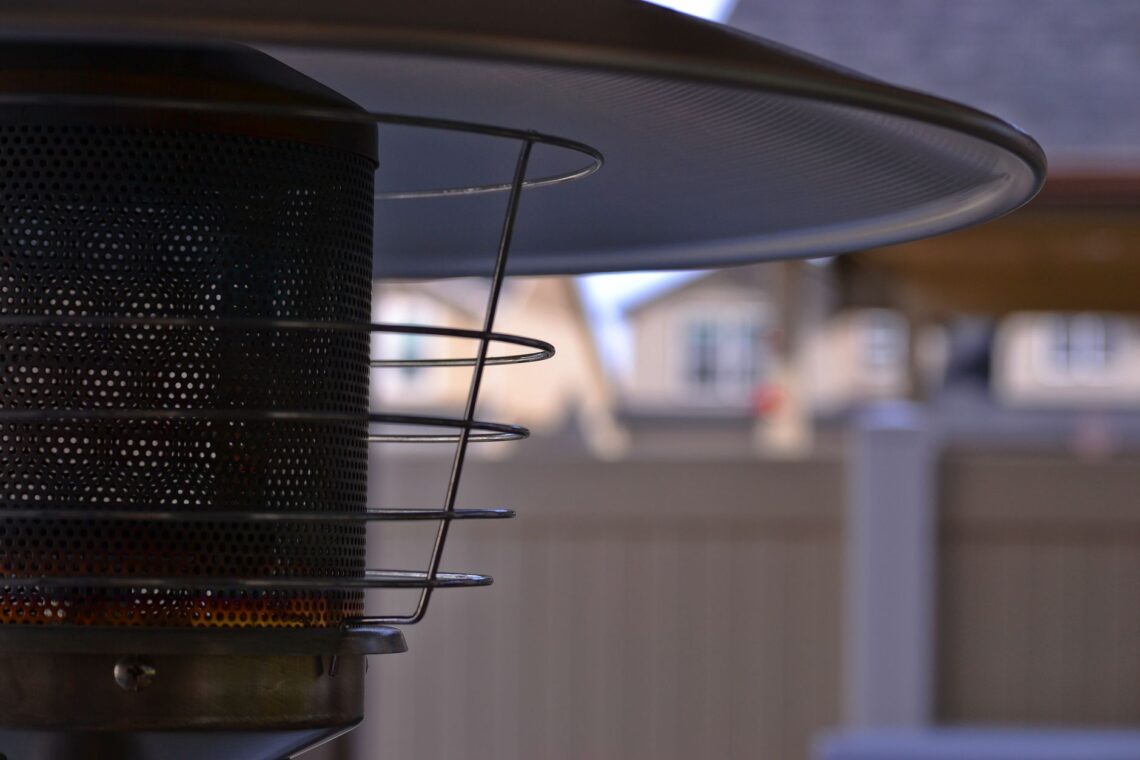
Choosing the best patio heater for a covered patio usually comes down to how much space you need to warm, how much ventilation you have, and whether you want plug-in convenience or propane output. Covered patios can handle more than an open deck, but the heater still needs to match the layout and the way you use the space. A compact tabletop unit may be enough for a small seating area, while a wall-mounted infrared heater makes more sense if you want to save floor space. Larger propane heaters are better when you are trying to warm a full seating zone instead of just the people closest to the unit.
This guide focuses on practical differences rather than ranking every model as if they solve the same problem. Some options are better for small, partially enclosed patios. Others are a stronger fit for larger covered spaces, backyard entertaining, or users who want quieter electric heat with less setup. The right choice depends on where the heater will sit, how often you will use it, and whether you care more about convenience, heat output, or portability.
Quick Answer
If you want a heater for a covered patio, start by deciding between electric infrared and propane. Electric models are usually easier to live with for covered spaces that have power nearby, especially when you want quiet operation and lower maintenance. Propane heaters typically produce more heat and work better for bigger outdoor seating areas, but they need fuel handling and more clearance. For small patios, a tabletop propane heater can be enough. For larger covered patios, a freestanding propane unit or a mounted infrared heater is usually the better fit.
Comparison Table
| Product | Fuel Type | Best Use | Notable Trade-Off |
|---|---|---|---|
| DR. INFRARED HEATER Portable Infrared Heater | Electric infrared | Mounted covered patios, garages, and decks | Needs wall or ceiling placement |
| Amazon Basics 46,000 BTU Patio Heater | Propane | Medium covered patios and outdoor seating | Requires a propane tank |
| Outdoor Electric Patio Heater | Electric infrared | Portable heating for covered patios and work areas | Best for focused rather than room-wide heat |
| Pamapic 41,000 BTU Propane Patio Heater | Propane | Covered patios with a design-focused look | Higher price than basic freestanding heaters |
| Cuisinart Portable Tabletop Patio Heater | Propane | Small covered patios, tables, and camping | Heats a smaller area |
| Sundate 1500W Infrared Patio Heater | Electric infrared | Covered patios that need smart control | Requires mounted installation |
| Patio Heater for Outdoor Use, Infrared Electric Heater | Electric infrared | Quiet, portable warmth for smaller covered spaces | Less powerful than large propane units |
| PATIOPIA 48,000 BTU Flame Pyramid Pool Heater | Propane | Decorative heating for larger covered patios | Taller footprint and more open-space demand |
| EAST OAK 50,000 BTU Patio Heater | Propane | Large covered patios and group seating | Bulkier than compact options |
Our Top Picks
The products below were selected to cover different patio sizes, installation styles, and heat sources. Some are better for people who want a fixed electric setup, while others make more sense if you need stronger propane heat or a heater you can move around. Instead of looking for one universal winner, it helps to compare the trade-offs and choose the style that matches your patio layout and usage habits.
DR. INFRARED HEATER Portable Infrared Indoor and Outdoor Space Heater
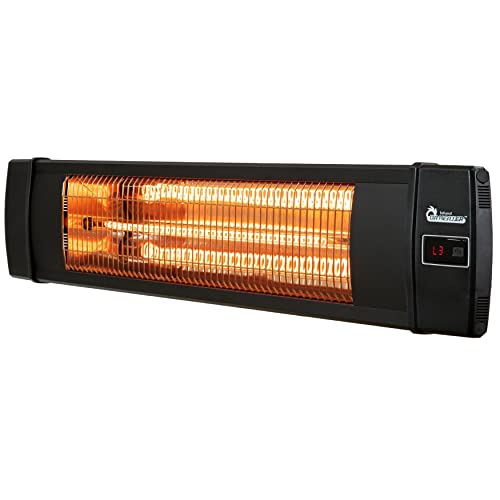
This infrared heater is designed for users who want steady electric warmth on a covered patio without dealing with propane tanks. It runs on standard 120V power and offers three heat settings, so you can adjust output depending on the weather and how close people are sitting. Because it can be wall- or ceiling-mounted, it works especially well in spaces where floor room is limited. The IP55 rating also makes it more suitable for indoor and outdoor use than many basic space heaters, which matters if your covered patio gets some moisture exposure.
It earns a place here because it solves a different problem than the larger propane models. Instead of trying to heat a wide open area, it gives targeted radiant heat that is often more useful on smaller or partially enclosed patios. The remote control adds convenience, and the weather-resistant aluminum build should appeal to buyers who want a more permanent setup. It is a practical choice for homeowners who use their covered patio often and prefer a cleaner, lower-maintenance heating option.
Pros:
- Electric infrared heat avoids fuel handling
- Wall and ceiling mounting saves floor space
- Three heat settings add flexibility
- Remote control improves everyday convenience
- Weather-resistant construction suits covered outdoor use
Cons:
- Requires installation rather than simple placement
- Best for directed warmth, not large open areas
- Not as portable as freestanding heaters
This is a sensible pick for covered patios where you want dependable supplemental heat and do not want to move a heater in and out of storage. It is less about dramatic coverage and more about practical, focused comfort.
Best for: Covered patios, pergolas, and homeowners who want a mounted electric heater.
Amazon Basics 46,000 BTU Portable Outdoor Propane Patio Heater

This freestanding propane heater is built for people who want stronger heat coverage on a covered patio or seating area. Its 46,000 BTU output gives it enough power for a broad zone around the unit, and the adjustable knob lets you tone it down when full output is not needed. The wheel kit makes it easier to reposition, which matters if you move the heater between a patio, deck, or storage area. The water box at the base also helps add stability, which is useful on surfaces that may get occasional movement or bumps.
Compared with electric infrared models, this heater offers more reach and a more traditional patio-heater setup. That makes it a good fit when your covered patio has room for a tall standing unit and you want faster, broader warmth for a group. The trade-off is the usual one for propane heaters. You will need to keep fuel on hand, and the unit takes up more visual and physical space than a mounted electric option. For shoppers who care most about output and portability, though, it remains a straightforward and practical choice.
Pros:
- Strong 46,000 BTU output for wider coverage
- Wheels make repositioning easier
- Adjustable heat control improves flexibility
- Tilt shutoff adds an important safety layer
- Stable base features help support everyday use
Cons:
- Requires a propane tank that is not included
- Needs more clearance than compact heaters
- Less convenient than plug-in electric options
This model fits buyers who want a classic tall patio heater with decent heat coverage and easy mobility. It is a practical middle ground for a covered patio that needs more output than a tabletop unit can provide.
Best for: Medium covered patios, outdoor dining spaces, and users who prefer propane heat.
Outdoor Electric Patio Heater, Portable Infrared Heater

This electric infrared heater is aimed at shoppers who want portability without giving up a range of heat settings. With 750W, 1000W, and 1500W modes, it gives you more control over output than many basic plug-in heaters. That makes it useful on a covered patio where the temperature can change through the evening. Since it is portable and requires no installation, you can move it from a patio to a garage or work area as needed. The built-in tip-over switch is a useful safety feature for households that want extra peace of mind.
It stands out because it focuses on practical everyday use rather than just raw output. Quiet operation is helpful if you want to sit outdoors without fan noise or burner sounds, and the targeted heating approach can be more efficient when only a small zone needs warmth. It is not the right pick for very large patios, but it is a useful choice for people who want a simple electric heater they can move around. For covered patios with a nearby outlet, this is one of the easier options to live with.
Pros:
- Three wattage settings provide useful flexibility
- Portable design makes relocation simple
- Tip-over shutoff improves safety
- Quiet operation suits relaxed outdoor spaces
- Good for focused heating in smaller zones
Cons:
- Not designed for broad patio coverage
- Portable form is less space-efficient than wall mounting
- May feel modest in colder or windier conditions
If your patio is covered and relatively compact, this heater offers a useful balance of flexibility and ease of use. It is a straightforward electric option for people who want warmth without the maintenance that comes with propane.
Best for: Small covered patios, garages, and buyers who want a portable plug-in heater.
Pamapic 41,000 BTU Propane Patio Heater with Wheels & Cover

The Pamapic heater is a propane model for buyers who want a more refined look than a basic utility heater. Its 41,000 BTU output is still strong enough for a covered patio seating area, and the tempered glass and stainless steel construction give it a more finished appearance. The flame is visible, which can add atmosphere in the evening, though that is more of a style benefit than a heating advantage. Wheels and lockable casters also make it easier to move and stabilize, and the included cover is a useful touch for storage.
This model belongs on the list because it blends practical heating with a presentation that suits patios meant for entertaining. It is not the cheapest way to get outdoor heat, but some buyers care about design and weather resistance as much as output. Compared with simpler freestanding propane heaters, it feels more like a permanent part of an outdoor living area. That said, it still needs a propane tank and enough space for safe operation, so it is better for a larger covered patio than for a tight balcony.
Pros:
- 41,000 BTU output is suitable for many patio seating areas
- Tempered glass and stainless steel improve the look and durability
- Lockable wheels help with movement and placement
- Includes a protective cover for storage
- CSA certification adds confidence for buyers comparing safety-focused models
Cons:
- More expensive than some simpler propane heaters
- Still requires fuel and outdoor clearance
- Best suited to patios with enough room for a tall unit
For a covered patio where appearance matters as much as warmth, this heater is an appealing option. It gives you familiar propane performance with a more polished design and a few convenience touches.
Best for: Decorative covered patios, backyard entertaining, and buyers who want a stylish propane heater.
Cuisinart Portable Tabletop Patio Heater
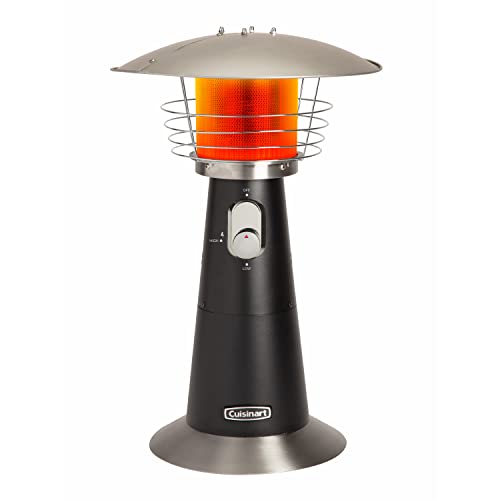
This tabletop propane heater is a good fit for smaller covered patios where a full-size standing heater would feel bulky. With 11,000 BTUs, it is built to warm roughly the immediate area around a table rather than a whole seating zone. That makes it useful for two to four people who want extra comfort during meals or casual evening use. Because it sits on a table, it stays low-profile and easy to position, and the burner screen guard plus tilt shutoff are sensible safety features for a compact flame-based heater.
It stands out because it solves the small-space problem better than larger patio heaters. A lot of covered patios do not need high-output heat across a wide radius. They need concentrated warmth near where people are sitting. This model does that without taking over the entire space. The main limitation is obvious, since it will not heat a large group or a bigger open patio very well. Still, for a smaller covered outdoor area, it can be more practical than buying a large heater that you do not have room to use safely.
Pros:
- Compact tabletop design saves floor space
- Good for small seating areas
- Adjustable heat dial offers control
- Safety tilt switch adds protection
- Can use either a 1-lb. tank or a larger tank with the right setup
Cons:
- Not suitable for large patios
- Needs a stable table or surface
- Lower heat output than full-size propane heaters
This is a sensible option when your covered patio is small and you want heat close to the table. It is compact, easy to understand, and more practical for limited spaces than a tall patio heater.
Best for: Small covered patios, tabletop use, camping, and tailgates.
Sundate 1500W Infrared Patio Heater

The Sundate heater is aimed at buyers who want a mounted infrared option with more control than the average plug-in model. It offers nine heat levels, a 24-hour timer, and WiFi app control, which can be useful if your covered patio is part of a larger outdoor living area and you want to adjust heat without walking back to the unit. Because it mounts to a wall or ceiling, it preserves floor space and can work well in compact patios, pergolas, and balconies where freestanding heaters would get in the way.
It deserves attention because it combines practical placement with smart controls. Many patio heaters can warm a space, but fewer give you timer scheduling and app-based adjustment. That makes it easier to use the heater only when needed, which is helpful for energy-conscious buyers. The main compromise is that it is less portable than a standing model, so you need to be comfortable with installation. For a covered patio that sees regular use, though, the convenience and clean layout can outweigh that limitation.
Pros:
- WiFi, remote, and touch control offer flexible operation
- Nine heat levels help fine-tune comfort
- Timer function supports everyday convenience
- Wall or ceiling mounting saves floor space
- Suited to covered outdoor areas and garages
Cons:
- Requires installation
- Not portable like a freestanding unit
- Best for directed heat rather than large open coverage
This is a practical pick for people who want a cleaner, more permanent patio setup and like the idea of controlling heat from their phone. It works especially well where floor space is limited.
Best for: Small to medium covered patios, balconies, and buyers who want smart electric control.
Patio Heater for Outdoor Use, Infrared Electric Heater

This infrared electric heater is a budget-friendly option for covered patios where quiet operation and adjustable settings matter more than raw output. The 60-degree oscillation helps spread warmth across a wider area than a fixed-direction heater, which can be useful when more than one person is sitting nearby. It also includes nine heat levels, a remote control, a timer, and a child safety lock, so it covers a lot of the small convenience details that people often want in an everyday patio heater. Its portable design makes it easy to move when needed.
What makes it worth considering is the mix of features at a relatively accessible price. Not every patio heater in this range offers oscillation, multiple heat levels, and a remote. That said, buyers should treat it as a light- to moderate-duty heater rather than a replacement for a large propane model. It is most useful on a covered patio where you want to take the edge off the chill and keep the space comfortable for a small group. For the price, it offers a sensible balance of control and simplicity.
Pros:
- Oscillation helps spread heat more evenly
- Nine heat settings improve control
- Remote control and timer add convenience
- Quiet operation suits relaxed outdoor use
- Child safety lock is useful for family settings
Cons:
- Less powerful than larger propane units
- Best for smaller or moderately sized covered patios
- White finish may not suit every outdoor space
If you want an affordable electric heater with useful everyday controls, this one fits that role well. It is not the strongest heater in the group, but it covers a lot of practical basics.
Best for: Smaller covered patios, quiet operation, and buyers looking for value in an electric heater.
PATIOPIA 48,000 BTU Flame Pyramid Pool Heater

This pyramid-style propane heater is as much a visual piece as it is a heat source. With 48,000 BTUs and a tall glass flame tube, it is designed to warm a larger covered patio while also adding a decorative focal point. The pulse ignition system and adjustable heat settings make it straightforward to use, and the included cover is a useful addition for storage. Because of its height, it can create a more dramatic presence than a standard barrel-style heater, which may appeal to buyers setting up a more polished outdoor entertaining area.
It earns a spot here because some covered patios are meant to feel like outdoor rooms, not just functional seating areas. This heater supports that kind of setting better than a plain utilitarian unit might. The trade-off is space. It needs room, both for safety and for visual balance. If your covered patio is small, this likely is not the right choice. But if you want strong propane heat with a more decorative look, it offers a reasonable mix of output and presentation.
Pros:
- Strong 48,000 BTU heat output
- Distinctive pyramid design adds visual appeal
- Adjustable heat settings improve comfort control
- Tip-over safety system adds protection
- Includes a protective cover for storage
Cons:
- Tall footprint requires more space
- Not ideal for very small covered patios
- Propane fuel adds ongoing operating needs
This is a good match for buyers who want the heater to blend into the patio design instead of looking purely utilitarian. It performs the same basic job as other propane heaters, but with a more decorative profile.
Best for: Larger covered patios, backyard entertaining, and buyers who want a decorative flame heater.
EAST OAK 50,000 BTU Patio Heater

This is one of the stronger propane options in the group, and it is aimed at buyers who need wider heat coverage for a covered patio or outdoor seating area. Its 50,000 BTU output is suitable for larger spaces, and the round table design adds a practical surface for small items. The double-layer stainless steel burner is meant to improve durability, while the wheels make it easier to move into position. For people who want a traditional standing heater with more power, this model checks a lot of useful boxes.
It stands out because it combines high output with small convenience touches that make it easier to live with day to day. The round tabletop lid is handy, and the safety systems help reduce worry during use. Compared with smaller propane models, this one is better suited to groups and wider covered areas. The main compromise is that it is still a sizable outdoor appliance, so it will not suit tight patios or minimalist spaces. When room size is not the issue, though, it is a solid option for consistent outdoor warmth.
Pros:
- High 50,000 BTU output for larger areas
- Table-style top adds convenience
- Double-layer burner design supports durability
- Wheels help with movement
- Safety shutoff features add protection
Cons:
- Large footprint may overwhelm small patios
- Requires propane tank and outdoor clearance
- More heater than many small spaces need
This is a strong choice if your covered patio is large enough to benefit from a full-size propane unit. It offers plenty of heat and a few useful extras without moving into a more complicated setup.
Best for: Large covered patios, group seating, and buyers who want strong propane heat.
Buying Guide
The best patio heater for a covered patio depends on three things: how much space you need to heat, whether you want electric or propane power, and how permanent you want the setup to be. A covered patio can usually support a wider range of heaters than an open deck, but that does not mean any model will work well. Clearance, airflow, and mounting options still matter. The goal is to match the heater to the patio rather than try to make one heater fit every space.
Electric vs. propane for covered patios
Electric infrared heaters are usually the easier choice when you have access to an outlet and want low-maintenance heat. They are quiet, do not require fuel storage, and work well for targeted warmth. That makes them a strong fit for many covered patios, balconies, and pergolas. Propane heaters usually deliver more raw heat and are often better for larger seating areas, but they need tank handling and more space around the unit. If you want the simplest setup, electric is often the better place to start.
Mounted, freestanding, and tabletop designs
Mounted heaters are useful when floor space is limited. They keep the patio open and can direct heat where people sit. Freestanding heaters are easier to move and usually better for flexible seating arrangements. Tabletop models work best when you want warmth close to a small group and do not need full-area coverage. Each style has a role, and the right one depends on how your covered patio is arranged. A compact dining nook and a large lounging space usually need very different heaters.
Safety and placement
Even with a covered patio, safety should come first. Propane heaters need proper clearance from walls, ceilings, and furniture. Electric heaters also need careful placement if they are freestanding or wall-mounted. Look for tilt shutoff, stable bases, and features that reduce accidental contact. If the heater will live outdoors for much of the season, a cover can help protect it from dust and weather when it is not in use. Good placement and basic maintenance often matter as much as heater output.
Heat output and room size
BTU ratings and wattage give you a rough idea of output, but they do not tell the whole story. A higher number can help in a larger space, but a covered patio with partial enclosure may hold warmth better than an open one. Smaller patios often do fine with compact electric units or tabletop propane heaters. Larger patios usually need a standing propane heater or a mounted infrared model with enough coverage. Think about where people actually sit, not just the total square footage.
Convenience and long-term use
If you plan to use the heater often, convenience features matter. Remote controls, timers, wheels, and easy ignition can make a real difference in daily use. For propane models, consider how often you want to swap tanks. For electric models, think about outlet location and whether mounting will improve the layout. The more often you use the patio, the more important these small details become. A heater that is easy to start and easy to live with is often the one people end up using most.
Common Mistakes When Choosing a Covered Patio Heater
- Buying a heater that is too large for the space
- Ignoring clearance needs around ceilings, walls, and furniture
- Choosing propane when a simpler electric model would be enough
- Overlooking outlet access for plug-in heaters
- Forgetting that some heaters need a stable surface or wall mounting
- Skipping a protective cover for outdoor storage
Frequently Asked Questions
Can I use a patio heater under a covered patio?
Yes, but the heater must be placed according to the manufacturer’s clearance instructions. Coverage from rain or snow does not remove the need for ventilation, overhead space, or safe distance from combustible materials. Always follow the product manual.
Is electric or propane better for a covered patio?
Electric is usually better for smaller spaces, quieter operation, and lower maintenance. Propane is often better when you want stronger heat for a larger patio. The right choice depends on room size, outlet access, and how much heat you expect to need.
Do mounted heaters work well on covered patios?
They do, especially in compact patios where floor space is limited. Mounted infrared heaters are often a practical choice because they keep the area open and direct warmth where people sit. Installation and clearance still matter.
How much heat do I need?
For a small covered patio, a compact electric or tabletop heater may be enough. Medium and large patios usually need a more powerful propane heater or a mounted electric unit. The amount of heat needed depends on patio size, enclosure, and local weather.
Are patio heater covers worth it?
Yes, especially if the heater stays outdoors for long periods. A fitted cover can help reduce dust buildup and shield the unit from rain, sunlight, and debris when it is not in use. It is a simple way to extend the life of the heater.
Final Recommendations
For most covered patios, the best choice is the one that matches the space instead of the one with the biggest number on the box. Mounted electric heaters are a smart fit for compact or frequently used patios, while propane heaters make more sense when you want wider coverage and higher output. Smaller patios can do well with a tabletop unit, and larger gathering spaces usually benefit from a freestanding model with stronger heat and stable placement. Choose the style that fits your layout, and the heater is more likely to be useful throughout the season.