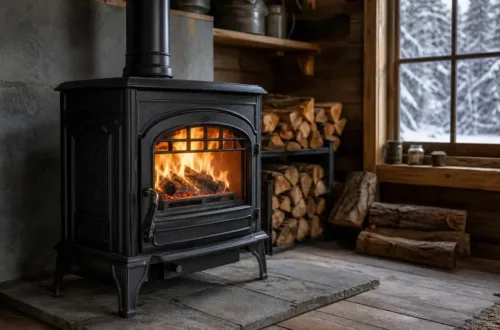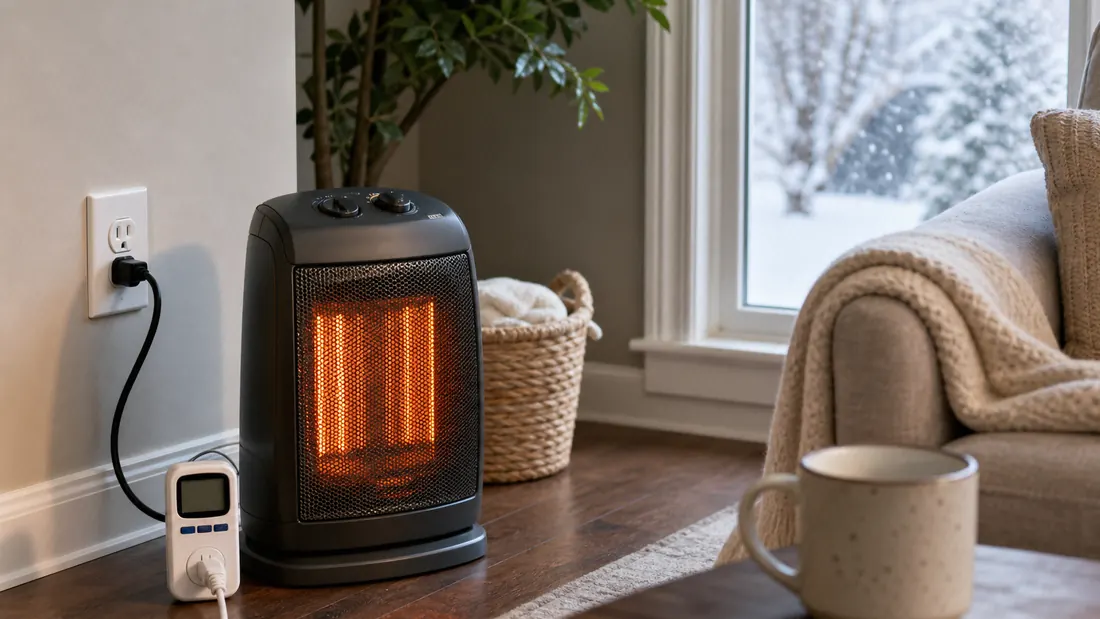
When people search for the Most Energy Efficient Heater, they are usually trying to solve a practical problem: staying warm without pushing the electric bill too far up. The answer depends less on a single product and more on how the heater will be used. A low-wattage personal heater can be efficient for one desk or small bedroom, while a larger room heater with an accurate thermostat may waste less power over time because it cycles on and off more intelligently.
The picks below were selected for different heating needs, room sizes, and noise preferences. Some focus on quiet, steady warmth. Others are better for quick spot heating, small rooms, or wall-mounted use that avoids floor clutter. If energy use is your main concern, the most useful comparison is not just wattage. It is how much space each heater can reasonably warm, how precisely it controls temperature, and whether it matches the room you actually need to heat.
Quick Answer
If you want the most energy efficient heater for a small personal space, a 400W or 500W model is usually the better fit than a full-size 1500W heater. If you need to warm a larger room, look for a heater with an accurate thermostat, ECO mode, or oscillation so it does not run harder than necessary. Wall-mounted and oil-filled radiators are often stronger choices for steady, targeted heating, while compact ceramic heaters are better for short-term spot warmth.
Comparison Table
| Product | Type | Best Use | Energy-Saving Trait |
|---|---|---|---|
| PELONIS Radiator Heater | Oil-filled radiator | Quiet, steady heat for larger rooms | Lower heat modes and long-lasting radiant warmth |
| DREO Space Heater with Thermostat and Remote | PTC ceramic | Bedrooms, offices, everyday indoor use | Precise thermostat and ECO mode |
| Amazon Basics Ceramic Space Heater | Mini ceramic | Small desks and very tight spaces | 500W output for spot heating |
| Dreo 1500W Space Heater with Oscillation | PTC ceramic | Large rooms | ECO mode and wide oscillation |
| Amazon Basics Ceramic Portable Mini Space Heater | Mini ceramic | Budget desk heating | Low-wattage personal heating |
| ASNUG Space Heater | Mini ceramic | Quiet personal warmth | 500W draw and simple operation |
| Envi Plug-in Electric Panel Wall Heater | Wall-mounted panel | Continuous room heating | Low wattage and silent convection |
| Gaiatop Mini Space Heater | Mini ceramic | Portable spot heating | Fast heat at 500W |
| WINHL Small Portable Electric Heater | PTC ceramic | Small rooms with remote control needs | ECO-friendly thermostat control |
Our Top Picks
These heaters are not ranked as a single best-to-worst list. Each one serves a different kind of room, budget, or heating habit. The most energy efficient heater for you will depend on whether you need steady background warmth, brief desk-level heat, or broader coverage from a thermostat-controlled unit that avoids unnecessary runtime.
PELONIS Radiator Heater for Large Space, Electric Oil Filled Radiator

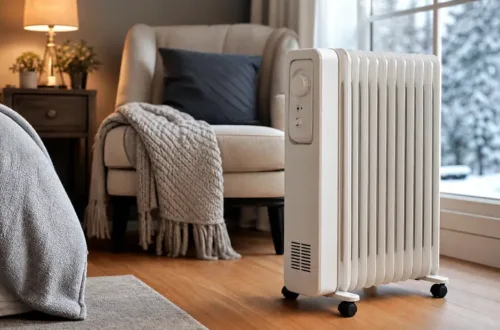
The PELONIS oil-filled radiator is a good option for readers who want steady heat without fan noise. Oil-filled heaters do not blow hot air in the same way as ceramic models, so the warmth tends to feel more even and less drying. With 600W, 900W, and 1500W settings, it gives you some control over how much power it uses depending on the room and the weather. The design is also well suited to bedrooms or offices where quiet operation matters.
What makes this model worth considering is the balance between comfort and practical control. It is not the fastest heater on this list, but it is often the kind of heater people can run more predictably because it maintains warmth steadily once the oil is heated. That makes it a sensible choice for larger spaces where you want longer-lasting heat rather than short bursts. The built-in tip-over and overheat protection also add reassurance, and the casters make it easier to move between rooms.
Pros:
- Quiet operation with no fan noise
- Three power settings for more flexible energy use
- Gentle, steady heat that is less drying than forced air
- Suitable for bedrooms, offices, and larger rooms
- Built-in safety features and easy mobility
Cons:
- Warms more slowly than ceramic heaters
- Bulkier than compact desk heaters
- Best for steady heating, not quick spot warmth
This is a practical choice if you want a quiet heater that can run at a lower setting for long periods without constant adjustment. It fits people who care about comfort and energy use, but do not need instant heat from a fan-driven unit.
Best for: Quiet, steady heating in medium to large rooms
DREO Space Heater with Thermostat and Remote

This DREO model is aimed at readers who want tighter temperature control in a compact indoor heater. It uses a 1500W PTC ceramic system, but the important feature for energy use is the thermostat range, which can be set in 1-degree increments. That kind of control matters because a heater that reaches the target temperature and then backs off can be more efficient in daily use than one that simply stays on. It also includes ECO mode, which is useful when you want the heater to manage output more intelligently.
It stands out because it combines quick heat with useful convenience features. The remote, timer, child lock, and multiple modes make it easier to use in a bedroom or office without keeping the unit on longer than needed. The 34dB noise level is another plus for people who want a heater that does not dominate the room. Compared with the oil radiator, this one is faster to respond. Compared with the small 500W desk heaters, it covers a room more effectively while still giving you decent control over energy use.
Pros:
- Precise thermostat control with 1-degree adjustments
- ECO mode helps reduce unnecessary runtime
- Quiet enough for bedrooms and workspaces
- Remote control and timer improve convenience
- Good balance of quick heat and energy control
Cons:
- Still uses up to 1500W, so it is not a low-wattage heater
- Not as steady or silent as a fan-less radiator
- Better for rooms than for very small personal spaces
If you want a compact heater that reacts quickly but also gives you more control over power use, this is one of the more practical choices. It suits people who want efficient short-to-medium heating without giving up modern convenience features.
Best for: Bedrooms, offices, and users who want precise thermostat control
Amazon Basics Ceramic Space Heater, Portable Mini Heater

This small Amazon Basics heater is designed for close-range warmth rather than whole-room heating. At 500W, it uses far less power than a standard 1500W space heater, which makes it a reasonable choice when you only need heat at a desk, beside a chair, or in another tight area. Its compact size and light weight make it easy to move, and the ceramic element provides quick warmth for brief use sessions.
Its main advantage is simplicity. There are no complex controls to learn, and the low power draw helps keep it in the category of practical personal heaters instead of room heaters that cycle on and off more aggressively. That said, it is not meant to replace central heat or warm a larger bedroom. It earns a place here because some readers do not need a more powerful unit. They need a heater that gives a small, focused comfort zone without using more electricity than necessary.
Pros:
- Low 500W power draw for personal heating
- Very compact and easy to move
- Quick ceramic heat for small areas
- Tip-over protection adds a basic safety layer
- Good fit for desks and tight spaces
Cons:
- Too small for most rooms
- Limited heating range compared with larger models
- Best for short-range use, not all-day room heating
This heater makes sense when energy efficiency means using the smallest practical amount of power for the smallest practical area. It is a modest, sensible choice for one-person heating needs.
Best for: Desks, small work areas, and tight personal spaces
Dreo Space Heater, 1500W Electric Heater with Thermostat

This Dreo heater is built for people who need stronger coverage in a larger room but still want some control over energy use. It offers 1500W PTC ceramic heating, a thermostat, ECO mode, and 70-degree oscillation. Those features work together to spread heat more evenly so the heater does not have to concentrate all of its output in one direction. In a larger bedroom, basement, or living room, that can make the heat feel more usable without constant manual adjustment.
The main reason it belongs in a discussion of the most energy efficient heater options is that efficiency is not always about the lowest wattage. Sometimes it is about using heat well. A heater with good oscillation and an accurate sensor can reduce waste by maintaining temperature more smoothly. This model also has a strong safety package and a quiet operating level, which makes it easier to leave on in a room where people are sleeping, studying, or working. It is a more capable choice than the 500W desk heaters when the room itself is the goal.
Pros:
- Good for larger rooms that need broader coverage
- ECO mode helps regulate power use
- 70-degree oscillation improves heat distribution
- Quiet enough for bedrooms and offices
- Strong safety features and ETL certification
Cons:
- Uses full 1500W when operating at higher output
- Not the most efficient choice for very small spaces
- Needs direct wall outlet use, so placement is more limited
If your room is too large for a tiny heater but does not need a permanent wall unit, this is a balanced middle ground. It gives you room-scale heating with more control than a basic high-output model.
Best for: Large bedrooms, living rooms, and shared indoor spaces
Amazon Basics Ceramic Portable Mini Space Heater

This black Amazon Basics mini heater covers the same basic purpose as the white version, but it may appeal to readers who prefer a darker finish or a slightly different desk setup. It is another 500W ceramic heater, which keeps power use low compared with full-size space heaters. For a desk, nightstand, or small home office nook, that lower wattage can be enough to take the chill off without heating more space than needed.
It belongs on the list because many shoppers looking for the most energy efficient heater are really shopping for the smallest useful heater. In that situation, a simple 500W unit often makes more sense than a feature-heavy model. This one is lightweight, easy to relocate, and straightforward to operate. The trade-off is obvious: it will not handle a room, and it is mainly a personal comfort tool. Still, for readers who want the least complicated route to small-area warmth, it is a practical option.
Pros:
- Low power use for personal heating
- Compact and easy to place on a desk
- Lightweight for simple portability
- Quick heat response from ceramic coils
- Tip-over protection adds basic safety
Cons:
- Not suitable for larger rooms
- Limited controls compared with advanced heaters
- Best for short, focused use rather than continuous room heating
This is a practical budget pick for readers who want low-wattage warmth in a very small area. It does one job well, but that job is narrow.
Best for: Budget-friendly desk or personal heating
ASNUG Space Heater, Portable Electric 500W PTC Ceramic Heater

The ASNUG heater is another low-wattage option, but it focuses more clearly on quiet indoor use. At 500W, it keeps electricity demand modest while still providing quick PTC ceramic heat. The simple one-touch operation makes it easy to use in a bedroom, bathroom, or office, and the compact form means it does not take much space on or under a table.
Compared with some of the more feature-rich heaters, this model is stripped down in a useful way. There is less to manage, which can be helpful if you only want a small heater that starts quickly and stays unobtrusive. The safety features are appropriate for a mini heater, including tilt and overheat protection. It is not trying to warm a large room, and that honesty is part of its value. For someone focused on efficiency in a small zone, it is a reasonable, no-frills choice.
Pros:
- Very low 500W power use
- Quiet operation for bedrooms or offices
- Compact and easy to place
- Simple one-touch control
- Includes overheat and tip-over protection
Cons:
- Too small for room-wide heating
- Fewer features than remote-controlled models
- Best used as a personal heater only
This heater is a good fit if you want something basic, quiet, and light on power use. It is most useful when the heating target is a single person, not the whole room.
Best for: Quiet personal heating in small indoor spaces
Envi Plug-in Electric Panel Wall Heater

The Envi wall heater takes a different approach from portable fan heaters. Instead of pushing air with a fan, it uses a fan-less wall-mounted design that delivers quiet, gentle heat. That can make a real difference in rooms where noise is distracting or where floor space is limited. Its low-wattage operation is aimed at targeted comfort rather than rapid room-wide blasts, which is why it fits well in bedrooms, bathrooms, offices, and similar spaces where steady warmth matters more than speed.
Its most important advantage for efficiency is that it is designed to stay in one place and maintain comfort continuously. That makes it a stronger fit for people who need a room to feel consistently warm throughout the day, rather than only when a heater is turned on occasionally. The wall-sense safety feature and lack of moving parts also help reduce concerns about maintenance and accidental movement. It costs more than portable mini heaters, but the trade-off is a cleaner installation and a heating style that is easy to live with over time.
Pros:
- Low-wattage design supports steady heating
- Completely silent operation
- Wall-mounted format saves floor space
- No fan means less dust circulation
- Simple, maintenance-light design
Cons:
- Higher upfront cost than portable heaters
- Not intended for fast heat-up times
- Installation is less flexible than plug-and-move models
This is one of the more interesting choices for readers who want efficient warmth without clutter or fan noise. It makes sense for people who plan to heat the same room regularly and value steady comfort over portability.
Best for: Bedrooms, bathrooms, offices, and fixed-location heating
Gaiatop Mini Space Heater

The Gaiatop mini heater is a compact 500W ceramic unit aimed at people who want fast, local heat in a small footprint. The appeal here is straightforward: it takes up very little space, heats quickly, and keeps power use relatively low. That makes it a sensible choice for dorm rooms, small offices, and apartments where you only need a short burst of warmth near where you are sitting or working.
It earns a place on this list because it covers the same practical need as other mini heaters while offering a lightweight, easy-to-store design. The tip-over and overheat protections are standard but useful, and the quiet operation helps it work in shared or focused environments. It is not trying to compete with larger thermostatic heaters, which is exactly why it can be efficient for the right person. If the goal is small-space heating with minimal electricity use, this model fits that use case well.
Pros:
- Compact size for tight spaces
- 500W output keeps power use low
- Fast ceramic heating for quick warmth
- Quiet enough for desk or dorm use
- Basic safety features included
Cons:
- Not suitable for larger rooms
- Limited by the simplicity of a mini heater
- No advanced thermostat or remote control
This is a straightforward answer for readers who want a small heater that can be moved easily and does not draw much power. It works best as a personal comfort device rather than a room heater.
Best for: Dorms, apartments, and small personal spaces
WINHL Small Portable Electric Heater with Thermostat and Remote

The WINHL heater is meant for readers who want a compact unit with more convenience than a basic mini heater. It combines a 1500W ceramic system with a thermostat, remote, timer, and oscillation. Those features matter because they let the heater spread warmth more evenly and reduce the chance that it runs harder than needed. In a small bedroom or office, that can make it easier to keep the space comfortable without leaving the heater on full blast.
This model is more flexible than the fixed-output 500W personal heaters, but it also uses more power when the higher setting is needed. That trade-off is why it fits a different kind of buyer. If you want a heater that can serve as a small-room solution and still be adjusted from across the room, it is a practical middle ground. The safety features and ETL certification add reassurance, though you should still think of it as a room supplement rather than a whole-home heating answer.
Pros:
- Remote control adds convenience
- Oscillation helps spread warmth more evenly
- Thermostat and timer support better power management
- More room-capable than basic 500W mini heaters
- Multiple safety protections included
Cons:
- Uses more energy than low-wattage desk heaters
- Not as quiet or steady as a fan-less radiator
- Battery-powered remote requires separate batteries
This is a good fit if you want one heater that feels more capable than a mini desk unit but still stays relatively compact. It gives you useful controls that can help avoid unnecessary runtime.
Best for: Small rooms, offices, and users who want remote control convenience
Buying Guide: How to Choose the Most Energy Efficient Heater
Energy efficiency in a space heater is not just about choosing the lowest wattage. It also depends on how well the heater matches the room, how accurately it controls temperature, and how often you actually need the heat. A 500W heater can be efficient for one person at a desk, but inefficient if you expect it to warm an entire bedroom. Likewise, a 1500W model with good thermostat control may be more practical than a smaller heater that runs constantly.
Match the heater to the room size
The most common mistake is buying a heater that is too small for the space. Small heaters are efficient only when the area is small. For a desk, a dorm nook, or a personal work area, 400W to 500W can be enough. For bedrooms and larger living spaces, a heater with wider coverage, oscillation, or a better thermostat may use power more effectively because it reaches the target temperature faster and cycles less often.
Look for thermostat and ECO mode control
Thermostat control is one of the clearest signs that a heater can be used more efficiently. Instead of running continuously, the heater can stop once the room reaches the set temperature. ECO mode can make that process even more useful by adjusting output based on the room’s conditions. These features do not eliminate power use, but they help reduce waste.
Consider fan noise and heat style
Fan heaters often warm a room quickly, but they are not always the best option for quiet, long sessions. Oil-filled radiators and wall panel heaters usually provide gentler heat and can be more comfortable for overnight or extended use. If you need heat while sleeping or working, a quieter design may be more practical than a faster one.
Do not ignore safety and placement
Efficient heating should still be safe heating. Tip-over protection, overheat shutoff, and a direct wall outlet connection matter. Heaters should never be used with extension cords unless the manufacturer clearly allows it. Safety features do not make a heater use less electricity, but they do make regular use more reliable.
Common Mistakes When Choosing an Efficient Heater
- Choosing based only on wattage: Lower wattage is not always better if the heater cannot warm the space you need.
- Using a small heater for a large room: The heater may run constantly and still fail to keep the room comfortable.
- Ignoring thermostat quality: A heater that manages temperature well can waste less power than one with basic controls.
- Forgetting about noise: A heater that is efficient on paper may still be unpleasant to use if it is too loud.
- Overlooking placement: Wall-mounted and radiator-style heaters may fit some rooms better than portable units.
FAQ
What type of heater uses the least electricity?
For small personal spaces, low-wattage heaters around 400W or 500W usually use the least electricity. For larger rooms, efficiency depends more on thermostat control and room coverage than on wattage alone.
Are oil-filled heaters more energy efficient?
They can be efficient for steady, long-term warmth because they hold heat well and usually run quietly. They are not the fastest at heating a room, but they can be a good fit when you want consistent comfort.
Is a 1500W heater always inefficient?
No. A 1500W heater can still be a practical choice if it heats the space quickly and then cycles off through a thermostat or ECO mode. The key is whether it fits the room size.
Are wall heaters better than portable heaters?
They can be better for fixed rooms where you want continuous heat and less clutter. Portable heaters are usually more flexible, while wall units are often better for steady use in one location.
Final Recommendations
If your goal is the Most Energy Efficient Heater, start with the size of the space you actually need to warm. Small personal areas usually pair best with low-wattage mini heaters like the Amazon Basics, ASNUG, or Gaiatop models. For larger rooms, a thermostat-driven heater such as the DREO or WINHL models may be a better fit because it gives you more control over runtime. If you want quiet, steady heat in one room, the PELONIS radiator and Envi wall heater are both worth a close look.
The most efficient option is usually the one that matches the room, the noise level you can tolerate, and how often you plan to use it. Picking a heater that is too large or too small often wastes more energy than choosing a model with the right controls and coverage.