A heated hoodie can make a cold commute, outdoor shift, or afternoon at the stadium more comfortable, but heating-zone counts alone do not determine how useful it will be. Fit, battery weight, fabric thickness, controls, and weather protection all affect how the garment performs in everyday use.
Women also need to look closely at sizing. Most heated hoodies are sold as unisex garments, so the torso, shoulders, and sleeves may fit differently from a women-specific jacket. A close but comfortable fit generally transfers warmth more effectively than an oversized hoodie, while enough room for a base layer remains useful in colder conditions.
This guide compares eight options with distinct strengths, including lightweight pullovers, full-zip fleece hoodies, a weather-resistant women’s jacket, and a lower-cost model for shoppers who already own a compatible power bank.
Quick Answer
The Brimekey Heated Hoodie offers a useful balance of six heating areas, fleece comfort, a high-capacity battery, and full-zip convenience. Women who need more protection from wind and moisture should consider the Brimekey Women’s Heated Jacket instead, although it feels more like outerwear than a casual sweatshirt.
The Venustas Heated Hoodie is a straightforward premium pullover, while the ORORO Heated Hoodie is notable for its established battery system and manufacturer-stated wash-cycle durability. For lighter layering, the RCVICTY Heated Hoodie uses lower heat settings and a relatively simple pullover design.
- Balanced full-zip choice: Brimekey Heated Hoodie
- For wind and wet winter conditions: Brimekey Women’s Heated Jacket
- For independent hood heating: Qdreclod Heated Hoodie
- Premium pullover: Venustas Heated Hoodie
- For lightweight layering: RCVICTY Heated Hoodie
- For long-term garment care: ORORO Heated Hoodie
- For extensive heating controls and storage: GOTOBI Heated Fleece Jacket
- Lower initial cost: Earneo Heated Hoodie without Battery
Heated Hoodie Comparison
| Product | Best For | Heating Design | Material and Protection | Notable Trade-Off |
|---|---|---|---|---|
| Brimekey Heated Hoodie | Everyday winter use | Six zones, including arms, neck, back, and abdomen | Cotton-polyester fleece | Large battery may add pocket weight |
| Brimekey Women’s Heated Jacket | Wind, light precipitation, and outdoor activities | Six zones with separate body and arm controls | Fleece-lined softshell outerwear | Bulkier and less casual than a hoodie |
| Qdreclod Heated Hoodie | Head and neck warmth | Six zones with separate hood control | Cotton-polyester fleece blend | Unisex sizing requires careful measurement |
| Venustas Heated Hoodie | Casual pullover wear | Five zones across chest, back, and pocket | Simple pullover sweatshirt design | Higher price and no full-length zipper |
| RCVICTY Heated Hoodie | Layering and milder winter weather | Six zones with moderate temperature settings | Cotton exterior with fleece lining | Less heat output than higher-temperature models |
| ORORO Heated Hoodie | Regular wear and machine washing | Three core heating zones | Cotton exterior and fleece lining | Fewer zones and charger not included |
| GOTOBI Heated Fleece Jacket | Outdoor work and adjustable coverage | Eight zones with independent controls | Polar fleece with attached hood | Large 12V battery and longer charging time |
| Earneo Heated Hoodie | Shoppers who own a suitable power bank | Five-zone version with three settings | Polyester exterior and flannel-like lining | Battery is not included |
Heating time and temperature can vary with the selected setting, outdoor conditions, battery age, garment fit, and whether the hoodie is worn under a shell. Manufacturer temperature figures generally describe the heating system, not a guaranteed temperature against the skin.
How We Chose These Heated Hoodies
These recommendations were selected by comparing manufacturer specifications in areas that affect practical winter use. No single feature decided the list. A hoodie with more heating panels may offer broader coverage, but it can also require a larger battery and more controls. A simpler three-zone model may be easier to wear under a coat.
The primary evaluation factors were:
- Heating location: Core panels usually matter more than a high zone count. Chest, back, neck, arm, hood, and pocket heating serve different needs.
- Battery system: Capacity, voltage, expected runtime, charging requirements, and battery-pocket bulk were considered.
- Fit and layering: Unisex sizing, available size ranges, pullover versus full-zip construction, and room for base layers all affect comfort.
- Fabric and insulation: Fleece improves passive warmth, while lighter fabrics can be easier to layer and more comfortable during active use.
- Weather protection: Sweatshirt fleece is not a substitute for a windproof or waterproof shell. A softshell jacket is more appropriate when exposure is expected.
- Controls: Independent heating controls can save battery power and prevent one area from becoming uncomfortably warm.
- Care: Removable batteries and machine-washable construction make routine maintenance more manageable.
- Value: Battery inclusion matters. A low garment price may not represent a low total cost if a compatible power source must be purchased separately.
The products below are not arranged as a universal best-to-worst ranking. Each addresses a different combination of warmth, weather exposure, layering, battery capacity, and budget. Compare the intended uses and limitations rather than choosing solely by the number of heating zones.
Our Top Picks for Women
Brimekey Heated Hoodie: Balanced Full-Zip Choice

The Brimekey is a full-zip, fleece-lined hoodie made from a cotton-polyester blend. Its six carbon-fiber heating areas cover the arms, neck, back, and abdomen near the pockets. That distribution is useful for women who want more than basic chest and back heating, particularly when cold arms or hands are a recurring problem. Three controls on the chest adjust the available heat levels. A 7.4V, 20,000mAh rechargeable battery is included, and its digital display provides a more useful indication of remaining power than a simple row of lights. The hoodie is listed in sizes S through 3XL, but shoppers should compare body measurements with the product chart because the cut is unisex.
This model offers a practical middle ground between a casual sweatshirt and a more technical heated jacket. Its fleece provides passive insulation when the power is off, and the zipper makes it easy to vent indoors or remove without pulling it over the head. The large battery supports extended use, but capacity comes with extra weight and bulk in the battery pocket. The fabric also lacks the weather protection of a dedicated winter shell. It should work well for commuting, spectator events, or low-intensity outdoor tasks, with a wind-resistant layer added when conditions demand it.
Pros:
- Six heating areas include the arms, neck, back, and abdomen
- Large 7.4V, 20,000mAh battery is included
- Battery display makes remaining charge easier to monitor
- Full zipper allows quick ventilation and easier removal
- Machine-washable construction simplifies routine care
Cons:
- High-capacity battery may feel heavy in the pocket
- Fleece sweatshirt fabric offers limited wind and moisture protection
The Brimekey combines broad heating coverage with practical everyday features. It is most suitable for moderate activity and situations where a traditional hoodie feels comfortable but does not provide enough warmth. For exposed winter weather, treat it as an insulating midlayer rather than a protective outer shell.
Best for: Women seeking a versatile full-zip heated hoodie for commuting, outdoor events, and everyday cold-weather wear.
Brimekey Women’s Heated Jacket: For Wind and Wet Weather
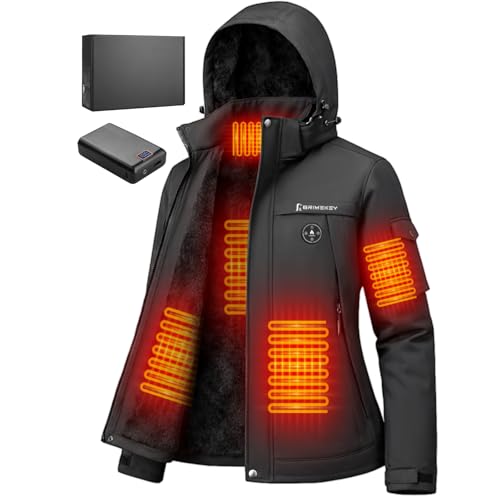
This Brimekey garment is technically a women’s heated softshell jacket rather than a standard sweatshirt hoodie. That distinction makes it worth considering when wind and precipitation are greater concerns than casual indoor comfort. Its fleece-lined shell, adjustable hood, and covered upper body provide more protection than exposed cotton-blend fleece. Six heating areas are positioned at the arms, back, rear neck, and pockets. Separate controls allow the body and arm sections to operate independently at three heat levels. The included 7.4V, 20,000mAh battery has a percentage display and supports compatible fast-charging methods, according to the manufacturer.
The women-specific design may be more appealing to shoppers who find unisex hoodies too broad through the shoulders or too straight through the torso, although the size chart should still determine the final choice. Its weather-ready shell makes it better suited to hiking, fishing, outdoor work, and winter travel than ordinary fleece. The trade-off is reduced indoor versatility. The shell, lining, heating system, and large battery will feel more substantial than a lightweight sweatshirt. It may also become warm during high-output activities, so the independent controls and front zipper are useful for regulating heat.
Pros:
- Women-specific heated outerwear design
- Softshell construction offers better wind and moisture protection than sweatshirt fleece
- Separate body and arm controls allow targeted heating
- Heated pockets can warm the hands during low-activity use
- Large battery includes a digital charge display
Cons:
- Bulkier and less breathable than a casual heated hoodie
- Large battery can add noticeable weight
This jacket is the stronger option when exposure matters more than sweatshirt styling. It provides insulation, powered warmth, and a protective shell in one garment. Women who mainly want something for the office or home may find it unnecessarily substantial, but it is more practical than fleece in windy or damp conditions.
Best for: Women who need heated outerwear for outdoor work, winter walks, hiking, fishing, or changeable weather.
Qdreclod Heated Hoodie: Best for Hood Heating
The Qdreclod focuses on the upper torso, neck, and head. Its six heating areas include the left and right chest, mid-back, neck, and both sides of the hood. Two controls separate the main garment from the heated hood, so users can warm both sections or preserve battery power by running only one. The included 7.4V, 16,000mAh battery supplies three selectable settings. A cotton-polyester fleece blend provides some insulation without power, although the manufacturer describes this hoodie as thinner than many heated garments. Sizes run from S through XXL, and the unisex chart should be checked carefully for chest, shoulder, and sleeve dimensions.
Heated hood panels distinguish this model from hoodies that concentrate exclusively on the torso. That layout may appeal to women who spend time standing outdoors, watching sports, or commuting in cold wind. It is less compelling for active hiking, where heating around the head could become uncomfortable and moisture management matters more. The thinner construction can be beneficial under a jacket, but it offers less passive warmth when the battery is depleted. Because the material is still sweatshirt fleece, a shell remains advisable for wind, snow, or rain.
Pros:
- Heating areas extend into both sides of the hood
- Separate hood and body controls improve flexibility
- Three temperature settings accommodate changing conditions
- Included 7.4V, 16,000mAh battery provides a complete system
- Thinner fabric is easier to use as a midlayer
Cons:
- Less passive insulation than thicker fleece hoodies
- Head heating may feel excessive during active movement
The Qdreclod is a specialized choice for people who value head and neck heat. Its independent controls make that feature more practical because the hood does not need to remain powered continuously. The lighter fabric is useful for layering, but it should not be mistaken for weather-protective outerwear.
Best for: Cold-sensitive commuters, spectators, and outdoor users who specifically want adjustable hood heating.
Venustas Unisex Heated Hoodie: Premium Pullover

The Venustas is a classic pullover with five carbon-fiber heating areas across the chest, mid-back, and front pocket region. One button cycles through three settings. Its compact 36Wh battery is rated by the manufacturer for up to 10 hours on low, six hours on medium, or three hours on high, although actual runtime will depend on ambient temperature and battery condition. The understated heather-gray design resembles an ordinary casual hoodie, making it easier to wear at home, around town, or at an outdoor event without the appearance of technical outerwear.
This model costs more than many generic heated pullovers, but it offers a streamlined design and a clearly stated runtime for each setting. Pocket-area heating is useful when hands are cold, while the chest and back panels address core warmth. A pullover can retain heat with fewer zipper gaps, but it is less convenient to ventilate or remove than a full-zip hoodie. It also remains a casual sweatshirt rather than a wind-blocking shell. Women should consult the unisex size chart and consider whether they want a closer fit for heat transfer or extra room for a base layer.
Pros:
- Five heating areas cover the chest, back, and pocket region
- Compact battery is less cumbersome than many high-capacity packs
- Manufacturer provides runtime estimates for all three settings
- Simple styling works well for casual and indoor use
- Pullover construction minimizes interruption across the front
Cons:
- Higher price than many comparable unisex pullovers
- No full zipper for quick ventilation
The Venustas is most appealing to women who prefer a traditional pullover and are willing to pay more for a compact battery system and simple appearance. It is appropriate for low-intensity everyday use, but shoppers who prioritize extensive controls or weather resistance should choose a different style.
Best for: Casual wear, outdoor gatherings, chilly homes, and shoppers who prefer an understated pullover.
RCVICTY Heated Hoodie: Lightweight Layering Option
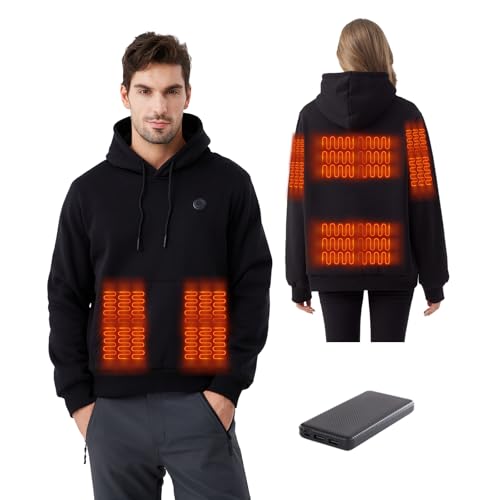
The RCVICTY combines a cotton exterior with a fleece lining in a relaxed pullover design. Six heating areas are placed across the mid-back, arms, and front pockets. Its three listed settings reach 104°F on low, 113°F on medium, and 122°F on high, which are more moderate than the maximum figures advertised for several other models. That can be an advantage for layering or extended indoor wear because the heating system is less likely to feel overly intense. Ribbed cuffs and an adjustable hood help retain warmth, and available sizes run from S through 3XL.
This hoodie is better aligned with cool fall days, mild winters, and use beneath a separate coat than prolonged exposure to severe cold. Its relaxed unisex shape should allow movement and layering, but petite shoppers may find the sleeves or torso roomy. The pullover format is simple and comfortable for sitting at a game, working in a cool room, or taking a low-intensity walk. It is listed as machine washable after battery removal. As with other fleece hoodies, the garment provides little assurance against sustained wind or precipitation on its own.
Pros:
- Six zones warm the back, arms, and pocket area
- Moderate settings suit layering and less severe conditions
- Relaxed pullover design allows comfortable movement
- Size range extends through 3XL
- Machine washable after removing the battery
Cons:
- Maximum listed setting is lower than several competing models
- Relaxed unisex proportions may fit loosely on smaller frames
The RCVICTY prioritizes comfortable, moderate heat rather than the highest advertised temperature. It makes sense as an insulating midlayer or casual sweatshirt in less severe weather. Women needing stronger output, a fitted silhouette, or weather protection should look to a full-zip jacket instead.
Best for: Mild winters, indoor use, casual walks, and layering beneath a wind-resistant coat.
ORORO Heated Hoodie: Practical for Regular Wear
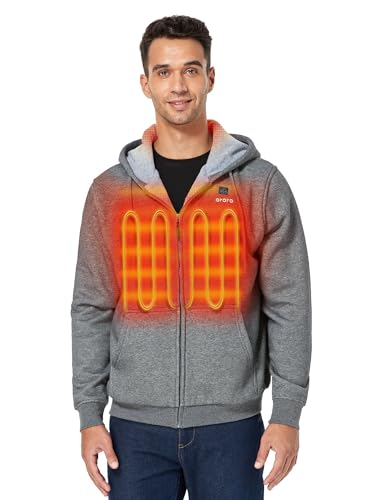
The ORORO uses three carbon-fiber elements at the left chest, right chest, and mid-back. That is less coverage than most models in this guide, but the placement concentrates heat around the core rather than adding panels to the hood or arms. Its cotton exterior and fleece lining create a familiar full-zip sweatshirt feel, while three heating settings provide basic temperature control. The included 7.38V UL-certified battery is rated for up to 10 hours, and its USB port can charge a phone in an emergency. The listing states that the charger is not included, so buyers should verify what charging equipment they need before ordering.
ORORO says the heating elements and garment are designed to withstand more than 50 machine-wash cycles. That manufacturer claim makes the hoodie relevant for frequent users who expect regular laundering, although care instructions still need to be followed closely. The full zipper helps with ventilation and layering, and the hoodie can be worn beneath a lightweight shell to retain heat. Its primary drawbacks are the premium price and limited coverage. Women who want heated pockets, sleeves, or a hood will get more functional area from another model.
Pros:
- Heating panels focus on the chest and mid-back
- Full-zip construction is easy to layer and ventilate
- UL-certified battery is included
- Manufacturer states that the garment can endure more than 50 wash cycles
- Battery includes a USB port for mobile-device charging
Cons:
- Only three heating areas
- More expensive than many broader-coverage hoodies
The ORORO favors a straightforward core-heating layout and established care specifications over a long feature list. It is a sensible option for regular casual wear, provided the limited heating coverage is sufficient. Check charging requirements and the unisex sizing chart before purchase.
Best for: Regular commuters and casual users who value full-zip convenience and stated wash-cycle durability.
GOTOBI Heated Fleece Jacket: Extensive Controls and Storage

The GOTOBI is a full-zip polar-fleece jacket with an attached hood, heated collar, chin guard, and eight pockets. Eight carbon-fiber zones warm the back, neck, abdomen, and arms. Three control buttons manage different groups of panels, while a master button turns the complete system on or off. Each area includes an NTC temperature sensor intended to regulate output. Power comes from an included 12V, 18,400mAh battery with a charge display and USB phone-charging port. The manufacturer lists approximate runtimes of 3.5 hours on high, 5.5 hours on medium, and nine hours on low.
Independent control and extensive storage make this model particularly useful for outdoor work, fishing, camping, and other low-to-moderate activity where users carry small items. The heated collar and hood design also provide more coverage around the neck than a basic sweatshirt. However, the large 12V battery requires about six hours for a full charge and may be more noticeable than a compact pack. Polar fleece offers insulation and breathability, but it does not provide the weather barrier of a softshell or rain shell. Add an appropriate outer layer in wind, snow, or rain.
Pros:
- Eight heating zones cover the arms, abdomen, neck, and back
- Independent controls allow users to limit power to selected areas
- Temperature sensors help regulate individual heating areas
- Eight pockets provide substantial storage
- Battery display and setting-specific runtime estimates aid planning
Cons:
- Large 12V battery may feel heavy during active movement
- Six-hour listed charging time requires advance planning
The GOTOBI offers more control and storage than a typical casual heated hoodie. It is a strong candidate for stationary or low-output outdoor activities, especially when different body areas need different heat levels. Its battery size and fleece construction make it less appealing for fast-paced exercise or compact travel.
Best for: Outdoor work, camping, fishing, and users who want independently controlled heating areas and multiple pockets.
Earneo Heated Hoodie: Lower-Cost Option Without a Battery

The Earneo is a USB-powered heated garment with a polyester exterior and soft flannel-like lining. The listed five-zone version distributes carbon-fiber heating wires across areas that include the chest, back, and arms, with three selectable heat levels. Its low garment price is partly explained by a major omission: no battery or power bank is included. Buyers must supply a compatible unit that meets the garment’s electrical requirements. This makes the hoodie most relevant to someone who already owns an appropriate power bank or is comfortable verifying voltage, output, connector type, and physical dimensions before use.
Excluding a battery can reduce replacement costs and let users choose their preferred capacity, but compatibility should not be assumed merely because a power bank has a USB port. The power source must satisfy the manufacturer’s specifications and fit securely in the garment pocket. Total cost can approach that of a battery-included hoodie once a suitable pack is purchased. Product descriptions also contain less detailed sizing and runtime information than the stronger alternatives in this guide, so buyers should review the current listing carefully before selecting a size.
Pros:
- Lower initial garment price
- Five-zone layout offers broader coverage than some core-only systems
- Three heat settings provide basic adjustment
- Allows users to select their own compatible power-bank capacity
Cons:
- Battery or power bank is not included
- Compatibility requires careful verification
The Earneo is not the simplest first heated hoodie because it requires a separate power source. It can be economical for someone who already owns a verified compatible battery, but most buyers will find a complete battery-included system easier to evaluate and use safely.
Best for: Budget-conscious shoppers who already have a compatible power bank and understand the required electrical specifications.
How Heated Hoodies Work
A heated hoodie contains thin resistive elements, commonly made with carbon-fiber materials, sewn or laminated into selected areas. A rechargeable battery sends electrical current through those elements, converting energy into heat. The panels do not heat every inch of the garment. Instead, they warm targeted locations such as the chest, back, neck, abdomen, arms, pockets, or hood.
Heating the torso can make the entire body feel more comfortable, but panel placement should match the intended use. Chest and back zones are practical for most people. Heated arms may benefit someone working with limited movement, while pocket panels can warm hands between tasks. Hood panels are useful for stationary outdoor use but may become too warm during exercise.
The fleece or lining remains important even after heating elements are added. Insulating fabric slows heat loss, while an outer shell can reduce the effect of wind. In exposed conditions, a heated sweatshirt under a wind-resistant or waterproof shell will usually retain warmth more effectively than the same sweatshirt worn by itself.
How to Choose the Best Heated Hoodie for Women
Check the Fit, Not Just the Gender Label
Most models are unisex. That may mean a straighter torso, broader shoulders, longer sleeves, or a roomier waist than women-specific clothing. Read the actual garment measurements whenever they are available. Do not rely only on the letter size you normally wear.
A heated hoodie should sit close enough for warmth to reach the body, but it should not compress base layers or restrict shoulder movement. If it hangs loosely, air gaps can reduce the perceived effect of the panels. If it fits too tightly, the battery, wiring, and heating areas may feel uncomfortable.
Measure the chest and compare it with the size chart. Sleeve length, hip circumference, and garment length are also relevant, particularly for women with a curvier build or a petite frame. If choosing between two sizes, consider whether the hoodie will be worn over a thin base layer or several thicker garments.
Match Heating Zones to the Activity
More zones can improve coverage, but placement matters more than the raw count. Eight small back panels are not automatically more useful than three larger core panels. Consider where you typically feel cold:
- Chest and back: Suitable for most everyday situations.
- Neck and collar: Helpful in wind or during stationary activities.
- Arms: Useful for outdoor work or prolonged low-intensity exposure.
- Abdomen and pockets: Helpful for hand warming and general comfort.
- Hood: Best for spectators, commuting, and other low-output use.
Independent controls add value when zones serve different purposes. They let the wearer turn off the hood indoors, reduce arm heat during walking, or run only the core panels to conserve power.
Consider Battery Weight as Well as Capacity
A large-capacity battery can extend runtime, but it also occupies more pocket space and adds weight to one side of the garment. That imbalance may not matter while sitting or standing, but it can become noticeable during hiking, bending, or repetitive work.
Voltage and capacity figures should not be compared in isolation. A higher-voltage system can deliver power differently from a standard USB system, and milliamp-hour ratings are not directly comparable across different voltages without considering watt-hours. Manufacturer runtime estimates at each setting are often more useful than capacity alone.
For a full day away from electrical outlets, longer runtime or a spare compatible battery may be important. For a short commute, a smaller battery can be more comfortable. Confirm whether the battery and charger are included, since listings vary.
Choose Pullover or Full-Zip Construction
A pullover offers a familiar casual look and has no full-length zipper interrupting the front. It can work well at home, at a sporting event, or beneath an outer coat. However, it is slower to remove and harder to ventilate when moving between cold and heated environments.
A full-zip hoodie is more adaptable for commuting and layering. Opening the zipper releases heat quickly, and the garment is easier to put on without disturbing hair, glasses, or other layers. The zipper can create a small interruption in insulation, but that is usually a reasonable trade-off for versatility.
Do Not Confuse a Hoodie With a Winter Shell
Cotton, polyester, and fleece sweatshirts can provide insulation, but most do not block strong wind or sustained precipitation. Heating elements cannot compensate fully for cold air passing through a porous fabric. They also do not make the garment waterproof.
For dry, calm conditions, a heated hoodie may work as the outer layer. In wind or snow, add a compatible shell. For wet conditions, choose a jacket whose manufacturer clearly specifies appropriate weather protection. Even then, follow care instructions and keep battery connections protected.
Balance Warmth With Breathability
Heated clothing is generally most useful during low-output activity. Commuting, operating equipment, watching outdoor sports, fishing, and standing at a worksite generate limited body heat. Powered panels can fill that gap.
During running, steep hiking, or other vigorous activity, the same hoodie may trap sweat and cause overheating. Moisture against the skin can lead to rapid cooling after activity stops. Start on the lowest setting and turn the system off before becoming sweaty. A moisture-managing base layer is preferable to cotton next to the skin during active winter use.
Review Care Requirements
Many heated hoodies are machine washable, but the battery must be removed first. The connector should be secured as directed, and the garment may need to be placed in a laundry bag. Use the cycle, water temperature, and detergent specified by the manufacturer.
Do not wring, dry clean, iron, or machine dry a heated garment unless the care label explicitly allows it. Air drying is commonly recommended because high heat can damage wiring, connectors, coatings, or fabric. Never reconnect the battery until the hoodie and its power port are completely dry.
Heated Hoodie Safety
Heated clothing should be used only with a compatible battery and connector. A power bank that physically plugs in is not necessarily electrically appropriate. Follow the manufacturer’s voltage and output requirements, and avoid improvised adapters.
- Inspect the cable, battery, connector, and fabric before each use.
- Stop using the garment if one area becomes unusually hot.
- Do not use a swollen, cracked, leaking, or damaged battery.
- Keep the battery dry and away from open flame or high heat.
- Remove the battery before washing or storing the hoodie.
- Do not fold the garment sharply across heating elements during storage.
- Use a low setting initially, especially under an insulated coat.
- Follow any restrictions in the manual regarding sleep, medical devices, reduced skin sensation, pregnancy, or use by children.
People who cannot reliably sense heat may not notice a hot spot soon enough to prevent injury. Anyone with circulation concerns, neuropathy, an implanted medical device, or another relevant health condition should seek medical guidance before using electrically heated clothing.
Common Buying Mistakes
Choosing by Maximum Temperature Alone
The highest listed temperature does not tell you how evenly the garment warms, how that figure was measured, or whether the setting will be comfortable against the body. Panel location, fabric insulation, fit, and wind exposure are often more important.
Ignoring Battery Bulk
Large batteries look attractive on a specification sheet, but a heavy pack can pull at a hoodie pocket. Think about how long you realistically need powered heat and whether a lighter battery would be more comfortable.
Buying an Oversized Hoodie for Layering
Extra room helps accommodate layers, but too much space separates the heating panels from the body. A thin base layer under a correctly fitted hoodie is generally more effective than several bulky garments beneath an oversized heated sweatshirt.
Expecting Sweatshirt Fabric to Stop Wind
Fleece may feel warm indoors while losing heat quickly in outdoor wind. Add a shell or choose a weather-resistant heated jacket when the garment will be exposed to severe conditions.
Assuming the Battery and Charger Are Included
Some listings include both items, some include a battery but omit the charger, and others provide only the garment. Check package contents and replacement-battery availability before comparing prices.
Frequently Asked Questions
What is the best heated hoodie for women?
The most suitable choice depends on fit, weather, and activity. The Brimekey Heated Hoodie is a balanced full-zip option with six heating areas and a large included battery. Women who need a protective outer layer may be better served by the Brimekey Women’s Heated Jacket. The Venustas is a simpler premium pullover, while the RCVICTY is better suited to moderate heat and layering.
Should a heated hoodie fit tightly?
It should fit close enough to reduce large air gaps, but it should not be skin-tight. You need room for a thin base layer and unrestricted arm movement. Compression against the wiring or battery pocket can be uncomfortable. Since many designs are unisex, use garment measurements rather than ordering automatically by your usual women’s size.
Can a heated hoodie replace a winter coat?
Usually not. Most heated hoodies provide insulation and targeted warmth but limited protection from wind, rain, and wet snow. They work best alone in calm, dry, cool weather or as a midlayer beneath a suitable shell. A heated softshell jacket is more appropriate when greater weather protection is required.
How long does a heated hoodie battery last?
Runtime varies by battery capacity, voltage, heat level, outdoor temperature, and battery condition. High settings draw power faster than low settings. Manufacturer claims range from several hours on high to around a full day on low for some models, but those figures should be treated as estimates rather than guarantees.
Can you wash a heated hoodie?
Many models are machine washable after the battery is removed, but instructions differ. Secure the connector, use a laundry bag if required, and follow the garment label. Do not reconnect power until every part is completely dry. Avoid machine drying unless the manufacturer specifically permits it.
Are heated hoodies safe in rain or snow?
The electrical components may have protective construction, but that does not mean the entire hoodie is waterproof. Do not expose ordinary sweatshirt fleece to sustained precipitation. Use a waterproof shell where appropriate, protect the battery connection, and follow the product manual regarding moisture exposure.
Can I use any USB power bank?
No. The power bank must match the garment’s required voltage, current output, connector, and other manufacturer specifications. Using an incompatible source may prevent the hoodie from working and could damage the heating system or battery. Use the included pack or a replacement specifically approved for that model.
Is a heated hoodie useful for hiking?
It can be useful during rest stops, low-intensity walking, or cold starts. During steep or fast hiking, powered fleece may reduce breathability and contribute to sweating. Use the lowest setting, ventilate early, and carry a weather-appropriate shell. A heated hoodie should not replace a complete layering system.
Final Recommendations
For a general-purpose heated sweatshirt, the Brimekey Heated Hoodie combines broad coverage, full-zip convenience, and a large battery. The Brimekey Women’s Heated Jacket is the more practical choice when wind and moisture exposure justify a protective shell.
Choose the Qdreclod if hood heating is a priority, the Venustas for a streamlined premium pullover, or the RCVICTY for milder conditions and layering. The ORORO suits regular casual wear, while the GOTOBI provides more controls and storage for outdoor tasks.
Before ordering, compare body measurements with the correct size chart, confirm what charging equipment is included, and decide whether the hoodie will be worn alone or under a shell. The best heated hoodie for women is the one that fits closely without restricting movement, places heat where it is useful, and matches the actual weather rather than relying on electrical warmth alone.