Choosing the best pellet stove is less about finding one model with the highest heating claim and more about matching the stove to your home, fuel routine, and tolerance for maintenance. A stove that works well in a 1,000 square foot cabin may be frustrating in a drafty open-plan house, while an oversized unit can cycle inefficiently in smaller spaces. Hopper size, control options, venting requirements, cleaning access, and backup power considerations all matter just as much as raw output.
For most buyers in 2026, the strongest pellet stove options are the Cleveland Iron Works Bayfront Pellet Stove for balanced whole-room heating, the US Stove 3,000 Sq. Ft. Pellet Stove for larger spaces and longer burn times, and the Castle Serenity Pellet Stove for smaller homes that need easier controls and simpler cleaning. If you want a non-electric design, the US Stove Wiseway fills a very different niche. The right pick depends on square footage, noise expectations, power reliability, and how often you want to refill pellets.
Quick Answer
The best pellet stove for many households is a mid-to-large hopper model with enough heating range for the coldest days in your area, not just average conditions. In this group, the Cleveland Iron Works Bayfront offers a practical mix of heating coverage, hopper capacity, and smart controls. Buyers with larger homes may get more value from the US Stove 3,000 Sq. Ft. model because its 170-pound hopper can reduce refilling frequency. For smaller spaces and simpler upkeep, the Castle Serenity remains one of the more sensible choices.
Comparison Table
| Product | Heating Coverage | Hopper Size | Notable Strength | Best Match |
|---|---|---|---|---|
| Cleveland Iron Works Bayfront Pellet Stove | 1,800 to 2,500 sq. ft. | 66 lb. | Balanced performance with WiFi | Most medium to large homes |
| US Stove 3,000 Sq. Ft. Pellet Stove | Up to 3,000 sq. ft. | 170 lb. | Very large hopper and long runtime | Larger homes and fewer refills |
| Cleveland Iron Works Medium Pellet Stove | 1,500 to 2,200 sq. ft. | 60 lb. | Strong mid-size option with WiFi | Average-size homes |
| Castle Serenity Pellet Stove | Up to 1,500 sq. ft. | 40 lb. | Flexible operating modes and easier cleaning | Smaller homes and scheduled heating |
| Mr. Heater Cleveland Iron Works Small Pellet Stove | 800 to 1,200 sq. ft. | 24 lb. | Compact heating with smart features | Small rooms, cabins, and zones |
| Canyon Lodge Small Pellet Stove | 800 to 1,200 sq. ft. | 24 lb. | Quiet blower, fresh air kit included | Mobile homes and quieter spaces |
| US Stove Wiseway Non-Electric Pellet Stove | Up to 2,000 sq. ft. | 60 lb. | Runs without household electricity | Backup heat and off-grid use |
How We Chose These Picks
These recommendations focus on home pellet stoves with a clear use case. Heating coverage, hopper capacity, control style, maintenance access, and installation suitability mattered more than marketing claims. We also prioritized variety so the list covers large homes, average living spaces, small rooms, and buyers who want a non-electric option.
Several products in the research list were not included as top picks because they were pellet fuel, accessories, cleaning tools, or outdoor camping stoves rather than primary indoor pellet stoves. That distinction matters. Someone searching for the best pellet stove for home heating usually needs a residential appliance, not a tent stove or a maintenance add-on.
Our Top Picks
These pellet stoves were selected to fit different homes and heating priorities, not to force every buyer toward the same model. Some are better for larger floor plans, some are easier to live with in smaller spaces, and one is especially relevant if power outages are part of your winter planning. Compare the hopper size, control system, and coverage range before deciding, because daily convenience often matters as much as heating output.
Cleveland Iron Works Bayfront Pellet Stove
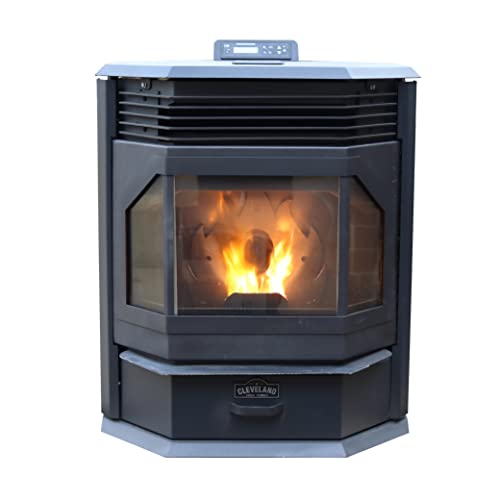
The Cleveland Iron Works Bayfront Pellet Stove is a strong all-around choice for buyers who need meaningful heat output without moving into the extra-large footprint and fuel capacity of the biggest residential models. According to the listed specifications, it is designed to heat roughly 1,800 to 2,500 square feet and uses a 66-pound hopper. That makes it better suited to medium and many larger living areas than small zone-heating stoves. Built-in WiFi is one of the main differentiators here, giving the Bayfront a more modern control approach than many basic pellet stoves in a similar price range.
What makes this model especially useful in a buying guide is its balance. It offers substantially more heating coverage than compact stoves, but it does not jump all the way to the oversized hopper and scale of heavier whole-home units. That makes it a practical middle ground for households that want fewer pellet refills, smart controls, and enough capacity for cold-weather use in a primary living area or open floor plan. Buyers should still confirm venting, hearth protection, and clearance requirements before purchase, but from a feature and size standpoint, this is one of the easiest models here to recommend broadly.
Pros:
- Good heating range for many medium and larger homes
- 66-pound hopper reduces refill frequency compared with smaller units
- Built-in WiFi adds convenience for monitoring and control
- More balanced size than very large hopper stoves
- Suitable for buyers who want a primary living-area heater rather than a small supplemental stove
Cons:
- Still too large for small rooms or compact cabins
- Requires electricity, so it is not a backup option during outages without additional power support
If you want one pellet stove that covers a lot of common needs without leaning too heavily toward either compact or oversized use, the Bayfront is a sensible place to start. It fits households that want real heating ability and a larger hopper, but do not necessarily need the bulk of the highest-capacity models.
Best for: Medium to large homes that want balanced heating coverage, a larger hopper, and smart controls.
US Stove 3,000 Sq. Ft. Pellet Stove

This US Stove model is built for buyers who place a high value on heating range and long runtime between refills. The published specifications list coverage up to 3,000 square feet, a 170-pound hopper, and up to 80 hours of operation, along with electronic ignition, top-mounted controls, upgraded ceramic glass, WiFi capability, and mobile home approval in the USA with an optional fresh air kit. On paper, that combination makes it the most ambitious whole-home heating option in this group.
The large hopper is the main reason it stands apart. Many pellet stove owners do not mind routine maintenance, but frequent refilling gets old quickly in long cold spells. A 170-pound capacity changes the day-to-day experience in a meaningful way, especially for larger homes or for users who rely on pellet heat heavily. The trade-off is predictable. This is a bigger, more imposing appliance that makes the most sense when you genuinely need the extra runtime or coverage. In a modest house, it may be more stove than necessary. But for larger layouts, colder regions, or buyers who want to reduce refill frequency, it fills an important role.
Pros:
- Very large 170-pound hopper supports long burn times
- Coverage up to 3,000 square feet suits larger homes
- Electronic ignition and top-mounted controls simplify daily use
- WiFi adds remote convenience
- Mobile home approval broadens installation possibilities when properly set up
Cons:
- Larger size may be excessive for smaller homes or single-room heating
- Higher pellet capacity usually means a heavier, bulkier stove to place and install
For buyers who want fewer refills and enough capacity to handle a larger footprint, this US Stove model is one of the clearest specialty picks in the category. It is less about compact convenience and more about sustained heating with a much bigger fuel reserve.
Best for: Large homes, longer runtimes, and households that want to refill pellets less often.
Cleveland Iron Works Medium Pellet Stove

The Cleveland Iron Works Medium Pellet Stove sits in a very practical part of the market. With stated heating coverage of 1,500 to 2,200 square feet and a 60-pound hopper, it targets households that need more than a small supplemental stove but do not require the largest units available. It also includes built-in WiFi, which helps separate it from more basic mid-size pellet stoves. For many buyers, this size class ends up being the most workable because it can heat a main living area and adjacent rooms without dominating the space quite as much as larger whole-home models.
Its main appeal is that it avoids extremes. Compared with the Bayfront, it gives up some top-end coverage and a bit of hopper capacity, but it may be easier to fit into homes where square footage and layout do not justify a larger appliance. Compared with smaller 24-pound hopper stoves, it offers a more substantial fuel reserve and a broader heating range. That makes it a strong value-oriented middle pick for shoppers who want a serious pellet stove rather than a niche zone heater. It will still require proper installation planning and regular ash management, but its size and feature set line up well with a lot of real-world homes.
Pros:
- Useful heating range for average-size homes
- 60-pound hopper offers a meaningful step up from compact units
- Built-in WiFi improves convenience
- More manageable size than the largest pellet stoves
- Good fit for buyers who want balanced capacity without oversizing
Cons:
- Not ideal if you need to heat a very large or highly open floor plan
- May still be too large for small apartments or tight installation areas
This is a strong middle-of-the-market option for households that want substantial heat and a decent hopper without stepping into extra-large territory. It is especially appealing when a small stove feels underpowered but a 170-pound hopper model feels unnecessary.
Best for: Buyers with average-size homes who want a mid-capacity pellet stove with smart features.
Castle 41278 Serenity Pellet Stove
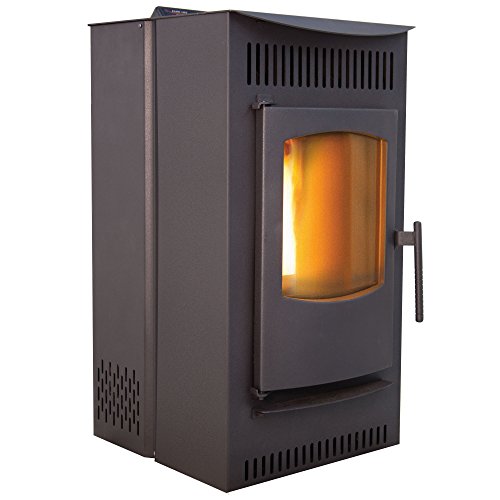
The Castle Serenity is aimed at buyers who want a smaller residential pellet stove with a stronger focus on everyday usability. Its listed specifications include coverage up to 1,500 square feet, a 40-pound hopper, and multiple operating modes such as manual, thermostat, weekly scheduling, and eco mode. The included remote and easy-clean design are important details because many owners care just as much about how easy a stove is to live with as how much heat it can produce on paper.
What separates this stove from some similarly sized competitors is the emphasis on control flexibility and simpler maintenance access. Weekly scheduling can be genuinely helpful for people who want predictable heating during workdays or overnight, while eco mode may help reduce wasteful operation when trying to maintain room temperature. It is not the right tool for heating large homes, and the hopper is smaller than the medium and large models above, but that is the trade-off for a more compact unit. For smaller houses, finished basements, or targeted heating in a main living zone, the Castle Serenity has a clear editorial reason to be here.
Pros:
- Multiple operating modes support flexible day-to-day use
- Easy-clean design may reduce maintenance hassle
- 40-pound hopper is reasonable for a compact residential stove
- Remote programmability adds convenience
- Good match for smaller homes and zone heating
Cons:
- Heating range is more limited than mid-size and large stoves
- Smaller hopper means more frequent refilling in colder conditions
The Castle Serenity makes the most sense when convenience features and easier upkeep matter more than maximum square-foot coverage. It is a practical choice for buyers who want a smaller pellet stove that still offers useful scheduling and control options.
Best for: Smaller homes, zone heating, and buyers who want flexible operating modes with easier cleaning.
Mr. Heater Cleveland Iron Works Small Pellet Stove
This small Cleveland Iron Works model is designed for a very different job than the larger stoves in this guide. With stated coverage of 800 to 1,200 square feet and a 24-pound hopper, it is best viewed as a compact heating solution for smaller homes, cabins, workshops, or focused zone heating rather than a whole-home appliance. Built-in WiFi is still part of the package, which is notable because smaller stoves do not always include smart control features.
Its real value is scale. Not every buyer wants a large freestanding stove with a big hearth presence and substantial pellet storage. In tighter spaces, a more compact stove can be easier to place and easier to justify. The trade-off is that a 24-pound hopper will need more frequent attention, especially during colder weather or longer burns. That makes it less convenient for all-day heating than the 40-, 60-, or 66-pound units above. Still, if your heating goal is a modest area and you prefer a smaller appliance with modern controls, this one has a clear purpose that larger stoves do not fill well.
Pros:
- Good size for smaller spaces and targeted heating
- Built-in WiFi is a useful feature in a compact stove
- More manageable footprint than mid-size or large units
- Can be a practical fit for cabins, additions, or workshops
- Lower entry price than many larger pellet stoves
Cons:
- 24-pound hopper requires more frequent refilling
- Not suitable for larger homes or broad open layouts
This stove earns its place by serving buyers who do not need whole-home capacity. If your space is relatively small and you still want pellet heat with app-based convenience, it is one of the more logical compact choices in the group.
Best for: Small homes, cabins, workshops, and buyers who want compact pellet heat with WiFi.
Canyon Lodge Small Pellet Stove

The Canyon Lodge Small Pellet Stove occupies the same general heating class as other compact models, with listed coverage of 800 to 1,200 square feet and a 24-pound hopper. What helps distinguish it are the added installation and usability details, including a cast iron fire pot, large viewing glass with air wash system, automatic ignition, whisper-quiet blower technology, smart home capability, EPA approval, and an included fresh air kit. It is also listed as mobile home approved, which matters for certain installations where code and setup requirements are more specific.
Compared with the Mr. Heater Cleveland Iron Works small model, this stove looks more specialized around convenience and setup flexibility rather than simply offering compact pellet heat. The included fresh air kit can be especially meaningful because it removes one more item from the parts list for buyers planning an approved installation. The quiet blower claim also gives it a distinct role for bedrooms-adjacent living areas, smaller homes, or users who are sensitive to fan noise. As with any 24-pound hopper stove, refill frequency remains the main trade-off, so it is better suited to modest spaces than to all-day heating demands in larger homes.
Pros:
- Quiet-blower design may be better for noise-sensitive spaces
- Fresh air kit included, which can simplify installation planning
- Mobile home approval expands suitability for certain users
- Automatic ignition and smart home features improve convenience
- EPA-approved design is reassuring for buyers focused on compliance
Cons:
- 24-pound hopper limits runtime compared with larger stoves
- Heating range is intended for small spaces only
The Canyon Lodge is a thoughtful small-space option, especially when quieter operation and mobile-home-friendly features matter. It will not replace a bigger pellet stove in a large house, but it checks several practical boxes for compact installations.
Best for: Small homes, mobile homes, and buyers who want a quieter compact pellet stove with included fresh air kit.
US Stove GW1949 Wiseway Non-Electric Pellet Stove

The US Stove Wiseway is unlike the other pellet stoves in this guide because it is designed to operate without electricity. Its listed features include a natural gravity feed system, EPA certification, up to 40,000 BTUs of heat, coverage up to 2,000 square feet, standard 3-inch pellet venting, a 60-pound hopper, and silent operation. For households concerned about power outages, off-grid use, or simply reducing dependency on powered blowers and electronics, that difference is substantial.
A non-electric pellet stove comes with its own trade-offs, so this is not automatically the right choice for every home. You give up the convenience of electronic ignition, app control, and powered airflow features common on electric pellet stoves. But in return, you gain a heating approach that may still function when the grid is down, and you avoid fan noise. That makes the Wiseway less of a mainstream pick and more of a specialty recommendation for a very real need. Buyers should pay close attention to installation requirements and operating method, because this style differs from standard push-button pellet stove ownership.
Pros:
- Non-electric operation is valuable during power outages or off-grid use
- Silent operation without blower noise
- 60-pound hopper is solid for a non-electric design
- Coverage up to 2,000 square feet is meaningful for many homes
- Uses standard 3-inch pellet venting
Cons:
- Lacks the convenience features common on electric pellet stoves
- Operation may involve more learning than push-button models
The Wiseway fills a niche that most other pellet stoves do not address. If outage resilience or off-grid operation is a major factor in your purchase, it deserves serious consideration. If convenience automation is your priority, a powered model will likely be easier to live with.
Best for: Backup heating, off-grid use, and buyers who want a non-electric pellet stove.
Buying Guide: How to Choose the Best Pellet Stove
Match the stove to real square footage, not ideal conditions
Manufacturer heating ranges are useful, but they are not guarantees. Ceiling height, insulation quality, floor plan openness, window area, and climate all affect performance. If your home is older, drafty, or located in a colder region, it is wise to size with some margin. If your home is tight and well insulated, a smaller stove may be enough.
Think about hopper size as a lifestyle factor
A larger hopper does not just mean more fuel. It means fewer interruptions. A 24-pound hopper may be fine for a cabin or occasional evening use, but daily heating in winter can make repeated refills tedious. Buyers who plan to rely heavily on pellet heat often appreciate 40-pound hoppers and up, while large homes may justify 60 pounds or far more.
Decide whether you want smart controls or simplicity
WiFi and programmable settings can be useful, especially if you want to adjust temperature remotely or set heating schedules. On the other hand, some buyers prefer simpler controls with fewer electronics. If outages are common, a non-electric stove addresses a very different concern than an app-connected one.
Do not underestimate cleaning and ash management
Pellet stoves are usually cleaner than traditional wood stoves, but they are not maintenance-free. Burn pots, ash traps, glass, and venting still need regular attention. A stove advertised as easy to clean can save time over a full season. Cleaning frequency depends on fuel quality, burn rate, and design.
Check installation details before buying
Pellet stove ownership involves more than ordering the unit. You need to confirm venting path, floor protection, wall clearances, outside air requirements where applicable, electrical needs, and any local code or permit issues. Mobile home installation rules can be more specific. Always verify the manufacturer manual and local requirements before finalizing your choice.
Consider noise level if the stove will be in a main living area
Many pellet stoves use fans and augers, so some operating noise is normal. In family rooms this may not matter much, but in smaller houses or open layouts, blower sound can become more noticeable. If noise sensitivity is a concern, quieter blower models or non-electric options may be worth a closer look.
Common Mistakes to Avoid
- Buying only by square-foot claim. Heating coverage should be treated as a range, not a promise.
- Choosing too small a hopper for full-time heating. Small hoppers are often fine until the coldest weeks arrive.
- Ignoring electrical dependence. Most pellet stoves need power for ignition and operation.
- Overlooking maintenance access. A stove that is harder to clean may become frustrating over time.
- Assuming all pellet stoves suit mobile homes. Installation approval varies by model and setup.
- Skipping venting and clearance checks. Fit and code compliance need confirmation before delivery.
Frequently Asked Questions
What is the best pellet stove for most homes?
For many households, a mid-to-large model like the Cleveland Iron Works Bayfront is a strong fit because it balances heating range, hopper capacity, and modern controls. That said, the best choice still depends on home size and how often you want to refill pellets.
Is a bigger hopper always better?
Not always. A bigger hopper reduces refill frequency, which is helpful for daily winter heating. But larger hopper stoves also take up more space and can be more than some homes need. The best hopper size is the one that matches your heating routine.
Are pellet stoves good during power outages?
Most pellet stoves rely on electricity for ignition, auger feed, and blowers. If outage performance matters, look closely at a non-electric model such as the US Stove Wiseway, or plan for an appropriate backup power solution if using a standard electric pellet stove.
What size pellet stove do I need?
Start with your square footage, then adjust for insulation, ceiling height, and climate. A well-insulated 1,200 square foot home may do well with a smaller unit, while a drafty or open 1,500 square foot space may need more capacity than the raw number suggests.
Are WiFi pellet stoves worth it?
They can be, especially for buyers who value scheduling, monitoring, or remote adjustments. WiFi does not improve heating output by itself, but it can make day-to-day use more convenient. Buyers who prefer minimal electronics may not see it as essential.
How often do pellet stoves need cleaning?
That varies by stove design, pellet quality, and how heavily the unit is used. In general, regular ash removal and routine cleaning are part of ownership. Some stoves are designed to make that process easier, which can matter over a full heating season.
Final Recommendations
If you want the most balanced option for a wide range of homes, the Cleveland Iron Works Bayfront Pellet Stove is the strongest starting point. If your priority is longer runtime and fewer pellet refills, the US Stove 3,000 Sq. Ft. Pellet Stove makes a strong case. For smaller homes or buyers who value flexible scheduling and easier cleaning, the Castle Serenity Pellet Stove is a practical alternative.
Buyers with compact spaces should look closely at the Canyon Lodge Small Pellet Stove or the Mr. Heater Cleveland Iron Works Small Pellet Stove. If outage resilience matters more than connected features, the US Stove Wiseway Non-Electric Pellet Stove serves a very different need. The right pellet stove is the one that fits your home’s size, your installation conditions, and the amount of daily attention you are willing to give it during the coldest months.