Yes, space heaters can cause fires. The risk is greatest when a heater is too close to something that can burn, is connected improperly to electrical power, has a damaged cord or plug, or is left running when no one is there to notice a problem.
That does not mean space heaters are inherently unsafe. A modern electric space heater can be used as a practical source of supplemental heat when it is placed correctly, connected directly to an appropriate wall outlet, kept clear of combustible materials, and operated according to the manufacturer’s instructions. Safety features such as tip-over shutoff and overheat protection add useful safeguards, but they do not make careful use optional.
The most important rule is simple: treat a space heater as a high-heat appliance. Give it space, inspect it before use, and turn it off when you leave the room or go to sleep.
How Serious Is the Fire Risk From Space Heaters?
Portable heaters are involved in home fires every year. According to the U.S. Consumer Product Safety Commission (CPSC), portable heaters, including electric space heaters, were involved in an estimated average of 1,600 fires per year from 2020 through 2022. Those fires resulted in an estimated annual average of 70 deaths and 150 injuries.
The U.S. Fire Administration (USFA) has also identified portable heaters as a significant concern within home heating fires. The important takeaway is not that every heater is likely to catch fire, but that the consequences can be severe when a heater is used around combustible materials or with an unsafe electrical setup.
Space Heater Fire Risks at a Glance
| Risk | Why It Matters | Safer Practice |
|---|---|---|
| Nearby bedding, curtains, paper, or furniture | Combustible materials can ignite when exposed to sufficient heat | Keep the heater at least 3 feet from anything that can burn |
| Extension cords and power strips | High electrical loads can overheat unsuitable connections | Plug an electric space heater directly into a wall outlet |
| Damaged cord or plug | Damaged electrical components can overheat or create an electrical hazard | Inspect the cord and plug before use and stop using damaged equipment |
| Unstable placement | A heater that tips or shifts can end up close to combustible materials | Use a solid, flat surface and follow the manufacturer’s placement instructions |
| Unattended operation | A developing problem may go unnoticed | Turn the heater off when leaving the room or going to sleep |
| Blocked airflow | Obstructed intake or outlet areas can interfere with normal operation | Keep the heater uncovered and maintain the clearances specified in its manual |
Why Space Heaters Can Start Fires
A space heater concentrates a substantial amount of heat in a relatively small area. Fire risk develops when that heat reaches combustible material or when the heater’s electrical supply becomes unsafe.
Several different situations can create those conditions.
Combustible Materials Are Too Close
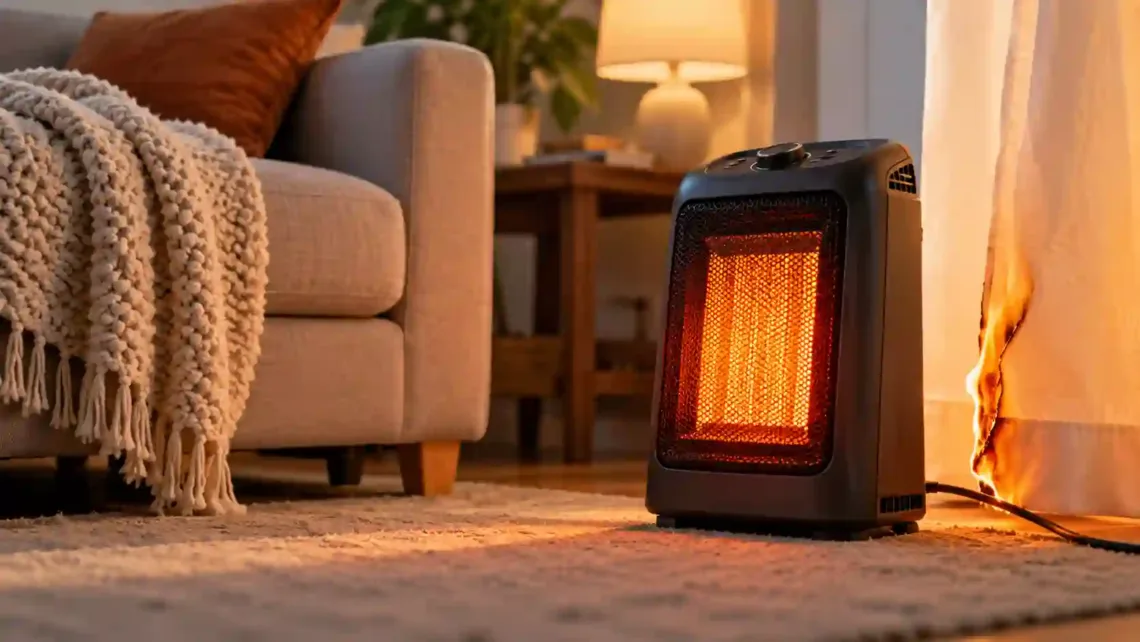
Curtains, bedding, clothing, upholstered furniture, paper, and other household materials can burn. Placing them near a space heater creates one of the most avoidable heating hazards.
The CPSC and USFA recommend keeping portable heaters at least 3 feet away from combustible materials. Think of that distance as a safety zone around the heater rather than simply a gap in front of it.
If you are unsure how much clearance a particular setup needs, we have a separate guide explaining how far a space heater should be from furniture. The heater manufacturer’s instructions should still take priority for the specific model you own.
The Electrical Connection Overheats
Many portable electric space heaters draw substantial electrical power. A typical high-output portable model may be rated around 1,500 watts, so the electrical connection is an important part of safe operation.
The CPSC and USFA advise plugging electric space heaters directly into wall outlets rather than extension cords or power strips. An unsuitable extension cord, overloaded power strip, damaged connection, or other electrical problem can create excessive heat.
Do not run a heater cord under a rug or carpet. The cord can be damaged without the problem being immediately visible, and covering it can make inspection more difficult.
The Heater Tips Over
A portable heater can be bumped by a person or pet or become unstable if it is placed on an unsuitable surface. If the heater falls toward bedding, clothing, furniture, or another combustible item, the situation can become dangerous quickly.
Tip-over shutoff is therefore a useful safety feature. It is designed to stop heater operation when the unit tips beyond its normal position. Even with that feature, the heater should still be placed on a stable surface where it is unlikely to be knocked over.
The Heater Is Left Unattended
Safety features can reduce certain risks, but they cannot account for every possible situation around the heater. A blanket can fall, a pet can move something, an outlet can develop a problem, or the heater itself can malfunction.
For that reason, portable heaters should not be treated as appliances that can simply run in the background indefinitely. Turn the heater off when you leave the room.
The Cord or Plug Is Damaged
Inspect the heater’s power cord and plug periodically. Cracked insulation, damaged plugs, loose connections, discoloration, or other visible deterioration should not be ignored.
If the plug, outlet, or cord becomes unusually hot, stop using the heater and investigate the cause rather than continuing to operate it.
Keep at Least 3 Feet From Things That Can Burn
The 3-foot rule is one of the easiest space-heater safety guidelines to remember. Keep portable heaters at least 3 feet from materials that can burn, including:
- Curtains and drapes
- Bedding and blankets
- Clothing
- Paper and cardboard
- Upholstered furniture
- Other combustible household items
Clearance can be particularly easy to overlook in small bedrooms and offices, where furniture may already occupy most of the available floor space. Do not solve that problem by squeezing the heater into an unsafe location. Choose a different location or heating approach instead.
Should You Plug a Space Heater Into an Extension Cord?
No. Current CPSC and USFA guidance for portable electric space heaters is to plug them directly into a wall outlet and not into an extension cord or power strip.
This is an important distinction because older or less specific advice sometimes discusses selecting a sufficiently heavy extension cord. For ordinary household space-heater use, following the current federal fire-safety guidance is the simpler rule: use the wall outlet directly.
Also pay attention to the outlet itself. Stop using the heater if you notice signs such as scorching, melting, a loose-fitting plug, or abnormal heat at the connection. Electrical problems should be addressed rather than worked around.
Can You Put a Space Heater on Carpet?
A solid, flat surface is the safer general choice. USFA guidance calls for portable heaters to be placed on a solid, flat surface, while CPSC guidance has specifically recommended a level, hard, nonflammable surface rather than rugs or carpets.
Always check the instructions for your heater because designs and placement requirements vary. Do not improvise a stand or place a heater where it can wobble, fall, or be surrounded by loose fabric.
Can You Leave a Space Heater On Overnight?
Turning a portable heater off before going to sleep is the safer approach. Current CPSC guidance specifically says to turn portable heaters off when sleeping, and USFA advises turning space heaters off when leaving the room or going to bed.
A thermostat, timer, tip-over switch, or overheat sensor does not change that basic recommendation. Those features provide additional protection against particular failure modes; they are not a reason to ignore safe operating practices.
What Safety Features Should a Space Heater Have?
Built-in safety features cannot compensate for poor placement or unsafe electrical use, but several features are worth looking for when choosing a portable electric heater.
| Feature | What It Does | What It Does Not Replace |
|---|---|---|
| Tip-over shutoff | Stops operation when the heater tips beyond its normal position | Stable placement and adequate clearance |
| Overheat protection | Shuts the heater down when internal temperature reaches an unsafe condition | Keeping airflow unobstructed and inspecting the heater |
| Thermostat | Cycles heat according to temperature settings | Turning the heater off when unattended or sleeping |
| Stable base | Makes accidental tipping less likely | Keeping the heater out of traffic areas |
| Recognized safety certification | Indicates the product has been evaluated to applicable safety requirements by a recognized testing organization | Following the manufacturer’s instructions |
A thermostat is useful for temperature control, but it should not be confused with a fire-prevention system. If thermostat control is important for your supplemental-heating setup, our comparison of space heaters with thermostats looks at models designed around more controlled room heating.
Electric vs. Fuel-Burning Space Heaters
Electric and fuel-burning portable heaters should not be treated as interchangeable products from a safety perspective.
Electric heaters do not create combustion gases at the point of use, but they still introduce electrical, heat, and fire hazards. They require adequate clearance, an appropriate electrical connection, and careful placement.
Fuel-burning heaters add other considerations, including fuel handling, combustion, ventilation, and carbon monoxide. Only use a fuel-burning heater in locations specifically permitted by its manufacturer, and follow all instructions for ventilation, fueling, clearances, and carbon monoxide protection.
Never bring an outdoor-only combustion appliance indoors simply because the room is cold.
Are Ceramic Space Heaters Less Likely to Cause Fires?
Ceramic heaters are common for indoor supplemental heating and often include features such as thermostats, tip-over switches, and overheat protection. However, the word ceramic should not be treated as a guarantee that a heater cannot cause a fire.
A ceramic heater can still be placed too close to bedding, connected improperly, knocked over, damaged, or left unattended. The same basic safety rules apply regardless of the heating technology.
The practical difference between heater types is therefore less important than many shoppers assume when it comes to basic fire prevention. Safe placement and operation remain essential.
Space Heater Safety in Bedrooms
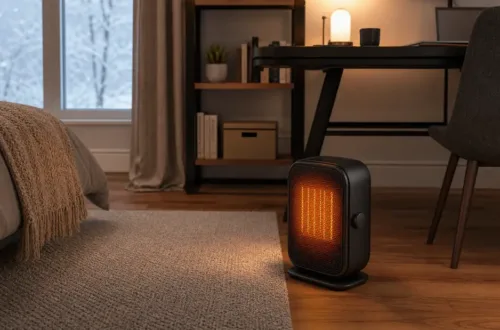
Bedrooms require particular attention because they contain large amounts of combustible material: mattresses, blankets, sheets, clothing, curtains, rugs, and upholstered furniture.
A heater should never be squeezed between a bed and furniture simply because that is where an outlet happens to be. Maintain the required clearance and keep the unit away from areas where blankets or clothing could fall onto it.
Most importantly, turn a portable heater off before going to sleep rather than relying on a thermostat or timer to supervise it overnight.
Space Heater Safety in Offices
Office environments present a different set of hazards. Paper, cardboard boxes, bags, cables, furniture, and items stored beneath a desk can end up surprisingly close to a small heater.
Before using one under or beside a desk, make sure the heater has adequate clearance and cannot be kicked, blocked by a chair, or covered by loose papers. Workplace rules may also restrict or prohibit personal space heaters, so check the applicable policy before bringing one into an office.
If you are choosing a heater specifically for a workspace, our guide to space heaters for office use discusses models and features suited to different office setups. Regardless of model, workplace rules and the heater manufacturer’s safety instructions still come first.
Space Heater Safety Around Children and Pets
Children and pets can get too close to a heater, touch a hot surface, pull a cord, knock the unit over, or move combustible objects into its safety zone.
Keep heaters where they cannot easily be reached or disturbed, while still maintaining the placement requirements in the manual. Do not rely on a child or pet recognizing that a heater is dangerous.
The USFA recommends maintaining a 3-foot safe zone between children and things that can get hot, including space heaters.
Warning Signs That Mean You Should Stop Using the Heater
Turn the heater off and stop using it if you notice a condition that suggests an electrical or mechanical problem. Warning signs can include:
- A cracked, frayed, or otherwise damaged power cord
- A damaged plug
- Scorching or melting around the plug or outlet
- An unusually hot plug or electrical connection
- Persistent unusual odors after normal initial use
- Sparks, arcing, or abnormal electrical sounds
- A heater that repeatedly shuts down unexpectedly
- A tip-over or overheat safety feature that does not appear to work as intended
Do not keep operating a questionable heater simply because it still produces heat. Follow the manufacturer’s troubleshooting instructions and replace or professionally evaluate damaged equipment when appropriate.
Space Heater Fire Prevention Checklist
- Keep a 3-foot safety zone: Maintain at least 3 feet between the heater and anything that can burn.
- Use the wall outlet: Plug portable electric space heaters directly into an appropriate wall outlet, not an extension cord or power strip.
- Inspect before use: Check the cord and plug for damage.
- Use a stable surface: Keep the heater on a solid, flat surface and follow its placement instructions.
- Keep airflow clear: Do not cover the heater or block its intake and outlet areas.
- Keep it out of traffic: Position it where people and pets are less likely to knock it over.
- Turn it off when leaving: Do not leave a portable heater running in an unattended room.
- Turn it off before sleeping: Do not rely on a timer or thermostat as a substitute for this precaution.
- Follow the manual: Clearance, placement, cleaning, and operating requirements can vary by model.
- Maintain working smoke alarms: Space-heater precautions are part of broader home fire safety, not a replacement for smoke detection.
Frequently Asked Questions
Can a space heater catch fire by itself?
A space heater can develop an electrical or mechanical fault, but many fire hazards involve the heater interacting with its surroundings, such as combustible materials being too close or an unsafe electrical connection. Inspect the heater regularly and stop using it if you notice damage or abnormal operation.
Can a space heater set curtains on fire?
Yes. Curtains are combustible and should be kept well away from portable heaters. CPSC and USFA guidance recommends at least 3 feet of clearance between portable heaters and combustible materials.
Can a space heater start a fire on carpet?
Unsafe placement can increase fire risk. A solid, flat surface is recommended, and CPSC guidance has specifically advised placing heaters on level, hard, nonflammable surfaces rather than rugs or carpets. Follow the placement instructions for your particular heater.
Can a space heater cause an electrical fire?
Electrical problems can contribute to fire risk, particularly when cords, plugs, outlets, extension cords, or power strips are damaged, unsuitable, or overloaded. Plug portable electric space heaters directly into an appropriate wall outlet and stop using the heater if the connection shows signs of overheating or damage.
Can you leave a space heater on while you sleep?
The safer practice is to turn it off. Current CPSC guidance says to turn portable heaters off when sleeping, and USFA recommends turning space heaters off when leaving the room or going to bed.
How far should a space heater be from a bed?
Keep portable heaters at least 3 feet from bedding and other combustible materials, and follow any greater clearance specified by the heater manufacturer. Also consider whether blankets or other bedding could move into the heater’s safety zone while the bed is occupied.
Is a heater with tip-over protection fireproof?
No. Tip-over protection addresses one particular hazard. It does not prevent fires caused by nearby combustible materials, damaged electrical components, unsafe power connections, blocked airflow, or other problems.
Are space heaters safe if they have a thermostat?
A thermostat can regulate temperature and reduce unnecessary cycling, but it does not make a heater inherently safe. Proper clearance, direct wall-outlet connection, stable placement, supervision, and following the manufacturer’s instructions remain important.
Bottom Line
Space heaters can cause fires, but many of the major hazards are preventable. Keep the heater at least 3 feet from anything that can burn, plug electric models directly into an appropriate wall outlet, inspect cords and plugs, place the unit on a stable surface, and turn it off when you leave the room or go to sleep.
Features such as tip-over shutoff, overheat protection, and thermostat control are useful additional safeguards, but none of them replaces careful placement and operation. Treat a space heater as a high-heat appliance rather than background furniture, and follow the instructions for the specific model you own.