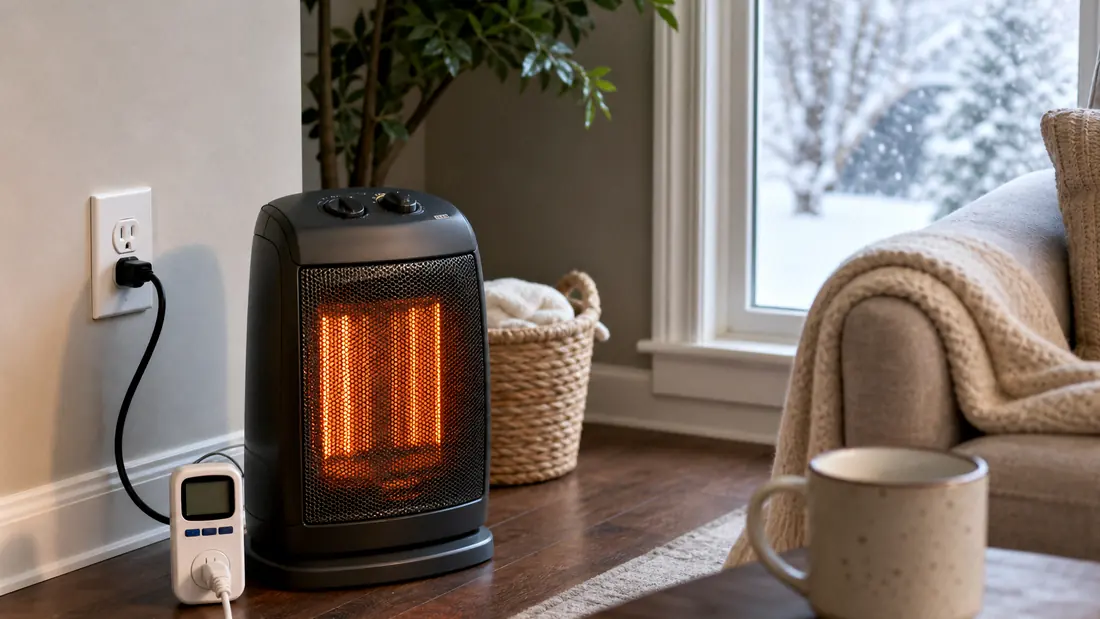
Keeping a space heater too close to furniture is one of the most common safety mistakes people make in winter. A good general rule is to keep the heater at least 3 feet away from furniture, bedding, curtains, and other combustible materials, while also following any model-specific clearance requirements in the manufacturer’s instructions.
If you are asking how far should a space heater be from furniture, 3 feet is a useful safety baseline for things that can burn, but it should not be treated as a substitute for the heater’s manual. Different heater designs can have specific requirements for the front, sides, rear, or top of the unit. When the manufacturer calls for greater clearance, follow the larger distance.
Placement matters because furniture is not always stationary. Blankets can slide off a sofa, curtains can move, clothing can be dropped nearby, and a chair can be pushed closer to the heater after it has been turned on. A safe setup needs enough room for normal household movement as well as the heater itself.
Quick Answer
Keep a portable space heater at least 3 feet away from furniture, bedding, curtains, paper, clothing, and other combustible materials. Then check the heater’s instructions for any additional clearance requirements.
Place the heater on a solid, flat surface in a location where it is unlikely to be knocked over. Keep its air intake and outlet unobstructed, and do not squeeze it between furniture simply because that is where an electrical outlet happens to be.
Space Heater Clearance at a Glance
| Nearby Item or Area | General Guidance | Why It Matters |
|---|---|---|
| Sofa or upholstered chair | Keep at least 3 feet away from the heater | Upholstery and cushions are combustible and may shift toward the heater |
| Bed and bedding | Keep at least 3 feet away, with extra attention to loose blankets | Sheets and blankets can move beyond the edge of the bed |
| Curtains | Keep at least 3 feet away | Fabric can move with drafts and enter the heater’s hot-air path |
| Paper, cardboard, and clothing | Keep outside the 3-foot safety zone | These materials can ignite or be accidentally moved closer to the heater |
| Walls and noncombustible surfaces | Follow the model-specific clearance in the manual | Required rear and side clearance varies by heater design |
| Front of heater | Keep open and maintain required clearance | Blocking the heat outlet can interfere with airflow and expose nearby objects to concentrated heat |
These are general safety guidelines rather than model-specific installation instructions. If your heater’s manual requires more clearance, follow the manufacturer’s requirement.
Why Space Heater Distance Matters
Space heaters produce concentrated heat in a relatively small area. Furniture placed too close to that heat can create an avoidable fire hazard, particularly when the nearby materials include upholstery, blankets, cushions, paper, or other combustible items.
Clearance also helps keep the heater’s airflow unobstructed. A forced-air heater positioned behind a sofa or underneath furniture may not be able to move air as intended. A radiant heater pointed toward nearby objects can expose those surfaces to concentrated radiant heat.
The problem is therefore not just whether furniture physically touches the heater. The goal is to keep combustible materials out of the heater’s safety zone and give the appliance enough open space to operate according to its design.
Is 3 Feet Always the Correct Distance?
Three feet is a widely used general safety rule for keeping portable heaters away from things that can burn. It is particularly useful for furniture, bedding, curtains, clothing, and paper.
However, it does not mean every space heater requires exactly 3 feet of empty space in every direction. The heater manufacturer may specify different clearances for the front, rear, sides, and top based on the product’s construction and airflow.
For example, a manufacturer might allow a particular noncombustible surface to be closer to the rear of a heater while requiring considerably more open space in front. Another design may have different requirements entirely.
Use the 3-foot rule for combustible materials as a baseline, then follow any more specific or restrictive instructions supplied with your heater.
How Far Should a Space Heater Be From a Couch?
Keep a portable space heater at least 3 feet away from a couch or upholstered chair. Sofas contain several materials that can burn, including fabric, cushioning, blankets, and decorative pillows.
Also think about how the couch is actually used. A throw blanket that is safely positioned when the heater is turned on can later slide onto the floor. A pillow can fall. Someone can move an ottoman or chair into the clearance zone without realizing it.
Do not position the heater between the sofa and a wall simply because the gap appears large enough for the heater itself. The relevant question is whether there is enough safe clearance for the heater to operate.
How Far Should a Space Heater Be From a Bed?
Keep the heater at least 3 feet from bedding and other combustible materials around the bed. In practice, more room can be useful because blankets, comforters, sheets, and clothing can extend well beyond the mattress.
A heater that appears to be 3 feet from the bed frame may still be too close if a comforter hangs toward it.
Bedrooms deserve particular care because they combine heaters with large amounts of fabric and periods when occupants may be asleep. Portable space heaters should be turned off before going to sleep rather than relying solely on a thermostat, timer, or automatic shutoff.
How Far Should a Space Heater Be From Curtains?
Keep curtains and drapes at least 3 feet from a portable heater. Curtains are especially important because they can move with air currents rather than remaining in one fixed position.
A curtain that appears safely separated from the heater when hanging straight down may move closer when a door opens, a fan runs, or warm air circulates through the room.
Do not place a portable heater directly beneath curtains or aim a forced-air heater toward hanging fabric.
Different Heater Types May Need Different Placement
The basic rule about keeping combustible materials away applies to portable heaters generally, but heater designs distribute heat differently.
Ceramic and Fan-Forced Heaters
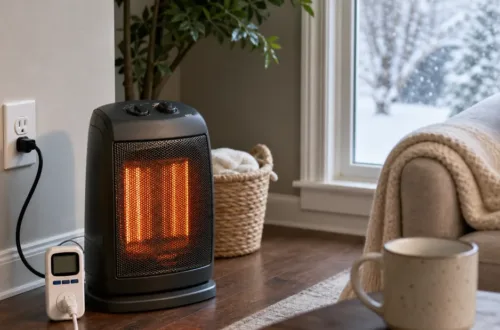
Ceramic and other fan-forced heaters move heated air into the room. The area in front of the outlet needs to remain open so furniture and other objects do not obstruct airflow or sit directly in the stream of hot air.
Rear or side vents may also need clearance for air intake. Check the heater’s manual before placing it close to a wall or other solid surface.
Infrared and Radiant Heaters
Radiant heaters transfer heat directly toward people and objects rather than relying entirely on warming circulating air. That makes the direction the heater faces particularly important.
Do not aim a radiant heater toward nearby upholstered furniture, bedding, curtains, or other combustible objects simply because they are not touching the unit.
Oil-Filled Radiator Heaters
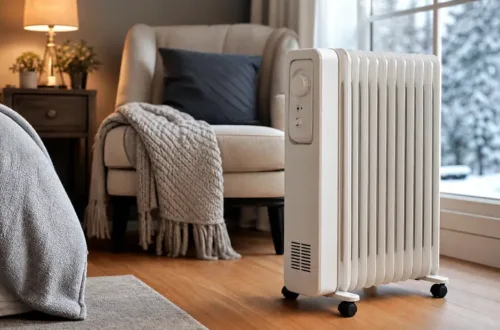
Oil-filled radiators typically warm more gradually and do not rely on a high-velocity fan, but their exterior surfaces can still become hot. They still require adequate clearance from combustible materials.
Do not drape clothing, towels, blankets, or other items over an oil-filled radiator to warm or dry them.
Can You Put a Space Heater Next to a Wall?
Possibly, but the correct wall clearance depends on the heater. This is an area where the manufacturer’s instructions matter more than applying the 3-foot combustible-material rule mechanically in every direction.
Some portable heaters require substantial rear clearance because they draw air through the back. Other designs may permit closer placement near an appropriate surface.
Check the manual for rear and side clearance requirements and make sure wall coverings, curtains, furniture, or other combustible items do not enter the required space.
Can You Put a Space Heater Under a Desk?
Only use a space heater under a desk if the heater’s instructions, available clearance, and workplace rules make that setup appropriate. Many desks create tight spaces surrounded by cables, paper, bags, drawers, chairs, and a person’s legs.
Even when the heater physically fits, that does not necessarily mean the location provides enough clearance.
Under-desk heaters can also be accidentally kicked or moved. If you use a heater in an office, position it where its intake and outlet remain open and where normal movement will not push objects into the heater.
Can You Put a Space Heater on Carpet?
A solid, flat surface is the safer general choice for a portable heater. Follow the manufacturer’s placement instructions for your specific model rather than assuming that any carpeted location is acceptable.
A soft or uneven surface can affect stability, and nearby rugs or loose textiles can create additional combustible material around the appliance.
Do not improvise a platform from cardboard, books, boxes, or other combustible materials in an attempt to raise a heater above carpet.
Common Space Heater Placement Mistakes
- Putting the heater beside a couch, recliner, or bed to save space
- Aiming the heater toward curtains or hanging fabric
- Placing blankets, clothing, paper, or storage bins within the clearance zone
- Tucking the heater underneath furniture without checking its clearance requirements
- Blocking the heater’s intake or hot-air outlet
- Positioning the heater in a doorway or busy walkway where it can be knocked over
- Running the power cord under a rug or carpet
- Using an extension cord or power strip instead of plugging an electric space heater directly into an appropriate wall outlet
Clearance is only one part of space-heater fire prevention. If you want a broader explanation of the risks, our guide to how space heaters can cause fires covers electrical hazards, combustible materials, unattended operation, and other common problems.
How to Choose a Safer Location for a Space Heater
Before turning the heater on, look at the room rather than only at the empty floor space. Ask what might move into that area during normal use.
A suitable location should:
- Provide adequate clearance from combustible materials
- Meet the manufacturer’s front, rear, side, and top clearance requirements
- Keep air intakes and outlets unobstructed
- Provide a solid and stable placement surface
- Be outside busy walking paths where possible
- Keep the heater away from locations where children or pets can easily disturb it
- Allow an electric heater to connect directly to an appropriate wall outlet without stretching the cord across a walkway
Recheck the area periodically. A safe heater location can become unsafe when furniture is rearranged, laundry is placed nearby, or a blanket falls into the clearance zone.
When to Choose a Different Heating Approach
If you cannot maintain safe clearance around a portable heater, the room may simply not be a good place to use one. Moving furniture, choosing a different location, or using another heating approach is better than reducing the safety zone to make the heater fit.
This is particularly relevant in very small bedrooms, crowded offices, and other spaces where beds, desks, curtains, and upholstered furniture occupy most of the available floor area.
For larger or more open rooms, it can also make sense to choose a heater with a built-in thermostat and a stable design rather than forcing a small unit into a cramped spot. If temperature control is important for your setup, our comparison of space heaters with thermostats covers options for different room sizes and heating needs. The right heater is only part of the equation, though. Safe placement and adequate clearance matter just as much.
Frequently Asked Questions
Can a space heater be next to a couch?
A portable space heater should generally be kept at least 3 feet away from a couch and other combustible furniture. Remember that pillows and blankets can move beyond the edge of the sofa, so consider those items when measuring the available space.
Is 2 feet enough distance from furniture?
Two feet should not be treated as the general safety baseline for combustible furniture. Keep portable heaters at least 3 feet from things that can burn unless applicable instructions require an even greater distance.
Does a space heater need 3 feet of clearance on every side?
Not necessarily. The 3-foot rule is general guidance for keeping portable heaters away from combustible materials. Model-specific requirements for walls and other surfaces can vary by heater design. Follow the manufacturer’s instructions for front, rear, side, and top clearance.
Can I put a space heater on carpet?
A solid, flat surface is the safer general choice. Follow the placement requirements in the heater’s manual and avoid unstable or improvised surfaces.
How far should a space heater be from curtains?
Keep curtains at least 3 feet away from a portable heater. Because curtains can move with air currents, make sure they cannot swing or blow into the heater’s safety zone.
How far should a space heater be from a bed?
Keep the heater at least 3 feet from bedding and other combustible materials. Consider the full reach of blankets and comforters rather than measuring only from the bed frame.
Can I put a space heater behind a sofa?
That is generally a poor location if the sofa falls within the heater’s required clearance area or blocks airflow. A heater should be placed where furniture cannot obstruct it and combustible materials remain safely separated.
Can furniture block the heat from a space heater?
Yes. Furniture can obstruct airflow from fan-forced heaters and can also sit in the path of radiant heat. Blocking a heater may reduce effective heat distribution while creating an unnecessarily hot area around nearby objects.
Practical Bottom Line
A portable space heater should generally be kept at least 3 feet from furniture, bedding, curtains, clothing, paper, and other materials that can burn. That is a useful baseline for combustible objects, not a universal specification for every surface surrounding every heater.
Check the manufacturer’s instructions for the exact clearance requirements of your model, particularly around walls and other fixed surfaces. Keep the heater on a stable surface, leave its airflow unobstructed, and position it where normal household activity will not move furniture or fabric into its safety zone.
If a room is too crowded to provide adequate clearance, do not reduce the distance simply to make the heater fit. A different location or heating approach is the safer solution.