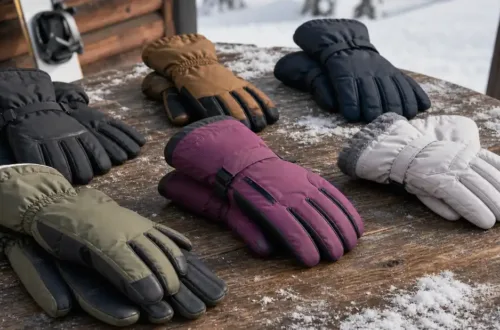
Wet gloves can turn an otherwise comfortable ski day into a cold, frustrating one. The challenge is that a “waterproof” label does not tell the whole story. Water may still enter through an open cuff, seams can wear over time, and sweat can leave insulation damp even when snow never penetrates the shell.
The best waterproof ski gloves combine a moisture-blocking insert with useful insulation, secure cuffs, dependable grip, and enough breathability for the intended activity. Fit matters just as much. Gloves that are too tight can restrict circulation, while oversized gloves make it harder to hold poles, adjust bindings, or operate zippers.
This guide compares eight options for different conditions, including resort skiing, family snow days, outdoor work, active winter use, and milder weather. The recommendations are based on listed materials, weather protection, cuff design, grip, insulation, mobility, care requirements, and practical limitations. Temperature claims from manufacturers are treated as guidance rather than guarantees because warmth varies with wind, activity, circulation, and personal cold tolerance.
Quick Answer
For a traditional insulated ski-glove design, the MCTi Waterproof Men’s Ski Gloves offer a useful combination of 3M Thinsulate insulation, a waterproof TPU insert, a reinforced palm, and a gauntlet-style closure. Skiers who prioritize thicker insulation may prefer the MOREOK Waterproof Winter Gloves, while the Tough Outdoors Ski Gloves are a more budget-conscious option with a breathable membrane and secure cuff.
Different gloves serve different needs. The Carhartt Waterproof Insulated Gloves are better suited to outdoor work, and the lighter ihuan Lightweight Winter Gloves make more sense for mild winter days and everyday tasks. Families looking for a broad selection of adult and children’s sizes should consider the Odtmger Ski Gloves.
Waterproof Ski Gloves Compared
| Product | Best For | Insulation or Lining | Weather Protection | Notable Trade-Off |
|---|---|---|---|---|
| MCTi Waterproof Ski Gloves | Resort skiing and snowboarding | 3M Thinsulate C40 and soft lining | TPU insert, softshell exterior, gauntlet closure | Insulation may retain sweat during vigorous activity |
| MOREOK Waterproof Winter Gloves | Cold conditions and added insulation | 200-gram 3M insulation and velvet lining | Wind-resistant exterior and TPU membrane layers | Snug fit and thicker construction require careful sizing |
| Tough Outdoors Ski Gloves | Budget-conscious snow sports | SUMMITLOFT synthetic insulation | Water-resistant nylon shell and TPU membrane | Shell is described as water-resistant, not fully waterproof |
| Carhartt Waterproof Insulated Gloves | Outdoor work and snow removal | Synthetic insulation and FastDry lining | Waterproof insert with fleece cuff | Knit-style cuff offers less coverage than a long gauntlet |
| ihuan Lightweight Winter Gloves | Mild winter weather and everyday use | Dense fleece lining | Water-resistant exterior with wind-blocking cuff | Cuff is not waterproof and is unsuitable for deep immersion |
| 2THESTARS Winter Ski Gloves | Low-cost snow gloves with a long cuff | Synthetic thermal lining | Taslon shell and TPU membrane | Manufacturer performance claims have limited supporting detail |
| ihuan Active Winter Gloves | Cycling, driving, and active winter use | Lightweight fleece lining | Water-resistant shell and internal waterproof pouch | Less insulated than traditional ski gloves |
| Odtmger Family Ski Gloves | Adults and children needing coordinated sizing | 3M Thinsulate and thermal fleece | Water-repellent shell and waterproof PU or TPU layer | Fit must be checked separately for every family member |
How We Chose These Gloves
Water protection was the starting point, but it was not the only selection factor. A waterproof insert is most useful when paired with a shell that sheds snow and a cuff that limits water entry. We also considered whether each listing distinguishes between a waterproof membrane and a merely water-resistant exterior.
The following factors shaped the recommendations:
- Weather protection: Waterproof inserts, water-resistant shells, wind protection, cuff length, and closure design.
- Warmth: Insulation type, lining, cuff coverage, and suitability for either active or lower-output use.
- Moisture management: Breathable membranes and sweat-wicking linings that may help reduce internal dampness.
- Grip and durability: Reinforced palms and fingers for ski poles, tools, handlebars, and snow equipment.
- Mobility: The balance between insulation and the finger movement needed for bindings, pockets, and gear adjustments.
- Fit: Wrist adjustment, gauntlet design, sizing guidance, and the risk of restricting circulation.
- Ease of care: Drying needs and any washing restrictions intended to protect the waterproof membrane.
- Value: Whether the construction and features make sense for the glove’s intended use, rather than price alone.
No glove is equally suitable for every skier. Someone riding chairlifts in cold, windy weather may benefit from heavier insulation, while a cross-country skier or winter cyclist usually needs better breathability and less bulk. The eight products below are not ranked strictly from first to last. Each fills a different role, so compare cuff design, warmth, fit, and water protection against the conditions in which you plan to use it.
Our Top Waterproof Ski Glove Picks
MCTi Waterproof Men’s Ski Gloves
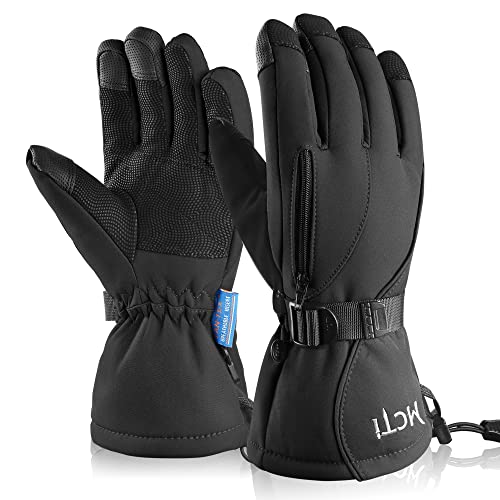
The MCTi gloves have the familiar shape and feature set of an insulated resort ski glove. They use 3M Thinsulate C40 insulation, a soft inner lining, a three-layer softshell exterior, and a waterproof TPU insert. A wrist buckle helps secure the glove around the hand, while a drawstring closes the longer cuff over or around a jacket sleeve. The synthetic Nubuck-style palm and reinforced fingers are intended to improve wear resistance and grip. There is also a soft nose-wipe area on the thumb and a small zippered pocket that can hold a thin hand warmer, key, or similar item.
This design offers one of the more balanced combinations in the group for downhill skiing and snowboarding. Its gauntlet closure provides more snow coverage than a short everyday cuff, and the reinforced grip is useful when holding poles or carrying equipment. The insulation should work better for lift-served skiing than for high-output winter running, although warmth cannot be guaranteed at a specific temperature. People whose hands sweat heavily should allow the gloves to air-dry thoroughly after use, as the layered construction may take time to release accumulated moisture.
Pros:
- Waterproof TPU insert provides a dedicated moisture barrier
- 3M Thinsulate insulation balances warmth with moderate weight
- Adjustable wrist strap and drawstring cuff help limit snow entry
- Reinforced palm and fingers support a secure pole grip
- Zippered pocket can accommodate a small hand warmer
Cons:
- May be too warm for highly aerobic winter activities
- Layered construction requires adequate drying time after sweaty use
- Buyers should verify hand measurements rather than relying only on a general size label
The MCTi is a practical starting point for skiers seeking conventional insulation, a waterproof insert, and a snow-blocking gauntlet without moving into specialized premium gear. It is less compelling for running or fast uphill travel, where a lighter and more breathable glove would generally be easier to manage.
Best for: Resort skiers and snowboarders who want a traditional insulated glove with a long adjustable cuff.
MOREOK Waterproof Winter Gloves

The MOREOK gloves prioritize insulation and extended weather coverage. According to the manufacturer, they contain 200 grams of 3M synthetic insulation, a soft velvet lining, and TPU membrane layers beneath a wind-resistant exterior. The longer cuff includes an elastic closure and an adjustable wrist buckle to reduce openings around a jacket sleeve. A nitrile-coated palm adds friction for gripping poles, handlebars, and tools, while a terry cloth thumb panel can be used to wipe a nose or remove light moisture from goggles. Touchscreen material is incorporated at the thumb area for basic phone interaction.
Compared with lighter models, this pair appears better suited to people who value warmth and wind protection more than low bulk. The insulation and extended cuff may be useful during chairlift rides, snowmobiling, or other cold activities with periods of limited movement. The manufacturer describes the fit as snug and advises measuring the hand, which is especially important with thick insulation. A glove that compresses the fingers can reduce circulation and feel colder despite having more insulation. The listed subzero rating should not be treated as a universal comfort guarantee because wind, exertion, dampness, and individual circulation all affect warmth.
Pros:
- Substantial synthetic insulation for colder, lower-output activities
- TPU membrane construction provides a dedicated water barrier
- Extended cuff and adjustable wrist help block wind and loose snow
- Textured nitrile palm supports grip in damp conditions
- Includes touchscreen material and a terry cloth thumb panel
Cons:
- Thicker insulation may reduce fine finger control
- Snug construction makes accurate hand measurement important
- May retain too much heat during vigorous uphill or cross-country use
MOREOK’s design fits the colder end of this list, particularly for users who spend time standing, riding lifts, or moving at a moderate pace. The trade-off is additional bulk and the possibility of overheating. Choose enough room to move the fingers freely without leaving large empty spaces inside the glove.
Best for: Skiers, riders, and outdoor users who prefer heavier insulation and extended cuff coverage.
Tough Outdoors Ski Gloves
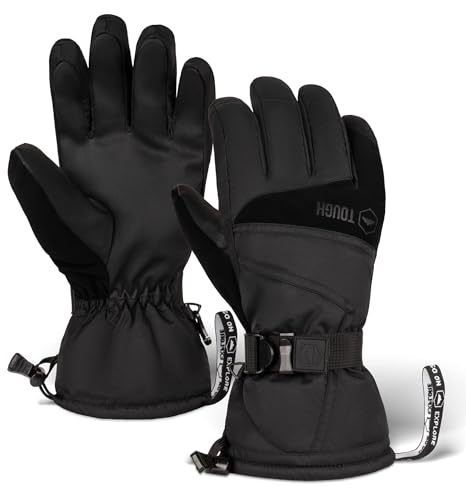
The Tough Outdoors gloves combine SUMMITLOFT synthetic insulation with a nylon exterior and a breathable TPU membrane. The manufacturer describes the shell as water- and wind-resistant, an important qualification for buyers expecting prolonged exposure to wet snow or rain. A double-layer synthetic leather palm provides extra grip and protection in the area that receives the most contact with ski poles, shovels, and snowmobile controls. The gloves also use an adjustable wrist buckle and a drawstring cuff, allowing the wearer to close gaps where snow and cold air commonly enter.
This pair is a useful budget-oriented option for recreational skiing, sledding, snow removal, and occasional winter trips. The membrane should provide more moisture protection than a basic fleece or knit glove, while the adjustable gauntlet offers better snow control than a short cuff. However, readers should not interpret the water-resistant shell as permission to submerge the gloves or use them indefinitely in heavy rain. Their value comes from combining ski-specific features at a relatively accessible price, not from matching the materials or long-term serviceability of higher-end technical gloves.
Pros:
- Breathable TPU membrane adds protection from melting snow
- Synthetic insulation is appropriate for general winter recreation
- Double-faced synthetic leather palm improves grip and wear resistance
- Wrist buckle and drawstring offer two points of adjustment
- Unisex design is available for a range of adult users
Cons:
- Exterior shell is described as water-resistant rather than completely waterproof
- Not intended for immersion or extended exposure to heavy rain
- Long-term durability will depend on abrasion, care, and frequency of use
These gloves make sense for occasional skiers who want an insulated gauntlet and a membrane without spending heavily. They are better viewed as general-purpose snow gloves than expedition equipment. Keep the shell clean, dry the lining completely, and inspect worn palm areas before relying on them for a full day in wet conditions.
Best for: Recreational skiing and general snow use on a limited budget.
Carhartt Men’s Waterproof Insulated Gloves

Carhartt’s insulated glove is designed more like a winter work glove than a long-cuff alpine model. Its polyester and softshell exterior is paired with a waterproof insert, synthetic insulation, and a FastDry lining intended to move perspiration away from the skin. The digital-grip palm and textured fingers and thumb are designed for handling tools, equipment, and other objects in slippery conditions. A fleece cuff sits close to the wrist, while an adjustable strap tightens the glove around the hand. This arrangement is practical beneath many work-jacket sleeves, though it provides less deep-snow coverage than a full gauntlet.
The work-focused construction distinguishes this glove from models centered on touchscreen use or lightweight activity. It may suit snow shoveling, equipment operation, loading gear, and occasional skiing, especially when palm grip matters. The waterproof insert offers protection from wet snow, but water can still enter through the cuff if it is exposed. Skiers who frequently fall, handle deep powder, or spend long days in storms may prefer a gauntlet that overlaps the jacket sleeve. The FastDry lining is useful for moisture management, although every insulated waterproof glove still needs thorough drying between uses.
Pros:
- Waterproof insert helps isolate the lining from external moisture
- Grip pattern is designed for tools and equipment handling
- FastDry lining addresses perspiration during physical work
- Synthetic insulation provides warmth without relying on down
- Adjustable wrist strap helps stabilize the glove
Cons:
- Shorter fleece cuff offers less powder protection than a ski gauntlet
- Work-oriented construction may feel less flexible for small gear adjustments
- No listed touchscreen feature
Carhartt’s glove is the more practical choice for readers who divide their time between snow removal, outdoor work, and occasional recreation. Its grip and moisture-wicking lining are useful strengths, but powder skiers should consider whether the shorter cuff will overlap securely with their jacket sleeves.
Best for: Outdoor work, snow shoveling, and users who prioritize tool grip over a long ski cuff.
ihuan Lightweight Waterproof Ski Gloves

This ihuan model takes a lighter, less bulky approach than a conventional insulated gauntlet. It uses a water-resistant outer fabric, dense fleece lining, an adjustable cuff, and a microfiber synthetic palm for grip. Touchscreen-compatible material lets the wearer perform basic phone tasks without immediately removing the gloves. The manufacturer positions them for temperatures around 20°F to 32°F, but also states that they are not designed for extreme weather. That range is best treated as a general intended-use category rather than a guaranteed comfort rating. The lighter structure suits driving, walking, cycling, shoveling, and mild ski days where dexterity matters.
The main reason to consider this pair is mobility. Thick alpine gloves can feel cumbersome during commuting or everyday outdoor chores, while this design should be easier to pack and manipulate. Weather protection has clear limits, however. The wrist area is not waterproof, and the manufacturer advises against heavy rain or submersion. It is therefore better for dry snow, light precipitation, and shorter outings than for repeated falls in wet powder. Care also requires attention: hand wash at room temperature with mild detergent, avoid forceful wringing and high heat, and allow the gloves to dry flat in a ventilated area.
Pros:
- Lightweight design supports better finger mobility
- Fleece lining provides moderate warmth for milder conditions
- Microfiber palm adds grip and abrasion resistance
- Touchscreen compatibility is useful for everyday wear
- Less bulky and easier to pack than heavily insulated ski gloves
Cons:
- Wrist and cuff area is not waterproof
- Not intended for extreme cold, heavy rain, or immersion
- Requires gentle hand washing and air-drying to protect the membrane
This ihuan glove works best when low bulk is more important than maximum insulation or deep-snow coverage. It can handle everyday winter tasks and mild-weather recreation, but it should not replace a substantial gauntlet for wet storms or long, cold lift days.
Best for: Mild ski days, driving, walking, and winter chores that require better dexterity.
2THESTARS Winter Ski Gloves

The 2THESTARS gloves combine a Taslon shell with a TPU membrane, synthetic thermal lining, extended cuff, touchscreen fingertips, and a small zippered pocket. A reinforced polyurethane palm is intended to improve grip and resist wear from poles, tools, and outdoor equipment. The long cuff is a useful feature at this price level because it can overlap a jacket sleeve and reduce direct snow entry. The manufacturer promotes very low-temperature performance and makes several testing claims, but the supplied information does not provide enough detail to treat those statements as independently established ratings. Warmth should instead be judged according to fit, activity, wind, and individual sensitivity.
This option is most appealing to occasional users who want an inexpensive ski-style design rather than a short everyday glove. It includes several practical features commonly found on more costly models, including the membrane, gauntlet, touchscreen material, and storage pocket. At the same time, buyers should set reasonable expectations for material refinement and long-term durability at the lower price point. Check stitching, membrane condition, and palm wear regularly, particularly if the gloves will be used for frequent skiing or abrasive work. Accurate sizing is also important because excess space reduces control, while compression reduces warmth.
Pros:
- TPU membrane and Taslon shell provide layered weather protection
- Extended cuff helps cover the jacket-glove junction
- Full-palm reinforcement supports grip and abrasion resistance
- Touchscreen fingertips allow basic device interaction
- Zippered pocket can hold a small item or thin warmer
Cons:
- Extreme-cold performance claims should be interpreted cautiously
- Long-term durability is difficult to assess from the supplied specifications
- May not provide the fit refinement of established technical ski-glove lines
The 2THESTARS model offers a broad feature list for occasional skiing, sledding, and snow chores. Its low cost and extended cuff are the main attractions. Frequent skiers may prefer a model with a longer track record and more detailed material documentation, especially for demanding wet-weather use.
Best for: Occasional snow activities when budget and a gauntlet-style cuff are the main priorities.
ihuan Active Winter Gloves

The ihuan Active Winter Gloves are lightweight fleece-lined gloves intended for running, cycling, driving, hiking, and other activities where heavy insulation could cause overheating. Their tightly woven exterior has a water-resistant coating, and an internal waterproof pouch adds a second level of moisture protection around the hand. An elastic cuff creates a simple close fit at the wrist. Silicone printing extends across the palm and fingers to improve grip on handlebars, steering wheels, and phones. Conductive material at the thumb and index finger supports touchscreen use, though touchscreen response can vary with device, fit, and screen protector.
These are not direct substitutes for thick downhill ski gloves. Instead, they serve active users who generate considerable body heat and want less bulk. They may work for cross-country skiing in moderate conditions, winter cycling, or as everyday gloves during damp weather. The short elastic cuff is easier to fit beneath a sleeve but does not offer the powder protection of a drawstring gauntlet. Because the outer shell is water-resistant rather than an impenetrable barrier, prolonged rain and deep wet snow remain poor use cases. Their lighter insulation also means cold-sensitive users may need a warmer alternative.
Pros:
- Lightweight construction suits higher-output winter activities
- Internal waterproof pouch adds protection beneath the shell
- Silicone palm and finger pattern improves grip
- Touchscreen material covers the thumb and index finger
- Lower bulk is useful for driving, cycling, and packing
Cons:
- Provides less insulation than a traditional downhill ski glove
- Short cuff can allow snow to enter during falls or deep-powder use
- Water-resistant outer fabric is not intended for prolonged soaking
This ihuan model is better chosen as an active winter glove than as a primary storm-day ski glove. It favors mobility, grip, and touchscreen access over substantial insulation. That balance may suit runners and cyclists but will be less comfortable for people sitting on exposed chairlifts in cold wind.
Best for: Winter cycling, driving, running, and other active use in moderate cold.
Odtmger Family Ski Gloves

Odtmger offers this snow-glove design in a broad range of sizes intended for children, teens, and adults. The construction includes 3M Thinsulate, thermal fleece, a water-repellent polyester exterior, and a waterproof PU or TPU layer beneath the shell. An adjustable wrist strap and drawstring closure help close the gauntlet around a jacket sleeve. Synthetic leather reinforces the palm for grip, while touchscreen material appears on the thumb and forefinger. A zippered pocket provides space for a small card, key, or hand warmer, and a pairing buckle helps keep the gloves together when they are not being worn.
The wide size selection gives this product a distinct role for families preparing for skiing, sledding, or a winter vacation. Similar glove construction across age groups can simplify shopping, but it does not eliminate the need to measure each person’s hand. Children need enough room for circulation and finger movement without so much excess space that poles and zippers become difficult to control. The manufacturer lists a very cold intended range, but that figure should not be viewed as a promise of comfort. Young children, beginners who spend time sitting in snow, and anyone with poor circulation may need extra monitoring and frequent warm-up breaks.
Pros:
- Broad selection includes sizes for children, teens, and adults
- Thinsulate and fleece provide layered synthetic insulation
- Waterproof inner layer and water-repellent shell address wet snow
- Adjustable wrist and drawstring gauntlet help limit snow entry
- Pairing buckle reduces the chance of separating the gloves
Cons:
- Every wearer must be measured rather than assigned a size by age alone
- Manufacturer temperature guidance does not guarantee individual warmth
- Touchscreen performance may be limited by small or loose-fitting fingers
Odtmger’s gloves are most useful when a family needs similar snow protection across several size categories. The closures, insulated construction, and anti-loss buckle are practical for ski trips. Adults buying solely for themselves may find more specialized choices elsewhere, but the family sizing is a meaningful convenience.
Best for: Families shopping for coordinated adult and children’s snow gloves with adjustable gauntlets.
How to Choose Waterproof Ski Gloves
Understand What “Waterproof” Covers
A glove can have a waterproof membrane while still allowing water to enter through the cuff. The membrane protects the enclosed hand area, but openings, worn seams, punctures, and extended compression against wet surfaces can reduce practical protection.
Look for three separate elements:
- Outer shell: The first defense against snow, wind, and abrasion. A water-repellent finish helps prevent the shell from becoming saturated.
- Waterproof insert: A PU or TPU membrane located beneath the shell. This prevents liquid water from reaching the lining while allowing some water vapor to escape.
- Cuff closure: A wrist strap, elastic section, or drawcord that limits snow entry at the opening.
Water-resistant gloves can handle light snow and brief moisture but are less dependable in sustained wet conditions. Even gloves with waterproof inserts should not be submerged unless the manufacturer explicitly approves that use.
Match Insulation to Activity
More insulation is not automatically better. Downhill skiers often alternate between movement and exposed chairlift rides, so moderate or heavy insulation can be useful. Cross-country skiers, winter cyclists, and uphill travelers create more heat and may become sweaty in thick gloves.
| Activity | Typical Glove Priority | Likely Trade-Off |
|---|---|---|
| Resort skiing | Insulation, wind protection, and long cuff | More bulk and slower drying |
| Snowboarding | Water protection and reinforced palm | Thicker materials can reduce dexterity |
| Cross-country skiing | Breathability and mobility | Less warmth while standing still |
| Winter cycling | Wind resistance, grip, and control | Short cuffs offer less deep-snow protection |
| Snow removal or work | Durability, grip, and moisture management | Work gloves may lack a long ski gauntlet |
| Family snow play | Secure fit and reliable cuff closure | Children may outgrow sizes quickly |
Check the Fit Before Relying on a Temperature Claim
Gloves need a small amount of space for warm air and unrestricted circulation. Fingertips should not press firmly against the ends, and the wrist closure should feel secure without restricting blood flow. At the same time, excessive empty space can reduce pole control and make touchscreen panels difficult to align.
Measure the circumference around the widest part of the hand and compare it with the manufacturer’s current size chart. If a listing provides both palm width and hand circumference, use the specified measurement method rather than assuming the two are interchangeable.
People who plan to wear thin glove liners must allow enough room for them. A liner stuffed into an already tight glove can compress insulation and make the hand colder.
Choose the Right Cuff Length
Gauntlet cuffs extend farther past the wrist and typically close with a drawcord. They can fit over a jacket sleeve and are useful for deep snow, frequent falls, and stormy resort conditions.
Short cuffs fit beneath or close to the jacket sleeve. They are less bulky and often more convenient for driving, working, cycling, and everyday use. Their main limitation is a greater chance of exposing the wrist or admitting snow if the jacket and glove do not overlap properly.
Evaluate Palm and Finger Reinforcement
Ski-pole straps, edges, bindings, tow ropes, and tools all create wear. Synthetic leather, polyurethane coatings, rubberized fingers, and textured silicone can improve grip and protect high-contact areas. Reinforcement should cover the places that contact a pole without making the fingers excessively stiff.
No reinforced palm is immune to damage. Avoid using ski gloves to handle sharp metal edges, and inspect cuts promptly because a puncture can compromise the waterproof membrane beneath the shell.
Consider Breathability and Drying Time
Waterproof membranes reduce external moisture, but they cannot eliminate sweat. Breathability depends on the membrane, lining, insulation, temperature, and how much heat the wearer produces. If the lining becomes damp, the gloves may feel cold during chairlift rides even though no snow leaked through.
Open the cuffs fully after use and dry the gloves at room temperature with good air circulation. Follow the manufacturer’s care instructions. High heat can damage membranes, adhesives, coatings, synthetic leather, and insulation. Do not place gloves directly on a radiator unless their care label permits it.
Do Not Overvalue Touchscreen Compatibility
Touchscreen panels are convenient for answering a call, changing music, or taking a quick photo. They should remain a secondary buying factor. Thick insulation reduces precision, and conductive material may not work consistently if the fingertip fit is loose.
For navigation or detailed phone use, a thin liner glove beneath the ski glove may be more practical. The outer glove can be removed briefly while the liner continues to provide limited protection.
Common Ski Glove Buying Mistakes
- Buying the tightest size for better control: Compression can restrict circulation and reduce the loft that traps warm air.
- Treating water-resistant and waterproof as identical: A coated shell for light snow does not provide the same protection as a glove with a waterproof insert.
- Choosing maximum insulation for active use: Excess insulation can cause sweating, which may leave the lining damp and cold later.
- Ignoring the cuff: A waterproof hand section cannot stop snow or rain from entering through an exposed wrist opening.
- Trusting temperature ratings without context: Wind, humidity, activity, circulation, and fit can change how warm a glove feels.
- Drying gloves with excessive heat: Dryers, radiators, and other high-temperature sources may damage waterproof membranes and coatings.
- Leaving gloves packed while damp: Insulation needs to dry completely to limit odor, loss of warmth, and material deterioration.
- Handling ski edges carelessly: Sharp edges can cut the palm or membrane even when the exterior is reinforced.
Frequently Asked Questions
Are waterproof ski gloves completely waterproof?
Not necessarily. Many use a waterproof membrane around the hand, but water can still enter through the cuff. Damage, worn coatings, open seams, and prolonged immersion can also reduce protection. “Waterproof” should be understood as protection for normal intended exposure, not a guarantee against every form of soaking.
Are mittens warmer than ski gloves?
Mittens are often warmer because the fingers share heat inside one compartment and have less total surface area exposed to cold air. Gloves provide better individual finger movement for poles, bindings, zippers, and phones. People with consistently cold hands may prefer mittens, while those who need more dexterity may accept the lower warmth of gloves.
Should ski gloves fit tightly or loosely?
They should fit securely without compressing the fingertips or restricting circulation. There should be enough room to flex the fingers and preserve insulation loft, but not so much room that the glove shifts when gripping a pole. Consult the product-specific size chart because sizing is not standardized across brands.
Can I wear liners under waterproof ski gloves?
Yes, provided the outer glove has enough room. Thin synthetic or wool liners can add a little warmth and protect the skin when the outer glove is removed. A liner that makes the glove tight can have the opposite effect by restricting circulation and compressing insulation.
Why do my hands feel wet inside waterproof gloves?
The moisture may be perspiration rather than leakage. Waterproof membranes release some vapor, but moisture can accumulate when activity is intense or insulation is too warm for the conditions. If dampness consistently appears in one specific area after contact with snow, inspect the shell and seams for damage.
How should waterproof ski gloves be washed?
Follow the care label or manufacturer instructions for the specific pair. Many membrane gloves require gentle hand washing with mild detergent and air-drying away from direct heat. Fabric softener, bleach, aggressive wringing, and high-temperature drying can damage coatings or membranes.
How can I keep ski gloves dry between days?
Remove them from bags as soon as possible, open the cuffs, and place them in a ventilated room. If the liner can be safely pulled outward according to the manufacturer’s instructions, doing so may improve airflow. Avoid storing the gloves until every layer is dry.
Do expensive ski gloves always stay dry longer?
No. Higher-priced gloves may use more refined materials, replaceable liners, stronger reinforcement, or better construction, but cuff fit and proper care remain important. A costly glove with an open cuff can still fill with snow, while an affordable membrane glove may perform adequately during occasional recreational use.
Are touchscreen ski gloves worth choosing?
They are convenient, but touchscreen performance should not take priority over fit, water protection, insulation, and grip. Conductive fingertips work best when the glove aligns closely with the wearer’s finger. Thick or loose gloves may only be suitable for simple taps rather than detailed typing.
Final Recommendations
The MCTi Waterproof Ski Gloves provide the most conventional balance for recreational resort skiing, with a waterproof insert, Thinsulate insulation, reinforced grip, and an adjustable gauntlet. For colder, lower-output use, the thicker MOREOK Waterproof Winter Gloves place more emphasis on insulation and extended coverage.
Occasional skiers watching their spending can compare the Tough Outdoors Ski Gloves with the 2THESTARS Winter Ski Gloves. The Tough Outdoors model has clearly qualified water-resistant shell construction, while 2THESTARS offers a long cuff and broad feature list but less detailed support for some of its performance claims.
For outdoor work, the grip and moisture-wicking lining of the Carhartt Waterproof Insulated Gloves may be more useful than ski-specific extras. Active users should look toward the lighter ihuan Active Winter Gloves, while the ihuan Lightweight Waterproof Ski Gloves are better for mild-weather chores and casual recreation. Families needing multiple size categories can start with the Odtmger Family Ski Gloves.
Before deciding, measure your hand, consider how much heat you generate, and check whether the cuff will overlap your jacket securely. A well-fitted glove with appropriate insulation and a dependable closure will usually serve you better than the thickest model or the most ambitious temperature rating.