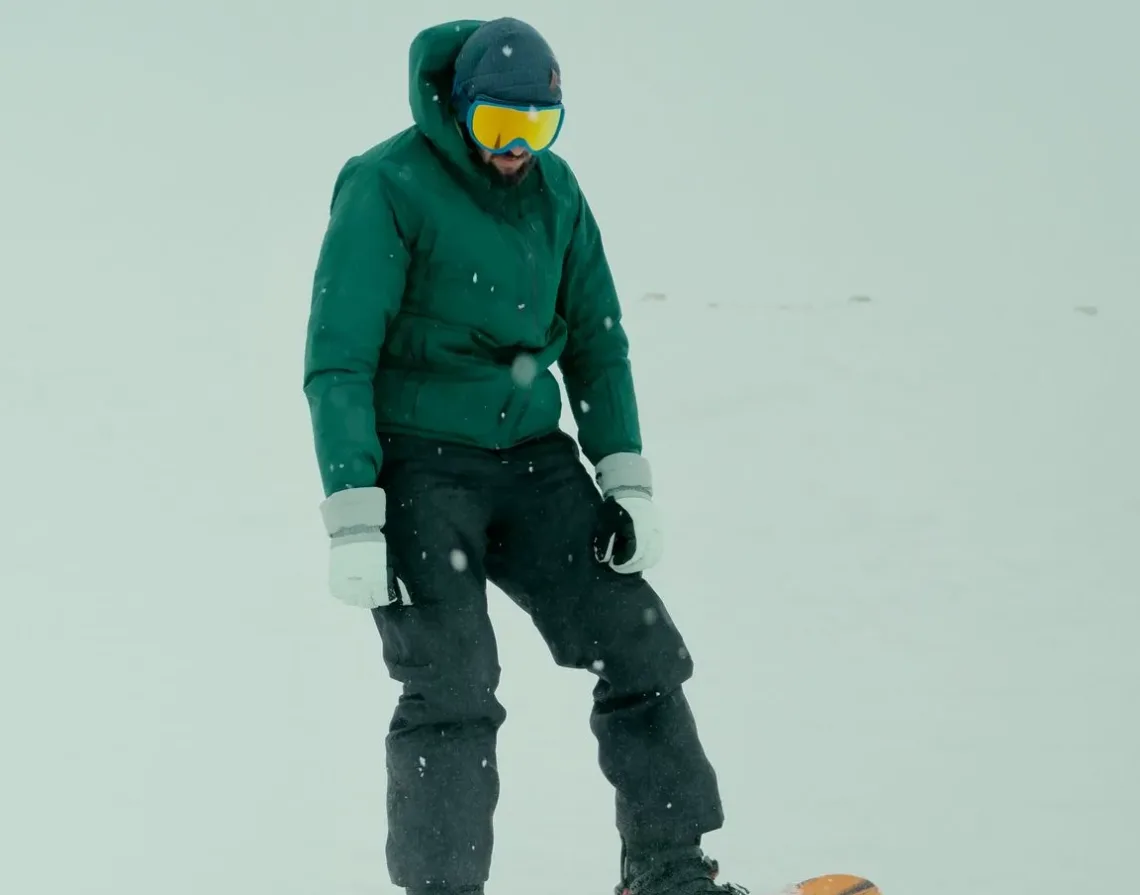
A snowboard jacket has to manage two competing jobs. It must block wind and snow on the lift, but it also needs to release heat when you are riding hard. Choosing solely by warmth can leave you sweaty, while choosing solely by waterproof ratings can overlook fit, ventilation, and snow-sealing details.
The best snowboard jacket for snowboarding depends on your climate, activity level, layering habits, and preferred fit. An insulated jacket is convenient in colder conditions, while a shell offers more control across changing weather. Powder skirts, wrist gaiters, helmet-compatible hoods, and underarm vents often make a bigger practical difference than extra pockets or casual styling.
Quick Answer
For riders seeking a balanced insulated option, the Burton Reserve 2-Layer Insulated Jacket combines low-profile synthetic insulation with a listed 20K waterproof and 20K breathability rating. Riders who prefer to build their own layering system should consider the Burton Reserve 2-Layer Shell. The Volcom Buckthreeeighty offers a baggier freeride fit at a lower listed price, while the GSOU SNOW Women’s Jacket and Pants Set provides coordinated outerwear for shoppers who need both pieces.
This guide includes eight options serving different needs. They are not ranked from first to last, since a warm insulated jacket, an adaptable shell, and a loose anorak solve different problems.
Snowboard Jacket Comparison
| Product | Best For | Construction | Weather Protection | Fit and Layering | Notable Trade-Off |
|---|---|---|---|---|---|
| Burton Reserve Insulated | Cold resort days | Two-layer shell with synthetic insulation | Listed 20K/20K protection, fully taped seams | Regular fit with low-profile insulation | Less adaptable than an uninsulated shell |
| Burton Reserve Shell | Flexible layering | Uninsulated two-layer shell | Listed 20K/20K protection, fully taped seams | Regular fit designed for a mid-layer | Warm layers must be purchased separately |
| Volcom Buckthreeeighty | Baggy freeride fit | Recycled-blend two-layer shell | Listed 10K/10K protection, critically taped seams | Baggy fit with substantial layering room | Lower weather rating than several alternatives |
| GSOU SNOW Women’s Set | Coordinated jacket and pants | Insulated jacket and loose pants | Listed 20K waterproof rating | Loose fit; size chart requires careful review | Less useful if you already own snowboard pants |
| GSOU SNOW Unisex Baggy Jacket | Loose unisex styling | Nylon exterior and polyester interior | Listed 20K waterproof rating | Loose cut with layering space | Care instructions rule out machine drying |
| HIGH EXPERIENCE 3L Anorak | Riders who prefer a pullover | Three-layer anorak construction | Listed 30K waterproof and 25K breathability ratings | Baggy pullover fit | Less convenient to remove than a full-zip jacket |
| Volcom Brighton | Ventilation and snow sealing | Hooded snowboard jacket | Powder skirt and jacket-to-pant connection | Layering depends on selected size | Available listing provides limited fabric specifications |
| MAOYSSEN Fleece-Lined Jacket | Low-cost occasional use | Fleece-lined winter jacket | Manufacturer describes it as waterproof and windproof | Buyers should verify measurements | No numerical waterproof or breathability rating supplied |
How We Chose These Snowboard Jackets
The recommendations were assessed using manufacturer-listed construction and features rather than unsupported temperature claims. Particular attention was given to weather protection, insulation, ventilation, mobility, layering space, snow-sealing features, and ease of care.
- Weather protection: Waterproof ratings, seam sealing, cuffs, hoods, powder skirts, and jacket-to-pant connections were considered together. A high fabric rating alone does not guarantee that every opening will keep snow out.
- Warmth and layering: Insulated jackets were separated from shells. Insulation simplifies dressing for cold days, while shells let riders adjust base and mid-layers as conditions change.
- Breathability: Listed breathability ratings and mechanical vents were considered, especially for riders who generate substantial heat.
- Mobility: Snowboarding requires room through the shoulders, torso, and arms. Regular and baggy cuts can both work, but they provide different amounts of layering space.
- Snow-specific details: Powder skirts, wrist gaiters, lift-pass pockets, helmet-compatible hoods, and pant connections received more weight than general-purpose styling.
- Practical limitations: Pullover access, specialized care, missing technical specifications, bulk, and the need for separate layers were treated as meaningful trade-offs.
Our Top Snowboard Jacket Picks
These jackets were selected to cover distinct riding preferences rather than create a simple best-to-worst ranking. Compare each garment’s insulation, fit, ventilation, and weather construction with the conditions you encounter most often. Manufacturer ratings are useful for comparison, but fit, seam construction, maintenance, and correct layering also influence real-world comfort.
Burton Men’s Reserve 2-Layer Insulated Jacket
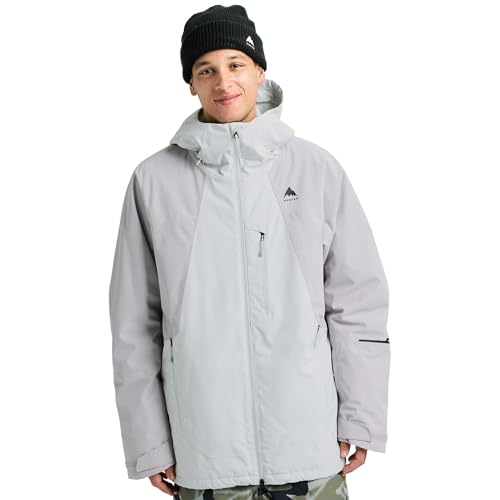
The Burton Reserve 2-Layer Insulated Jacket is designed for riders who want weather protection and warmth in one garment. Its DRYRIDE recycled shell carries listed 20K waterproof and 20K breathability ratings, while fully taped seams, water-resistant YKK zippers, adjustable cuffs, wrist gaiters, and a waist gaiter help close common entry points for moisture and loose snow. Low-profile synthetic insulation adds warmth without requiring a separate bulky mid-layer. A regular fit and two-way front zipper are intended to preserve movement, and the adjustable hood is described as helmet compatible.
Ventilation and storage make this more practical than a basic insulated winter coat. Pit zips allow riders to release heat, while a sleeve pocket, device storage, handwarmer pockets, dump pocket, and small-item pocket organize mountain essentials. It is particularly relevant to riders who spend cold periods sitting on lifts but still need airflow on descents. The trade-off is that fixed insulation offers less flexibility during mild weather or high-output riding than an uninsulated shell. Burton states that its outerwear is backed by a lifetime warranty, but buyers should review the warranty terms and care label.
Pros:
- Low-profile synthetic insulation provides built-in warmth.
- Listed 20K waterproof and 20K breathability ratings suit demanding resort conditions.
- Fully taped seams, wrist gaiters, and a waist gaiter improve snow protection.
- Pit zips help manage heat during active riding.
- Helmet-compatible hood and varied storage are designed around snow sports.
Cons:
- Fixed insulation is less adaptable during warm spring sessions.
- May be too warm for riders who run hot or use thick mid-layers.
- Shoppers should confirm that the regular fit leaves enough room for their preferred layers.
This is a well-rounded choice for riders who regularly face cold, wet, or windy resort weather and prefer the simplicity of built-in insulation. Its ventilation reduces one common drawback of insulated jackets, although riders who encounter wide temperature swings may still be better served by a shell and removable mid-layer.
Best for: Riders seeking an insulated resort jacket with substantial weather protection and snowboard-specific details.
Burton Men’s Reserve 2-Layer Shell Jacket

The shell version of Burton’s Reserve 2-Layer Jacket prioritizes weather protection and layering flexibility instead of built-in insulation. Burton lists its recycled DRYRIDE fabric at 20K waterproofness and 20K breathability, supported by fully taped seams and water-resistant YKK zippers. Adjustable cuffs, stretch wrist gaiters, a waist gaiter, and jacket-to-pant attachments help prevent powder from reaching inner layers. The regular fit accommodates a mid-layer, while the two-way zipper and helmet-compatible hood support movement and coverage on the mountain.
This version makes sense for riders who want one outer shell for multiple parts of the season. A lightweight fleece may be enough in mild conditions, while a warmer synthetic or down mid-layer can be added on colder days. Pit zips increase its usefulness for active riders, and its storage layout includes hand pockets, device organization, sleeve storage, and a mesh dump pocket. The important limitation is straightforward: a shell does not supply meaningful insulation by itself. Its total value also depends on whether the buyer already owns suitable base and mid-layers, especially given its higher listed price than many jackets in this guide.
Pros:
- Uninsulated construction supports a flexible layering system.
- Listed 20K/20K fabric balances weather protection and moisture release.
- Fully taped seams and multiple snow barriers improve coverage.
- Pit zips provide direct ventilation during strenuous riding.
- Regular fit, two-way zipper, and helmet-compatible hood support mountain use.
Cons:
- Requires separate insulating layers in cold weather.
- Higher listed price than several insulated options.
- A full layering system may be bulkier if the layers are not chosen carefully.
The Reserve Shell is the more adaptable Burton option in this group. It suits riders who understand their layering needs and want to change warmth levels without changing jackets. People who prefer one warm garment with minimal planning will likely find the insulated Reserve more convenient.
Best for: Frequent riders who want an adaptable shell for changing temperatures and already own suitable layers.
Volcom Men’s Buckthreeeighty Snowboard Jacket

The Volcom Buckthreeeighty is a two-layer shell built around a baggy freeride fit. Its V-Science recycled-blend plain-weave fabric has a PFAS-free durable water-repellent treatment and listed 10,000 mm waterproof and 10,000 g/m² breathability ratings. Critically taped seams reinforce the areas considered most exposed, although this is not the same as having every seam taped. Since the jacket is not described as insulated, its warmth will come primarily from the base and mid-layers worn underneath. The loose cut provides room for those layers and supports a relaxed range of motion.
Volcom’s Zip Tech interface is a central reason to consider this model, especially for riders using compatible Volcom pants. Connecting the jacket and pants can reduce the amount of snow entering during falls or deep-powder riding. An adjustable powder skirt, cinch cuffs, hem adjustment, hidden hood controls, and soft chin guard add further protection. Brushed handwarmer pockets and a ticket ring cover basic convenience. Compared with 20K-rated shells, its listed weather specifications and partial seam taping are more appropriate for typical resort days than prolonged exposure to very wet storms.
Pros:
- Baggy cut allows freeride movement and generous layering space.
- Zip Tech interface connects with compatible Volcom pants.
- PFAS-free durable water-repellent treatment is paired with recycled-blend fabric.
- Powder skirt, adjustable cuffs, hood controls, and hem cinch help seal out snow.
- Soft chin guard and lined hand pockets improve comfort.
Cons:
- Listed 10K/10K performance is lower than several jackets in this guide.
- Critically taped seams provide less comprehensive sealing than fully taped seams.
- Baggy styling may feel excessive for riders who prefer a close regular fit.
This Volcom jacket is best viewed as a roomy, layer-friendly resort shell rather than a heavily insulated storm jacket. Its snow-sealing system and relaxed mobility are useful for freestyle and freeride use, but riders who regularly encounter sustained wet snowfall may want higher-rated fabric and fully taped seams.
Best for: Snowboarders who prefer a baggy shell and want compatibility with Volcom’s jacket-to-pant system.
GSOU SNOW Women’s Ski Jacket and Pants Set

This GSOU SNOW set packages a loose snowboard jacket and matching pants for women who need a complete outerwear system. The jacket uses lightweight cotton-style fill for insulation, while the manufacturer lists the set with a 20,000 mm waterproof rating and 15,000 g/m²/24-hour breathability rating. Underarm ventilation helps compensate for the added insulation during active riding. A built-in snow skirt reduces upward snow entry, and the jacket includes zippered, chest, inner, and sleeve storage for a phone, pass, wallet, and small accessories.
Buying both garments together can simplify coordination, but fit becomes particularly important. The jacket must leave enough room for arm movement and base layers, while the pants need suitable waist, hip, rise, and inseam measurements. Buyers should compare their measurements with the seller’s size chart rather than relying only on a familiar letter size. This set is most appealing to shoppers starting without either garment. Those who already own well-fitting snowboard pants may get more value and fit control by choosing a jacket separately. Insulation also makes the set more oriented toward cold-weather use than warm spring riding.
Pros:
- Includes both a snowboard jacket and coordinating pants.
- Listed 20,000 mm waterproof rating supports wet and snowy conditions.
- Underarm vents provide a way to release excess heat.
- Loose design allows movement and space for appropriate base layers.
- Snow skirt and varied pockets add practical mountain functionality.
Cons:
- Both pieces must fit correctly within the same selected size.
- Insulation may be too warm for mild weather or highly active riders.
- Offers less value to shoppers who already own suitable snowboard pants.
The GSOU SNOW set fills a useful role for a rider assembling an outfit from the beginning. Its listed weather ratings and ventilation are promising on paper, but buyers should pay close attention to garment measurements and care directions because a coordinated set is only useful when both pieces fit comfortably.
Best for: Women who want a loose, insulated jacket and snowboard pants in one coordinated purchase.
GSOU SNOW Unisex Baggy Snowboard Jacket

The GSOU SNOW unisex jacket combines a 100 percent nylon exterior with a polyester interior and a loose, baggy profile. The manufacturer lists a 20,000 mm waterproof rating, positioning it for snowy and wet mountain conditions. Its closure system includes adjustable hook-and-loop cuffs, thumbholes, a drawcord hem, and a snow skirt. These features work together to limit gaps around gloves, pants, and the jacket hem. Multiple outer, sleeve, mesh, and zippered interior pockets provide considerably more storage than a minimalist shell.
This model is mainly differentiated by its relaxed unisex styling and insulated construction. It may appeal to riders who want substantial layering space, a less fitted silhouette, and a jacket that can also be used as casual winter outerwear. Unisex sizing deserves careful attention because the same labeled size may fit different body shapes very differently. Buyers should prioritize the listed chest, sleeve, and garment-length measurements. Maintenance is another consideration. The supplied instructions recommend gentle washing with the zippers closed and advise against machine drying, bleach, ironing, and dry cleaning, so air-drying space will be necessary.
Pros:
- Listed 20,000 mm waterproof rating offers strong protection on paper.
- Loose cut leaves room for movement and additional layers.
- Snow skirt, thumbholes, adjustable cuffs, and hem drawcord reduce open gaps.
- Numerous pockets organize passes, gloves, electronics, and small essentials.
- Unisex styling can work for riders seeking a relaxed silhouette.
Cons:
- Unisex sizing may require more careful measurement comparison.
- Insulated, baggy construction may feel bulky to some riders.
- Cannot be machine dried according to the supplied care instructions.
This GSOU SNOW jacket suits riders who prioritize a loose fit, built-in warmth, and generous storage. It is less suitable for anyone seeking a compact technical shell or easy machine drying. Check both body and garment measurements before ordering, particularly sleeve length and torso coverage.
Best for: Men or women who prefer baggy styling, built-in warmth, and extensive pocket storage.
HIGH EXPERIENCE Men’s 3-Layer Snowboard Anorak

The HIGH EXPERIENCE snowboard jacket uses a three-layer, baggy anorak design rather than a conventional full-length front zipper. The manufacturer describes the outer face as abrasion and tear resistant, with a middle layer intended to block wind and retain warmth and an inner surface designed for comfort and moisture movement. Its listed specifications are 30,000 mm waterproofness and 25,000 g/m²/24-hour breathability. Underarm zippers provide mechanical ventilation, while a built-in snow skirt helps stop powder from moving under the hem.
Anoraks can offer clean front coverage and a distinctive relaxed fit, but they require a different routine. Pulling the jacket over a helmet, hat, or layered clothing is generally less convenient than opening a full zipper, particularly indoors or during quick weather changes. In exchange, this model provides multiple pockets, including chest and cuff storage for frequently used items such as a lift pass. Its high listed ratings make it worth considering for storm-focused riders, although marketplace specifications should still be considered alongside seam construction, closure quality, correct maintenance, and fit. Buyers are specifically advised to use the seller’s height and weight guidance before selecting a size.
Pros:
- Three-layer construction is designed for active snow use.
- High listed waterproof and breathability ratings.
- Underarm vents help regulate heat and moisture.
- Built-in snow skirt reduces powder entry.
- Baggy profile supports mobility and layering.
Cons:
- Pullover construction is less convenient to put on and remove.
- Fit depends on carefully interpreting the seller’s size guidance.
- High fabric ratings do not by themselves confirm the performance of every seam and closure.
This anorak is a specialized alternative for riders who like pullover outerwear and want high listed weather specifications. Its ventilation and powder skirt are useful snowboard features, but anyone who frequently adjusts layers or moves between indoor and outdoor spaces may prefer a full-zip jacket.
Best for: Riders who prefer a baggy pullover and prioritize listed storm protection and underarm ventilation.
Volcom Men’s Brighton Hooded Snowboard Jacket

The Volcom Brighton is a snowboard-specific hooded jacket equipped with several practical controls for snow and heat. Its Zip Tech interface can connect the jacket to compatible Volcom pants, while an adjustable powder skirt provides another barrier around the waist. The hood uses hidden cinch controls, and a soft chin guard helps reduce irritation where the front closure contacts the face. Mesh-lined zippered vents allow direct airflow without leaving a completely open vent against falling snow or loose items.
This model deserves consideration for riders who place a high value on ventilation and jacket-to-pant integration. Those features can be more useful during a full day of riding than decorative details or excessive insulation. However, the supplied listing information does not provide a numerical waterproof rating, breathability rating, insulation description, or seam-taping specification. Buyers should verify those details on the selected color and size before choosing it for consistently wet or severe conditions. It may be a sensible alternative for someone already using compatible Volcom pants, but the limited supplied fabric information makes direct technical comparison with rated shells more difficult.
Pros:
- Zip Tech connection can integrate with compatible Volcom pants.
- Mesh-lined vents allow riders to manage excess heat.
- Adjustable powder skirt adds protection around the waist.
- Hidden hood adjustment maintains a clean exterior.
- Soft chin guard may improve comfort when fully zipped.
Cons:
- Supplied product details do not state numerical waterproof or breathability ratings.
- Insulation and seam-sealing information should be verified before purchase.
- Jacket-to-pant integration is most useful with compatible Volcom pants.
The Brighton offers a strong set of functional snowboard details, particularly for existing Volcom users. It should not be selected on features alone when storm performance is the priority. Confirm its fabric, insulation, and seam specifications for the exact version being sold before comparing it with fully documented technical shells.
Best for: Volcom pant owners and riders who prioritize venting, waist sealing, and a snow-sport-focused design.
MAOYSSEN Men’s Fleece-Lined Snow Jacket

The MAOYSSEN jacket is a low-cost, fleece-lined winter coat marketed for snowboarding, skiing, hiking, and other outdoor activities. Its adjustable cuffs, internal hem drawcord, and removable adjustable hood are intended to reduce cold-air entry. The fleece lining provides built-in warmth, and multiple pockets hold everyday essentials. The manufacturer describes the outer shell as waterproof and windproof, but the supplied information does not include a numerical hydrostatic-head rating, breathability figure, seam-sealing method, powder skirt, or snowboard-specific jacket-to-pant connection.
Those missing details matter because snowboarding places more demands on outerwear than casual winter walking. Repeated falls, wet lift seats, and sustained snowfall expose seams and closures to moisture, while active riding requires some way to release body heat. This jacket may be reasonable for occasional fair-weather resort use, beginners working within a strict budget, or general winter wear. It is a less certain choice for heavy wet snow or frequent riding. Buyers should also verify sizing, care directions, and return terms, since the listing provides limited technical and fit information compared with established snow-sport jackets.
Pros:
- Fleece lining supplies built-in warmth for cold casual use.
- Adjustable cuffs and hem help limit drafts.
- Removable adjustable hood offers flexible coverage.
- Multiple pockets provide practical storage.
- Low listed price may suit occasional users and tight budgets.
Cons:
- No numerical waterproof or breathability ratings are supplied.
- Seam sealing and snowboard-specific snow barriers are not described.
- May provide limited ventilation during active riding.
This jacket is the budget-oriented option, but its limitations should be weighed carefully. It may cover occasional use in moderate conditions, while frequent riders should generally prioritize documented waterproofing, seam construction, ventilation, and a powder skirt. Cost savings have less value if the jacket cannot match the expected weather.
Best for: Budget-conscious beginners, occasional riders, or shoppers seeking a fleece-lined general winter jacket.
How to Choose the Best Snowboard Jacket for Your Needs
Shell Versus Insulated Construction
A shell jacket blocks weather but supplies little warmth on its own. Warmth comes from the layers underneath, allowing the rider to change insulation as temperatures and activity levels shift. This is often the most adaptable setup for frequent riders, people who run warm, and anyone snowboarding in variable climates.
An insulated snowboard jacket combines an outer shell with synthetic or other insulation. It requires less planning and can feel more comfortable on cold lift rides, but the insulation cannot be removed when the weather warms. Underarm vents help, although they do not provide as much flexibility as removing a separate mid-layer.
- Choose a shell if you want seasonal versatility or frequently adjust layers.
- Choose light insulation if you want built-in warmth without excessive bulk.
- Choose heavier-feeling insulation cautiously if you ride hard, run warm, or expect mild conditions.
Understanding Waterproof Ratings
Waterproof ratings are commonly expressed in millimeters. In general, a higher number indicates that the fabric can resist more water pressure in a laboratory test. A 20,000 mm fabric is typically intended for wetter or more demanding conditions than a 10,000 mm fabric. However, the number does not tell the whole story.
Check whether the jacket has fully taped seams, critically taped seams, or no stated seam sealing. Fully taped construction covers every sewn seam, while critical taping concentrates on areas considered most exposed. Zipper design, hood coverage, cuff closure, fabric condition, and maintenance also affect water entry.
A durable water-repellent treatment helps snow and droplets bead on the surface, but it is not the same as the waterproof membrane or coating beneath it. DWR performance can decline as the garment becomes dirty or worn and may eventually require renewal according to the manufacturer’s directions.
Breathability and Ventilation
Breathability ratings indicate how readily moisture vapor can move through a fabric under test conditions. They are useful for broad comparison but cannot predict comfort for every rider. Humidity, layering, pace, and fit all affect how quickly sweat accumulates.
Mechanical ventilation is often easier to notice in practice. Pit zips or underarm vents let hot air escape quickly while riding, hiking a ridge, or standing in a warm lift line. Mesh-lined vents can help prevent loose items from falling through, although mesh may slightly reduce airflow compared with a completely open vent.
Fit, Mobility, and Layering Room
A snowboard jacket should permit reaching forward, bending, rotating, and fastening bindings without pulling tightly across the shoulders or exposing the lower back. The sleeves should remain near the gloves when the arms are extended, and the hem should provide coverage in a crouched riding position.
Baggy jackets offer generous mobility and layering space but can feel bulky during travel or casual use. Regular fits usually balance mobility and a cleaner profile. A trim fit can work if it is articulated for movement, but it may leave little room for insulating layers.
Use the seller’s actual garment measurements whenever available. Chest size alone is not enough. Compare sleeve length, back length, shoulder width, and the space required by your intended mid-layer. Unisex garments require particular care because body proportions vary even when chest measurements are similar.
Powder Skirts and Jacket-to-Pant Connections
A powder skirt forms an internal barrier around the waist. It is useful during falls, deep snow, and windy lift rides. Some skirts attach to compatible pants, while others use elastic or snap closures independently.
A jacket-to-pant interface can provide more continuous coverage, but compatibility may be brand or model specific. This feature has the greatest value for riders who already own matching pants or plan to purchase them. A conventional powder skirt remains more flexible if you mix outerwear brands.
Hood and Cuff Design
A snowboard hood should fit comfortably over the helmet if that is how it will be used. It should turn with the head without severely limiting side vision. Adjustment points help control excess fabric, particularly in wind.
At the sleeves, adjustable outer cuffs work with gloves, while internal wrist gaiters reduce gaps when the arms move. Decide whether you wear gloves under or over the cuff before assessing the opening size. Thumbhole gaiters can improve coverage but may feel restrictive if sleeve length is too short.
Pockets and Lift Access
Useful storage depends on what you carry. A sleeve pass pocket can simplify scanning at lift gates. Internal dump pockets hold goggles or gloves, while zipped chest storage can keep a phone away from wet outer areas. Avoid filling every pocket, since excess weight can pull on the jacket and restrict movement.
Electronics can lose battery capacity more quickly in cold weather. An interior pocket close to the body generally offers more protection than an exposed outer pocket, but no pocket should be assumed waterproof unless the manufacturer explicitly says so.
Building a Snowboard Layering System
The jacket is only one part of cold-weather comfort. A practical system moves perspiration away from the skin, adds enough insulation for the conditions, and blocks wind and precipitation.
- Base layer: Choose a moisture-managing synthetic or wool layer. Avoid cotton next to the skin because it retains moisture and can become uncomfortable when activity slows.
- Mid-layer: Add fleece, synthetic insulation, or another suitable insulating garment. Select thickness according to the weather and whether the jacket already has insulation.
- Outer layer: Use the snowboard jacket to control wind, snow, and rain while allowing heat to escape.
More layers are not automatically better. Tight stacking can compress insulation, reduce mobility, and restrict circulation. If a jacket only fits when the mid-layer is compressed, a different size or a lower-bulk insulating piece may work better.
Common Snowboard Jacket Buying Mistakes
- Choosing the warmest jacket available: Excess insulation can cause sweat buildup, especially during active riding or mild weather.
- Ignoring seam construction: A fabric rating says little about water that can enter through untreated seams.
- Buying a casual winter coat for regular riding: General coats may lack vents, a powder skirt, wrist gaiters, helmet-compatible hood adjustment, and suitable mobility.
- Assuming waterproof means breathable: The two properties are related but measured separately. Ventilation remains important.
- Ordering by letter size alone: Brand sizing, unisex proportions, and intended fit can vary. Garment measurements are more useful.
- Forgetting the helmet and gloves: Hood and cuff compatibility should be checked with the equipment you plan to use.
- Overlooking care requirements: Improper detergent, high heat, fabric softener, or neglected cleaning can reduce outerwear performance.
- Buying matching-brand features without compatible pants: Jacket-to-pant systems are less valuable if they cannot connect to your existing gear.
Snowboard Jacket Care and Maintenance
Always follow the garment’s sewn-in care label, even when general outerwear advice differs. Close zippers and fasteners before washing to reduce snagging. Use a detergent approved for technical outerwear when required, and avoid fabric softener because it can leave residue that interferes with moisture movement and water repellency.
Drying instructions vary. Some technical garments allow low heat, which may help reactivate certain durable water-repellent finishes. Others, including one GSOU SNOW option in this guide, specifically advise against machine drying. Never apply heat without checking the label.
Wash outerwear when dirt, body oils, or sunscreen begin to accumulate. A dirty jacket may stop beading water even when its underlying waterproof layer remains functional. If water continues soaking into the face fabric after cleaning and approved drying, use a compatible DWR renewal product according to both the jacket and treatment instructions.
Frequently Asked Questions
Should a snowboard jacket be insulated?
Not necessarily. Insulation is helpful for cold conditions and riders who prefer a simple clothing system. An uninsulated shell is more adaptable because mid-layers can be added or removed. Riders who run warm, ride aggressively, or experience variable weather often prefer shells.
Is a 10,000 mm waterproof rating enough for snowboarding?
A listed 10,000 mm rating may be adequate for many typical resort days, particularly in cold, relatively dry snow. Wetter climates, prolonged snowfall, and frequent contact with wet surfaces can justify higher-rated fabric and fully taped seams. Condition and maintenance also matter.
Is 20K waterproofing always better than 10K?
A higher laboratory rating generally indicates greater resistance to water pressure, but it does not automatically make the entire jacket better. Seam sealing, zipper construction, fit, breathability, ventilation, and maintenance can outweigh the difference for some riders.
How should a snowboard jacket fit?
It should allow unrestricted shoulder and torso movement with the intended layers underneath. Sleeves and the back hem should remain adequately covered in a riding stance. A jacket can be intentionally regular or baggy, but it should not compress insulation or expose gaps when bending.
Can a ski jacket be used for snowboarding?
Yes, provided it offers suitable mobility, weather protection, and snow barriers. Snowboarders often favor a slightly longer or roomier cut, but many jackets serve both sports. Features such as a powder skirt, vents, adjustable cuffs, and a helmet-compatible hood are useful for either activity.
Do I need a powder skirt?
A powder skirt is not essential for every groomed run, but it becomes valuable during falls, deep snow, and windy conditions. Riders who spend time off-piste or are still learning may appreciate the added barrier because they are more likely to contact loose snow.
What should I wear under a snowboard shell?
Begin with a moisture-managing base layer. Add a fleece or insulated mid-layer according to the conditions, then use the shell for weather protection. Avoid cotton base layers, and make sure the full system does not restrict movement.
Are baggy snowboard jackets warmer?
Not automatically. A baggy fit creates room for thicker layers, but excess open space can also allow more air movement if the hem and cuffs are not adjusted. Warmth depends more on insulation, layering, wind protection, fit control, and activity level.
How long should a snowboard jacket last?
Service life depends on fabric quality, frequency of use, abrasion, washing practices, repairs, and storage. Inspect high-wear areas, seam tape, cuffs, zippers, and the face fabric regularly. Small damage should be repaired before it spreads or allows significant moisture entry.
Final Recommendations
Among these eight jackets, the Burton Reserve 2-Layer Insulated Jacket offers the strongest balance for riders who want built-in warmth, documented weather specifications, ventilation, and snow-specific construction. The Burton Reserve 2-Layer Shell is better for riders who want to control warmth with separate layers.
The Volcom Buckthreeeighty is a practical alternative for a baggy freeride fit and Volcom pant integration, while the GSOU SNOW Women’s Set is aimed at shoppers who need both a jacket and pants. Riders who specifically prefer pullover outerwear can consider the HIGH EXPERIENCE 3L Anorak.
Before ordering, compare the jacket’s measurements with your base and mid-layers, confirm the specifications for the exact color and size, and consider the wettest conditions you realistically expect. The right choice is not simply the warmest or highest-rated jacket. It is the one that balances weather protection, heat management, mobility, and fit for the way you ride.