Choosing a men’s down jacket is less about finding the thickest coat and more about matching insulation, weather protection, and fit to the way you spend winter. A lightweight puffer can work well for commuting, travel, and active days, while cold, windy conditions may call for a hood, adjustable openings, and room for insulating layers.
This guide compares six practical options across those different needs. Most contain natural down, while two use synthetic insulation and are included for shoppers who prioritize easier moisture management, lower cost, or an alternative to animal-derived fill. None should be treated as a substitute for a waterproof shell during prolonged rain or heavy, wet snow.
Quick Answer
The Eddie Bauer CirrusLite Down Jacket offers the most balanced combination of recognized 650-fill down, low weight, packability, and light moisture protection. The Pioneer Camp Hooded Down Puffer is more suitable when a hood and adjustable weather-blocking features are priorities. For a lower-cost natural-down option, consider the Rdruko Hooded Down Puffer.
The Calvin Klein Classic Packable Down Jacket is better aligned with commuting and everyday mobility. Shoppers who prefer synthetic insulation can compare the affordable Amazon Essentials Packable Puffer with the more style-oriented Tommy Hilfiger Ultra Loft Puffer.
Comparison Table
| Product | Best For | Insulation | Weather Protection | Fit and Layering | Notable Trade-Off |
|---|---|---|---|---|---|
| Eddie Bauer CirrusLite | Balanced everyday and travel use | 650-fill down | DWR-treated shell for light moisture | Lightweight layering piece | No hood |
| Pioneer Camp Hooded Down Puffer | Windy days and hooded coverage | 90% duck down, listed at 650 fill power | Water-resistant shell with wind-blocking design | Adjustable hood and elastic openings | Weather claims are not the same as waterproofing |
| Rdruko Hooded Down Puffer | Budget-friendly natural down | 90% duck down | Water-resistant nylon shell | Lightweight and packable | No published fill-power figure |
| Calvin Klein Classic Packable Down Jacket | Commuting and mobility | Down insulation | Water-resistant outer layer | Stretch fabric supports movement | No hood or published fill power |
| Amazon Essentials Packable Puffer | Budget synthetic insulation and size availability | Synthetic insulation | Water-resistant nylon shell | Regular fit; Big & Tall options available | Not a natural-down jacket |
| Tommy Hilfiger Ultra Loft Puffer | Casual wear and travel | Ultra Loft synthetic fill | Basic cold-weather shell | Standard and Big & Tall sizing | Weather protection is less clearly specified |
How We Chose These Jackets
The recommendations were evaluated using the information most likely to affect real-world winter use. That includes insulation type, published fill power where available, shell treatment, hood and cuff design, packability, pocket arrangement, and likely layering role. We also considered whether each jacket serves a distinct type of shopper rather than selecting several nearly identical puffers.
- Warmth-to-weight balance: Down quality and construction matter more than jacket thickness alone. Published fill power was treated as one useful factor, not a complete warmth rating.
- Weather resistance: Water-resistant and water-repellent fabrics can handle brief exposure to light precipitation, but they are not assumed to be waterproof.
- Layering flexibility: Lightweight jackets can function as outer layers in calmer weather or as insulating midlayers beneath shells.
- Mobility: Stretch fabric, low bulk, and properly fitted openings can make a jacket more practical for walking, travel, and active use.
- Packability: A jacket that packs into a pouch or pocket is easier to carry but may use lighter materials that require more careful handling.
- Value: Cost was weighed against insulation details, weather features, fit options, and versatility rather than brand name alone.
Prices and available sizes can change. Fit also varies by body shape and by how much clothing will be worn underneath, so current size charts and recent buyer feedback should be checked before ordering.
Our Top Picks
These six jackets are not arranged as a simple best-to-worst ranking. Each emphasizes a different balance of warmth, mobility, weather coverage, cost, or casual style. Compare the insulation and shell first, then consider whether you need a hood, room for layers, or a jacket compact enough to carry in a daypack or suitcase.
Eddie Bauer Men’s CirrusLite Down Jacket
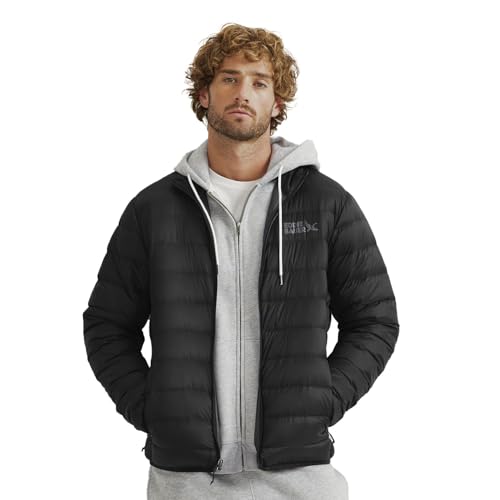
The Eddie Bauer CirrusLite is an ultralight, packable jacket insulated with 650-fill down. That published fill-power figure gives shoppers a useful point of comparison, although the total amount of down and the jacket’s construction also influence warmth. The solid-color version uses a recycled nylon shell and recycled nylon lining, while printed versions may use recycled polyester for the shell. A StormRepel durable water-repellent treatment is intended to make light moisture bead on the surface rather than soak in immediately. A higher collar adds protection around the neck, and two zippered side pockets secure small essentials.
This model offers the strongest all-around balance in the group for travel, errands, commuting, and low-to-moderate outdoor activity in cold, mostly dry weather. Its low bulk makes it useful as a standalone puffer or as insulation beneath a roomy rain or wind shell. However, it has no hood, and its DWR treatment does not turn it into a waterproof jacket. Anyone expecting sustained precipitation should plan to add a protective shell.
Pros:
- 650-fill down provides a useful warmth-to-weight balance
- Ultralight, packable design is practical for travel
- DWR-treated shell helps with brief exposure to light moisture
- Higher neckline reduces heat loss around the collar
- Recycled shell and lining materials are used in the listed construction
Cons:
- No hood for added head and neck coverage
- Water-repellent treatment is not suitable for prolonged rain
- Lightweight construction may require more care around rough surfaces
The CirrusLite is a versatile choice for shoppers who want natural down without carrying a bulky coat. It works especially well as part of a flexible layering system, but it is better suited to dry cold and light precipitation than wet winter storms.
Best for: Everyday use, travel, and lightweight layering in mostly dry winter weather.
Pioneer Camp Men’s Hooded Down Puffer Jacket

The Pioneer Camp puffer combines a hooded design with insulation listed as 90% duck down and 650 fill power. Its high-density shell is described by the manufacturer as water-resistant and windproof, while adjustable hood drawcords, elastic cuffs, and an elastic hem help reduce drafts. The high neckline provides additional coverage when the zipper is fully closed. Two zippered hand pockets and two large interior pockets offer more storage than many lightweight puffers, and the jacket packs into its own inner pocket rather than requiring a separate storage pouch.
This is the most feature-focused option for readers who want a lightweight down jacket with a hood. The adjustable openings make it more adaptable to gusty weather than minimalist collar-only designs, and the self-packing system suits travel. Still, shoppers should interpret the weather claims carefully. The listing does not establish a waterproof membrane or sealed-seam construction, so the jacket is better for wind, dry snow, and brief light precipitation than extended exposure to wet weather.
Pros:
- Listed 650-fill, 90% duck-down insulation
- Adjustable hood and high collar increase coverage
- Elastic cuffs and hem help limit cold drafts
- Self-packs into an interior pocket
- Four-pocket layout provides useful storage
Cons:
- Water-resistant construction should not be confused with waterproofing
- A hooded design may be less convenient beneath some close-fitting shells
- Buyers should verify sizing carefully if they plan to add thick layers
This Pioneer Camp jacket makes sense when hood coverage and adjustable draft control matter more than having the lightest possible minimalist puffer. It offers useful winter features, but a waterproof outer shell remains advisable for persistent rain or heavy, wet snow.
Best for: Travel, casual winter activity, and windy conditions where an adjustable hood is useful.
Rdruko Men’s Hooded Down Puffer Jacket
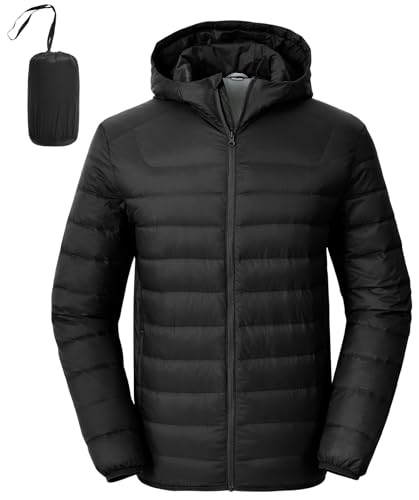
The Rdruko jacket is a lower-cost hooded puffer filled with 90% natural duck down. Its shell and lining are both listed as 100% nylon, with a water-resistant exterior intended for light moisture. Depending on size, the manufacturer reports a weight of approximately 11 to 13.5 ounces. The jacket compresses into an included pouch, making it easy to keep in luggage or a backpack until conditions cool. Elasticized cuffs and hem help retain warm air, while two zippered exterior pockets and two large interior pockets provide room for a phone, gloves, and other small items.
This option is notable for combining natural down, a hood, and low weight at a comparatively accessible price. It suits casual use, travel, hiking breaks, and layering in dry or lightly snowy conditions. The main uncertainty is insulation detail. No fill-power figure is provided, so it is difficult to compare its thermal efficiency directly with the 650-fill models. The lightweight shell also favors packability over ruggedness and should be kept away from sharp branches and abrasive surfaces.
Pros:
- Uses 90% natural duck-down fill
- Hood adds coverage without making the jacket especially heavy
- Packable design includes a separate carrying pouch
- Elastic cuffs and hem help control drafts
- Two exterior and two interior pockets offer practical storage
Cons:
- No published fill-power figure for direct insulation comparison
- Water resistance is intended for limited moisture exposure
- Light nylon construction may not suit abrasive outdoor work
The Rdruko is a practical entry point for shoppers seeking a packable natural-down jacket with a hood. Its specifications favor portability and value, but buyers needing documented insulation performance or a more rugged shell may prefer one of the more detailed alternatives.
Best for: Budget-conscious travelers and casual users who want lightweight natural down with hood coverage.
Calvin Klein Men’s Classic Packable Down Jacket

The Calvin Klein Classic Packable Down Jacket is designed around everyday mobility rather than technical outdoor features. It uses down insulation beneath a water-resistant outer layer and includes breathable stretch fabric intended to support a wider range of motion. Elasticized cuffs and hem create a neat, close-fitting finish that can help limit drafts. Storage is another strength: a zippered chest pocket and two lower zippered welt pockets keep frequently used items secure. Its lightweight, packable construction makes it suitable for carrying in a work bag or suitcase.
Compared with the more outdoor-oriented hooded models, this jacket fits more naturally into commuting, travel, and casual settings. Stretch material may be helpful when driving, walking through a city, or moving between indoor and outdoor spaces. The trade-off is limited technical information. The product details do not provide a fill-power figure, and there is no hood or adjustable weather seal. It is therefore better viewed as a versatile everyday insulating layer than a storm jacket.
Pros:
- Down insulation in a lightweight, packable design
- Stretch fabric supports mobility during everyday activity
- Water-resistant exterior handles brief light precipitation
- Three zippered pockets provide secure storage
- Elasticized cuffs and hem create a streamlined fit
Cons:
- No published down fill power
- No hood for additional weather coverage
- Style-oriented design has fewer adjustment features than outdoor models
The Calvin Klein jacket is better suited to offices, travel days, and casual plans than demanding winter backcountry use. Its mobility and pocket arrangement are practical strengths, while its lack of technical insulation data makes direct warmth comparisons difficult.
Best for: Commuting, business travel, and casual winter wear where mobility and a clean appearance matter.
Amazon Essentials Men’s Packable Lightweight Puffer Jacket

The Amazon Essentials puffer uses synthetic insulation rather than down, so it is not a true down jacket. It remains relevant for shoppers who want similar quilted warmth and packability without natural fill. The jacket has a water-resistant nylon taffeta shell, polyester lining, full-length zipper, and stand-up collar. Elasticated cuffs and a stretch-style bottom opening help hold the jacket close to the body. It has two zippered hand pockets and packs into an included drawstring bag. Its regular fit is described as easy through the shoulders, chest, and waist, and the line includes Big & Tall options.
Synthetic insulation generally retains insulating ability better than untreated down when damp, although this jacket is still only described as water-resistant. It is a sensible budget option for everyday wear, mild winter conditions, or layering beneath a weatherproof shell. The regular fit may provide more forgiving layering space than a trim fashion puffer, but sizing should still be checked against the manufacturer’s chart. Buyers seeking the highest warmth-to-weight ratio of natural down should look elsewhere.
Pros:
- Accessible alternative to natural-down jackets
- Water-resistant nylon shell suits brief light precipitation
- Regular fit can accommodate everyday layers
- Available in standard and Big & Tall sizes
- Packs into an included drawstring carrying bag
Cons:
- Uses synthetic insulation rather than down
- No hood or adjustable hem
- May offer less warmth for its packed size than an efficient down jacket
This Amazon Essentials puffer is most useful for shoppers who prioritize price, straightforward sizing, and synthetic insulation. It lacks the technical features of the hooded models, but it can serve as an uncomplicated everyday jacket or insulating layer.
Best for: Affordable everyday wear, Big & Tall sizing, and shoppers who prefer synthetic insulation.
Tommy Hilfiger Men’s Ultra Loft Lightweight Puffer Jacket

The Tommy Hilfiger Ultra Loft is another synthetic alternative to a natural-down jacket. Its faux-down insulation is intended to provide lightweight cold-weather warmth while allowing the jacket to pack into a matching adjustable storage bag. The exterior has a straightforward casual appearance with the brand’s flag logo on the chest and name at the back of the collar. Two lower zippered pockets and one concealed interior zippered pocket provide secure storage. Standard and Big & Tall sizes broaden the potential fit range, although availability varies by color and size.
This jacket fits readers who care about casual styling and travel convenience more than technical outdoor specifications. The synthetic fill avoids some of the moisture sensitivity associated with untreated natural down, but the provided product details do not establish a waterproof shell or describe an advanced water-repellent treatment. It is therefore best for dry cold, short trips outdoors, and general urban use. Its lack of a hood and adjustable openings also limits protection during windy or snowy weather.
Pros:
- Synthetic Ultra Loft insulation offers a down-free option
- Lightweight jacket packs into a matching bag
- Three zippered pockets secure small belongings
- Casual design works well with everyday clothing
- Standard and Big & Tall sizes are offered
Cons:
- Not insulated with natural down
- No hood or adjustable draft-control features
- Weather-resistance details are limited
The Ultra Loft is primarily an everyday and travel puffer rather than a technical winter jacket. It is a reasonable match for dry conditions and shoppers who prefer recognizable casual styling, but it should be paired with a protective shell when the forecast includes sustained precipitation.
Best for: Casual winter outfits, travel, and shoppers seeking a packable synthetic puffer in extended sizes.
How to Choose the Best Down Jacket for Men
Understand What Fill Power Tells You
Fill power measures the loft of down. Higher-loft down can trap more air relative to its weight, which often supports a better warmth-to-weight ratio. It does not provide a complete temperature rating. Total down weight, baffle construction, jacket coverage, wind exposure, fit, and the layers worn underneath all affect how warm a jacket feels.
A 650-fill jacket can provide a useful balance of performance and cost for everyday winter use. However, a jacket with more total lower-fill down may be warmer than a very light jacket using higher-fill down. When a manufacturer does not publish fill power or fill weight, precise comparisons are difficult.
Distinguish Natural Down From Synthetic Fill
Natural down is valued for its low weight, compressibility, and warmth relative to bulk. It works particularly well in cold, dry conditions and for travel where packed size matters. Its weakness is moisture. Unless specially treated, down can lose loft and insulating efficiency when it becomes wet, and it may take time to dry.
Synthetic insulation usually handles dampness better and can be easier to maintain, but it is often bulkier for a similar level of warmth. It may also lose loft gradually through repeated compression. The Amazon Essentials and Tommy Hilfiger options in this guide use synthetic insulation, even though their quilted construction resembles a down puffer.
Match the Jacket to Your Activity Level
A person standing at a bus stop generates much less body heat than someone hiking uphill. For low-output use, prioritize draft control, coverage, and room for a warm base or midlayer. During active use, a lighter jacket may be more comfortable because excess insulation can trap sweat.
- Commuting: Look for secure pockets, easy movement, and a collar that works with work clothing.
- Travel: Low weight and a reliable packing method are especially useful.
- Hiking: Favor low bulk and layering flexibility. Carry a shell if wind or precipitation is expected.
- Casual wear: Fit, pocket placement, and ease of care may matter more than technical adjustments.
- Snow sports: A lightweight puffer can work as insulation, but it does not replace a snow-sport shell with suitable waterproofing and activity-specific features.
Evaluate Water Resistance Carefully
Water-resistant, water-repellent, and waterproof are not interchangeable terms. A water-resistant puffer may shed a brief flurry or light drizzle, but moisture can eventually pass through its fabric and seams. A DWR treatment helps water bead on the surface, though that finish can become less effective with dirt, abrasion, and repeated washing.
For prolonged rain, sleet, or wet snow, use a waterproof shell over the down jacket. Make sure the shell is roomy enough that it does not compress the down, since crushed insulation cannot trap as much warm air.
Decide Whether You Need a Hood
A hood provides useful coverage in wind and snow, particularly when it has drawcords that keep it in place. It can also add bulk behind the neck when worn beneath another jacket. Collar-only models tend to layer more cleanly under a hooded shell and may look more streamlined for commuting.
If the puffer will usually be your outermost layer, a hood may be worth the additional bulk. If it will spend most of its time beneath a rain shell, a hoodless design can be easier to manage.
Check Fit With Your Intended Layers
A down jacket should allow normal arm and shoulder movement without feeling so loose that cold air circulates freely inside. At the same time, a tight fit can compress the insulation and leave little room for a base layer or fleece.
Measure your chest and compare it with the current brand chart. Consider sizing with the clothing you expect to wear underneath. If you are between sizes, the right choice depends on whether you want a trim standalone jacket or a roomier insulating layer. Also check sleeve and body length, especially when choosing Big & Tall sizing.
Consider Packability and Fabric Durability
Ultralight shells make a jacket easier to compress, but thin fabric is generally more vulnerable to snags and abrasion. A packable down jacket is suitable for travel, maintained trails, and everyday use. It may be less appropriate for construction sites, brush-heavy terrain, or activities where it will repeatedly rub against rough equipment.
Do not store down compressed for long periods. After a trip, remove the jacket from its pouch, allow it to dry completely, and hang it or place it loosely in a breathable storage area.
Common Down Jacket Buying Mistakes
Assuming a Puffy Appearance Guarantees Warmth
Two jackets can look similar while using different insulation types, amounts, and construction. Check whether the fill is natural down or synthetic, whether fill power is published, and how well the collar, cuffs, and hem limit heat loss.
Treating Water Resistance as Storm Protection
A lightweight water-resistant shell is not designed for extended rain. Allowing natural down to become saturated can substantially reduce its loft. A separate waterproof shell is a more dependable solution for wet conditions.
Buying Too Tight for Layering
A close fit can look neat but become restrictive over a fleece or heavy sweater. It can also compress the down. Plan the fit around actual winter layers rather than a thin shirt worn during a fitting.
Choosing Too Much Insulation for Active Use
Overheating leads to perspiration, which can make clothing feel damp and cold once activity slows. For hiking or other higher-output use, a lighter puffer combined with removable layers is often more adaptable than one heavy coat.
Ignoring Care Instructions
Down requires appropriate cleaning and thorough drying to maintain loft. Follow the garment label rather than applying one washing method to every jacket. Harsh detergents, fabric softener, high heat, and incomplete drying can harm performance.
Down Jacket Care and Maintenance
Clean a down jacket only when needed, since unnecessary washing adds wear to lightweight fabrics and water-repellent treatments. Before washing, empty the pockets, close zippers, loosen drawcords, and inspect the shell for small tears. Follow the manufacturer’s care label, as materials and instructions differ.
When machine washing is permitted, a front-loading washer is generally gentler than an older top-loader with a central agitator. Use a cleaner approved for down or technical apparel if the care instructions allow it. Rinse thoroughly so residue does not interfere with loft.
Drying is especially important. Down clumps when wet and must be dried completely to regain loft and avoid odor. Use only the heat setting allowed by the label, pause periodically to break up clumps by hand, and allow ample drying time. Do not put the jacket into storage while any part remains damp.
Frequently Asked Questions
What is the best down jacket for men in this guide?
The Eddie Bauer CirrusLite provides the strongest general balance for shoppers who want published 650-fill down, light weight, packability, and a DWR-treated shell. The Pioneer Camp jacket is more suitable if hood coverage and adjustable openings are priorities. The Rdruko is the more budget-oriented natural-down choice.
Is 650-fill down warm enough for winter?
Fill power alone cannot establish whether a jacket is warm enough for a particular winter day. It describes down loft, not the total insulation amount or a guaranteed temperature range. Weather, wind, activity, jacket fit, and supporting layers all affect comfort. A 650-fill lightweight jacket can be useful for many cold-weather situations, but severe cold may require additional insulation and protection.
Can a down jacket be worn in rain?
Brief light precipitation may be manageable when the shell has a water-resistant finish, but natural down should not be relied upon during sustained rain. Wear a waterproof shell over the jacket in wet conditions, and dry the puffer completely if it becomes damp.
Should a down jacket fit tightly?
It should fit close enough to reduce excessive air movement but not so tightly that it restricts motion, compresses the down, or prevents layering. Try to preserve loft around the chest, shoulders, and arms. Use the brand’s measurements and account for the base layers or fleece you plan to wear.
Is a hooded or hoodless down jacket better?
A hooded jacket provides more standalone protection in wind and snow. A hoodless jacket is usually easier to wear under a hooded waterproof shell and can be less bulky around the neck. The better design depends on how the jacket will be layered.
Are packable down jackets suitable for extreme cold?
Packability does not establish extreme-cold performance. Many packable jackets use lightweight shells and modest insulation to reduce bulk. Without a supported temperature rating and complete insulation data, they should not automatically be considered suitable for severe conditions. Use an appropriate layering system and select protective outerwear based on the forecast and activity.
How should a down jacket be stored?
Store it clean, completely dry, and uncompressed. Hanging it or laying it loosely in a breathable space helps preserve loft. Compression pouches are useful during travel but are not intended for long-term storage.
How often should a down jacket be washed?
Wash it when dirt, body oils, or odors make cleaning necessary, not after every wear. Spot cleaning can address minor marks. Always follow the garment’s care label because shell materials, treatments, and permitted drying methods vary.
Final Recommendations
Among these six options, the Eddie Bauer CirrusLite is the most versatile natural-down pick for travel, daily wear, and flexible layering. Choose the Pioneer Camp Hooded Down Puffer when a hood, adjustable openings, and extra pocket space are more important. The Rdruko Hooded Down Puffer offers a lower-cost route to lightweight natural-down insulation, although it lacks a published fill-power rating.
For commuting and casual settings, the Calvin Klein Classic Packable Down Jacket emphasizes mobility and secure storage. The Amazon Essentials and Tommy Hilfiger Ultra Loft models are synthetic alternatives rather than true down jackets, making them more appropriate for shoppers who prefer down-free insulation.
Before deciding, consider the wettest weather you expect, your activity level, and what will be worn underneath. A lightweight puffer is most useful when it fits into a complete layering system. Leave enough room to preserve loft, add a waterproof shell when conditions require one, and avoid relying on appearance or fill power alone as a guarantee of warmth.