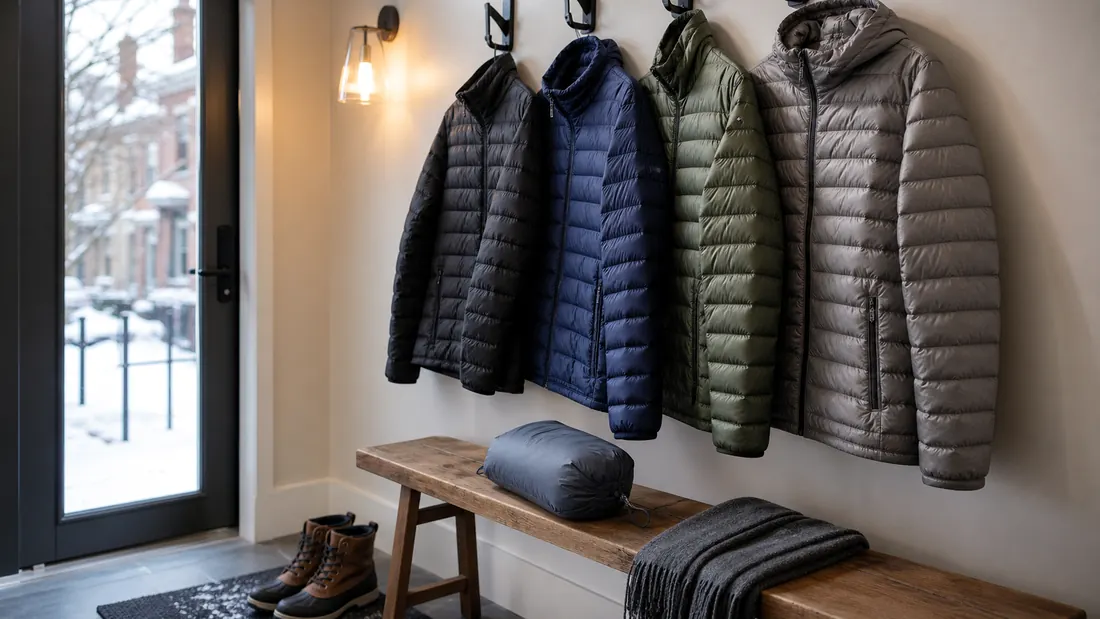
Choosing a men’s puffer jacket becomes easier once you stop treating every quilted coat as interchangeable. A compact jacket for airport travel has different priorities from a winter commuting coat, while a hood that helps during light snow can add unwanted bulk when the jacket is worn beneath a shell. Insulation, coverage, fit, and weather protection all matter more than appearance alone.
The options below focus on lightweight synthetic insulation, packable construction, and everyday versatility. They are most appropriate for mild to moderately cold conditions, travel, commuting, and casual outdoor use. None has a manufacturer-supported extreme-cold temperature rating, and water resistance should not be confused with waterproof protection.
Quick Answer
The Outdoor Ventures Lightweight Packable Hooded Puffer Jacket offers the most balanced feature set in this group, including a hood, elasticized openings, three zippered pockets, and a self-packing design. Men who prefer a simpler collar and wider size availability should consider the Amazon Essentials Packable Puffer Jacket. For a more polished casual appearance, the Tommy Hilfiger Ultra Loft Puffer Jacket combines synthetic insulation with understated branding and practical storage.
These six recommendations serve different needs rather than forming a strict ranking:
- Balanced hooded option: Outdoor Ventures Hooded Packable Puffer
- Affordable everyday option: Amazon Essentials Packable Puffer
- Casual style option: Tommy Hilfiger Ultra Loft Puffer
- Affordable hooded option: Amazon Essentials Hooded Puffer
- Travel option without a hood: Outdoor Ventures Packable Puffer
- Mobility-focused option: Tommy Hilfiger Stretch Poly Hooded Jacket
Men’s Puffer Jacket Comparison
| Product | Best For | Insulation and Shell | Weather Protection | Fit and Layering | Notable Trade-Off |
|---|---|---|---|---|---|
| Outdoor Ventures Hooded Packable Puffer | Everyday use and travel | Synthetic insulation and lightweight fabric | Water-resistant shell, hood, elasticized cuffs and hem | Designed for lightweight three-season wear | Not a technical ski shell |
| Amazon Essentials Packable Puffer | Value and size selection | Quilted synthetic insulation with nylon taffeta shell | Water-resistant shell, stand-up collar | Regular fit with Big & Tall availability | No hood or interior pocket listed |
| Tommy Hilfiger Ultra Loft Puffer | Casual city wear | Ultra Loft down-alternative insulation | Water-resistant construction and raised collar | Light enough to pack for travel | Higher typical price than basic options |
| Amazon Essentials Hooded Puffer | Budget-conscious hood coverage | Synthetic insulation with nylon taffeta shell | Water-resistant shell and elasticated hood opening | Regular fit for everyday layers | Limited technical weather features |
| Outdoor Ventures Packable Puffer | Travel and layering under a shell | Synthetic insulation and lightweight shell | Water-resistant fabric, elasticized cuffs and hem | Low-bulk, hoodless design | Separate storage bag can be misplaced |
| Tommy Hilfiger Stretch Poly Hooded Jacket | Mobility and casual wear | Quilted stretch poly-blend fabric | Attached adjustable hood | Stretch fabric supports easier movement | Detailed water-resistance information is not listed |
How We Chose These Jackets
These recommendations were evaluated using the manufacturer-listed materials, construction, storage features, and intended uses. Since no verified temperature ratings were supplied, the jackets are not assigned specific temperature ranges. Their lightweight, packable designs appear better suited to everyday winter conditions and layering than to prolonged exposure in severe cold.
The main selection criteria included:
- Warmth-to-weight balance: A useful packable jacket should provide insulation without becoming unnecessarily heavy or bulky.
- Weather protection: Water-resistant shells, raised collars, hoods, elastic cuffs, and close-fitting hems can reduce exposure to light precipitation and wind.
- Layering compatibility: A regular fit may accommodate a base layer and light fleece, but buyers should compare garment measurements before ordering.
- Packability: Each selection can be compressed or packed for travel, although the storage method differs.
- Pocket design: Zippered pockets are helpful for commuting, hiking, and travel because they reduce the chance of losing small items.
- Mobility: Low-bulk construction and stretch fabric can improve comfort during walking, cycling, or other active use.
- Value: The selection includes basic jackets and more style-focused alternatives without assuming that a higher price guarantees better performance.
Our Top Picks
The jackets below are selected for distinct situations, including travel, casual commuting, hood coverage, layering, mobility, and broader size availability. A hooded design is not automatically better, nor is the warmest-looking option necessarily the most practical. Compare the insulation, fit, weather features, and packing method with the conditions in which you expect to wear the jacket.
Outdoor Ventures Men’s Lightweight Packable Hooded Puffer Jacket

The Outdoor Ventures hooded puffer combines synthetic insulation with a lightweight, water-resistant outer fabric. Its attached hood, elasticized cuffs, and elasticized hem help reduce drafts, while a zipper garage keeps the top of the front zipper from pressing directly against the chin. Two exterior zippered pockets and one zippered interior chest pocket provide secure storage for a phone, keys, wallet, or travel documents. The jacket folds into its own pocket, eliminating the need to keep track of a separate storage pouch. Based on the listed construction, it appears best suited to commuting, travel, walking, hiking, and casual outdoor use in mild to moderately cold weather.
This is the most balanced hooded option among the selected jackets because it combines coverage, packability, and three secure pockets without relying on a heavy shell. The self-packing design is particularly practical for flights and daypacks. The manufacturer notes that the sleeves are somewhat long, which may benefit taller men but could be less convenient for those with shorter arms. Although the product name references skiing and snow, it lacks the listed waterproof membrane, powder skirt, and specialized ventilation commonly found on technical ski jackets. It is better viewed as a versatile insulated layer than as dedicated snow-sports outerwear.
Pros:
- Attached hood adds head and neck coverage
- Folds into its own pocket for easier travel storage
- Three zippered pockets provide secure organization
- Elasticized cuffs and hem help limit drafts
- Zipper garage improves comfort at the chin
Cons:
- Longer sleeves may not suit every body type
- Water-resistant construction is not equivalent to waterproofing
- Lacks the technical features expected from a dedicated ski jacket
This Outdoor Ventures model is a practical choice for men who want one lightweight puffer for daily errands, travel, and occasional outdoor activity. Its hood and self-packing design distinguish it from simpler collar-only jackets, but buyers expecting severe-weather protection should plan to add a waterproof shell or select a more substantial winter coat.
Best for: Men seeking a versatile hooded puffer for commuting, travel, walking, and light outdoor use.
Amazon Essentials Men’s Packable Lightweight Water-Resistant Puffer Jacket

The Amazon Essentials Packable Puffer uses a nylon taffeta shell, polyester lining, and quilted synthetic insulation. Its regular fit is designed to provide an easy shape through the shoulders, chest, and waist, and the style is offered in Big & Tall sizing. A stand-up collar covers part of the neck without adding the bulk of a hood. Elasticated cuffs and a gathered bottom opening help hold the jacket closer to the body, while two zippered hand pockets secure small belongings. It compresses into an included drawstring bag, making it convenient to keep in a suitcase, backpack, vehicle, or office drawer.
This jacket is a straightforward value option for men who need light insulation without specialized outdoor details. The hoodless shape can fit more comfortably beneath a rain shell, and it may also suit commuters who dislike having two hoods when wearing a sweatshirt underneath. Its water-resistant shell can handle limited contact with light rain or snow, but it is not described as waterproof. The simple pocket layout and absence of a listed interior pocket make it less storage-focused than the Outdoor Ventures models. Buyers planning to wear a thick fleece underneath should check the size chart and garment measurements rather than assuming the regular fit will provide enough room.
Pros:
- Lightweight synthetic insulation is easy to layer
- Big & Tall sizing broadens the available fit range
- Stand-up collar provides coverage without a hood
- Water-resistant nylon shell suits light precipitation
- Included drawstring bag simplifies packing and storage
Cons:
- No hood for direct head protection
- No interior pocket is listed
- Not intended to replace a waterproof shell or heavy cold-weather coat
For everyday value, this Amazon Essentials jacket covers the basics without adding much weight or visual complexity. It is most useful as a casual outer layer in moderate conditions or as insulation under a separate shell. The broad size availability is meaningful, though each buyer should still verify chest, sleeve, and layering measurements before choosing a size.
Best for: Budget-conscious shoppers, Big & Tall buyers, commuters, and men who prefer a hoodless jacket.
Tommy Hilfiger Men’s Water-Resistant Ultra Loft Down Alternative Puffer Jacket

The Tommy Hilfiger Ultra Loft Puffer uses faux-down synthetic insulation intended to trap warmth while remaining light enough for travel. It has a water-resistant exterior, a full front zipper, two lower zippered pockets, and a hidden interior zippered pocket. Branding includes the small Tommy Hilfiger flag on the chest and the company name at the back of the collar. A matching adjustable storage bag is included, and packing instructions are printed inside the lining. The design appears oriented toward casual city wear, commuting, and travel rather than technical outdoor use.
Its main distinction is presentation. Compared with basic utility-focused puffers, this model has a more polished casual appearance that can pair easily with jeans, chinos, or office-casual clothing. The three secure pockets are also helpful for daily transportation and airport use. Ultra Loft is synthetic rather than natural down, which can appeal to buyers who prefer down-alternative insulation. However, no fill weight, insulation rating, or supported temperature range is provided. That makes it difficult to compare warmth directly with more technical jackets. It also lacks a hood, so a hat or separate shell will be needed when the weather turns wetter or windier.
Pros:
- Ultra Loft down-alternative insulation avoids natural down
- Water-resistant exterior handles limited light precipitation
- Three zippered pockets include concealed interior storage
- Packable construction is convenient for travel
- Polished styling works well for casual city use
Cons:
- No hood is included
- No fill weight or temperature guidance is listed
- Typically costs more than basic Amazon Essentials options
This Tommy Hilfiger puffer makes sense when casual styling and secure storage matter as much as packability. It offers a cleaner city-ready look than many outdoor-focused alternatives, but its weather features remain modest. Men facing steady rain, deep snow, or prolonged cold should use it within a broader layering system rather than treating it as a stand-alone severe-weather coat.
Best for: Casual commuting, travel, and men who want a recognizable lifestyle design with synthetic insulation.
Amazon Essentials Men’s Lightweight Water-Resistant Packable Hooded Puffer Jacket

This hooded Amazon Essentials puffer shares the practical construction of the brand’s collar-only version but adds coverage around the head. It uses a nylon taffeta shell, polyester lining, and quilted synthetic insulation. The regular fit is described as easy through the shoulders, chest, and waist. Elasticated openings at the hood, cuffs, and bottom help hold the edges closer to the body, while two zippered hand pockets provide basic storage. The jacket packs into a separate drawstring carrying bag, which makes it simple to place in luggage or a daypack when changing weather is expected.
The jacket fills a useful role for shoppers who want basic hood coverage at a relatively accessible price. It is less feature-rich than the Outdoor Ventures hooded model because no interior chest pocket, zipper garage, or self-packing pocket is listed. Even so, its uncomplicated design may be enough for errands, campus wear, short commutes, and travel. The shell is water-resistant, not waterproof, so the hood is most useful during brief exposure to light rain or snow. Because the fit is regular rather than explicitly relaxed, anyone planning to add a bulky sweater or fleece should compare the size chart with their intended layers.
Pros:
- Attached hood adds coverage without requiring a separate hat
- Water-resistant nylon shell is suitable for light precipitation
- Elasticated hood, cuffs, and hem help reduce open gaps
- Two zippered pockets secure everyday items
- Included carrying bag supports compact storage
Cons:
- No interior pocket is listed
- Separate packing pouch may be easier to lose than a self-stowing pocket
- Not designed for heavy rain or demanding winter sports
The hooded Amazon Essentials jacket is the simpler alternative to the Outdoor Ventures hooded puffer. It omits several convenience features but retains the elements many casual users need: light insulation, a water-resistant shell, zippered pockets, and packability. It is better suited to routine winter wear than technical mountain conditions or extended exposure to severe cold.
Best for: Affordable everyday hood coverage, short commutes, travel, and casual winter wear.
Outdoor Ventures Men’s Lightweight Packable Puffer Winter Jacket

The collar-only Outdoor Ventures Puffer combines lightweight synthetic insulation with a water-resistant outer fabric. Elasticized cuffs and an elasticized hem help restrict drafts, and the front zipper includes a chin garage for greater comfort when fully closed. Its storage arrangement consists of two exterior zippered pockets and one zippered chest pocket. The jacket packs into an included drawstring bag equipped with a clip, allowing the packed garment to attach to a backpack. Without an attached hood, it can work as a compact outer layer during mild weather or as insulation beneath a roomier rain or snow shell.
Compared with the less expensive Amazon Essentials collar jacket, this model adds a third secure pocket, a zipper garage, and a clipped storage pouch. Those small details can be worthwhile for travel, walking, hiking, fishing, or cycling at a moderate pace. The absence of a hood also reduces bunching when worn under a hooded shell. As with the hooded Outdoor Ventures model, references to snow and skiing should not be interpreted as evidence of technical ski performance. No waterproof membrane, snow skirt, or specialized ventilation is listed. The design prioritizes low weight, convenience, and adaptable layering rather than maximum protection.
Pros:
- Hoodless construction layers cleanly beneath many shells
- Three zippered pockets provide useful secure storage
- Elasticized cuffs and hem help reduce drafts
- Chin guard improves comfort when the zipper is fully raised
- Storage pouch has a clip for attaching it to a pack
Cons:
- Separate storage bag can still be misplaced
- No hood for direct protection from light snow or rain
- Not equipped as a technical snow-sports jacket
This model is the stronger hoodless option for buyers who value pocket organization and small comfort details. It should work well as a portable insulating layer during travel or moderate outdoor activity. For sustained wet weather, combine it with a waterproof outer shell that leaves enough room for the puffer without compressing its insulation excessively.
Best for: Travel, light hiking, and men who want a packable insulating layer beneath a separate shell.
Tommy Hilfiger Men’s Stretch Poly Hooded Packable Jacket

The Tommy Hilfiger Stretch Poly Hooded Jacket uses a soft poly-blend fabric with added stretch. Its quilted exterior is designed to retain body heat, while the attached adjustable hood provides more customizable coverage than a fixed elastic opening. A full front zipper makes the jacket easy to put on and remove. Storage includes two lower zippered pockets and an interior zippered safety pocket. The combination of stretch fabric and lightweight construction appears suitable for casual walking, commuting, travel, and situations where freedom of movement is more important than heavy insulation.
This model differs from the other recommendations by placing greater emphasis on fabric flexibility. Stretch may improve comfort when reaching, driving, carrying bags, or moving through crowded transportation. It also offers the polished styling associated with a casual lifestyle jacket rather than a technical hiking layer. The supplied specifications do not describe the jacket as water-resistant, so buyers should not assume it provides the same light-precipitation protection as the other selected puffers. Information about the insulation composition, fill weight, and packing method is also limited. It is consequently better suited to dry, cool conditions and everyday mobility than to wet or severe winter weather.
Pros:
- Stretch poly-blend fabric supports easier movement
- Adjustable hood allows more personalized coverage
- Three zippered pockets include secure interior storage
- Quilted construction helps retain body warmth
- Casual styling works for commuting and daily wear
Cons:
- Water resistance is not stated in the supplied specifications
- Insulation details and fill weight are limited
- Less appropriate for wet weather or prolonged cold exposure
Choose this Tommy Hilfiger jacket when mobility, softness, and casual appearance take priority over detailed weather specifications. It may serve well for driving, travel, and everyday wear in cool, relatively dry conditions. Anyone who regularly encounters wet snow, strong wind, or sustained cold should consider a more protective shell and a clearly specified insulation system.
Best for: Casual movement, driving, commuting, and dry-weather wear where fabric flexibility is valuable.
How to Choose the Best Puffer Jacket for Men
Match the Jacket to the Climate
A lightweight packable puffer is useful in cool to moderately cold conditions, but its effectiveness depends on wind, moisture, activity level, and the layers worn underneath. None of the jackets in this guide comes with reliable temperature guidance, so it would be misleading to assign a specific minimum temperature.
For relatively mild winters, a lightweight puffer may work as the primary outer layer. In colder regions, the same jacket may function better as mid-layer insulation beneath a wind-resistant or waterproof shell. Severe cold generally calls for greater insulation, longer coverage, and more robust weather protection than these compact designs provide.
Understand Synthetic Insulation
All the selected jackets use synthetic materials or quilted synthetic construction rather than verified natural down fill. Synthetic insulation is often practical for everyday wear because it is generally straightforward to maintain and can remain functional when exposed to limited moisture. It may also cost less than high-fill-power down.
However, “synthetic insulation” does not describe a standard warmth level. Performance depends on insulation weight, loft, quilting pattern, garment construction, and fit. Because most of these manufacturers do not list fill weights, comparisons should focus on intended use and features rather than unsupported claims about which jacket is warmest.
Choose Between a Hood and a Stand-Up Collar
A hood provides immediate coverage during light snow, wind, or brief rain. It is useful for commuters and travelers who may not always carry a hat. An adjustable hood can provide a closer fit, while an elasticated opening offers simpler construction.
A collar-only puffer is often easier to layer under a hooded rain jacket or winter shell. It also avoids extra fabric behind the neck when driving or wearing a backpack. If you already use a hooded sweatshirt or shell, a hoodless puffer may be the cleaner layering choice.
Check the Fit With Your Intended Layers
A puffer should allow comfortable movement without hanging so loosely that large gaps admit cold air. At the same time, an overly tight jacket can compress the insulation and restrict shoulder movement. Consider what will normally be worn underneath:
- Over a T-shirt or thin base layer: A regular fit may provide adequate room.
- Over a sweater or fleece: Check chest, shoulder, and sleeve measurements carefully.
- Under a shell: Confirm the shell has enough space to avoid flattening the puffer.
- For active use: Raise your arms and reach forward to make sure the shoulders and sleeves do not bind.
Size labels are not consistent across brands. Use the current manufacturer size chart and compare it with a jacket that already fits well. Big & Tall availability can help, but it does not eliminate the need to verify sleeve and torso measurements.
Water-Resistant Is Not Waterproof
Most jackets in this guide are described as water-resistant. That means the shell may shed limited moisture from light rain or snow, but it does not guarantee protection during a downpour or prolonged wet snowfall. Waterproof jackets typically require a rated membrane or coating, sealed seams, and construction intended to block sustained moisture.
If wet winters are common where you live, treat a packable puffer primarily as insulation. Wear a waterproof shell over it when conditions demand more protection. Make sure the outer shell fits without compressing the insulation.
Consider Wind Protection
Wind can make a lightweight jacket feel substantially less warm. Elastic cuffs, gathered hems, raised collars, and close-fitting hoods help reduce openings where cold air can enter. They do not necessarily make the entire garment windproof.
For exposed trails, open platforms, waterfront commutes, or consistently windy climates, a dedicated wind-resistant shell may provide a more reliable barrier. A lightweight puffer can then supply insulation underneath.
Balance Warmth and Breathability
More insulation is not always beneficial. A thick jacket can cause overheating during brisk walking, cycling, hiking, or carrying luggage. Moisture produced inside the jacket may then leave the wearer feeling clammy or cold after stopping.
For higher-output activity, a lighter puffer that is easy to unzip or remove is often more practical. During low-output use, such as waiting for transportation or watching an outdoor event, greater insulation and weather coverage become more important.
Examine the Pockets and Packing Method
Two hand pockets may be sufficient for casual wear, but an interior zippered pocket is useful for a wallet, passport, or phone. Secure pockets are especially important during travel and active movement.
Self-packing jackets fold into one of their own pockets, which removes the risk of losing a separate pouch. A separate drawstring bag may be easier to fill and can protect the jacket from other items in luggage, but it needs to be stored carefully when the jacket is in use.
Think About Care Before Buying
Always follow the care label attached to the garment. General care practices for synthetic puffers include:
- Empty every pocket and close the main zipper before washing.
- Use the water temperature and cycle specified by the manufacturer.
- Avoid harsh products unless the care instructions permit them.
- Rinse thoroughly so detergent residue does not remain in the insulation.
- Dry the jacket completely before packing or storing it.
- Do not leave it compressed in its travel pouch for long-term storage.
Frequent washing can add wear, so spot-cleaning small marks may be preferable when permitted by the care instructions. Store the jacket loosely on a hanger or shelf to help preserve its loft.
Which Type of Puffer Fits Your Activity?
| Use | What to Prioritize | Likely Trade-Off |
|---|---|---|
| Daily commuting | Secure pockets, simple styling, light weather resistance | Less technical protection than an outdoor shell |
| Travel | Packability, low weight, interior pocket | Compact insulation may be insufficient for severe cold |
| Active walking or hiking | Mobility, ventilation, low bulk | Lighter insulation provides less warmth while standing still |
| Layering beneath a shell | Hoodless design, moderate trim, compressible insulation | Requires a separate shell for full weather protection |
| Casual winter wear | Comfort, fit, easy care, versatile appearance | May lack specialized outdoor features |
| Skiing or snow sports | Waterproofing, ventilation, snow-specific features | Most lightweight lifestyle puffers are not complete ski jackets |
| Extreme cold | Substantial insulation, longer coverage, protected openings | Greater weight and bulk |
Common Puffer Jacket Buying Mistakes
Buying Based on Thickness Alone
A thick-looking jacket is not automatically warmer. Insulation type, loft, construction, fit, wind exposure, and moisture all affect performance. Without comparable technical data, visual bulk is a poor substitute for a documented warmth rating.
Assuming Every Hood Improves the Fit
A hood can be helpful in exposed weather, but it may interfere with a backpack, bunch under another hood, or add fabric behind the neck while driving. Choose it because it fits your routine, not simply because it appears more protective.
Treating Water Resistance as Rain Protection
Lightweight water-resistant puffers are not substitutes for waterproof rain jackets. Prolonged moisture may pass through the shell, seams, or zipper. In wet climates, leave room for a waterproof outer layer.
Sizing Only for a T-Shirt
A jacket that fits well over a thin shirt may feel restrictive over a sweater. Decide on the intended layering system before ordering, then compare your measurements with the current size chart.
Leaving the Jacket Compressed
A packing pouch is useful during transportation, but it should not become the jacket’s permanent storage location. Extended compression can reduce loft and leave deep creases. Store it clean, dry, and uncompressed whenever practical.
Using a Casual Puffer as Technical Ski Outerwear
Product titles sometimes reference snow or skiing, but a technical ski jacket normally emphasizes sustained weather protection and snow-specific features. A lightweight puffer may work as an insulating mid-layer, yet it should not automatically be treated as a complete ski shell.
Frequently Asked Questions
What is the best puffer jacket for men?
The best puffer jacket for men depends on climate, activity, and layering preferences. The Outdoor Ventures Hooded Packable Puffer provides a strong balance of hood coverage, secure storage, and travel convenience. The Amazon Essentials collar puffer is better for buyers prioritizing value, simple layering, and Big & Tall availability. The Tommy Hilfiger Ultra Loft model suits men who prefer a more polished casual appearance.
Are lightweight puffer jackets warm enough for winter?
They can be suitable for mild winters, short periods outdoors, and active use, but there is no universal answer. Wind, precipitation, time outside, metabolism, and underlying layers all affect comfort. In colder conditions, a lightweight puffer often works better as part of a system with a moisture-managing base layer and protective outer shell.
Should a men’s puffer jacket fit tightly?
It should fit close enough to reduce excessive gaps but not so tightly that it compresses the insulation or restricts movement. There should be room for the layers you actually plan to wear. Check shoulder mobility, sleeve length, chest space, and hem coverage before removing tags.
Is synthetic insulation better than down?
Neither is better for every situation. High-quality down can offer an efficient warmth-to-weight ratio and excellent compressibility. Synthetic insulation is often more affordable and may be easier to manage around limited moisture. Construction quality and insulation amount matter as much as the broad material category.
Can I wear a puffer jacket in the rain?
A water-resistant puffer may tolerate brief light rain, but it should not be relied upon during sustained or heavy precipitation. Use a waterproof shell when prolonged rain is expected. If the jacket becomes wet, follow its care label and dry it thoroughly before storage.
Is a hooded or hoodless puffer better?
A hooded puffer is useful as a stand-alone casual jacket because it provides immediate head coverage. A hoodless puffer is often easier to wear under a hooded shell and may be more comfortable for driving or layering over a hooded sweatshirt. The better choice depends on how the jacket will be used.
Can a packable puffer be used for skiing?
It may work as an insulating mid-layer if it fits comfortably beneath a ski shell. Most lightweight casual puffers lack the waterproofing, snow skirt, ventilation, and durable outer construction expected from dedicated ski outerwear. Check both garments together to ensure the puffer does not restrict movement or compress excessively.
How should I pack a puffer jacket?
Use the included pouch or designated self-packing pocket and compress the jacket gently rather than forcing it into the smallest possible space. Remove it after travel and allow the insulation to recover. Long-term storage should be loose, clean, and dry.
How often should a puffer jacket be washed?
Wash it when needed rather than on an arbitrary schedule. Dirt, body oils, and heavy odors justify cleaning, but unnecessary washing adds wear. Follow the garment’s care label, address small stains with appropriate spot cleaning, and make sure the insulation dries completely.
Final Recommendations
Among these six options, the Outdoor Ventures Hooded Packable Puffer is the most versatile for men who want hood coverage, three secure pockets, and a self-stowing design. The Amazon Essentials Packable Puffer is the more practical value choice for simple everyday wear, broader size availability, or layering beneath a separate shell.
Choose the Tommy Hilfiger Ultra Loft Puffer when casual styling and interior storage are higher priorities. The Amazon Essentials Hooded Puffer offers affordable head coverage, while the hoodless Outdoor Ventures Packable Puffer is better configured for travel and layered weather protection. The Tommy Hilfiger Stretch Poly Hooded Jacket suits dry-weather use when mobility is especially important.
Before ordering, compare the current size chart with your intended base layers and check the latest care instructions. For wet, windy, or severely cold conditions, consider the puffer as one part of a complete layering system rather than expecting a lightweight packable jacket to provide every form of winter protection.