A synthetic base layer can be more practical than wool when you want quick drying, easy laundering, stretch, and a lower purchase price. The challenge is choosing the right weight. A thin performance set helps manage sweat during active use, while fleece-lined thermals retain more warmth but can become uncomfortable during demanding exercise.
This guide focuses only on synthetic options for women. Merino wool products are not included because they do not match the material-specific search intent. The four recommendations cover lightweight activity, cold-weather layering, budget warmth, and shoppers who need only base-layer bottoms.
Quick Answer
The Cuddl Duds Lightweight Everyday Active Set offers the most balanced combination of breathability, stretch, and everyday versatility among these options. Its 170 GSM fabric is better suited to mild winter conditions, travel, indoor work, and active layering than to prolonged exposure in severe cold.
For colder, less strenuous situations, the Cuddl Duds Heavyweight Fleece Set provides more insulation through a 235 GSM fleece-brushed fabric. The WEERTI Fleece-Lined Thermal Set is the budget-oriented alternative, while the Spyder Micro French Terry Bottom suits women who already own a suitable base-layer top.
- Best balanced synthetic set: Cuddl Duds Lightweight Everyday Active Set
- Best for colder casual use: Cuddl Duds Heavyweight Fleece Set
- Best budget set: WEERTI Fleece-Lined Thermal Set
- Best bottom-only option: Spyder Micro French Terry Base Layer Bottom
Comparison Table
| Product | Best For | Weight or Construction | Layering Profile | Notable Trade-Off |
|---|---|---|---|---|
| Cuddl Duds Lightweight Everyday Active Set | Travel, commuting, indoor work, and mild-weather activity | 170 GSM synthetic performance fabric | Close-fitting and relatively low bulk | Not the warmest choice for low-output use in deep winter |
| Cuddl Duds Heavyweight Fleece Set | Cold commutes, winter walks, and casual outdoor use | 235 GSM fleece-brushed synthetic fabric | Warm but more substantial under fitted clothing | May retain too much heat during strenuous activity |
| WEERTI Fleece-Lined Thermal Set | Affordable everyday warmth and lounging | Stretch fabric with a plush fleece lining | Fitted design intended to sit beneath clothing | Less technical information is provided about fabric weight |
| Spyder Micro French Terry Base Layer Bottom | Ski pants, snow pants, and replacing base-layer leggings | Lightweight, quick-drying stretch construction | Bottom-only design for flexible layering | A coordinating top must be purchased separately |
Prices, colors, and available sizes can change. Review the current listing and size information before ordering.
How We Chose These Synthetic Base Layers
These selections were assessed using their intended activity, fabric weight when disclosed, moisture management, stretch, warmth, bulk, and ease of layering. A useful base layer should fit close enough to move perspiration away from the skin without feeling restrictive. It also needs to sit comfortably beneath a midlayer, uniform, ski pants, or ordinary winter clothing.
Warmth was not treated as the only measure of quality. A thick fleece set can work well during a cold commute but feel damp and overly warm on a steep hike. Conversely, a lightweight set may be comfortable during movement yet provide insufficient insulation while standing still. The recommendations therefore serve different conditions rather than forming a simple warmest-to-lightest ranking.
Manufacturer descriptions were used for construction and performance details. No unsupported temperature ratings, waterproof claims, or personal testing observations are included. Because marketplace listings do not always display complete fiber percentages in every variation, shoppers with fabric allergies or strict material requirements should verify the label and current listing before purchase.
Our Top Synthetic Base Layer Picks for Women
The products below are not ranked from first to last. Each fills a different role within a winter layering system. Compare the amount of insulation, likely activity level, garment coverage, and care needs before deciding. Women who run warm or expect sustained exercise will generally benefit from a lighter set, while those who spend more time stationary may prefer a fleece-brushed option.
Cuddl Duds Lightweight Everyday Active Base Layer Set
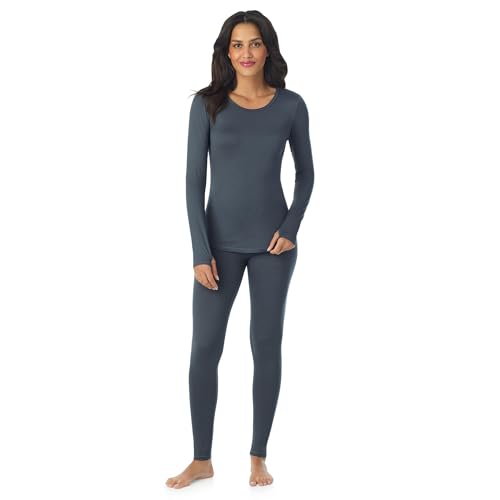
The Cuddl Duds Everyday Active set uses a 170 GSM synthetic performance fabric that prioritizes low bulk, flexibility, and breathability. It includes a long-sleeve shirt with thumbholes and high-waisted leggings, both cut to remain close to the body. The interior is designed to feel soft against the skin, while the smoother exterior should make it easier to pull sweaters, uniforms, or other garments over the set. Moisture-wicking and odor-control properties make it relevant for travel, commuting, errands, and moderately active days. The tag-free construction also reduces a common source of irritation during extended wear.
This is the most versatile choice in the group for women who need a base layer indoors as well as outside. It is less likely to feel cumbersome beneath scrubs, work clothing, or a fitted winter outfit than a thick fleece set. The trade-off is insulation. At 170 GSM, it should be viewed as the first part of a layering system rather than a substitute for an insulating midlayer or protective outer shell. It suits mild winter weather and active use better than long periods of inactivity in severe cold.
Pros:
- Lightweight 170 GSM construction supports breathable layering
- Stretchy, close-fitting design allows useful freedom of movement
- Smooth exterior should slide beneath additional clothing easily
- Includes both a long-sleeve top and high-waisted leggings
- Thumbholes and a tag-free interior add practical comfort
Cons:
- May not provide enough insulation for sedentary use in very cold conditions
- Close-to-body styling may not appeal to shoppers who prefer a relaxed fit
For a mix of daily wear and moderate activity, this set offers a sensible balance between moisture management and unobtrusive layering. It is not designed to deliver maximum warmth. Its advantage is adaptability across travel, work, exercise, and indoor settings where a heavy fleece layer could become uncomfortable.
Best for: Women seeking a breathable synthetic base layer for travel, commuting, uniforms, mild winters, or active days.
Cuddl Duds Heavyweight Fleece Base Layer Set

The heavyweight Cuddl Duds set moves toward warmth rather than maximum ventilation. Its 235 GSM synthetic fabric has a fleece-brushed interior intended to retain body heat while remaining flexible enough for ordinary movement. The package includes a long-sleeve shirt with thumbholes and coordinating leggings with a modern-rise waistband. Moisture-wicking construction can help move perspiration, but the added fleece makes this set more suitable for cold commutes, casual walks, outdoor events, and lounging than sustained high-output exercise. A smooth outer surface is useful when adding pants, a sweater, or another insulating layer.
Compared with the 170 GSM Everyday Active set, this version offers more insulation but also adds bulk and reduces its range in milder conditions. Women who frequently feel cold may appreciate that trade-off, particularly during low-to-moderate activity. Those planning vigorous hiking, running, or uphill skiing may be better served by lighter fabric that releases heat more readily. The set is not a weather barrier, so wind, snow, and rain protection must come from an appropriate outer layer.
Pros:
- 235 GSM construction provides more insulation than lightweight performance sets
- Brushed fleece interior offers soft next-to-skin warmth
- Stretch fabric supports walking, errands, and routine winter movement
- Thumbholes help keep the sleeves positioned while adding layers
- Complete top-and-bottom set provides consistent coverage
Cons:
- More likely to cause overheating during strenuous activity
- Fleece construction is bulkier beneath slim-fitting pants and tops
This is the stronger Cuddl Duds option when warmth matters more than minimal weight. It is particularly practical for casual cold-weather routines and periods of lower activity. For exercise or variable indoor-to-outdoor use, the lighter version will usually be easier to regulate.
Best for: Cold commutes, winter walks, outdoor events, lounging, and women who tend to run cold.
WEERTI Fleece-Lined Thermal Underwear Set

The WEERTI thermal set is an affordable top-and-bottom option built around a fitted, fleece-lined construction. Its four-way stretch is intended to let the shirt and leggings move with the body, which is helpful when the garments are worn beneath everyday clothing. The plush interior favors warmth and softness, while the close profile is designed to avoid some of the bulk associated with traditional long underwear. The listing also describes moisture and odor management, making the set relevant for work, casual outdoor use, travel, and relaxing at home. It appears better suited to low-to-moderate activity than intense aerobic use.
Its main appeal is value. Shoppers can obtain full upper- and lower-body coverage at a lower listed price than many technical sets. However, the available product information does not provide a fabric weight, detailed fiber breakdown, or the same level of performance detail found with the Cuddl Duds options. That makes direct warmth and breathability comparisons difficult. Women shopping primarily for skiing, winter running, or demanding backcountry activity may want more technical specifications before choosing it.
Pros:
- Lower-cost option that includes both a thermal top and leggings
- Fleece lining prioritizes next-to-skin warmth and softness
- Four-way stretch supports routine movement
- Fitted profile is intended for use beneath regular winter clothing
- Suitable for casual wear, work, travel, and lounging
Cons:
- No specific fabric weight is provided in the supplied product information
- Material details are less comprehensive than those of more technical base layers
The WEERTI set makes the most sense when cost and casual warmth are the priorities. Its fleece lining and stretch construction cover everyday winter needs, but shoppers seeking precise fabric specifications or a specialized athletic layer should consider a more performance-focused alternative.
Best for: Budget-conscious shoppers who need a complete synthetic thermal set for everyday cold weather and low-to-moderate activity.
Spyder Micro French Terry Base Layer Bottom

The Spyder Micro French Terry base layer is a bottom-only option for women who do not need a complete matching set. Its lightweight fabric is described as moisture-wicking and quick-drying, with stretch intended to preserve mobility under ski pants, snow pants, or ordinary winter trousers. The micro French terry construction offers light insulation without the deep plush lining found in heavier fleece thermals. That balance can be useful for skiing, snowboarding, walking, and everyday cold-weather layering, especially when the wearer expects to alternate between movement and rest.
Choosing separate leggings can be more practical than buying a set if upper- and lower-body warmth needs differ. Some women prefer a lighter bottom under insulated snow pants while using a warmer top beneath a jacket. The Spyder option supports that mix-and-match approach and may also serve as a replacement for worn base-layer leggings. Its limitation is coverage: there is no included shirt, and the supplied listing information does not provide a GSM fabric weight or detailed warmth rating.
Pros:
- Lightweight construction should fit readily beneath insulated pants
- Moisture-wicking, quick-drying fabric supports active winter use
- Stretch design allows greater mobility for skiing and snowboarding
- Bottom-only format works well for mixing different layer weights
- Less bulky than deeply fleece-lined thermal leggings
Cons:
- Does not include a base-layer shirt
- No fabric weight is specified in the provided information
These leggings are a focused choice rather than a complete thermal solution. They suit shoppers who already have a preferred base-layer top or who want less insulation beneath warm snow pants. For maximum casual warmth, a heavier fleece set will be more appropriate.
Best for: Skiing, snowboarding, active winter layering, or replacing base-layer bottoms without buying another top.
How Synthetic Base Layers Keep You Comfortable
A base layer does not create warmth in the same way as a thick insulated jacket. Its first job is to manage moisture next to the skin. Synthetic fibers generally absorb less liquid into the fiber than cotton, allowing perspiration to spread and evaporate more readily. This can reduce the clammy feeling that develops when damp fabric remains against the body.
The garment also traps a thin layer of warm air. Fabric weight, knit structure, and interior brushing determine how much insulation it provides. Lightweight fabric emphasizes moisture transport and ventilation. Fleece-brushed material captures more air and feels warmer, but it also releases body heat more slowly.
No base layer replaces a complete winter clothing system. Depending on the conditions, it may need to be combined with:
- A synthetic base layer to move moisture and provide light insulation.
- An insulating midlayer, such as fleece or another suitable garment, to retain additional warmth.
- An outer shell to address wind, rain, or snow when necessary.
Removing or opening the midlayer before becoming sweaty is often more effective than relying on the base layer to handle excessive moisture after it develops.
How to Choose the Best Synthetic Base Layer for Women
Match the Fabric Weight to Your Activity
Lightweight base layers are generally the better starting point for running, hiking, travel, indoor work, and other situations that generate steady body heat. They layer cleanly and dry relatively quickly, but they provide limited insulation while standing still.
Midweight or fleece-lined thermals work better for casual winter walks, cold commuting, outdoor events, and lower-output activities. They can also be comfortable indoors when a building is cool. Their limitation is temperature regulation during strenuous exercise.
| Base-Layer Type | Typical Strength | Better Uses | Main Limitation |
|---|---|---|---|
| Lightweight synthetic | Breathability and low bulk | Running, hiking, travel, and indoor-to-outdoor wear | Limited warmth during inactivity |
| Midweight synthetic | Balance of insulation and moisture management | Skiing, cold hikes, and general winter layering | Can feel warm during demanding exercise |
| Fleece-lined synthetic | Greater heat retention and softness | Commuting, casual wear, outdoor events, and lounging | More bulk and slower heat release |
Look for a Close but Unrestrictive Fit
A base layer needs contact with the skin to move moisture effectively. Loose fabric can trap sweat in the wrong places, bunch beneath other clothing, and leave gaps around the waist or wrists. However, a garment that pinches, restricts movement, or becomes transparent when stretched is too tight.
Body proportions vary, so a size that works through the waist may fit differently through the hips, thighs, shoulders, or bust. Consult the current brand chart rather than relying only on a usual clothing size. If measurements fall between sizes, consider whether you prioritize compression-like contact or a little more room for comfort.
Consider the Layers Worn Over It
A thick thermal set may fit comfortably beneath relaxed snow pants but feel restrictive under slim jeans or fitted work clothes. Smooth outer fabric helps other garments slide over the base layer, while deep fleece can create friction and bunching.
For skiing and snowboarding, check the combined fit of leggings, socks, and boots. Avoid folding excess fabric into the boot, where seams and bunching can create pressure. The leggings should end cleanly without forming thick ridges around the ankle.
Choose Warmth for the Lowest Activity Level
People often select thermals based on the coldest expected weather without accounting for movement. Hiking uphill produces much more body heat than waiting for transportation or watching an outdoor event. A lighter base layer combined with an adjustable midlayer provides more control during changing activity levels.
If most of the day involves sitting or standing, fleece-brushed fabric may be worthwhile. If the activity includes repeated climbs, running, or other strenuous movement, prioritize moisture management and ventilation.
Check Moisture Management and Drying Needs
Synthetic fabric is usually selected for its quick-drying behavior, but construction still matters. Thin, smooth material generally dries faster than thick fleece. A heavily brushed interior can hold more moisture between its fibers even if the fibers themselves are not highly absorbent.
Travelers should consider whether a set can be washed easily and dried overnight. A lighter garment may be more useful on a multi-day trip because it packs smaller and returns to service sooner.
Understand Odor-Control Claims
Synthetic clothing can retain body oils and odors more readily than merino wool. Some products use fabric treatments or specialized constructions intended to reduce this problem, but odor resistance does not eliminate the need for laundering.
Wash base layers after sweaty use and avoid leaving damp garments compressed in a gym bag or suitcase. If odor buildup becomes persistent, follow the care label and use a detergent suitable for technical fabric. Fabric softener is often discouraged for moisture-wicking apparel because residue can interfere with performance, but the garment’s instructions should take priority.
Verify Fiber Content
Terms such as thermal, fleece, and performance fabric describe construction or intended use, not a precise fiber composition. A product may use polyester, nylon, elastane, or a blend. Shoppers avoiding wool or managing skin sensitivities should read the sewn-in label and current product specifications carefully.
Stretch fibers can improve mobility and shape retention, while polyester is widely used for moisture management. Nylon may contribute durability and a smooth feel. The actual result depends on the blend, knit, garment design, and care.
Synthetic vs. Merino Wool Base Layers
Synthetic and merino base layers solve similar problems, but they have different strengths. Neither material is automatically better for every situation.
| Consideration | Synthetic | Merino Wool |
|---|---|---|
| Drying speed | Often dries relatively quickly, particularly in lightweight fabric | Can absorb more moisture and may take longer to dry |
| Odor management | Varies by fabric and treatment | Naturally resists odor buildup well |
| Durability | Commonly handles abrasion and frequent washing well | Fine fibers may require gentler care |
| Cost | Usually more affordable | Often more expensive |
| Stretch | Can provide substantial stretch when blended with elastane | Depends on knit and whether other fibers are included |
| Skin feel | Ranges from smooth performance fabric to plush fleece | Fine merino can feel soft, but some wearers remain sensitive to wool |
Synthetics make particular sense for frequent laundering, high-sweat activities, limited budgets, and people who avoid animal fibers. Merino may be more practical for multi-day wear where odor control matters and washing opportunities are limited.
Common Buying Mistakes
Choosing the Thickest Set for Exercise
A warmer garment is not always a safer or more comfortable choice. Excess insulation can increase sweating, and dampness becomes uncomfortable when activity slows. Select enough warmth for the activity and use removable layers for additional insulation.
Using Cotton as a Winter Base Layer
Cotton absorbs and holds moisture. Once wet from perspiration, it can remain damp next to the skin. A synthetic or suitable wool base layer is generally a more practical choice for cold-weather activity.
Expecting the Base Layer to Block Wind
Most thermal underwear is not windproof or waterproof. Wind can pass through knitted fabric, while rain and melting snow can saturate it. Use a suitable shell when weather protection is required.
Ignoring Torso and Leg Differences
Some women need a warmer top than bottom, particularly when wearing insulated pants. Others may prefer heavier leggings for stationary activities. Buying separate pieces, such as the Spyder bottom, allows each area to be layered differently.
Ordering Without Checking the Size Chart
Base layers are usually designed to fit closely, but sizing varies by manufacturer and style. Compare current body measurements with the brand chart. Also check return terms before removing tags or washing the garment.
Using Fabric Softener Without Checking the Label
Fabric softener can leave a coating on technical fibers and potentially reduce moisture-wicking performance. Follow the manufacturer’s directions for detergent, cycle, water temperature, drying, and stain treatment.
Care and Maintenance
Proper care helps synthetic thermals retain their fit and moisture-management properties. Instructions vary, so always begin with the sewn-in label.
- Wash sweaty base layers promptly instead of storing them damp.
- Turn garments inside out if recommended to expose the interior to the wash.
- Use the specified water temperature and cycle.
- Avoid excessive detergent, which can leave residue in the fabric.
- Skip fabric softener unless the manufacturer explicitly permits it.
- Close nearby zippers and hook-and-loop fasteners that could snag the fabric.
- Air-dry or use the approved dryer setting. High heat can damage stretch fibers.
- Store garments completely dry to reduce odor buildup.
Pilling does not necessarily mean a thermal layer has lost all function, but thinning fabric, stretched cuffs, failed seams, or areas that no longer recover their shape may indicate that replacement is appropriate.
Frequently Asked Questions
What is the best synthetic base layer for women who run warm?
A lightweight, breathable option such as the Cuddl Duds Everyday Active set is generally more appropriate than fleece-lined thermals. Women who run warm should emphasize moisture management and use removable midlayers to adjust insulation.
Are fleece-lined thermals good for skiing?
They can work for recreational skiing, particularly for women who tend to feel cold. However, fleece-lined fabric may become too warm during strenuous runs, hiking between areas, or backcountry travel. Insulated ski pants also reduce the need for thick leggings. Match the base-layer weight to the outerwear and expected exertion.
Should a women’s base layer fit tightly?
It should fit close to the skin without limiting breathing, bending, or normal movement. The fabric should not bunch beneath other clothing, but it also should not pinch at the waist, shoulders, cuffs, or seams.
Can synthetic base layers be worn alone?
They can be worn alone indoors or during mild conditions when weather protection is unnecessary. In cold, windy, snowy, or rainy weather, they should be combined with insulation and an appropriate outer layer. Most base layers do not block wind or precipitation by themselves.
How many synthetic base-layer sets do I need?
One set may be enough for occasional winter use. Two or more can be helpful for frequent exercise, work, or travel because one set can be washed while another is available. Buying separate tops and bottoms may provide greater flexibility than owning several matching sets.
Is a heavier GSM always warmer?
A higher fabric weight generally indicates more material per square meter, which often increases insulation. It does not provide a complete warmth rating. Knit structure, interior brushing, fit, wind exposure, moisture, and the rest of the layering system also influence comfort.
Do synthetic base layers prevent odor?
Some use odor-control treatments or fabrics designed to reduce buildup, but no garment remains fresh indefinitely. Wash synthetic thermals according to their care instructions, especially after high-sweat activity.
Can I wear synthetic thermals under jeans?
Yes, provided the leggings are thin enough and the jeans allow adequate room. Lightweight, smooth-faced thermals are usually easier to wear under fitted pants than fleece-lined versions. Restrictive layering can reduce comfort and mobility.
Final Recommendations
For the broadest range of uses, the Cuddl Duds Lightweight Everyday Active Set is the strongest starting point. Its lighter 170 GSM construction fits travel, commuting, uniforms, and moderate activity without adding the bulk of fleece.
Choose the Cuddl Duds Heavyweight Fleece Set when cold-weather insulation matters more than maximum breathability. The WEERTI Fleece-Lined Thermal Set is the more budget-oriented full set, although its technical specifications are less detailed. The Spyder Micro French Terry Bottom is the practical choice when only leggings are needed.
The right synthetic base layer depends on how much heat you generate, what clothing will be worn over it, and how long you expect to remain inactive. Start with a close but comfortable fit, avoid more insulation than the activity requires, and rely on adjustable midlayers and a weather-appropriate shell for conditions the base layer cannot handle alone.