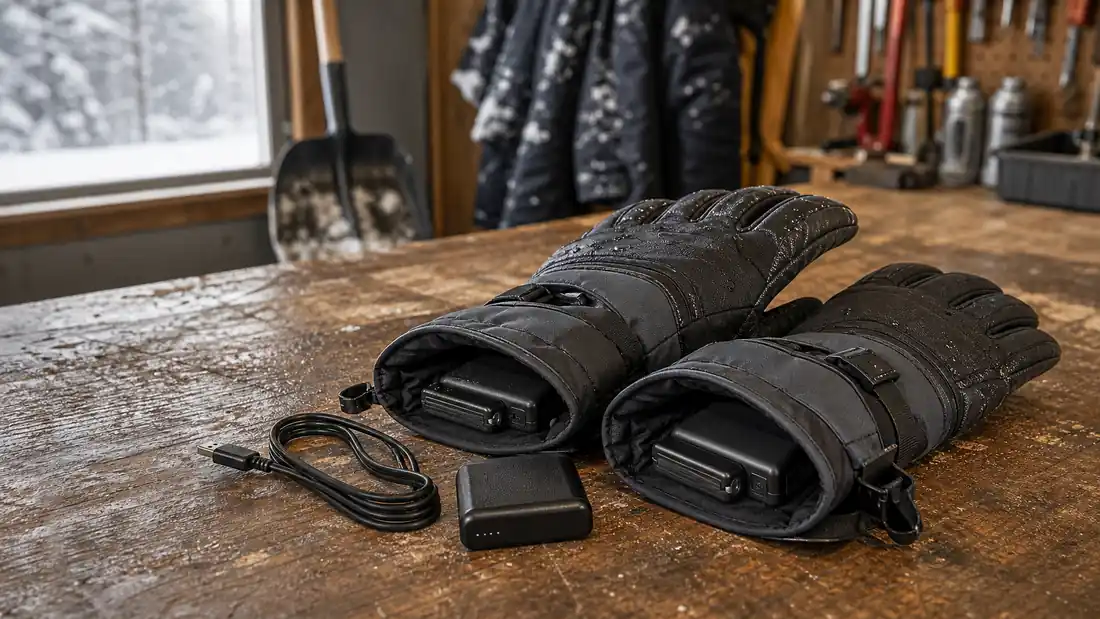
Cold hands can turn a winter commute, ski day, hunting trip, or outdoor shift into an uncomfortable experience. Standard insulated gloves slow heat loss, but they do not actively replace warmth once fingers become cold. Heated gloves address that problem by using battery-powered heating elements around the hand and fingers.
The right design depends on how the gloves will be used. A thick, weather-resistant ski glove provides more protection from wind and snow, while a thin heated liner offers better dexterity and can fit beneath an existing shell glove. Battery capacity matters, but insulation, fit, heating coverage, cuff design, and the selected heat level can be just as important in real winter conditions.
This guide compares seven of the best heated gloves for men from the available product set, including insulated gloves for outdoor activities and slimmer liners for driving, commuting, and layering. Manufacturer specifications form the basis of the comparisons. Runtime and heating performance can vary with temperature, fit, battery condition, and heat setting.
Quick Answer
For a practical balance of price, full-hand heating, weather protection, and battery capacity, the immtree Heated Gloves are a useful starting point. They have three heat settings, two 3000mAh batteries, an insulated shell, touchscreen fingertips, and claimed heating coverage from the palm to the fingertips.
Men who need stronger protection for skiing, snow removal, hunting, or outdoor work should consider the Waterproof Heated Ski Gloves or the Multi-Layer Heated Gloves. Both pair active heating with insulated, adjustable designs intended for wind and snow.
For driving, commuting, walking, or wearing beneath another glove, the Full-Hand Heated Glove Liners provide a slimmer and more flexible alternative. The ALI SEA Heated Gloves are the lowest-priced option in this group, although buyers should pay particular attention to sizing, long-term support, and current listing details.
Heated Gloves Comparison
| Product | Best For | Heating and Battery | Weather Protection | Notable Trade-Off |
|---|---|---|---|---|
| immtree Heated Gloves | Balanced everyday winter use | Three settings, two 3000mAh batteries, claimed 3 to 8 hours | Insulated shell described as waterproof | Bulkier than a heated liner |
| ALI SEA Heated Gloves | Lower budgets | Three settings, claimed runtime up to 8 hours on low | Double-layer shell described as waterproof and windproof | Limited sizing and battery details in the listing |
| Full-Hand Heated Glove Liners | Layering and dexterity | Three settings, 7.4V 2200mAh batteries, up to 6 hours under stated conditions | Minimal stand-alone protection in freezing weather | Usually needs an outer glove in severe conditions |
| Waterproof Heated Ski Gloves | Skiing and snowy outdoor use | Three settings, 7.4V 3000mAh batteries, claimed runtime up to 8 hours | Waterproof shell, adjustable wrist, elastic cuff | Higher price and a bulkier build |
| Royalrose Heated Glove Liners | Driving and light work | Three settings, 7.4V 2500mAh batteries, claimed 2.5 to 7 hours | Wind-resistant and splash-resistant construction | Not a substitute for an insulated shell in harsh weather |
| Multi-Layer Heated Gloves | Windy conditions and long outdoor sessions | Three settings, two 7.4V 3000mAh batteries, claimed runtime up to 8 hours | Multi-layer, double-layer waterproof construction | Insulation may reduce fine-motor control |
| 7.4V Fast-Heating Winter Gloves | Snow removal and general outdoor chores | Three settings, battery indicator, claimed 30-second warmup | Waterproof fabric, adjustable buckle and drawstring | Battery capacity and runtime are not clearly stated |
Runtime figures and weather-protection descriptions come from the manufacturers. Batteries generally run for less time on high heat and in very cold conditions. A “waterproof” marketplace description also does not necessarily indicate a published waterproof rating or sealed-submersion protection.
How We Chose These Heated Gloves
These recommendations were evaluated by comparing the practical features that affect warmth and usability rather than simply choosing the glove with the highest advertised temperature. The main criteria included:
- Heating coverage: Gloves that warm the fingers and back of the hand generally offer more useful coverage than designs that concentrate heat near the wrist or palm.
- Battery information: Voltage, capacity, runtime range, and battery indicators help buyers estimate whether a glove can cover a commute, activity, or work period.
- Passive insulation: Heating elements are only part of the system. Insulation and a secure cuff help retain warmth when batteries are off or operating on low.
- Weather protection: Shell material, wrist closures, drawcords, and extended cuffs affect how well a glove blocks wind, rain, and blowing snow.
- Dexterity: Thick gloves provide greater protection but make small tasks more difficult. Liners offer better movement, especially for driving and handling a phone.
- Layering compatibility: Heated liners can work under an existing ski, work, or motorcycle glove, provided the outer glove has enough room.
- Controls and maintenance: Accessible buttons, battery-level indicators, removable batteries, and clear cleaning instructions improve everyday usability.
- Value: Price was considered alongside battery specifications, heating area, materials, and intended use.
Seven products were selected because they address different needs rather than forming a strict ranking from first to last. Some prioritize affordability, while others focus on weather protection, dexterity, or layering. Compare each glove’s intended activity and limitations with your normal winter conditions before deciding.
Our Top Picks
immtree Heated Gloves

The immtree Heated Gloves combine an insulated outer glove with heating elements described as wrapping around the fingers and extending across the palm. The manufacturer specifies two 3000mAh rechargeable batteries, three heat settings from 100°F to 160°F, and a runtime range of approximately three to eight hours. The highest temperature and longest runtime should not be expected at the same time. The shell is described as waterproof, while adjustable heat, touchscreen fingertips, and anti-slip palm areas support activities such as driving, dog walking, hiking, hunting, and recreational skiing. Four sizes are listed, from small through extra large, which gives men more room to choose according to hand measurements.
This model offers one of the more balanced feature sets at a relatively modest listed price. The claimed 15-second warmup is useful when stepping outdoors, but the more meaningful advantage is the stated coverage across the palm and fingertips. That can be more comfortable than a design that warms only the back of the hand. These are full gloves rather than thin liners, so they should provide more passive insulation and weather protection. The trade-off is extra bulk, particularly around the batteries and fingers. Men who frequently handle small tools may prefer a liner system, while those wanting a single glove for casual winter activities may appreciate the simpler design.
Pros:
- Heating elements are described as covering the palm, fingers, and fingertips
- Three adjustable settings accommodate changing activity levels
- Two 3000mAh batteries provide a claimed runtime range of three to eight hours
- Battery-level indicators make remaining power easier to monitor
- Touchscreen fingertips and anti-slip palms add everyday convenience
Cons:
- The insulated construction is less dexterous than a thin heated liner
- Runtime is likely to be considerably shorter on the highest setting
The immtree gloves make sense for buyers seeking a reasonably priced, all-in-one heated glove for mixed winter use. They balance heating coverage, insulation, battery capacity, and practical controls without requiring a separate shell. Measure both hand circumference and finger length before ordering, since an excessively tight fit can reduce comfort and warmth.
Best for: Everyday winter use, dog walking, driving, hiking, and occasional snow activities.
ALI SEA Heated Gloves

The ALI SEA Heated Gloves are a lower-cost insulated option with heating wires across the fingers and back of the hand. They use three temperature modes and include two rechargeable power units with a four-segment battery indicator. The listing claims up to eight hours of operation on low after a two-to-three-hour charge, although it does not clearly identify battery voltage and capacity in the supplied specifications. Cotton, fleece, and double-layer fabric provide passive insulation, while adjustable wrist straps, cuff drawcords, and a shell described as waterproof and windproof are intended to limit exposure to snow and cold air. Touchscreen surfaces, anti-slip palms, and reflective details broaden their usefulness for cycling, walking, and winter chores.
Price is the main reason to consider this model. It includes many features found on more expensive heated gloves, including adjustable heat, visible power status, wrist closures, and extended cuffs. It may suit occasional users who do not want to spend heavily on gloves used only during a few cold weeks. However, the incomplete battery specifications make direct comparison difficult, and the manufacturer’s high-temperature claims should be treated cautiously. Begin on the lowest comfortable setting and check for excessive heat, particularly if sensation or circulation in the hands is reduced. Buyers planning frequent skiing or demanding outdoor work may prefer a model with clearer technical documentation.
Pros:
- Lower listed price than the other full-glove options
- Heating coverage extends through the fingers and back of the hand
- Three heat modes allow basic temperature adjustment
- Adjustable wrist straps and drawcord cuffs help block drafts
- Touchscreen, anti-slip, and reflective details support outdoor use
Cons:
- Battery voltage and capacity are not clearly stated in the supplied listing details
- Long-term durability and support are difficult to assess from specifications alone
These gloves are most appealing as an affordable introduction to battery-powered handwear. They provide a broad set of convenience features, but the limited battery documentation creates more uncertainty than with some alternatives. Confirm the current package contents, size chart, warranty terms, and charging equipment on the listing before ordering.
Best for: Budget-conscious buyers, occasional snow removal, walking, and recreational outdoor use.
Full-Hand Heated Glove Liners
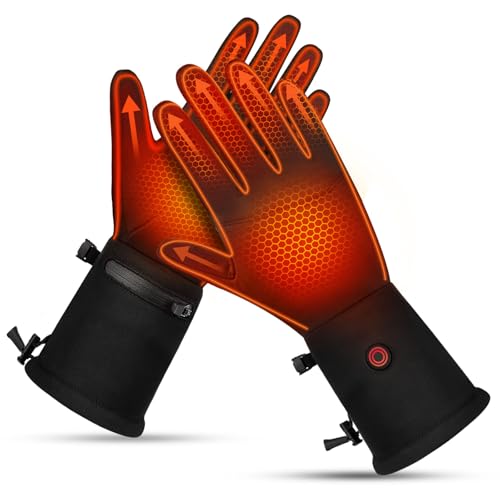
These rechargeable heated liners use a four-way stretch blend of 92 percent polyester and 8 percent elastane with a soft fleece interior. Their slim construction is designed to preserve finger movement and fit beneath a roomier outer glove. Unlike liners that heat only the back of the hand, the specified heating area includes the fingers, palm, and back. Three settings provide adjustable warmth, while 7.4V 2200mAh batteries offer a claimed runtime of up to six hours on low when the surrounding temperature is above 32°F. The manufacturer explicitly notes that runtime decreases below freezing. Conductive surfaces on the thumb and forefinger allow limited touchscreen operation without removing the liners.
A liner is often the more adaptable choice for men who already own protective ski, motorcycle, or work gloves. The liner supplies active warmth and dexterity, while the outer glove handles wind, moisture, and abrasion. It can also be worn alone for commuting, driving, indoor cold environments, or a brisk walk in milder weather. The main limitation is that thin fabric does not retain heat or block weather as effectively as an insulated shell. Layering also requires enough room. If the outer glove compresses the liner or restricts circulation, the combination may feel colder and less comfortable rather than warmer.
Pros:
- Stretch fabric offers better mobility than a thick ski glove
- Heating area includes the palm, fingers, and back of the hand
- Slim profile is designed for use beneath an outer glove
- Touchscreen pads support phone and navigation use
- The manufacturer clearly acknowledges reduced runtime below freezing
Cons:
- Limited wind, moisture, and abrasion protection when worn alone
- Claimed maximum runtime is shorter than that of several full-glove options
These liners prioritize mobility and layering flexibility rather than maximum stand-alone insulation. They are a practical option for driving, commuting, photography, and other situations where thick fingers would be inconvenient. For skiing or prolonged exposure below freezing, pair them with a weather-resistant outer glove sized to avoid compression.
Best for: Layering, commuting, driving, dog walking, and tasks requiring better finger movement.
Waterproof Heated Ski Gloves

These insulated heated ski gloves are built around 7.4V 3000mAh batteries and three settings rated by the manufacturer at 113°F, 122°F, and 149°F. Heating elements run from the back of the hand toward each fingertip, and the listing claims a warmup time of about 10 seconds and runtime of up to eight hours. A four-level battery indicator shows the approximate remaining charge. The outer shell is described as waterproof, with elastic cuffs and adjustable wrist straps to help keep snow and wind from entering. Silicone palm material adds grip, while reflective strips improve visibility in low-light settings. The listing also states that all ten fingers support touchscreen use.
The combination of an insulated shell, substantial battery capacity, and secure cuffs makes this one of the more suitable choices for skiing, snowboarding, snowmobiling, and outdoor work. It costs more than the budget models, but the design is more focused on weather exposure than a lightweight liner. As with most insulated ski gloves, the additional layers can make equipment adjustments and other precise tasks awkward. Touchscreen material also does not guarantee the same accuracy as a bare finger. Buyers should select the size from actual hand measurements and leave enough finger space for circulation without allowing the glove to slide.
Pros:
- 7.4V 3000mAh battery system with three heat settings
- Insulated shell and adjustable wrist design suit snowy conditions
- Heating elements extend toward all fingertips
- Four-level battery indicator simplifies charge monitoring
- Silicone palm and reflective details are useful outdoors
Cons:
- Higher listed price than entry-level heated gloves
- Insulated construction may feel bulky during detailed tasks
This model is better suited to prolonged outdoor exposure than a thin liner or lightly insulated glove. Its main strengths are battery capacity, snow-oriented closures, and fingertip heating. It is less appropriate for buyers who prioritize compact storage or fine dexterity, but it fits the needs of recreational snow-sport users and outdoor workers more closely.
Best for: Skiing, snowboarding, hunting, snowmobiling, and cold outdoor work.
Royalrose Heated Glove Liners

The Royalrose Heated Glove Liners use a flexible Lycra-style outer material with a soft, moisture-managing interior. Their heating wire is described as composite fiber with a heat-resistant silicone coating, and three settings allow the user to adjust warmth as conditions change. The 7.4V 2500mAh batteries have a manufacturer-stated runtime of approximately 2.5 to 7 hours, depending on the selected level and environmental conditions. Conductive material on the index fingers and thumbs supports touchscreen use, while reinforced, non-slip palm areas improve grip. The fabric is described as wind-resistant and splash-resistant rather than as a heavy protective shell.
These liners suit men who want active warmth without the stiffness of a ski glove. They can work well for driving, golf, commuting, walking, and relatively light outdoor tasks where finger movement matters. Royalrose also states that the liners are somewhat thicker than conventional unheated liners, an important consideration when placing them under another glove. They should not be treated as stand-alone protection for severe cold, wet snow, or prolonged wind exposure. A roomy outer glove adds insulation and weather resistance, but buyers need to verify that the combination does not press the batteries against the wrists or restrict hand movement.
Pros:
- Flexible construction supports driving and other dexterity-focused activities
- 7.4V 2500mAh batteries provide three heat settings
- Touchscreen material appears on both the thumb and index finger
- Reinforced palm areas improve grip and wear resistance
- Can be layered under a compatible outer glove
Cons:
- Needs an outer shell for demanding wet, windy, or very cold conditions
- Thicker than a conventional liner and may not fit under snug gloves
The Royalrose liners occupy the middle ground between a thin liner and a full insulated glove. They offer more battery capacity than some slim alternatives while retaining reasonable flexibility. They are most useful when dexterity comes first and weather protection can be added separately with an appropriately sized shell.
Best for: Driving, commuting, golf, light work, and use beneath roomy outer gloves.
Multi-Layer Heated Gloves
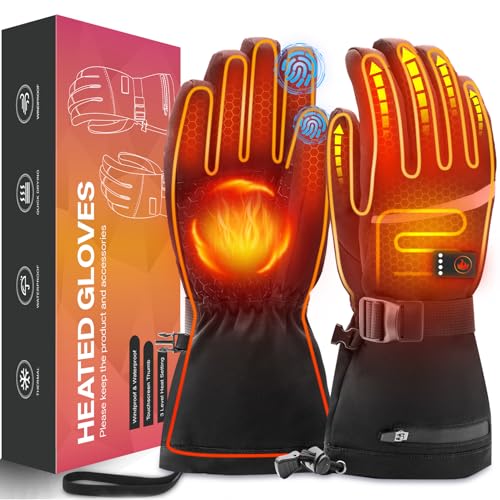
These multi-layer heated gloves combine cotton, velvet, and polyester in a six-layer construction intended to retain warmth and block wind. Two 7.4V 3000mAh batteries supply three temperature settings, with a manufacturer-stated range from 113°F to 149°F and runtime of up to eight hours. Four battery indicators show approximate charge levels, while protective circuitry is specified for overcurrent, overvoltage, and overcharge. The double-layer fabric is described as waterproof, and the glove includes reflective strips, adjustable cuffs, hanging loops, touchscreen-compatible fingertips, and a textured palm for grip. This is an insulated outdoor glove rather than a thin liner.
The deeper, multi-layer build is useful for stationary or moderate-output activities such as ice fishing, hunting, operating outdoor equipment, and watching winter events. It can also suit skiing and hiking, although active users may need to lower the heat setting to reduce perspiration. Its main trade-off is bulk. More layers retain warmth but can reduce breathability and make it harder to handle buckles, zippers, fishing tackle, or small controls. Men who run warm or maintain a fast hiking pace may find a heated liner and breathable shell easier to regulate.
Pros:
- Six-layer construction provides substantial passive insulation
- Two 7.4V 3000mAh batteries support extended low-setting use
- Three heat levels and battery indicators aid temperature management
- Adjustable cuffs help reduce wind and snow entry
- Reflective strips, touchscreen material, and grip surfaces add utility
Cons:
- Multi-layer construction may reduce dexterity and packability
- Could become too warm during high-output activity
This option favors insulation and weather protection over fine finger movement. It is a reasonable match for men who spend long periods outdoors at low or moderate activity levels. For strenuous winter hiking or detailed work, a lighter and more breathable glove system may provide easier temperature control.
Best for: Hunting, ice fishing, outdoor events, snow sports, and windy winter conditions.
7.4V Fast-Heating Winter Gloves

These 7.4V rechargeable winter gloves use heating elements extending from the back of the hand toward the fingertips. The manufacturer claims a warmup time of approximately 30 seconds and provides three heat settings with a battery-status indicator. The supplied information does not state battery capacity or a specific runtime range, so buyers cannot compare endurance as easily as they can with the other models in this guide. The gloves include insulated lining, waterproof fabric, adjustable wrist buckles, cuff drawcords, reflective strips, and silicone grip material across the palms. Touch sensors are located on both index fingers and thumbs for use with phones, tablets, or vehicle displays.
This design is oriented toward practical winter chores. The secure cuff and textured palm may be helpful for snow shoveling, dog walking, cycling, and handling larger tools or equipment. It is not recommended by the manufacturer for work around sharp objects, which limits its suitability for construction, metal handling, or jobs with frequent contact against rough edges. Machine washing is allowed according to the listing when the batteries are removed and the included washing bag is used. Even so, minimizing wash frequency and allowing the gloves to dry completely before reconnecting batteries may help protect the electrical system.
Pros:
- Three heat settings and an easy-to-read battery indicator
- Adjustable wrist buckle and cuff drawcord help keep out drafts
- Silicone palms improve grip during general outdoor chores
- Touchscreen zones are included on both hands
- Manufacturer provides machine-washing instructions and a wash bag
Cons:
- Battery capacity and expected runtime are not specified in the supplied data
- Not intended for work around sharp objects
These gloves offer practical shell features for snow removal and routine outdoor tasks, but their incomplete battery information is a notable drawback. They are worth considering when cuff security, grip, and cleaning convenience matter more than having a clearly documented runtime. Verify the current battery specifications before purchase.
Best for: Snow shoveling, dog walking, cycling, and general winter chores without sharp-object exposure.
How Heated Gloves Work
Heated gloves contain flexible electrical elements powered by small rechargeable batteries, usually stored in pockets near the wrist. Electricity passes through the elements and produces heat across selected parts of the glove. Depending on the design, the heating path may cover the back of the hand, fingers, fingertips, palm, or a combination of these areas.
Most current models offer three temperature levels. High heat warms the glove quickly but draws more power. Low heat extends battery life and is often sufficient once the hand is warm. A practical approach is to start on high for a brief period, then move to medium or low before perspiration develops.
The electrical system does not replace insulation. Heating elements add warmth, while the glove’s lining, shell, cuff, and fit determine how efficiently that warmth is retained. A poorly insulated glove may consume battery power quickly without keeping the hand comfortable in wind. Conversely, an insulated glove with a secure cuff can often maintain warmth on a lower setting.
How to Choose Heated Gloves for Men
Choose Between a Full Glove and a Heated Liner
A full heated glove combines the electrical system, insulation, and weather-resistant shell in one garment. This is convenient for skiing, snow removal, hunting, and general outdoor use. Full gloves are usually warmer when worn alone, but their thicker fingers can make detailed work difficult.
Heated liners use thinner, stretchier fabric and are better for driving, commuting, photography, or handling controls. In freezing, wet, or windy conditions, they normally work best beneath an outer glove. Check that the shell has enough room for the liner without squeezing the hand.
Consider Heating Coverage
Cold fingers are often the main reason people shop for heated gloves, so look for clear information about where the heating elements run. Coverage that reaches the fingers and fingertips is generally more useful than heat concentrated only on the back of the hand.
Palm heating can improve the sensation of full-hand warmth, although a heavily heated palm may also feel excessive when gripping poles, handlebars, or tools. Adjustable temperature settings help manage this difference.
Understand Battery Runtime Claims
Advertised runtime usually represents a range rather than a guaranteed result. The upper figure commonly applies to the lowest setting under relatively favorable conditions. High heat, freezing temperatures, battery age, and frequent cycling between modes can shorten operation.
For a short commute or walk, a four-to-six-hour maximum may be sufficient. A full day outdoors may require batteries rated for longer low-setting operation or a compatible spare set. Before buying spare batteries, confirm voltage, connector type, physical dimensions, and manufacturer compatibility.
Check Battery Placement
Most batteries sit near the wrist. This keeps weight away from the fingers, but a large battery can press against the wrist when bending the hand or tightening a jacket cuff. Look for a secure battery pocket and enough sleeve room to avoid uncomfortable pressure.
Battery weight can also affect activities requiring continuous hand movement. A heavier system may be less noticeable while hunting or watching sports than during running or cross-country skiing.
Match Insulation to Activity Level
Thick insulation works well during low-output activities because the body is producing less heat. Ice fishing, hunting from a stationary position, operating equipment, and standing at outdoor events often favor a warmer glove.
During hiking, cycling, snowshoeing, or other active pursuits, too much insulation can trap perspiration. Damp hands may become cold when activity slows. A lighter heated liner, breathable shell, or lower heat setting can offer better temperature control.
Evaluate Water and Wind Protection Carefully
Marketplace listings often use terms such as waterproof, water-resistant, and windproof without publishing test standards. A glove described as waterproof may handle falling snow and brief contact with moisture, but that does not necessarily mean it will remain dry during prolonged rain or repeated immersion.
For wet snow, skiing, or snowmobiling, look for secure cuffs, adjustable wrist closures, covered battery compartments, and clear care instructions. If dependable waterproofing is essential, consider using heated liners beneath an established waterproof shell glove.
Measure for Fit Instead of Guessing
Men’s glove sizes vary across brands, and many heated gloves are sold as unisex models. Measure around the widest part of the dominant hand, excluding the thumb, and compare that number with the current manufacturer chart. Finger length should also be checked where measurements are available.
A tight glove can restrict circulation and compress insulation. An oversized glove allows warm air to escape and may reduce control. For liners, account for both the liner size and the available interior volume of the outer glove.
Decide How Much Dexterity You Need
Thick heated gloves may work well for holding ski poles, a shovel, handlebars, or larger equipment. They are less convenient for tying knots, adjusting small buckles, handling keys, or operating camera controls.
Touchscreen material is helpful, but performance varies by phone, screen protector, moisture level, and glove fit. Buyers who use electronics frequently should favor thinner fingertips or a liner rather than relying on an insulated glove to provide bare-hand accuracy.
Look for Practical Controls
A large button that can be operated while wearing the opposite glove is easier to use outdoors. Color-coded settings are common, while a separate four-level indicator provides more useful battery information than a simple low-power warning.
Controls should not be positioned where a jacket cuff repeatedly presses them. Accidental setting changes can cause overheating or drain the batteries faster than expected.
Common Heated-Glove Buying Mistakes
Choosing Only by Maximum Temperature
A higher advertised temperature does not automatically mean better real-world performance. Heat distribution, insulation, fit, and weather protection matter more than a peak figure measured under indoor conditions. Very high settings may also be uncomfortable and consume the battery quickly.
Assuming Maximum Runtime Applies to High Heat
If a listing claims up to eight hours, that figure normally refers to low mode. A glove may run for only a fraction of that time on high. Plan around the setting you are likely to use and the outdoor temperature, not the most favorable number in the listing.
Buying a Tight Size for Better Dexterity
A close fit can improve control, but a glove that constricts the fingers or wrist may impair circulation and reduce warmth. There should be enough room to flex the fingers naturally without excess fabric folding at the tips.
Expecting a Liner to Replace a Winter Shell
Heated liners improve warmth and dexterity, but most provide limited resistance to wind, wet snow, and abrasion. In difficult conditions, use a compatible insulated or weather-resistant outer glove.
Ignoring Care Instructions
Heated gloves contain wiring, connectors, controls, and battery pockets. Remove batteries before any cleaning. Follow the manufacturer’s washing method, avoid harsh heat during drying, and do not reconnect the electrical components until the gloves are completely dry.
Using Heated Gloves Around Uncontrolled Hazards
Consumer heated gloves are not automatically suitable for industrial work. Unless the product is specifically designed and rated for the task, do not assume it provides cut resistance, impact protection, chemical protection, electrical insulation, or flame resistance. A heated recreational glove should not replace required personal protective equipment.
Safety and Battery Care
- Fully charge the batteries with the supplied or manufacturer-approved charger before first use.
- Inspect cables, connectors, battery cases, and fabric for damage before each winter season.
- Stop using a glove if the battery swells, leaks, becomes unusually hot, or develops a damaged casing.
- Do not puncture, crush, modify, or expose lithium-ion batteries to fire.
- Begin with a low or medium setting if you have not used the gloves before.
- Do not use excessive heat on numb skin or while sleeping.
- Remove batteries before washing and follow the product-specific cleaning directions.
- Store batteries in a cool, dry location away from metal objects and direct sunlight.
- Check the manufacturer’s guidance for long-term storage charge levels.
People with diabetes, neuropathy, reduced hand sensation, circulatory disorders, or other medical concerns should ask a qualified healthcare professional whether heated gloves are appropriate. These products may improve comfort, but they are not medical treatment and should not be relied on to prevent frostbite or resolve an underlying circulation problem.
Frequently Asked Questions
Are heated gloves worth buying?
They can be worthwhile for people whose hands become cold despite wearing properly insulated gloves. They are particularly useful during commuting, outdoor work, snow sports, hunting, fishing, and other activities involving sustained cold exposure. They add charging requirements, weight, and cost, so occasional users in mild climates may be satisfied with conventional insulated gloves and disposable hand warmers.
How long do heated-glove batteries last?
The products in this guide have manufacturer-stated maximum runtimes ranging from about six to eight hours where figures are available. Actual operation depends on heat level, ambient temperature, battery capacity, battery condition, and insulation. High mode may provide only several hours of heat, while low mode lasts longer.
Can heated gloves be used in rain or snow?
Only according to the weather-protection limits stated by the manufacturer. Several gloves here are described as waterproof, while Royalrose describes its liners as wind-resistant and splash-resistant. Keep charging ports and batteries protected from moisture, and never charge wet gloves. For prolonged wet conditions, a dedicated waterproof shell may provide greater confidence than an unsupported marketplace claim.
Should heated gloves fit tightly?
No. They should fit securely without constricting the fingers or wrist. A tight fit can restrict circulation and compress insulating material. A very loose fit can allow heat to escape and reduce grip. Use the brand’s current size chart rather than assuming your usual glove size will transfer directly.
Are heated glove liners warmer than insulated heated gloves?
Not when worn alone in severe weather. Full insulated gloves generally retain more warmth and provide better wind and snow protection. Liners offer greater dexterity and flexibility. When paired with a well-fitted outer shell, however, heated liners can form an effective and adaptable system.
Can heated gloves help with Raynaud’s or arthritis?
Warmth may improve comfort for some people, and several manufacturers market these gloves toward users with cold-sensitive hands. Heated gloves do not treat Raynaud’s disease, arthritis, neuropathy, or another medical condition. Anyone with reduced sensation or a diagnosed circulation problem should discuss safe temperature exposure with a healthcare professional.
Can I wash heated gloves?
Many can be washed after the batteries are removed, but the approved method varies. Some permit machine washing in a protective bag, while others may require hand washing. Never assume that the battery, charger, or connector can be submerged. Follow the instructions supplied with the specific gloves and allow them to dry fully before use.
Can I take heated gloves on an airplane?
Lithium-ion batteries are generally subject to airline and transportation-security rules. Spare batteries commonly need to travel in carry-on baggage with terminals protected against short circuits. Regulations and airline policies can change, so verify battery watt-hours and check current Transportation Security Administration, Federal Aviation Administration, and airline instructions before traveling.
Are heated gloves safe for motorcycle riding?
They can add warmth, but ordinary heated winter gloves should not be assumed to provide motorcycle-specific impact, abrasion, or slide protection. Motorcycle riders should prioritize protective gloves designed for riding and use compatible heated liners when sufficient interior space is available.
What heat setting should I use?
Use the lowest setting that keeps your hands comfortable. High mode is useful for initial warmup or brief exposure, but medium or low usually preserves battery life and reduces perspiration. Turn the temperature down if the glove feels hot, moisture develops inside, or the skin becomes uncomfortable.
Final Recommendations
The immtree Heated Gloves provide the most balanced combination in this group for general winter use. Their full-hand heating coverage, two 3000mAh batteries, insulated construction, and moderate listed price make them suitable for commuting, walking, driving, and occasional snow activities.
For skiing, hunting, and longer periods in snow or wind, the Waterproof Heated Ski Gloves offer a more protective build with substantial battery capacity and adjustable cuffs. The Multi-Layer Heated Gloves are another option for low-to-moderate activity where warmth retention matters more than fine dexterity.
Men who need finger movement for driving, photography, commuting, or handling controls should look first at the Full-Hand Heated Glove Liners. They can be worn alone in milder conditions or combined with a roomy shell when temperatures fall. Whichever style you choose, verify the size chart, battery specifications, care instructions, and current package contents before ordering.