Extreme cold exposes a weakness in many hand warmers: a long advertised runtime does not necessarily mean strong heat in wind, low oxygen, or subzero conditions. Disposable warmers need airflow, while rechargeable models depend on batteries that can lose capacity as temperatures fall. The right choice depends on how long you will be outside, whether you can recharge, and whether you need heat in both hands at once.
This guide compares seven practical options, including air-activated packs, rechargeable pocket heaters, and an insulated glove that can help retain the heat a warmer produces. None replaces proper gloves or mittens. For severe cold, treat a hand warmer as one part of a complete system that includes insulation, wind protection, moisture management, and a plan for getting indoors if numbness develops.
Quick Answer
The best hand warmers for extreme cold are usually long-duration disposable warmers for remote trips or rechargeable two-piece warmers for regular daily use. Disposable packs are simple, light, and unaffected by charging access, but they take time to warm and create waste. Rechargeable models heat more quickly and offer adjustable output, although battery runtime can fall in very cold weather.
- Best rechargeable option for long outings: AI Hand Warmers Rechargeable 2 Pack
- Best disposable option for extended use: HotHands Body & Hand Super Warmers
- Best bulk supply: HotHands Hand Warmers 40 Pair
- Best compact rechargeable pair: Lerat Rechargeable Hand Warmers
- Best low-cost disposable pack: TCANG 10 Pack Hand Warmers
- Best whole-body emergency assortment: HotHands Toe, Hand & Body Warmer Variety Pack
- Best insulated glove companion: TRENDOUX Extreme Cold Weather Gloves
Hand Warmer Comparison
| Product | Best For | Heat Type | Listed Runtime | Notable Trade-Off |
|---|---|---|---|---|
| AI Rechargeable Hand Warmers 2 Pack | Long rechargeable use | Battery-powered, three settings | Up to 8.5 to 20 hours | Runtime depends on heat level and cold-weather battery performance |
| HotHands Body & Hand Super Warmers | Long disposable heat | Air-activated | Up to 18 hours | Larger than ordinary hand-warmer packets |
| Lerat Rechargeable Hand Warmers 2 Pack | Compact two-hand heating | Battery-powered, three settings | Up to 6 hours | Shorter listed runtime than larger rechargeable options |
| TCANG 10 Pack Hand Warmers | Occasional use on a budget | Air-activated | Up to 15 hours | Single-use construction and limited long-term product history |
| HotHands Hand Warmers 40 Pair | Work crews, hunting season, and family supply | Air-activated | Up to 10 hours | Large box requires storage and produces disposable waste |
| HotHands Toe, Hand & Body Variety Pack | Emergency kits and full-body cold management | Air-activated | Varies by warmer type | Not every packet is intended for hands |
| TRENDOUX Extreme Cold Weather Gloves | Retaining warmth in wind and snow | Insulated glove, no active heat | Not applicable | Cannot generate heat by itself |
How We Chose These Picks
These recommendations were evaluated by heat duration, activation speed, portability, ability to warm both hands, ease of use with gloves or mittens, and suitability for remote or extended outings. We also considered the practical differences between disposable and rechargeable heat.
Manufacturer runtime claims are useful for comparison, but they are not guarantees. Battery temperature, heat setting, airflow, insulation, and how often a warmer is exposed to open air can all change real-world performance. We did not assign unsupported minimum-temperature ratings or assume that a product described for extreme cold will perform identically in every environment.
Our Top Picks
These seven products are not ranked from strongest to weakest. Each serves a different purpose, from daily rechargeable heat to disposable backup warmth in places without electricity. Compare the heat source, listed runtime, size, and operating limitations carefully. A hunter sitting still for hours has different needs from a commuter, skier, outdoor worker, or person assembling a roadside emergency kit.
AI Hand Warmers Rechargeable 2 Pack

This rechargeable set contains two matching warmers that can be joined into one palm-sized unit or separated so each hand has its own heat source. Three temperature settings provide more control than a disposable packet, with a manufacturer-listed maximum of 130°F. The listed operating range is 8.5 to 20 hours, although the actual result will depend heavily on the selected setting and ambient temperature. Indicator lights show heating status and remaining charge, while USB-C charging makes the set practical for repeated use. The split design is especially useful in coat pockets, mittens, or between brief periods of work when direct access to both warmers is convenient.
This is the most versatile rechargeable choice in the group for people who expect to use hand warmers frequently. Its main advantage is not simply maximum temperature. It is the combination of two-hand coverage, adjustable output, and a longer claimed runtime than the more compact Lerat set. The manufacturer states that the model has CE and FCC certifications, but buyers should still follow the charging, storage, and operating instructions. Like all battery-powered devices, it should be kept dry and checked for swelling or damage. It may suit commuting, spectator events, golf, hunting, and cold outdoor work where recharging is available between outings. For remote multiday travel, disposable backups remain sensible.
Pros:
- Two separate warmers can heat both hands at the same time
- Three heat settings help balance warmth and battery life
- Manufacturer lists 8.5 to 20 hours of operation
- USB-C charging is convenient for routine use
- Units can connect for compact storage or combined heating
Cons:
- Maximum runtime is unlikely at the highest heat setting
- Lithium battery performance may decline in severe cold
- Requires advance charging and careful protection from moisture
For repeated winter use, this pair offers a useful balance of runtime and control. It is more adaptable than a single rechargeable warmer because each hand receives its own heat source. Buyers heading far from power should carry a backup, but for everyday cold exposure, the reusable format can reduce reliance on disposable packets.
Best for: Commuters, outdoor workers, hunters, and spectators who want adjustable rechargeable heat for both hands.
HotHands Body & Hand Super Warmers

HotHands Body & Hand Super Warmers are larger air-activated pads made for situations where extended heat matters more than a compact shape. The manufacturer lists up to 18 hours of warmth per warmer, and the package contains 10 individual pads. Activation takes approximately 15 to 30 minutes after opening. If heat output falls, exposing the warmer to fresh air and shaking it can help restart the oxidation process. These pads are odorless, TSA-compliant according to the manufacturer, and intended for single use. They should not be placed directly against bare skin, especially when tucked inside insulated clothing where heat can accumulate.
The long listed duration makes these warmers relevant for all-day hunting, ice fishing, outdoor work, winter events, and emergency situations without access to charging. Their larger size can provide broader coverage than a standard hand packet, but it also makes them less convenient inside close-fitting gloves. They generally work better in roomy mittens, hand-warmer muffs, or coat pockets. Because air-activated products require oxygen, tightly sealed or compressed spaces may reduce heat output. They also need a warm-up period, so opening them before stepping outside is more practical than waiting until fingers are already cold. Compared with rechargeable units, they offer no temperature adjustment and cannot be turned off for later use.
Pros:
- Manufacturer lists up to 18 hours of heat
- Does not require charging, cables, or batteries
- Broader pad size can warm more area than a small packet
- Useful for remote locations and emergency supplies
- Simple air-activated operation
Cons:
- Larger dimensions may not fit comfortably inside fitted gloves
- Requires 15 to 30 minutes to heat fully
- Single-use format creates ongoing cost and waste
Choose this format when long, unattended runtime is more important than adjustability or reuse. It is particularly practical in roomy pockets and insulated muffs. The larger pad is not as discreet as a standard hand warmer, but its extended listed duration makes it a strong disposable option for long shifts and stationary cold-weather activities.
Best for: All-day outdoor work, hunting, fishing, winter events, and emergency use without charging access.
Lerat Rechargeable Hand Warmers 2 Pack

The Lerat set includes two thin rechargeable warmers, allowing one unit in each pocket or glove. The manufacturer lists three adjustable heat settings, a maximum temperature of 131°F, and up to six hours of operation. Their flat, palm-sized design is easier to distribute than a single thick power bank-style warmer. Because the units heat without waiting for an air-activation reaction, they can be more convenient for short errands, dog walking, commuting, golf, and occasional outdoor events. They can also be placed in separate coat pockets so both hands have access to heat without passing one device back and forth.
This set is the lower-cost rechargeable option among these recommendations. It makes the most sense for shorter outings where six hours of listed runtime is sufficient and where the warmers can be recharged afterward. The trade-off is endurance. In severe cold, running either unit at its highest setting may shorten the available heating time, so it is prudent to treat the six-hour figure as an upper limit rather than an assured result. The thin profile may fit some roomy gloves, but placing a hard electric warmer inside a tight glove can restrict circulation. Pockets or mittens generally provide more space and allow easier temperature adjustment.
Pros:
- Two-piece set provides separate heat for both hands
- Three settings allow basic temperature control
- Compact, flat shape is easy to carry
- Listed maximum temperature of 131°F
- Reusable design suits regular short outings
Cons:
- Listed runtime is shorter than that of larger rechargeable models
- Battery life can decline at high output or in very low temperatures
- Hard housing may feel awkward inside tight gloves
The Lerat pair provides accessible rechargeable heat without the bulk of one larger unit. It is better suited to routine outings than long expeditions, particularly when charging is available each day. For all-day stationary use in severe cold, a longer-runtime model or disposable backup will provide a wider safety margin.
Best for: Short commutes, dog walks, errands, golf, and buyers seeking an affordable rechargeable pair.
TCANG 10 Pack Disposable Hand Warmers

These TCANG disposable warmers use an air-activated reaction and are sold in a package of 10. The manufacturer claims up to 15 hours of heat, with activation taking about 15 to 30 minutes after the packet is opened and shaken. Their compact size is intended for pockets, gloves, footwear, and other enclosed areas, though the warmers should not be pressed directly against bare skin. If output decreases, briefly exposing a packet to fresh air and shaking it may restore the reaction. The packets require no charging and can remain in a vehicle kit, backpack, or work bag until needed, provided they are stored unopened and within their marked shelf life.
This pack fills the low-cost, occasional-use role. It may appeal to someone preparing for a single winter trip or keeping a modest emergency supply rather than purchasing a large bulk box. Its listed duration is competitive for the price category, but the product has less established brand history than the HotHands options in this guide. Buyers should inspect the packaging when it arrives, confirm the expiration date, and avoid using any packet that is torn, leaking, or unusually hard before opening. As with other disposable warmers, heat depends on airflow. A tightly compressed glove can reduce both oxygen supply and circulation, which works against the goal of keeping fingers warm.
Pros:
- Low initial cost for occasional use
- Manufacturer lists up to 15 hours of heat
- Compact packets require no charging
- Easy to store in travel and emergency kits
- Can be re-exposed to air if heat output falls
Cons:
- Single-use packets create waste
- Requires a 15 to 30 minute activation period
- Less established product history than long-running alternatives
This pack is most appropriate when budget and simplicity outweigh the benefits of rechargeability. It provides a manageable quantity for occasional outings without committing to a large box. For frequent winter work or a season-long supply, a bulk package may offer more practical value and a more familiar performance record.
Best for: Occasional winter events, travel bags, backup kits, and cost-conscious shoppers.
HotHands Hand Warmers, 40 Pair

This 40-pair box contains standard-size HotHands air-activated warmers for season-long use. Each pair is designed to produce up to 10 hours of heat after the outer package is opened. Activation generally takes 15 to 30 minutes, and declining heat can sometimes be restored by exposing the warmer to air and shaking it. The packets are thin enough for roomy gloves, mittens, pockets, and hand-warmer muffs. They are odorless and TSA-compliant according to the manufacturer, and they require no external power source. That combination makes them practical for work crews, hunting groups, ski trips, sporting events, and families who regularly spend time outside.
The main reason to choose this box is quantity rather than unusually long individual runtime. Forty pairs can cover repeated outings or allow several people to carry two warmers each. The established format is simple to distribute and does not depend on remembering to recharge multiple devices. Storage and waste are the corresponding drawbacks. The box takes more room than a small pack, and every use leaves spent packets behind. Buyers should also note that retailer descriptions sometimes combine features from related HotHands products. These are standard hand warmers, so any mention of adhesive backing should be verified against the package received rather than assumed.
Pros:
- Forty pairs support frequent or group use
- Up to 10 hours of listed heat per warmer
- No charging infrastructure is required
- Thin shape works in many pockets and roomy gloves
- Useful for seasonal supplies and emergency distribution
Cons:
- Large quantity may be excessive for occasional users
- Every packet is disposable
- No heat adjustment or on-off control
For people who use warmers every week, the bulk format is easier to manage than repeatedly buying small packs. It also works well for households or crews that need dependable distribution. Occasional users may be better served by a 10-pack, while those who have daily charging access may prefer reusable electric warmers.
Best for: Outdoor work crews, frequent hunters, families, ski groups, and season-long cold-weather supplies.
HotHands Toe, Hand & Body Warmer Variety Pack
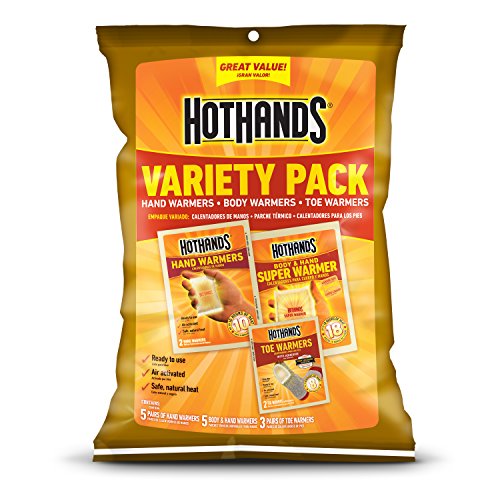
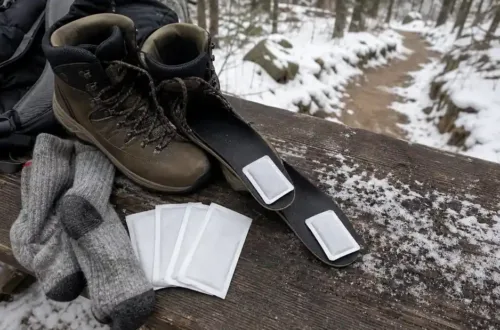
The HotHands Variety Pack combines air-activated warmers made for hands, toes, and the body rather than supplying one packet shape exclusively. Each type is intended for a different location, so users should read the instructions printed on the individual packaging before placement. The manufacturer lists up to 214 combined hours of heat across the package, but that total should not be interpreted as the runtime of one warmer. Like other iron-based air-activated products, the packets typically begin heating within 15 to 30 minutes. They are single-use, odorless, and described by the manufacturer as TSA-compliant.
This assortment is useful because cold hands are often part of a wider insulation problem. If feet or the torso become cold, the body may reduce blood flow to the extremities, making hand-only heat less effective. A mixed pack gives a household or traveler options for several areas and can be a practical addition to a roadside emergency kit. The disadvantage is that shoppers seeking hand warmers alone will not use every packet for the same purpose. Toe warmers, body warmers, and hand warmers may also have different heat output, attachment methods, and placement restrictions. Never substitute one style for another without checking its instructions, and do not apply the packets directly to bare skin.
Pros:
- Includes separate formats for hands, feet, and body
- Useful for vehicle and household emergency kits
- Does not require electricity or charging
- Addresses whole-body comfort rather than hands alone
- Individually packaged warmers are easy to distribute
Cons:
- Only part of the assortment consists of hand warmers
- Different packet types require careful placement
- Single-use design creates ongoing waste
This variety pack makes more sense as a general cold-weather resource than as a dedicated hand-warmer supply. It is especially useful for emergency preparation, where warming the feet and torso can be as important as warming the hands. Buyers who need identical packets for daily work should choose a bulk hand-only box instead.
Best for: Roadside emergency kits, winter travel, households, and people who need hand, foot, and body warmth.
TRENDOUX Extreme Cold Weather Gloves

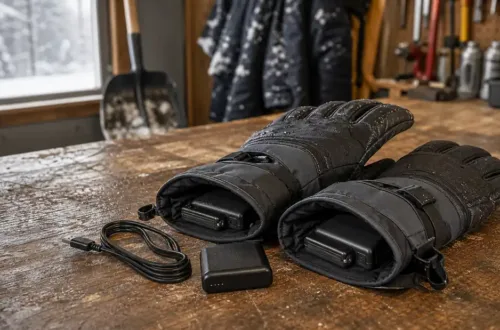
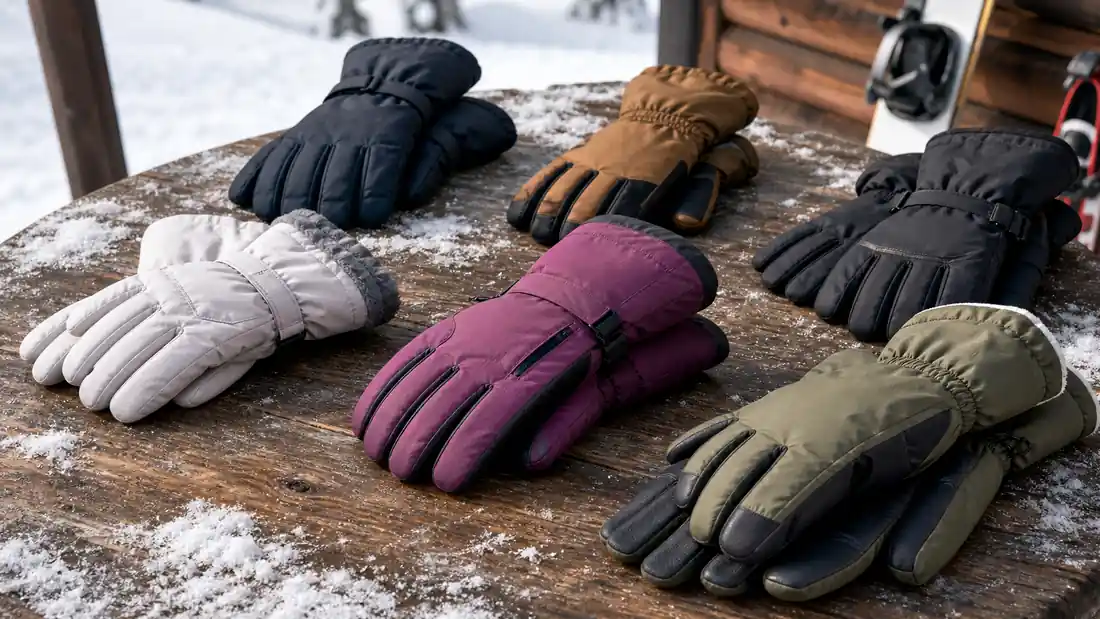
The TRENDOUX gloves do not generate active heat, but they address an important part of hand-warmer performance: retaining warmth and blocking wind. The manufacturer describes a seven-layer insulation system that includes fleece-like lining, 3M-branded material, and synthetic fiber. An adjustable wrist closure helps limit drafts, while the back-of-hand fabric is described as windproof. The gloves also include touchscreen-compatible thumb and index fingertips, a small zippered pocket, and a connector buckle for storage. Product information refers to water protection, but it does not provide a recognized laboratory waterproof rating that can be translated into dependable wet-weather performance. Treat them as weather-resistant unless clearer documentation is available.
These gloves belong in the guide as a companion to active warmers, not as a direct substitute. A rechargeable unit or disposable packet cannot compensate for thin gloves that allow wind to strip away heat. The zippered pocket may hold a small warmer if the product instructions and available space permit, though heat should be monitored carefully and never concentrated against bare skin. Compared with lightweight liner gloves, this layered design appears better suited to low-output activities such as waiting, ice fishing, or operating equipment. The added insulation can reduce dexterity, and buyers should check the size chart rather than relying on the broad unisex description.
Pros:
- Layered insulation helps retain naturally generated and supplemental heat
- Adjustable wrist closure can reduce cold-air entry
- Touchscreen fingertips limit the need to expose bare hands
- Small zippered pocket adds storage flexibility
- Connector buckle helps keep the pair together
Cons:
- Does not generate heat without a separate warmer
- Layered construction may reduce fine-motor dexterity
- Wet-weather protection is not supported by a clear standardized rating
Insulated gloves are the foundation of a cold-weather hand system, and this pair offers more coverage than a thin liner. It is most useful when paired with an appropriately sized warmer in very cold conditions. Shoppers who need precise tool handling should balance insulation against dexterity and confirm that the selected size leaves room without restricting circulation.
Best for: Stationary winter activities, windy conditions, and users who need an insulated outer layer around a hand warmer.
How to Choose Hand Warmers for Extreme Cold
Disposable vs. Rechargeable Heat
Air-activated disposable warmers use an oxidation reaction that begins when the inner packet is exposed to oxygen. They are light, easy to pack, and do not require charging. This makes them well suited to remote trips, emergency kits, hunting, and outdoor work where electricity is unavailable.
Their limitations are a slow start, dependence on airflow, and a lack of temperature control. Once activated, they generally cannot be shut off and saved for another day. Long-term use also produces more waste and recurring expense.
Rechargeable warmers use an internal battery and heating element. They start more quickly, offer multiple heat settings, and can be reused. A two-piece set is usually more practical than one large warmer because both hands can receive heat simultaneously.
Cold temperatures can reduce battery capacity, however. Maximum runtime figures normally reflect favorable conditions and lower settings. Rechargeable units also require protection from water, proper charging, and inspection for battery damage.
Runtime and Heat Level Are Different Measurements
A warmer that runs for 20 hours is not automatically hotter than one rated for six hours. Long runtimes are commonly achieved at lower output settings. For severe cold, a shorter period of stronger heat may be more useful than a long period of mild warmth, but high settings can increase burn risk and deplete batteries quickly.
Look for adjustable output when conditions and activity levels vary. A low setting may be enough while walking, while a higher setting may be needed during a stationary break. Disposable products offer less control, so they should be paired with gloves that allow the packet to be moved away from the skin when it feels too hot.
One Warmer or Two
A single warmer works if you can alternate hands in one pocket or hand muff. It is less convenient when skiing, holding tools, or using trekking poles. For those situations, choose a pair of rechargeable units or activate two disposable packets.
Two smaller warmers also make it easier to distribute heat evenly. Avoid putting a bulky unit into a tight glove. Pressure can interfere with circulation, and reduced circulation makes hands colder even when a heater is present.
Gloves, Mittens, and Hand Muffs
Mittens generally retain more warmth than gloves because the fingers share heat. They also provide a larger space for a disposable packet. Gloves offer better dexterity but expose more surface area and may compress a warmer against the skin.
A hand-warmer muff can be effective for hunters, photographers, sideline workers, and spectators because it creates one insulated space for both hands. It also allows a warmer to receive some air without placing it directly against the skin. For active sports, insulated gloves or mittens with wind-resistant shells are more practical.
Wind and Moisture Protection
Active heat is less effective when gloves allow strong wind to pass through. A wind-blocking outer layer reduces convective heat loss and helps both rechargeable and disposable warmers perform more efficiently.
Moisture also matters. Wet insulation loses effectiveness, and damp hands cool quickly. Choose a waterproof shell for prolonged contact with snow or rain. A water-resistant glove may handle flurries or brief exposure, but it is not the same as a waterproof glove.
Packability and Access to Power
Rechargeable models are practical for daily use when a wall outlet, vehicle charger, or power bank is available. For multiday backcountry trips, repeated charging adds equipment and planning. Disposable packets may be easier to manage, provided every used packet is packed out responsibly.
For vehicle emergencies, sealed disposable warmers are generally simpler because a rechargeable model may be depleted when needed. Check expiration dates annually, keep packages dry, and replace any damaged packets.
How to Use Hand Warmers Safely
- Do not place a warmer directly on bare skin. Use a glove, pocket, or fabric layer as a barrier.
- Check your skin regularly. Remove the warmer if you notice pain, unusual redness, discoloration, or excessive heat.
- Do not sleep with an active warmer. Reduced awareness increases the risk of prolonged heat exposure.
- Use extra caution with reduced sensation. Diabetes, neuropathy, circulation disorders, medication, and some injuries can make burns harder to detect.
- Do not puncture disposable packets. Follow the package directions for use and disposal.
- Keep rechargeable units dry. Stop using a unit that is swollen, cracked, leaking, or unusually hot while charging.
- Do not compress the hand tightly. A glove should leave enough room for circulation and finger movement.
- Supervise children. Young users may not recognize excessive heat or early cold injury.
Preventing Frostbite and Cold Injury
A hand warmer improves comfort, but it does not make prolonged cold exposure safe. Frostnip and frostbite can develop when skin and underlying tissue cool significantly. Warning signs include persistent numbness, tingling, waxy or unusually pale skin, loss of coordination, and skin that feels firm.
If these symptoms develop, get out of the cold and seek appropriate medical help. Do not rub frozen skin or place it against intense direct heat. Avoid relying on a hand warmer to rewarm a potentially frostbitten area, particularly if there is a chance the tissue could freeze again.
Cold hands can also signal a broader problem. Shivering, confusion, slurred speech, unusual fatigue, and poor coordination may indicate hypothermia. That requires prompt shelter, insulation, and emergency assistance when symptoms are serious.
Common Hand Warmer Mistakes
Opening Disposable Warmers Too Late
Air-activated warmers commonly need 15 to 30 minutes to reach useful heat. Open them before leaving shelter or before a long stationary period. Waiting until fingers are numb makes it harder to recover comfort.
Sealing Them Away From Air
Disposable warmers need oxygen. If one cools inside an airtight or tightly compressed space, remove it briefly, expose it to air, and shake it according to the manufacturer’s directions.
Using a High Setting From the Start
The highest setting on a rechargeable warmer consumes more battery and may become uncomfortable inside insulated mittens. Begin with a lower setting and increase it only when needed.
Ignoring Glove Fit
Overfilled gloves can reduce blood flow. If adding a warmer makes the glove tight, move the device to a coat pocket, hand muff, or roomier mitten rather than forcing it next to the hand.
Depending on One Heat Source
Battery-powered warmers can lose charge, while disposable packets can fail to activate or cool when airflow is restricted. For remote exposure, carry backup heat along with dry gloves and an emergency insulation layer.
Frequently Asked Questions
Are disposable or rechargeable hand warmers better for subzero weather?
Neither type is universally better. Disposable warmers are dependable when charging is unavailable and can provide long listed runtimes. Rechargeable models offer immediate, adjustable heat but may lose battery capacity in very low temperatures. Remote travelers often benefit from carrying disposable backups even when they prefer rechargeable heat.
How long do hand warmers actually last?
The products in this guide have manufacturer-listed runtimes ranging from about six hours to 20 hours, depending on the model. Actual duration can be shorter. Heat setting, airflow, outside temperature, battery condition, and insulation all affect performance.
Can hand warmers go inside gloves?
They can be used inside sufficiently roomy gloves or mittens if the manufacturer permits it and a fabric layer separates the warmer from bare skin. Do not use one if it makes the glove tight, restricts circulation, or creates a concentrated hot spot.
Why did my disposable warmer stop heating?
The packet may not be receiving enough oxygen. Remove it from the enclosed space, expose it to air, and shake it gently if the instructions recommend doing so. A damaged, expired, wet, or defective packet may not recover.
Do rechargeable warmers work in extreme cold?
They can work, but low temperatures may reduce lithium battery output and runtime. Keep the unit insulated in a pocket when possible, charge it fully before leaving, and carry a non-battery backup for long or remote outings.
Can a hand warmer cause a burn?
Yes. Prolonged contact can cause a low-temperature burn even when the warmer does not initially feel painfully hot. Always use a fabric barrier, check the skin periodically, and avoid using active warmers while sleeping.
Are mittens better than gloves with hand warmers?
Mittens usually retain more heat and provide more room for a packet because the fingers share one insulated compartment. Gloves provide better dexterity. The better choice depends on the activity and whether you need precise finger movement.
Can I take hand warmers on an airplane?
Several disposable products in this guide are described by their manufacturers as TSA-compliant. Rules can vary by warmer type, battery capacity, airline, and destination. Confirm current Transportation Security Administration and airline requirements before packing them.
Final Recommendations
Among these seven options, the AI Hand Warmers Rechargeable 2 Pack offers the strongest combination of adjustable heat, two-hand coverage, and long listed battery life for routine use. The HotHands Body & Hand Super Warmers are better suited to extended outings where charging is unavailable, while the HotHands 40 Pair box provides a practical seasonal supply for groups and frequent users.
The Lerat rechargeable pair is more appropriate for shorter daily outings, and the TCANG 10-pack keeps the initial cost low for occasional use. Choose the HotHands Variety Pack for an emergency kit that also addresses feet and body warmth. Regardless of the heat source, pair it with dry, wind-protective insulation such as the TRENDOUX gloves or another properly fitted glove or mitten. In extreme cold, the safest system combines active heat, adequate insulation, unrestricted circulation, and a backup plan.