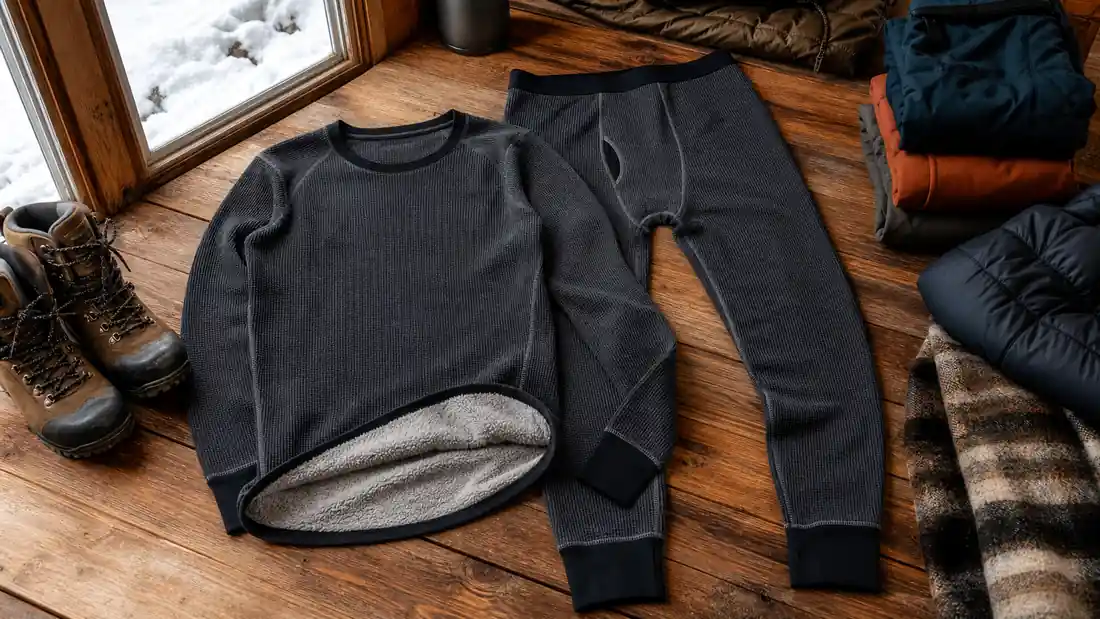
Extreme cold exposes the weaknesses in ordinary thermal underwear. A thin base layer may feel comfortable indoors but provide too little insulation during long periods outside. At the other extreme, a thick fleece set can trap so much moisture during skiing, hiking, or physical work that it becomes damp and uncomfortable. The right choice depends on more than thickness alone.
The best long johns for extreme cold should fit close enough to manage moisture without restricting movement, work smoothly beneath additional layers, and provide the right balance of insulation and breathability for the activity. Heavy fleece favors stationary work and low-output use, while merino wool generally offers better temperature regulation for changing activity levels. No base layer replaces an insulating midlayer and weather-resistant outer shell in severe conditions.
Quick Answer
For active outdoor use, the DANISH ENDURANCE Men’s Merino Thermal Underwear Set offers the most capable material blend in this group. Its heavyweight 250 g/m² fabric uses 90% merino wool for moisture management, odor control, and temperature regulation, with polyamide added for durability. Its higher cost and wool-specific care requirements are the main trade-offs.
For maximum fleece insulation at a lower price, the Ouruikia Men’s Ultra Heavyweight Thermal Underwear Set is better suited to outdoor work, spectator events, and other low-to-moderate activity. Women looking for a similar construction can consider the corresponding Ouruikia Women’s Ultra Heavyweight Set. The Cuddl Duds Men’s Heavyweight Set provides a more balanced option for everyday layering, while the WEERTI Men’s Thermal Set is the budget-friendly choice.
- Best premium merino option: DANISH ENDURANCE Men’s Merino Thermal Underwear Set
- Best heavyweight fleece option for men: Ouruikia Men’s Ultra Heavyweight Thermal Underwear Set
- Best heavyweight fleece option for women: Ouruikia Women’s Ultra Heavyweight Thermal Underwear Set
- Best for balanced everyday layering: Cuddl Duds Men’s Heavyweight Thermal Set
- Best budget set: WEERTI Thermal Underwear for Men
- Best bottoms-only multipack: Men’s Heavyweight Wool-Blend Thermal Bottoms
Comparison Table
| Product | Best For | Material or Insulation | Fit and Layering | Notable Trade-Off |
|---|---|---|---|---|
| DANISH ENDURANCE Merino Set | Skiing, hiking, travel, and changing activity levels | 250 g/m² fabric with 90% merino wool and 10% polyamide | Close-fitting design with flat seams and a mock neck | Costs more and requires careful washing |
| Ouruikia Men’s Ultra Heavyweight Set | Outdoor work and prolonged low-output cold exposure | Polyester-spandex fabric with thick fleece lining | Snug, stretchy fit with ribbed cuffs | May be bulky or too warm during strenuous activity |
| Ouruikia Women’s Ultra Heavyweight Set | Women prioritizing maximum fleece insulation | 95% polyester and 5% spandex with thick fleece | Close fit with four-way stretch and ribbed cuffs | Less versatile for high-output activities |
| Cuddl Duds Men’s Heavyweight Set | Everyday wear, outdoor chores, and moderate activity | 235 GSM fabric with brushed fleece interior | Smooth exterior, stretch construction, and thumbholes | Not as temperature-regulating as merino wool |
| WEERTI Men’s Thermal Set | Budget layering, indoor work, and casual winter use | Stretch fabric with soft fleece lining | Flexible fit intended for layering | Fabric weight and fiber percentages are not specified |
| Men’s Wool-Blend Thermal Bottoms | Shoppers who need extra lower-body layers | Stretch fabric with an 11% wool-blend component | Bottoms-only design with four-way stretch | No matching top and limited material details |
How We Chose These Long Johns
These recommendations were assessed using the supplied manufacturer specifications, including fabric composition, fabric weight when available, lining type, stretch, seam design, moisture-management claims, care requirements, and intended use. We also considered whether each option fills a distinct role rather than treating every heavyweight thermal set as interchangeable.
The most important evaluation factors were:
- Insulation: Thick fleece can retain considerable warmth, but it also adds bulk and may become uncomfortable during intense movement.
- Moisture management: Sweat needs to move away from the skin. A damp base layer can accelerate heat loss when activity slows.
- Layering compatibility: Long johns should fit under a midlayer and outer garment without bunching or restricting circulation.
- Mobility: Stretch fabric, raglan sleeves, and low-profile seams can make a meaningful difference during work or winter sports.
- Coverage: Cuffs, collars, thumbholes, and a secure waistband help reduce gaps between layers.
- Care: Synthetic fleece is generally straightforward to wash, while merino wool requires gentler handling.
- Value: Cost was considered in relation to material quality, versatility, and whether the package includes both a top and bottom.
No unsupported temperature ratings were assigned. Extreme-cold comfort depends on wind, moisture, exposure time, activity, personal cold tolerance, and the rest of the clothing system. A base layer that works during active skiing may not be sufficient for standing still at the same air temperature.
Our Top Picks
These products are not arranged as a simple best-to-worst ranking. The merino set prioritizes moisture control and versatility, the thick fleece sets favor insulation, and the lighter or less expensive choices suit everyday layering. Compare each garment’s intended activity, bulk, care needs, and available sizing before deciding.
DANISH ENDURANCE Men’s Merino Thermal Underwear Set

The DANISH ENDURANCE set uses a heavyweight 250 g/m² fabric made from 90% merino wool and 10% polyamide. Merino wool can absorb and move moisture while helping regulate temperature, which makes this construction more adaptable than a thick fleece lining when activity levels change. The polyamide reinforces the wool to improve durability. A mock neck increases upper-body coverage, while raglan sleeves support shoulder movement. Flat seams, an absence of tags, and superfine 18.5-micron fibers are intended to reduce irritation when the set is worn directly against the skin. Based on these features, it appears particularly well suited to skiing, snowboarding, hiking, and cold-weather travel.
This is the strongest option here for users who expect to alternate between exertion and rest. Its odor resistance can also be useful during multi-day trips when frequent washing is impractical. However, it is not the thickest-feeling choice simply because it is the most expensive. People standing still for long periods may prefer fleece combined with substantial midlayers. Wool also calls for more careful maintenance: the manufacturer directs users to wash at no more than 86°F on a gentle cycle with wool detergent and to avoid tumble drying. Buyers sensitive to wool should consider their skin tolerance, even though the listed fibers are relatively fine.
Pros:
- Heavyweight 250 g/m² construction is appropriate for cold-weather layering
- Merino wool manages moisture and temperature across changing activity levels
- Natural odor resistance benefits travel and multi-day outdoor use
- Flat seams, no tags, and fine fibers are designed for next-to-skin comfort
- Polyamide reinforcement adds durability to the wool-rich fabric
Cons:
- Costs considerably more than the synthetic fleece sets
- Requires wool detergent, a gentle wash, and air drying
- May not satisfy buyers who specifically want a thick fleece feel
The DANISH ENDURANCE set offers the most technically versatile fabric in this group. It makes the most sense for active users who value moisture control and odor resistance as much as warmth. Its price and care routine are less convenient, but those trade-offs may be worthwhile for winter sports, travel, and repeated outdoor wear.
Best for: Active cold-weather use, winter travel, skiing, snowboarding, and hiking.
Ouruikia Men’s Ultra Heavyweight Thermal Underwear Set

The Ouruikia men’s set is built around a thick fleece lining and a 95% polyester, 5% spandex outer fabric. Its substantial construction prioritizes insulation rather than low weight or compact packing. Four-way stretch allows the top and bottom to follow normal movement, while ribbed cuffs help keep the sleeves and legs in place beneath other clothing. The close fit is designed to reduce open air gaps, and a double-layer open fly adds convenience for long workdays. This combination appears most appropriate for outdoor workers, spectators, cold indoor environments, and people spending extended periods outside at a low or moderate activity level.
Compared with the merino option, this set provides a softer, heavier fleece feel at a lower cost and with simpler care expectations. The trade-off is reduced versatility during vigorous movement. Thick synthetic fleece may hold excess heat, and perspiration can become uncomfortable if the wearer shifts from strenuous work to standing still. It is also likely to occupy more room under slim pants and fitted shirts. Buyers should compare body measurements with the listing’s size chart and confirm that their outer garments have enough space for a heavyweight layer without compressing it or restricting circulation.
Pros:
- Thick fleece lining prioritizes heat retention for low-output conditions
- Four-way stretch supports normal movement
- Ribbed cuffs help prevent the fabric from riding up under other layers
- Polyester-spandex construction is generally easier to maintain than wool
- Open-fly design is practical for extended outdoor work
Cons:
- Heavy construction may feel bulky under fitted clothing
- Can be too warm for running, steep hiking, or demanding physical labor
- Less odor-resistant and temperature-regulating than merino wool
This Ouruikia set is a sensible option when insulation and softness matter more than packability or high-output breathability. It should work best as the first layer in a cold-weather system for relatively stationary use. Active buyers may be better served by merino or a less substantial synthetic base layer.
Best for: Men doing low-to-moderate activity in severe winter conditions, including outdoor work and long periods of standing.
Ouruikia Women’s Ultra Heavyweight Thermal Underwear Set

The women’s Ouruikia set follows the same insulation-first approach as the men’s version. It combines 95% polyester and 5% spandex with a thick fleece lining, creating a substantial layer for cold environments. Four-way stretch is intended to preserve mobility despite the fabric’s weight, and ribbed cuffs keep the extremities aligned beneath socks, gloves, pants, and outer sleeves. The manufacturer describes the material as machine washable and designed to resist pilling and deformation. This set appears better suited to outdoor work, casual winter use, cold-weather travel with limited activity, and other situations where the wearer is more concerned about retaining heat than minimizing bulk.
Its inclusion provides a women-specific alternative among a group otherwise dominated by men’s sizing. Nevertheless, shoppers should not assume that a gender label guarantees an ideal fit. Torso length, rise, hip measurements, inseam, and sleeve length can vary considerably between people. Check the current chart rather than relying only on a usual letter size. The thick lining also needs adequate room beneath pants and jackets. For snow sports or uphill activities, the fabric may retain more warmth than necessary and offer less efficient temperature regulation than heavyweight merino.
Pros:
- Thick fleece lining provides substantial insulation
- Four-way stretch helps offset the restrictive feel of heavier material
- Ribbed cuffs reduce bunching and gaps between layers
- Machine-washable synthetic fabric offers convenient routine care
- Provides a women-specific heavyweight option for low-output use
Cons:
- May be too bulky beneath close-fitting pants or ski clothing
- Not the most breathable choice for sustained high-output movement
- Fit still needs to be verified using body measurements
Women seeking a plush, heavily insulated synthetic set may find this more suitable than a thin athletic base layer. Its strengths are warmth, stretch, and straightforward care. For aerobic winter activities or compact travel, a lighter synthetic fabric or wool-rich alternative would generally provide a better balance.
Best for: Women who run cold, perform stationary outdoor tasks, or need a thick fleece layer for severe winter weather.
Cuddl Duds Men’s Heavyweight Fleece-Lined Thermal Set

The Cuddl Duds two-piece set uses 235 GSM fabric with a brushed fleece interior, placing it in the heavyweight category without relying on an unspecified claim of maximum thickness. The manufacturer describes the fabric as breathable and moisture-wicking, while the smooth exterior is intended to slide beneath additional clothing with less bunching. Stretch-enhanced leggings and a long-sleeve crewneck support mobility. Thumbholes can keep the sleeves extended when a jacket is pulled on, and the functional fly is helpful during long days outdoors. The tag-free construction may also reduce irritation during extended wear.
This set occupies a useful middle position between thick, insulation-focused fleece and the more expensive merino option. It appears appropriate for outdoor chores, everyday commuting, moderate hiking, and active work where some breathability is needed. The 235 GSM specification gives shoppers a more concrete point of comparison than products that do not disclose fabric weight. Still, it remains a fleece-lined synthetic set. During demanding uphill movement, it may trap more heat than a lighter base layer. It also cannot block strong wind or precipitation by itself, so a suitable outer layer remains essential.
Pros:
- Listed 235 GSM fabric provides a clear indication of heavyweight construction
- Brushed fleece adds warmth and next-to-skin softness
- Smooth exterior is designed to layer without excessive bunching
- Thumbholes improve sleeve coverage when adding upper layers
- Functional fly and tag-free design support extended everyday wear
Cons:
- May retain too much heat during strenuous activity
- Does not offer the natural odor control of merino wool
- Fleece thickness can require extra room beneath fitted clothing
Cuddl Duds provides a practical balance for shoppers who want a true heavyweight set without moving to premium merino. Its layering details distinguish it from basic fleece thermals. It is most useful for varied everyday winter routines rather than the highest-output sports or the most stationary exposure.
Best for: Everyday cold-weather layering, outdoor chores, commuting, and moderate activity.
WEERTI Thermal Underwear Set for Men

The WEERTI set combines a fleece-lined interior with four-way stretch and moisture-wicking fabric. It includes both a long-sleeve top and long-john bottoms, making it an accessible choice for someone assembling a winter layering system on a limited budget. The flexible construction is intended to move without bunching, while the soft inner surface also makes the set suitable for sleepwear or cold indoor spaces. Based on its design, it appears most useful for commuting, errands, indoor work, casual outdoor tasks, and short periods outside when paired with appropriate insulating and protective layers.
This recommendation is less about maximum technical performance and more about value and versatility. Unlike the DANISH ENDURANCE and Cuddl Duds sets, the supplied specifications do not identify a fabric weight or detailed fiber percentages. That makes its insulation and drying performance harder to compare precisely. Buyers should view it as a general cold-weather fleece base layer rather than assume it will independently handle severe exposure. Its relatively low price may make it practical as a spare set, but people working outside all day may benefit from a more clearly specified heavyweight fabric.
Pros:
- Includes a top and bottom at a budget-oriented price
- Fleece lining offers a soft feel for everyday wear
- Four-way stretch supports mobility and reduces bunching
- Moisture-wicking fabric is intended to improve comfort
- Versatile enough for layering, lounging, or sleepwear
Cons:
- Fabric weight and exact fiber composition are not provided in the supplied details
- May not provide enough insulation for prolonged stationary exposure
- Less specialized for demanding winter sports than a wool-rich base layer
The WEERTI set suits shoppers who need an affordable thermal foundation for daily winter use. Its stretch and fleece lining cover the basics, but limited material detail makes it difficult to evaluate against more technical garments. For severe cold, treat it as one part of a complete layering system rather than the primary source of insulation.
Best for: Budget-conscious shoppers, casual winter use, cold indoor environments, and spare thermal clothing.
Men’s Heavyweight Wool-Blend Thermal Bottoms

These heavyweight long-john bottoms are a two-pair option for shoppers who need additional lower-body layers rather than another complete top-and-bottom set. The supplied specifications identify an 11% wool-blend component, a soft moisture-wicking lining, four-way stretch, and reinforced seams. The design is intended to fit beneath casual clothing, outdoor gear, or workwear while allowing movement. Two pairs can be useful for alternating between wash days, travel, or maintaining separate work and casual layers. They may suit skiing, cycling, climbing, or outdoor tasks, provided their thickness works comfortably beneath the wearer’s outer pants.
The main advantage is practical quantity, not a high wool content. At 11%, the wool component is much lower than the 90% merino used by DANISH ENDURANCE, so shoppers should not expect equivalent odor resistance or temperature regulation. The supplied details also do not provide total fabric weight or a full fiber breakdown. Because this is a bottoms-only package, buyers still need a separate upper-body base layer. Check the current listing carefully for package contents, measurements, rise, and inseam before ordering, particularly if the bottoms will be worn beneath fitted ski pants.
Pros:
- Includes two pairs of thermal bottoms
- Four-way stretch supports lower-body mobility
- Soft lining is designed for next-to-skin comfort
- Reinforced seams may help in high-movement areas
- Machine-washable construction simplifies routine care
Cons:
- Does not include a matching thermal top
- Wool makes up only a limited portion of the blend
- Total fabric weight and complete fiber composition are not specified
This multipack is most relevant for someone who already owns suitable thermal tops or needs to rotate lower-body layers frequently. It offers flexibility and a small amount of wool in the blend, but it should not be confused with a predominantly merino garment. The incomplete material details also warrant careful listing review.
Best for: Men who need multiple thermal bottoms for work, travel, or frequent rotation.
How to Choose Long Johns for Extreme Cold
Start With Your Activity Level
The amount of heat your body produces can change which base layer works best. A person standing beside a worksite, waiting at a bus stop, or watching an outdoor event generates relatively little heat. A thick fleece layer may be useful in these situations because insulation takes priority over rapid moisture transfer.
Ski touring, snowshoeing, running, and steep winter hiking create much more body heat. An extremely thick base layer can cause sweating, even when the air is very cold. Once activity stops, that moisture can cool quickly. Active users often benefit from merino wool or a thinner synthetic base layer paired with an adjustable midlayer.
| Activity Level | Suitable Base-Layer Approach | Main Concern |
|---|---|---|
| Low output | Heavyweight fleece or heavyweight merino | Maintaining warmth during long stationary periods |
| Moderate output | Breathable heavyweight synthetic or merino | Balancing insulation with moisture movement |
| High output | Merino or a lighter moisture-wicking synthetic layer | Preventing overheating and sweat accumulation |
| Changing output | Temperature-regulating base layer with adjustable midlayers | Adapting without needing to replace the next-to-skin layer |
Understand the Material Trade-Offs
Merino Wool
Merino wool is valued for temperature regulation, moisture management, and odor resistance. It remains comfortable across a wider range of activity levels than many thick fleece fabrics and is useful for multi-day trips. Fine merino can feel smooth, although people with wool sensitivity may still notice itching.
Its disadvantages are cost and care. Wool garments generally require a gentle cycle, cool water, suitable detergent, and air drying. Pure or high-percentage merino can also be less abrasion-resistant than some synthetics, which is why manufacturers often add nylon or polyamide.
Polyester Fleece
Polyester fleece is soft, insulating, relatively affordable, and usually easy to wash. A heavily brushed interior traps warm air and can be comfortable for stationary work or casual winter wear. Spandex is often included to improve stretch and fit.
Thicker fleece adds bulk and may trap excessive heat during strenuous movement. Synthetic fabric can also retain odors more readily than merino. Look for flat seams, a smooth exterior, and enough stretch to prevent heavy fleece from feeling restrictive.
Wool Blends
The phrase wool blend does not indicate how much wool is present. A garment containing 10% wool will behave differently from one containing 90% merino. Always check the complete fiber percentages when available. A small wool content does not automatically provide the same temperature regulation or odor resistance as a wool-rich fabric.
Check Fabric Weight, but Do Not Use It Alone
Fabric weight is commonly expressed in grams per square meter, abbreviated as g/m² or GSM. A higher number generally indicates a more substantial fabric, but it does not provide a direct temperature rating. Fiber type, knit density, moisture, fit, wind, and the other clothing layers all affect performance.
- Lightweight: Better for high-output movement or mild conditions.
- Midweight: A versatile choice for moderate activity and variable winter weather.
- Heavyweight: Better suited to low-output use, severe cold, or people who run cold.
These categories are not standardized equally across every manufacturer. A listed GSM figure provides more useful context than terms such as “ultra warm,” but garments with similar weights can still perform differently.
Choose a Close Fit Without Compression
A base layer should sit close to the skin so it can collect and move moisture. Loose fabric creates gaps and may bunch beneath other clothing. However, tighter is not always better. Excess compression can restrict movement and circulation, flatten insulating fabric, and make seams uncomfortable.
Measure the chest, waist, hips, inseam, and torso when the manufacturer provides corresponding dimensions. Consider sleeve and leg length as well as circumference. If measurements fall between sizes, use the brand’s guidance and consider whether the garment will be worn mainly for movement or stationary warmth. Do not assume sizing is consistent across brands.
Make Sure the Base Layer Fits Under Other Clothing
Heavy fleece can create fit problems beneath slim work pants, jeans, ski bibs, or tailored uniforms. Try to preserve enough room to bend the knees, sit, reach overhead, and squat without pulling at the waistband or shoulders. Outer layers should not compress the base layer so severely that it loses loft.
Useful layering details include:
- Flat or low-profile seams that reduce pressure points
- Ribbed cuffs that remain inside socks and gloves
- A smooth outer face that slides beneath midlayers
- Thumbholes that hold sleeves in place
- A mock neck for added coverage in exposed conditions
- A functional fly for work and extended outdoor use
Do Not Expect Long Johns to Stop Wind or Precipitation
Most base layers are neither windproof nor waterproof. Their job is to manage next-to-skin moisture and provide initial insulation. Wind can pass through fleece and rapidly remove heat, while rain or melting snow can overwhelm a thermal layer.
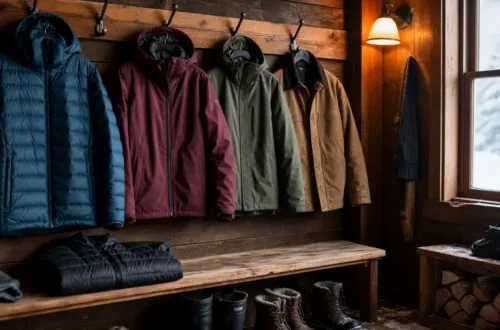
A complete extreme-cold system generally includes:
- Base layer: Manages moisture and provides initial warmth.
- Insulating layer: Traps additional warm air. Examples include fleece, wool, or insulated garments.
- Protective outer layer: Reduces heat loss from wind and helps manage snow or moisture.
Conditions may require more than one insulating layer. The outer layer’s weather protection and ventilation can matter as much as the long johns underneath it.
Consider Care Before Buying
Base layers collect perspiration, body oils, and odor, so their maintenance routine matters. Synthetic thermals are often machine washable, although high heat can damage elastic fibers or affect the fabric’s shape. Follow the garment label rather than using one washing method for every set.
Merino wool usually needs cooler water, gentle agitation, wool-safe detergent, and air drying. It often needs less frequent washing because of its odor resistance. Airing wool after use can extend the time between washes, but visibly dirty or heavily soiled clothing still requires proper cleaning.
Common Mistakes When Buying Extreme-Cold Base Layers
Choosing the Thickest Set for Every Activity
More insulation is not automatically better. Thick fleece can work well while standing still but cause overheating during strenuous activity. Choose according to expected movement, not just the lowest forecast temperature.
Wearing Cotton Underneath
A cotton T-shirt or cotton underwear worn beneath a technical base layer can absorb moisture and remain wet. That undermines the base layer’s moisture-management function. When practical, wear the thermal fabric directly against the skin or over minimal non-cotton undergarments.
Ignoring the Rest of the Layering System
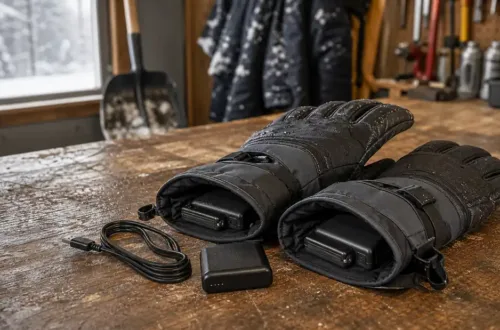
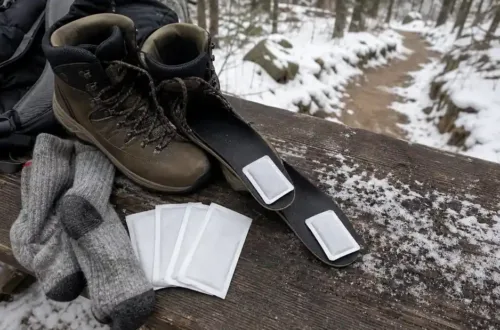
Warm long johns cannot compensate for a jacket that allows strong wind through, wet pants, exposed wrists, or poorly insulated boots. Evaluate the complete system, including head, hands, feet, and face protection.
Buying Too Tight
A close fit helps moisture transfer, but severe compression can restrict circulation and movement. This is particularly important at waistbands, cuffs, and beneath tight boots. Cold-weather clothing should not leave deep pressure marks or cause numbness.
Assuming a Product Has a Reliable Temperature Rating
Comfort at a given temperature varies with wind chill, humidity, sun exposure, activity, duration, food intake, health, and individual cold tolerance. Unless a manufacturer supports a rating with a defined test method, treat temperature claims cautiously.
Failing to Change Damp Clothing
Even a moisture-wicking base layer can become saturated. Carrying a dry replacement is important during remote trips, long work shifts, or activities followed by extended rest. Change out of damp layers before the body begins cooling rapidly.
Safety Considerations in Severe Cold
Warm clothing reduces risk but does not eliminate it. Monitor weather forecasts, wind chill, route conditions, and the expected time away from shelter. People with circulatory conditions or reduced cold sensitivity should seek appropriate medical guidance before prolonged exposure.
Watch for signs of cold stress, including:
- Persistent or violent shivering
- Numb, pale, waxy, or unusually firm skin
- Loss of coordination
- Slurred speech
- Confusion or unusual behavior
- Drowsiness and reduced responsiveness
Confusion, loss of coordination, slurred speech, or reduced consciousness can indicate a medical emergency. Move the person to shelter, remove wet clothing, insulate them from the ground, and contact emergency services. Avoid direct high heat on numb or frostbitten skin.
Frequently Asked Questions
Are fleece-lined long johns good for extreme cold?
Fleece-lined long johns can provide substantial insulation, especially during low-output activities. Their main disadvantages are bulk and the possibility of overheating during strenuous movement. They work best as part of a system that includes an insulating midlayer and an outer layer suited to wind and precipitation.
Is merino wool warmer than synthetic thermal underwear?
Neither material is always warmer. Fabric weight, thickness, fit, construction, and moisture levels all matter. Heavy fleece may feel warmer during stationary use, while merino often provides better temperature regulation and odor control across changing activity levels. A dry, appropriately weighted layer is generally more useful than choosing by fiber alone.
Should long johns fit tightly?
They should fit close to the skin without restricting circulation, breathing, or movement. The fabric should not sag or bunch, but waistbands and cuffs should not cause numbness or deep pressure marks. Use body measurements and the current manufacturer size chart rather than relying solely on a usual size.
Can I wear two pairs of long johns?
Two base layers can restrict movement, trap sweat, and create uncomfortable seams. A better approach is usually one moisture-managing base layer followed by a purpose-built insulating midlayer. If two close-fitting layers are used, confirm that they do not compress the legs or restrict circulation.
What should I wear over long johns in severe cold?
Add insulation appropriate to the activity, followed by an outer layer that addresses wind and moisture. For example, a merino base layer might be combined with fleece or insulated pants and a wind-resistant or weather-protective shell. The exact system depends on exertion, precipitation, exposure time, and available shelter.
Are heavyweight thermals suitable for skiing?
They can be, especially for resort skiing, slow-paced activity, or people who run cold. However, very thick fleece may overheat during demanding runs, uphill travel, or spring conditions. Skiers should also make sure the thermal bottoms do not bunch inside boots. Base-layer cuffs should end above or fit smoothly beneath ski socks according to personal comfort and boot fit.
How many thermal sets do I need?
One set may be enough for occasional use near home. Two or more sets are useful for regular outdoor work, travel, or multi-day activities because they allow wet or dirty clothing to be replaced. Merino may be worn more times between washes when it remains clean and dry, while synthetic layers may need more frequent laundering due to odor retention.
Can heavyweight long johns be worn as pajamas?
Many fleece-lined sets are comfortable as sleepwear, but very thick thermals may cause overheating in a heated room or inside a warm sleeping bag. Avoid going to bed in layers that are damp from daytime activity. A dry sleep layer helps preserve warmth and keeps moisture out of sleeping insulation.
How often should thermal underwear be washed?
Wash frequency depends on material, perspiration, odor, and use. Synthetic sets may need washing after one or several wears. Merino can often be aired and worn again if it is dry and clean. Always follow the care label, and avoid fabric treatments that conflict with the manufacturer’s instructions.
Final Recommendations
The DANISH ENDURANCE Men’s Merino Thermal Underwear Set is the most versatile choice among these six recommendations for winter sports, travel, and activities that alternate between exertion and rest. Its wool-rich construction manages moisture and odor well, although it comes with a higher price and more demanding care.
For prolonged low-output exposure, the Ouruikia Men’s Ultra Heavyweight Set and Ouruikia Women’s Ultra Heavyweight Set prioritize thick fleece insulation. The Cuddl Duds Men’s Heavyweight Set offers a more balanced synthetic design for everyday layering, while the WEERTI set is the practical budget choice. Shoppers needing only lower-body coverage may prefer the two-pair Men’s Wool-Blend Thermal Bottoms.
Choose according to activity before choosing by thickness. In extreme cold, a dry base layer, adjustable insulation, and suitable protection from wind and moisture form a safer and more adaptable system than heavyweight long johns alone.