Choosing winter gloves is less about finding the thickest pair and more about matching the glove to the job. A glove that works well for commuting or walking the dog may feel too thin for snow shoveling, while a heavily insulated ski glove can be too bulky for driving, using a phone, or handling tools. Wet snow, wind, activity level, and fit all affect how warm your hands actually feel.
The best winter gloves for men combine enough insulation for the conditions with dependable weather protection, a secure cuff, and the dexterity needed for daily tasks. The eight options below cover distinct needs, including outdoor work, snow sports, active use, mild winter errands, and budget-conscious everyday wear.
Quick Answer
For work and wet winter chores, the Carhartt Waterproof Insulated Knit Cuff Glove offers a durable build, waterproof insert, and reinforced grip. The The North Face Apex Insulated Etip Glove is a more streamlined choice for commuting, hiking, and frequent phone use. For snow sports and colder, wetter conditions, the MOREOK Waterproof & Windproof Glove provides a more protective cuff and substantial insulation. Shoppers who need affordable, lighter gloves for running, driving, and everyday use should consider the SIMARI Winter Gloves or Deemii Winter Gloves.
Comparison Table
| Product | Best For | Insulation or Material | Weather Protection | Notable Trade-Off |
|---|---|---|---|---|
| Carhartt Waterproof Insulated | Outdoor work and chores | Synthetic insulation, softshell shell | Waterproof insert | More work-focused than streamlined |
| TRENDOUX Winter Gloves | Budget snow activities | 3M Thinsulate insulation | Water-resistant outer and cuff closure | Not intended for prolonged soaking |
| The North Face Apex Etip | Commuting and active everyday wear | 100g Heatseeker Eco insulation | Water-repellent finish | Not a dedicated waterproof ski glove |
| ihuan Winter Ski Gloves | Driving and light snow chores | Fleece lining, flexible shell | Water-resistant body | Cuff is not waterproof |
| SIMARI Winter Gloves | Running and mild weather | Polyester-spandex with flannel lining | Limited weather protection | Too light for wet snow or severe cold |
| Deemii Winter Gloves | Active commuting and cycling | 3M C40 insulation, fleece lining | Water-resistant, wind-blocking outer | Lightweight build has limits in deep cold |
| MOREOK Waterproof & Windproof | Skiing and colder conditions | 200g 3M insulation | TPU waterproof layers and extended cuff | Snug fit and greater bulk |
| Krosa Winter Gloves | Cold-weather walking and cycling | 3M insulation with plush lining | Windproof, water-resistant shell | Hand washing recommended |
How We Chose These Gloves
These selections were compared by their stated insulation, outer materials, weather protection, grip, cuff design, touchscreen function, and likely suitability for different winter activities. Waterproof and water-resistant are not interchangeable. A waterproof insert or membrane is generally more appropriate for sustained exposure to snow or slush, while a water-resistant coating is better suited to light precipitation and brief outdoor trips. Fit matters as well. Gloves that are too tight can reduce warmth by limiting the insulating air around the hand, while oversized gloves can make gripping and touchscreen use difficult.
Our Top Picks
These gloves are not ranked from best to worst. Each fills a different role, from durable work gloves to lightweight active gloves and insulated snow gloves. Consider the weather you face most often, whether your hands get sweaty during activity, and how much finger mobility you need before choosing. Checking the manufacturer’s size chart is especially important for insulated gloves, since fit can vary by hand shape and preferred layering.
Carhartt Men’s Waterproof Insulated Knit Cuff Glove

The Carhartt Waterproof Insulated Knit Cuff Glove is designed around practical winter work rather than low-profile casual wear. Its polyester and softshell exterior, synthetic palm, waterproof insert, and synthetic insulation aim to handle cold, wet tasks such as clearing snow, carrying materials, or working outdoors. A FastDry lining is intended to move moisture away from the skin, which can be useful when physical work causes hands to sweat. The adjustable wrist strap and fleece cuff help reduce gaps where snow and cold air can enter.
Grip is a central advantage here. The digital-grip palm and reinforced fingers and thumb should be more useful for tools, equipment, and rough chores than a simple fleece glove. The construction may feel less nimble than a thin commuter glove, so it is not the strongest match for typing or detailed work. It is also worth confirming the listed size carefully, especially if you prefer room for a thin liner glove.
Pros:
- Waterproof insert for wet snow and slushy conditions
- Durable, work-oriented shell and synthetic palm
- Textured grip areas support tool handling
- FastDry lining helps manage moisture during active tasks
- Adjustable wrist strap and cuff help seal out snow
Cons:
- Bulkier than lightweight running or driving gloves
- Touchscreen capability is not a stated feature
This is a sensible choice when weather protection, durability, and grip matter more than fine dexterity. It fits outdoor workers, homeowners, and anyone who regularly handles wet, cold materials, provided the glove is sized with enough room to maintain circulation.
Best for: Outdoor work, snow removal, winter chores, and handling tools in wet conditions.
TRENDOUX Winter Gloves with 3M Thinsulate

TRENDOUX Winter Gloves are a lower-cost insulated option for people who want a single pair for casual outdoor activity, walking, cycling, and occasional snow play. They use 3M Thinsulate insulation with a moisture-wicking lining, while the outer includes a water-resistant treatment and reinforced PU leather palm areas. An adjustable wrist strap, elastic knit cuff, and waterproof-style insert are intended to limit cold air and light snow intrusion. Touchscreen fingertips add useful convenience during travel or outdoor recreation.
The appeal is the broad feature set at a modest price, including grip reinforcement, a pairing buckle, and relatively light insulation. However, the manufacturer describes water resistance, not a guarantee of protection through prolonged exposure to wet snow, rain, or immersion. They are a more practical fit for intermittent activity than for all-day lift-served skiing in consistently wet conditions. Buyers should also avoid relying on marketing comparisons between insulation materials and instead focus on fit, dryness, and intended use.
Pros:
- 3M Thinsulate insulation in a relatively light design
- Touchscreen-compatible fingertips
- Reinforced PU palm areas improve grip
- Adjustable wrist strap and knit cuff improve closure
- Useful pairing buckle helps keep gloves together
Cons:
- Water-resistant construction is not the same as waterproof protection
- May not provide enough insulation for prolonged severe cold
TRENDOUX is a practical value pick for users who need insulation, grip, and phone access without moving into a heavier work or ski glove. It is best reserved for light-to-moderate winter exposure and active use where breathability and mobility remain important.
Best for: Budget-conscious commuters, casual hiking, cycling, and occasional snow activities.
The North Face Men’s Apex Insulated Etip Glove

The North Face Apex Insulated Etip Glove is a softshell-oriented option for men who prioritize mobility and regular phone use. It combines a recycled polyester shell, a fleece-backed hand panel, brushed-tricot lining, and 100g of Heatseeker Eco synthetic insulation. A non-PFC durable water-repellent finish helps shed light moisture, while silicone dots on the palm support grip. The thumb and index finger are touchscreen compatible, making this a convenient option for commuting, dog walking, hiking, and day-to-day cold-weather errands.
This glove is notably different from a heavy ski glove. Its shorter, less bulky profile should make it easier to operate a phone, manage zippers, or use trekking poles, but it does not replace a waterproof glove in sustained wet snow. The insulation level and water-repellent finish make the most sense for cool to cold, mostly dry conditions or active pursuits where a very thick glove might cause overheating. The pairing clip, cuff pulls, and nose wipe are practical finishing details.
Pros:
- 100g Heatseeker Eco synthetic insulation
- Touchscreen-compatible thumb and index finger
- Softshell construction supports mobility
- Water-repellent finish for light moisture
- Silicone palm dots improve grip
Cons:
- Water-repellent finish is not a waterproof membrane
- Less protective than a gauntlet-style snow glove
For a glove worn repeatedly throughout an ordinary winter day, the Apex Insulated Etip offers a balanced mix of warmth, dexterity, and useful features. Choose a more protective waterproof model if your regular plans include wet snow, snowboarding, or extended time outside with little movement.
Best for: Commuting, walking, hiking, travel, and touchscreen use in mostly dry winter weather.
ihuan Winter Waterproof Ski Gloves

The ihuan Winter Ski Gloves use a soft fleece lining and flexible outer material to provide a warmer, less bulky option for routine winter activities. The design includes a water-resistant glove body, wind-blocking cuff adjustment, microfiber leather palm panels, and touchscreen-capable fingertips. That combination is especially relevant for driving, walking, light shoveling, cycling, and errands where holding a steering wheel or phone securely matters. The manufacturer specifically notes that the wrist area is not waterproof, an important limitation for wet conditions.
These gloves are better viewed as an everyday cold-weather pair than as technical ski equipment. The lighter construction can make routine movement more comfortable than a thick gauntlet glove, but it also means they should not be expected to handle extended exposure to soaking rain, deep powder, or extreme cold. Care also matters. The stated instructions recommend hand washing, avoiding vigorous wringing, and air drying to reduce the risk of damaging the internal weather-resistant components.
Pros:
- Fleece lining offers comfortable everyday insulation
- Microfiber leather palm improves grip for driving and tools
- Touchscreen fingertips support phone use
- Adjustable cuff helps limit wind entry
- Less bulky than many dedicated snow gloves
Cons:
- Wrist area is not waterproof
- Not intended for extreme weather or sustained wet exposure
The ihuan glove works well for people who need flexible warmth for typical winter days and light snow. Its disclosed cuff limitation is worth taking seriously. Keep sleeves over the cuff and choose a fully waterproof glove for prolonged snow sports or wet work.
Best for: Driving, walking, light outdoor chores, cycling, and everyday winter use.
SIMARI Winter Gloves
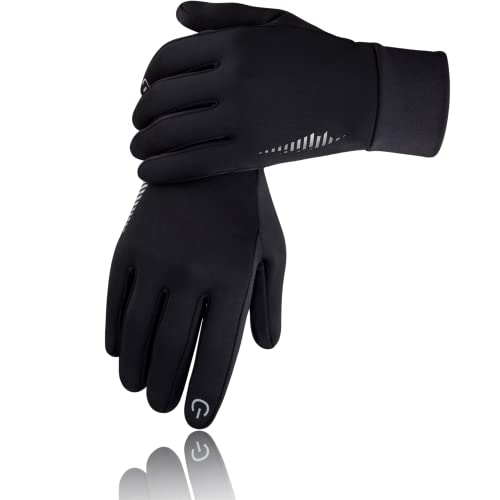
SIMARI Winter Gloves are lightweight thermal gloves made from a polyester-spandex blend with a flannel lining and elastic cuff. Their strength is flexibility. They are designed for activities that involve regular hand movement, such as running, cycling, driving, walking, gym use, or handling a phone outdoors. Conductive touchscreen fingers allow use with phones, tablets, watches, and vehicle displays, while silicone grip areas on the palm and fingers help reduce slipping. Reflective details can also be helpful for visibility during early-morning or evening activity.
These are closer to an insulated liner or mild-weather active glove than a waterproof winter glove. The streamlined fit can work well beneath larger mittens or shell gloves when conditions change, but the thin construction and lack of stated waterproof protection make them a poor choice for snow shoveling, wet snow, or long periods in severe cold. Their versatility is their main advantage, especially for users who often remove bulky gloves because they need more control.
Pros:
- Flexible polyester-spandex construction supports dexterity
- Touchscreen-compatible fingers
- Silicone grip pattern on palm and fingers
- Reflective accents suit low-light activity
- Can function as a liner under larger gloves
Cons:
- No stated waterproof or water-resistant protection
- Limited insulation for severe cold or inactive use
SIMARI gloves are useful when mobility is more important than maximum weather protection. They are a reasonable choice for mild winters, high-output exercise, and errands, while a waterproof insulated glove remains the safer choice for wet, cold, or stationary conditions.
Best for: Running, cycling, driving, touchscreen use, and layering in mild winter weather.
Deemii Winter Gloves with 3M Thinsulate

Deemii Winter Gloves are designed for active use, pairing 3M C40 insulation with a fleece lining and a stretchable PU outer. The manufacturer describes a lightweight, flexible build intended for running, cycling, hiking, driving, and commuting. Water-resistant coating and wind-blocking fabric help with light precipitation and breezy conditions, while elastic cuffs sit close to the wrist to reduce drafts. Touchscreen material on the thumb and index finger allows basic phone operation, and silicone stripes across the palm and fingers improve hold on handlebars and steering wheels.
For users who get warm quickly while moving, this type of glove can be more practical than a thick snow glove. It is easier to grip equipment and less likely to feel restrictive, though the trade-off is reduced protection in very cold, wet, or slow-moving situations. The maker provides a temperature claim, but individual warmth depends heavily on circulation, wind, activity, fit, and whether the gloves become wet. Treat it as a light insulated glove, not a substitute for a fully waterproof ski glove.
Pros:
- 3M insulation and fleece lining in a lightweight format
- Stretchable outer supports finger movement
- Silicone grip stripes on palm and fingertips
- Touchscreen thumb and index finger
- Reflective logo can aid low-light visibility
Cons:
- Water-resistant coating is not designed for prolonged soaking
- Elastic cuffs offer less coverage than extended snow cuffs
Deemii is a good fit for active commuters and outdoor exercisers who want warmth without a heavy, restrictive feel. It works best in dry or lightly wet winter conditions, particularly when movement generates body heat and a secure grip is important.
Best for: Running, cycling, driving, hiking, and active commuting.
MOREOK Waterproof & Windproof Winter Gloves

The MOREOK Waterproof & Windproof Winter Gloves are built for users who need more weather coverage than a typical commuter glove. They use 200g 3M insulation, a warm lining, a windproof outer fabric, and TPU membrane layers intended to provide waterproof and breathable protection. The longer cuff, elastic closure, and adjustable wrist strap help reduce the chance of snow entering at the wrist. A nitrile-rubber palm coating supports grip, while touchscreen-compatible thumb areas and a terry cloth thumb panel add convenience for snow sports and outdoor riding.
This is the more protective choice for skiing, snowboarding, winter cycling, and extended time in snow, though a glove’s performance still depends on fit and conditions. MOREOK describes the fit as snug, so sizing by hand circumference or palm width is particularly important. A snug glove can improve control but may feel restrictive if you prefer room for liners. The extra insulation and cuff protection can also be warmer than necessary for short drives or high-output running.
Pros:
- 200g 3M insulation for colder conditions
- TPU membrane layers intended for waterproof protection
- Extended cuff and adjustable wrist strap help block snow
- Grip-enhancing nitrile-rubber palm treatment
- Terry thumb panel can help wipe goggles or moisture
Cons:
- Snug fit may not work for those wanting liner space
- More insulated and bulky than a running glove
MOREOK is the stronger option here for people who regularly spend time in snow and need a more secure weather barrier. Measure before ordering, and consider a lighter glove instead if your winter activity is mainly driving, errands, or fast-paced exercise.
Best for: Skiing, snowboarding, winter riding, and colder wet-weather outdoor use.
Krosa Winter Gloves with 3M Insulation and Plush Lining
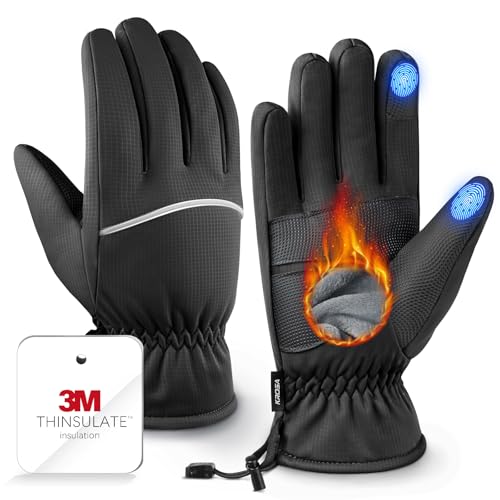
Krosa Winter Gloves use a layered design that combines a PU shell, 3M insulation, cotton, and plush fleece lining. The goal is a warmer glove for cold-weather walking, cycling, hiking, and casual snow use without moving to a full work glove. The shell has a water-resistant coating and is described as windproof, while an elastic wrist and adjustable drawstring help close the opening. Pre-curved fingers are intended to support a more natural hand position, and conductive material on the thumb and index finger allows touchscreen use.
Details such as anti-slip palm material, reflective strips, extended cuffs, and a glove clip make this a well-equipped choice for people outside after dark or in exposed wind. Still, water resistance should not be confused with full waterproofing, particularly around wet snow or rain. The manufacturer advises against machine washing, which may be inconvenient for frequent use. Because fit preference varies, the available size chart is worth checking before choosing between a closer fit and roomier cold-weather fit.
Pros:
- Layered insulation and plush fleece lining
- Extended cuffs with adjustable drawstring closure
- Pre-curved fingers support mobility
- Touchscreen-compatible thumb and index finger
- Reflective strips and anti-loss clip add practical utility
Cons:
- Water-resistant shell is not equivalent to a waterproof membrane
- Not machine washable according to the manufacturer
Krosa gloves suit someone who wants more insulation and cuff coverage than a thin active glove, while still retaining touchscreen access and hand mobility. They are most appropriate for cold, breezy daily outings and light snow rather than prolonged exposure to saturated conditions.
Best for: Cold-weather walking, cycling, hiking, and evening outdoor activities.
How to Choose Winter Gloves for Men
Match insulation to your activity level
Hands generate heat during walking, skiing, cycling, and manual work, but lose heat quickly when standing still. Light insulated gloves are often more comfortable for running and commuting. Heavier synthetic insulation is more appropriate for snow shoveling, snow sports, and other situations where cold exposure lasts longer. If your hands run cold, leave enough room for a thin liner rather than sizing down tightly.
Understand waterproof, water-resistant, and water-repellent
A waterproof insert or membrane is the better choice for wet snow, slush, or repeated contact with moisture. Water-resistant and water-repellent gloves can shed brief light precipitation but may eventually wet through in rain or saturated snow. Cuff design is equally important. Snow can enter through a loose wrist opening even when the hand portion has strong weather protection.
Do not overlook grip and dexterity
For driving, cycling, work, and hiking poles, look for a textured or reinforced palm. A thick glove may keep hands warmer but can make it difficult to operate zippers, keys, phones, and tools. Touchscreen fingers are convenient, but responsiveness varies with screen protectors, moisture, fit, and the device itself.
Choose a fit that supports warmth
Measure your hand according to the manufacturer’s chart rather than assuming your usual clothing size will translate directly. Fingers should reach near the ends without being compressed. Tight gloves can reduce circulation and warmth, while excessive extra length reduces control. For ski or work gloves, consider whether you need room for a liner glove before selecting a size.
Care for insulated gloves properly
Read the care label before washing. Many insulated or membrane gloves should be hand washed or gently cleaned and air dried away from direct heat. High heat, harsh detergents, and aggressive wringing can damage coatings, insulation, adhesives, or waterproof layers. Dry gloves completely between uses, especially after snow removal or wet-weather activity.
Common Mistakes When Buying Winter Gloves
- Buying based on thickness alone: Thick gloves can be useful for stationary cold, but they may be uncomfortable for active use or detailed tasks.
- Assuming water-resistant means waterproof: This can lead to cold, wet hands during long periods in snow or rain.
- Ignoring the cuff: A secure cuff or gauntlet makes a meaningful difference in wind and snow protection.
- Choosing a tight fit: Compression can limit circulation and reduce warmth.
- Using one pair for every winter task: A lightweight glove and a waterproof insulated glove often cover more situations than one compromise pair.
Frequently Asked Questions
Are gloves or mittens warmer?
Mittens are usually warmer because the fingers share heat in one compartment. Gloves provide more dexterity for driving, tool use, phones, and outdoor activities. A practical approach is to use gloves for active tasks and choose mittens for very cold, low-movement conditions.
Are touchscreen gloves reliable?
They can be convenient for basic taps, swipes, and calls, but performance varies by glove fit, conductive material, screen protector, moisture, and device sensitivity. Thin touchscreen gloves generally provide more accurate control than heavily insulated ski gloves.
How can I keep my hands warmer in gloves?
Start with dry hands and gloves that fit without compression. Use a thin moisture-wicking liner if there is enough room, keep jacket sleeves positioned over the cuff when possible, and change gloves if they become wet. For severe cold, mittens or insulated shell gloves over liners may provide more warmth than a single glove.
What gloves are best for snow shoveling?
Look for a durable glove with reliable water protection, insulation, a secure wrist closure, and grippy palm material. The Carhartt model in this guide is particularly suited to that type of task. If snow is wet or shoveling takes a long time, bring a dry backup pair.
Final Recommendations
Start with the conditions that challenge your hands most. The Carhartt Waterproof Insulated Knit Cuff Glove is the practical choice for outdoor chores and work where grip and durability matter. The MOREOK Waterproof & Windproof Winter Gloves provide more protection for snow sports and extended cold-weather exposure. For everyday mobility and phone use, The North Face Apex Insulated Etip Glove offers a more streamlined alternative. If your winter is relatively mild or you stay active, SIMARI and Deemii gloves make more sense than a thick snow glove. A well-fitted glove that stays dry will usually serve you better than a heavily insulated pair that is too tight, too bulky, or unsuited to your routine.