Cold wind can make an otherwise comfortable winter run unpleasant within minutes. The challenge is choosing gloves that block moving air without trapping so much heat and moisture that your hands become sweaty. Thick snow gloves may be warm, but they often limit dexterity. Thin knit gloves breathe well, yet many allow wind to pass directly through the fabric.
The best windproof running gloves balance weather protection, breathability, grip, and mobility. Your ideal pair also depends on pace, temperature, run length, and whether you need protection from rain or snow. The eight options below cover lightweight training, cold and wet conditions, layering, touchscreen use, and budget-conscious shopping.
Quick Answer
For runs in roughly 32°F to 50°F, the Aerynx Winter Running Gloves offer a useful combination of fleece warmth, a wind-blocking middle layer, and a flexible fit. Runners who expect wet snow or colder conditions may prefer the more insulated RIVMOUNT Five-Layer Winter Gloves, although their added protection can feel warmer and bulkier during hard workouts.
The New Balance Lightweight Running Gloves are better suited to mild weather and high-output training where breathability matters more than heavy insulation. For a low-cost liner that can be worn alone or under a shell, consider the Unigear Running Glove Liners.
Windproof Running Gloves Comparison
| Product | Best For | Warmth and Material | Weather Protection | Fit or Layering | Notable Trade-Off |
|---|---|---|---|---|---|
| Aerynx Winter Running Gloves | Balanced winter running | Three layers with 320 gsm fleece | Wind-blocking and water-repellent | Stretchy, close-fitting design | Needs a shell in persistent rain or deep cold |
| RIVMOUNT Five-Layer Winter Gloves | Cold, wet, or snowy outings | Five layers with 3M Thinsulate | Windproof construction with waterproof TPU layer | More protective than a basic liner | May be too warm for fast runs |
| RIVMOUNT Adjustable-Cuff Winter Gloves | Mixed running and daily winter use | Dense fleece lining | Protective outer fabric and adjustable cuff | Flexible with cuff adjustment | Less running-specific than lightweight athletic gloves |
| SIMARI Thermal Running Gloves | Visibility and everyday value | Polyester-spandex shell with flannel lining | Elastic cuff; no waterproof membrane specified | Stretchy liner-style fit | Weather protection is limited compared with membrane gloves |
| New Balance Lightweight Running Gloves | Mild weather and faster training | Breathable polyester-spandex fabric | Light cold protection; no waterproof layer specified | Snug, second-skin athletic fit | Not intended for severe cold or sustained precipitation |
| Unigear Running Glove Liners | Layering and budget shoppers | Moisture-wicking stretch fabric | Basic standalone protection | Trim fit for wearing under shells | Limited wind and wet-weather protection alone |
| ihuan Waterproof Winter Gloves | Wet and windy routes | Fleece lining with an internal waterproof pouch | Water-resistant outer coating and waterproof insert | Lightweight insulated design | Touchscreen material is limited to two fingers |
| RIVMOUNT Three-Layer Running Gloves | Cool-weather running and reflective details | Three layers with 320 gsm fleece | Wind-blocking and water-repellent | Close fit that can work as a liner | Not designed for steady rain without a shell |
What Matters in Windproof Running Gloves
A windproof glove does more than add insulation. It reduces convective heat loss, which occurs when moving air carries warmth away from your skin. This is particularly important when running along exposed roads, open trails, or waterfront routes. Even moderate temperatures can feel much colder when a strong headwind reaches damp hands.
Weather protection must still be balanced with moisture management. Hands generate heat during exercise, and an impermeable glove can become clammy if it does not allow enough moisture to escape. For faster runs, a light wind-blocking layer often works better than thick insulation. Slower runners, people with cold-sensitive hands, and those exercising in lower temperatures may need fleece or synthetic insulation.
- For mild, windy runs: Prioritize breathability, a close fit, and light wind resistance.
- For freezing conditions: Look for fleece or synthetic insulation combined with a wind-blocking layer.
- For rain and wet snow: Choose a glove with a waterproof insert, or wear a waterproof shell over a breathable liner.
- For variable weather: A thin liner-and-shell system is easier to adjust than one heavily insulated glove.
- For phone or watch use: Check which fingers have conductive material. Touchscreen compatibility does not guarantee accurate typing.
How We Chose These Picks
These gloves were assessed using manufacturer-provided information about fabric, insulation, wind protection, water resistance, grip, touchscreen coverage, cuff design, and intended activity. We also considered whether each design appears appropriate for active use, whether it can function as a liner, and what compromises runners should expect.
No single pair is appropriate for every pace or climate. The recommendations include breathable gloves for high-output training, insulated designs for colder outings, weather-resistant options for wet routes, and flexible liners for layering. Product claims about waterproofing and temperature suitability are qualified where necessary, since comfort varies with circulation, exertion, wind exposure, and run duration.
Our Top Picks
These eight products are not arranged as a simple best-to-worst ranking. Each serves a different combination of weather, activity level, and layering preference. Compare the protection and insulation against the conditions in which you actually run. A lightweight glove can outperform a heavily insulated one during a hard workout, while a warmer, membrane-equipped design may be more useful for slower runs in wet or exposed areas.
Aerynx Winter Running Gloves
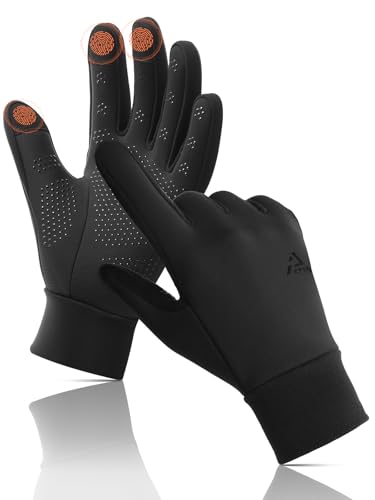
The Aerynx gloves combine a soft outer knit, a wind-blocking middle layer, and 320 gsm fleece. The manufacturer recommends them for approximately 32°F to 50°F, which positions them for cool and moderately cold runs rather than prolonged exposure to severe cold. Four-way stretch creates a close, low-bulk fit that should preserve hand movement when operating a watch, tying a jacket cord, or carrying small items. The outer surface repels light moisture and road spray, while silicone across the palm improves traction. Conductive yarn on the thumb, index finger, and middle finger supports basic phone, GPS, and tablet use.
This is one of the more balanced options for runners who want greater wind protection than an ordinary stretch liner without moving into a thick snow glove. Its fleece adds useful warmth, but runners who heat up quickly should consider whether 320 gsm insulation is more than they need for faster sessions. The water-repellent outer is also different from a fully waterproof shell. For extended outings below 25°F or exposure to steady precipitation, the manufacturer advises adding an outer shell. That layering capability gives the gloves a broader range than a single-purpose running liner.
Pros:
- Wind-blocking middle layer reduces exposure on open routes
- Three-layer construction provides warmth without snow-glove bulk
- Touchscreen material covers three fingers on each hand
- Silicone palm supports a more secure grip on phones and gear
- Stretch fabric can fit under a larger weatherproof shell
Cons:
- Water-repellent exterior is not intended for sustained rain or wet snow
- May feel too warm during hard efforts in mild weather
- Additional protection is recommended for prolonged use below 25°F
The Aerynx is a practical middle-ground glove for runners who encounter cold wind more often than heavy precipitation. Its trim profile and three-finger touchscreen coverage support everyday training, while the fleece and wind-blocking layer offer more protection than a basic knit liner. Add a shell when conditions become colder or consistently wet.
Best for: Everyday winter running in cool, windy conditions from approximately 32°F to 50°F.
RIVMOUNT Five-Layer Winter Gloves

These RIVMOUNT gloves place weather protection and insulation ahead of minimal weight. Their five-layer construction includes a soft lining, 3M Thinsulate insulation, a protective outer shell, and a waterproof TPU layer. A stretchy wrist helps reduce gaps where wind and loose snow could enter. The palms and fingers use nonslip PU material for handling a phone, water bottle, steering wheel, or outdoor equipment. Touchscreen-sensitive fabric extends across all fingertips, while a reflective pattern adds visibility when illuminated. An anti-loss buckle keeps the pair connected when stored in a gym bag or coat pocket.
Compared with liner-style running gloves, this model is more appropriate for runners who prioritize cold and wet-weather coverage. The extra layers may be helpful during slower sessions, run-walk workouts, or exposed winter routes, but they can retain too much heat during tempo runs and other demanding efforts. Although the manufacturer describes the gloves as waterproof and includes a TPU barrier, cuff openings and construction details can still affect protection during prolonged exposure. Buyers should also consult the provided size chart carefully. Excess room can reduce dexterity, while an overly tight glove can compress insulation and restrict circulation.
Pros:
- Five-layer construction includes 3M Thinsulate insulation
- Waterproof TPU layer provides more wet-weather protection than a basic liner
- Windproof shell and close wrist help limit cold-air entry
- Touchscreen material is included on every fingertip
- Reflective detailing and a glove-joining buckle add practical convenience
Cons:
- Heavier insulation may cause overheating during faster runs
- Bulkier than a close-fitting athletic glove
- Touchscreen precision may still be reduced by the insulated construction
This RIVMOUNT model is better viewed as a protective cold-weather glove that can be used for running, rather than a minimal running liner. It suits athletes who regularly face wind, snow, or mixed precipitation and are willing to accept additional warmth and bulk for greater coverage.
Best for: Cold, windy, or wet outings at an easy to moderate effort level.
RIVMOUNT Adjustable-Cuff Winter Gloves

The adjustable-cuff RIVMOUNT gloves use a protective outer fabric, dense fleece lining, and a cuff that can be tightened to reduce wind entry. The manufacturer describes the outer as waterproof, while also positioning the gloves for snow and light rain. That makes them most reasonably suited to ordinary winter moisture rather than assuming unlimited protection in prolonged rain. PU material across the palm increases grip and abrasion resistance, and conductive fabric on all fingers supports touchscreen use. Reflective patterns appear on the back, while a portable buckle helps prevent one glove from becoming separated from the other.
These gloves make sense for someone who alternates among running, commuting, dog walking, driving, and basic outdoor chores. The adjustable cuff is their most meaningful distinction because it allows the wrist opening to be secured more closely than a simple elastic liner cuff. Their fleece lining favors warmth and comfort over maximum ventilation, so they may be better for easy runs than intense intervals. They are described as lightweight and flexible, but runners should still expect more hand coverage than they would get from a thin polyester-spandex glove. Verify sizing against the seller’s chart to preserve finger movement and touchscreen control.
Pros:
- Adjustable cuff helps limit drafts around the wrist
- Dense fleece lining provides insulation for colder daily use
- Touchscreen-compatible material covers all fingers
- PU palm adds grip for phones, bottles, and handlebars
- Reflective pattern offers an additional visibility detail
Cons:
- Fleece can retain excess heat during high-output running
- Wet-weather limits are not stated as clearly as those of a dedicated rain shell
- General-purpose design is less streamlined than a running-specific liner
Choose this version when an adjustable cuff and broad everyday usefulness matter more than having the lightest possible running glove. It can cover easy runs and routine winter tasks, particularly in cold wind or light precipitation, but high-intensity runners may prefer a thinner and more breathable design.
Best for: Runners seeking one flexible glove for easy workouts, commuting, and daily winter activities.
SIMARI Thermal Running Gloves
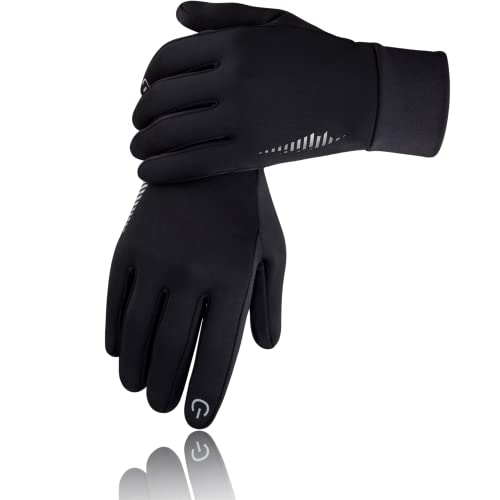
SIMARI uses a 95 percent polyester and 5 percent spandex outer fabric with a soft flannel lining. This creates a flexible liner-style glove for running, cycling, walking, and other active or everyday uses. An elastic cuff keeps the wrist opening close, while silicone particles across the palm and fingers improve grip. Conductive fingertips allow interaction with phones, smartwatches, tablets, and vehicle displays. Reflective patterns on the back can make hand movement more noticeable when directly illuminated, although they do not replace a reflective vest, lamp, or other dedicated visibility equipment.
This model is a budget-friendly option for runners who value stretch, grip, and touchscreen access. It does not have a specified waterproof membrane, and the listed construction provides less evidence of wind blocking than the layered Aerynx or RIVMOUNT designs. As a result, it is better suited to dry, cool conditions or routes with moderate wind exposure. The flannel lining adds comfort for low to moderate activity, but it may hold moisture during longer or faster sessions. It can also serve as a liner beneath a roomy shell, provided the combined layers do not compress the fingers.
Pros:
- Polyester-spandex blend supports flexibility and close hand movement
- Flannel lining adds light warmth for cool-weather use
- Silicone coverage improves grip across the palm and fingers
- Touchscreen feature works with common personal electronics
- Reflective pattern provides a useful supplemental detail for low-light runs
Cons:
- No waterproof membrane is specified
- Wind protection is less clearly defined than on multilayer gloves
- Flannel may become warm or damp during strenuous workouts
The SIMARI gloves are most appropriate for dry winter training, cool fall runs, and general outdoor use. They offer useful dexterity and grip at a relatively accessible price, but runners facing strong wind, heavy rain, or extended cold should consider a more protective glove or add a weather-resistant shell.
Best for: Budget-conscious runners in cool, mostly dry weather.
New Balance Performance Lightweight Running Gloves

New Balance takes a running-focused approach with an 88 percent polyester and 12 percent spandex fabric. The result is a lightweight, breathable glove intended to fit closely and retain finger mobility during jogging, training, cycling, and other active workouts. Conductive fingertips allow basic use of a smartphone, GPS watch, or touchscreen without removing the gloves. The stretch construction favors a second-skin feel rather than heavy insulation, making this design easier to pack into a pocket if conditions warm up. The gloves are hand washable, which is relevant for an item that can absorb sweat during regular training.
This is the strongest option in the group for runners who tend to overheat or who need only modest protection during cool-weather workouts. It differs from the fleece-lined and membrane-equipped gloves by emphasizing ventilation and dexterity. That same advantage is also its main limitation. No waterproof layer or substantial wind-blocking membrane is specified, so it should not be treated as a severe-weather glove. The available version is listed in a combined Large-XL size, which may not suit runners with smaller hands. A loose fit can reduce warmth, grip, and touchscreen accuracy.
Pros:
- Lightweight stretch fabric supports natural hand movement
- More breathable than heavily insulated winter gloves
- Close athletic profile is easy to pack or tuck into a pocket
- Conductive fingertips support phone and GPS watch use
- Well suited to runners who generate substantial body heat
Cons:
- No waterproof membrane or substantial insulation is specified
- Limited protection for severe cold or sustained wind
- Large-XL sizing may not fit smaller hands securely
The New Balance gloves favor moisture management and mobility rather than maximum warmth. They are a sensible choice for brisk runs in mild winter weather, but cold-sensitive runners and those using exposed routes may need a wind shell or a more insulated alternative.
Best for: Fast training, mild winter conditions, and runners whose hands warm quickly.
Unigear Running Glove Liners

The Unigear gloves are close-fitting liners designed for standalone use in fall and early winter or for layering under larger cycling, skiing, or winter gloves. Four-way stretch helps the fabric follow hand movement, while the soft interior and moisture-wicking construction are intended to move perspiration away from the skin. Conductive fabric appears on the thumb and forefinger of both hands. Silicone palm printing provides grip for carrying a phone, holding a water bottle, or using other gear. Reinforced elastic stitching at the seams is intended to address a common weak point in lightweight stretch gloves.
Layering versatility is the main reason to consider this model. A runner can use it alone in mild conditions, then add a windproof or waterproof shell as the weather changes. This approach can manage moisture better than relying solely on one thick glove, and the shell can be removed as the body warms. However, these liners are not presented as having a dedicated wind-blocking membrane. They may therefore allow noticeable air penetration when worn alone on exposed routes. The listed option is Medium, so checking the seller’s hand measurements is important. A tight liner should follow the fingers without restricting circulation.
Pros:
- Trim design works alone or beneath a larger shell glove
- Moisture-wicking fabric is useful during active workouts
- Four-way stretch supports dexterity and close layering
- Silicone palm print improves grip
- Reinforced seam construction targets a common liner-glove stress point
Cons:
- No dedicated windproof or waterproof barrier is specified
- Touchscreen material is limited to the thumb and forefinger
- Standalone warmth is intended mainly for fall and early winter
Unigear offers the most adaptable layering option in this selection. It is not the strongest standalone choice for harsh wind or wet snow, but it gives runners a breathable base layer that can be paired with different shells as conditions change.
Best for: Layering, transitional seasons, and runners seeking an affordable glove liner.
ihuan Waterproof Winter Gloves

The ihuan winter gloves combine a tightly woven outer shell, water-resistant coating, fleece lining, elastic cuff, and an internal waterproof pouch across the hand. This layered construction is designed to keep moisture from reaching the skin even if the exterior fabric begins to wet through. Silicone printing covers the palm and fingers for traction in damp conditions. Conductive material on the thumb and index finger supports basic phone or tablet operation. Despite their weather-focused construction, the gloves are presented as lightweight enough for running, cycling, walking, driving, and similar outdoor activities.
Wet-route protection separates this model from simple stretch liners. It is useful for runners who regularly encounter drizzle, slush, or wet snow and do not want to manage a separate shell. The internal barrier may reduce airflow, however, which can make the glove feel humid during high-output sessions. Waterproof construction also does not mean water cannot enter through the cuff, particularly in persistent rain. The fleece lining and elastic wrist are more appropriate for cold-weather comfort than warm transitional conditions. Runners who prioritize accurate smartwatch operation should note that conductive coverage is limited to two fingers.
Pros:
- Internal waterproof pouch provides meaningful wet-weather protection
- Water-resistant outer coating helps shed ordinary winter moisture
- Fleece lining and elastic cuff support warmth in cold wind
- Silicone grip remains useful when surfaces are damp
- Lightweight profile is more practical for running than a thick ski glove
Cons:
- Waterproof insert may trap heat and perspiration during intense exercise
- Moisture can still enter through the wrist opening
- Touchscreen coverage is limited to the thumb and index finger
The ihuan gloves prioritize wet-weather coverage while retaining a relatively streamlined shape. They are better for cool, damp runs than warm high-intensity workouts. If your hands sweat heavily, reserve them for easy sessions or conditions where the waterproof insert provides a clear advantage.
Best for: Runners who frequently encounter drizzle, wet snow, slush, or damp winter wind.
RIVMOUNT Three-Layer Running Gloves

This RIVMOUNT liner-style model uses three layers, including a wind-blocking middle layer and 320 gsm thermal fleece. The manufacturer identifies approximately 32°F to 50°F as its main operating range and recommends adding a shell for extended use below 25°F or in wet conditions. Four-way stretch supports a close, flexible fit, while the water-repellent exterior handles light rain and road spray. Silicone printing covers the full palm and important fingertip areas. Conductive yarn on the thumb, index finger, and middle finger provides broader touchscreen access than designs limited to two digits.
Although its basic construction resembles the Aerynx option, this model adds a glove-joining buckle and a reflective icon for storage and low-light convenience. It suits runners who want the feel of a liner but need more wind resistance than an ordinary knit glove. The fleece can still be warm during demanding workouts, particularly near the upper end of the stated range. Its water-repellent surface should not be confused with a waterproof membrane. Persistent rain, deep cold, or extended snow exposure calls for a separate protective shell, with enough room to avoid compressing the hands.
Pros:
- Wind-blocking middle layer helps reduce convective heat loss
- 320 gsm fleece provides moderate cold-weather insulation
- Four-way stretch maintains a close, mobile fit
- Three touchscreen-compatible fingers improve device access
- Full-palm silicone, reflective detail, and storage buckle add utility
Cons:
- Water-repellent fabric is not sufficient for steady precipitation
- Can become warm during fast running in milder temperatures
- A shell is recommended for extended outings below 25°F
This RIVMOUNT glove is a useful alternative for runners who want a close fit, moderate fleece warmth, and practical storage details. It works best in cool wind and brief light moisture, while a separate shell extends its usefulness into colder or wetter weather.
Best for: Cool-weather runners who want a liner-style fit with reflective detailing and a storage buckle.
How to Choose Windproof Running Gloves
Match Insulation to Your Running Intensity
Running generates much more heat than walking or standing outdoors. A glove that feels comfortable at the start of a run may become damp after 20 minutes. If you run quickly, live in a mild winter climate, or naturally have warm hands, begin with a breathable stretch glove. Slower paces and colder circulation generally call for fleece or synthetic insulation.
A removable layering system offers the most flexibility. Wear a moisture-managing liner next to the skin and carry a thin wind or rain shell. The liner handles ordinary conditions, while the shell can be added on exposed sections or when precipitation begins.
Distinguish Windproof From Wind-Resistant
Closely woven stretch fabric may reduce some airflow without stopping it completely. A glove described as windproof usually incorporates a membrane, laminate, or dedicated wind-blocking layer. That extra protection can make a noticeable difference on open roads, but it may also reduce breathability.
If wind is your main concern, look beyond generic descriptions such as “winter glove.” Check whether the manufacturer identifies a specific wind-blocking middle layer, protective membrane, or tightly sealed construction. Cuff fit matters too. An effective glove can still feel cold if air flows into a wide wrist opening.
Understand Water-Resistant and Waterproof Construction
A water-repellent coating helps light rain bead and roll off the surface. It is useful for brief showers, road spray, and dry snow, but the fabric can eventually saturate. A waterproof insert or membrane provides a stronger barrier. Even then, water may enter through seams or the open cuff unless those areas are also sealed and covered.
Waterproof gloves tend to breathe less effectively than simple liners. For hard running, a separate waterproof overmitt can be easier to regulate because it can be removed when the weather improves.
Check Fit and Finger Length
Running gloves should fit close enough to prevent loose fabric from sliding across the fingers, but they should not pinch. Excess pressure can restrict circulation and make hands feel colder. Leave enough room to bend every finger naturally and make a relaxed fist.
Use the manufacturer’s hand measurements rather than relying only on labels such as Small or Large. Pay attention to palm circumference and finger length. If you plan to layer, confirm that the outer glove has enough room for the liner without compressing it.
Consider Grip and Touchscreen Coverage
Silicone or PU palm material is helpful when holding a phone, bottle, leash, trekking pole, or bicycle handlebar. Full-palm coverage generally offers more consistent traction than a small printed patch, although heavy coatings can reduce flexibility.
Touchscreen performance varies with glove thickness, screen protectors, moisture, and fit. Conductive coverage on three fingers or all fingertips gives more options, but a thick insulated glove may still be awkward for typing. For runners, dependable tapping and swiping are usually more realistic expectations than precise text entry.
Look for Useful Visibility Details
Reflective patterns can improve the visibility of moving hands when vehicle headlights strike them. This is a helpful supplement, not primary safety equipment. After-dark runners should still use reflective clothing, a headlamp or chest light, and route choices that minimize traffic exposure.
Review Care Requirements
Sweat, skin oils, and road grime can reduce comfort and eventually affect grip coatings or water-repellent finishes. Follow the manufacturer’s washing instructions. Some stretch gloves are hand-wash only, while membrane gloves may require gentle detergent and air drying.
Avoid placing gloves on a radiator or using high dryer heat unless the care label permits it. Excess heat can damage elastic fibers, conductive fingertips, adhesives, and waterproof layers. Dry gloves completely before storage to reduce odor and fabric deterioration.
Common Buying Mistakes
- Choosing the thickest glove available: Excess insulation can lead to sweating, followed by colder hands when your pace slows.
- Assuming every winter glove blocks wind: Fleece and knit fabrics can be warm in still air while allowing strong wind to pass through.
- Treating water resistance as waterproofing: A surface coating handles brief moisture differently from an internal waterproof membrane.
- Ignoring cuff coverage: A gap between the glove and jacket sleeve allows cold air and precipitation to reach the wrist.
- Ordering by usual clothing size: Glove sizing varies, so measure the hand and consult the product chart.
- Expecting bare-finger touchscreen precision: Conductive fingertips provide convenience, but thickness and fit still affect accuracy.
- Using reflective glove details as the only visibility measure: Reflective patterns work only when illuminated and cover a relatively small area.
- Forgetting about layering room: A tight shell over a liner can restrict movement, flatten insulation, and reduce warmth.
Frequently Asked Questions
Are windproof gloves necessary for winter running?
They are especially helpful on exposed routes or in climates with frequent wind. Moving air can cool damp hands rapidly, even when the temperature is not extremely low. In sheltered areas or mild weather, a breathable stretch glove may provide enough protection. The need depends on wind speed, temperature, pace, and personal circulation.
What temperature requires running gloves?
There is no universal threshold. Some runners use gloves well above freezing, while others remain comfortable without them in colder conditions. Wind, humidity, run duration, pace, and individual circulation all influence comfort. Use manufacturer temperature guidance when available, but treat it as a starting point rather than a guarantee.
Should running gloves fit tightly?
They should fit closely without squeezing the palm or fingertips. A close fit supports dexterity and touchscreen use, but excessive tightness may restrict circulation. You should be able to flex your fingers and form a relaxed fist without feeling pressure at the seams.
Are waterproof running gloves too sweaty?
They can be during hard exercise because waterproof barriers usually release moisture more slowly than simple stretch fabrics. Waterproof gloves are most useful in active rain, sleet, or wet snow. In dry conditions, a more breathable wind-resistant glove may be more comfortable.
Can liner gloves be windproof?
Some liner-style gloves incorporate a wind-blocking membrane, while others use only stretch knit fabric. Check the listed construction rather than judging by thickness. A thin glove with a dedicated wind layer can block moving air more effectively than a thicker but porous fleece liner.
Can running gloves be worn under ski gloves?
Yes, provided the ski gloves have enough room. A thin, moisture-wicking liner can improve comfort and make it possible to remove the outer glove briefly without exposing bare skin. If the combined fit is tight, however, insulation may become compressed and circulation may be reduced.
Why do my hands get colder after they start sweating?
Moisture transfers heat away from the skin and can cool rapidly when exposed to wind. Gloves that are too warm or insufficiently breathable may cause sweat to accumulate. Selecting lighter insulation, loosening the cuff briefly, or using a removable shell can improve temperature regulation.
How can I improve touchscreen performance with gloves?
Make sure the conductive fingertip sits directly against the end of your finger. Loose fabric reduces accuracy. Keep the fingertip and screen reasonably dry, and use larger interface buttons when possible. If you frequently operate a watch while running, test whether its controls can be managed with physical buttons instead of relying entirely on the touchscreen.
Do reflective running gloves make night running safe?
No single reflective item makes low-light running safe. Glove patterns cover a small surface and require an external light source to become visible. Combine them with reflective apparel, active lighting, careful route selection, and awareness of traffic and changing road conditions.
Final Recommendations
For a balanced combination of wind protection, moderate warmth, grip, and mobility, the Aerynx Winter Running Gloves are well suited to everyday runs in approximately 32°F to 50°F. The similar RIVMOUNT Three-Layer Running Gloves add convenient reflective and storage details.
Choose the RIVMOUNT Five-Layer Winter Gloves when insulation and wet-weather coverage matter more than minimal bulk. The ihuan Waterproof Winter Gloves are another practical option for damp routes, particularly for easy or moderate runs.
Warm-handed runners and those training at a faster pace should look first at the New Balance Lightweight Running Gloves. If weather varies significantly, the Unigear Running Glove Liners paired with a separate shell provide the most adaptable system. The right choice is the glove that keeps wind under control while allowing enough moisture to escape for your pace and climate.