Cold hands can reduce grip, dexterity, and concentration long before a winter shift ends. Standard insulated gloves may help, but they often force workers to choose between warmth and the finger movement needed to handle tools, fasteners, controls, scanners, or phones. Heated gloves add battery-powered warmth, although their materials and protective features vary considerably.
The best heated gloves for work should match the job rather than simply offer the highest temperature setting. Construction and mechanical tasks call for abrasion resistance and impact padding. Snow removal and outdoor maintenance require dependable wind and water protection. Drivers, equipment operators, and warehouse workers may benefit more from thin gloves or liners that preserve dexterity.
This guide compares seven options for different working conditions. Manufacturer specifications were evaluated for heating coverage, battery runtime, insulation, weather protection, grip, mobility, and practical limitations. Heated gloves are not automatically safety gloves, so any workplace-specific protection requirements should remain part of the decision.
Quick Answer
For general construction, freezer, maintenance, and outdoor work, the Impact-Resistant Heated Work Gloves provide a useful balance of active heating, layered weather protection, palm reinforcement, and knuckle padding. Workers who want a more heavily reinforced design with Thinsulate insulation may prefer the SAVIOR HEAT Heated Work Gloves.
For lighter tasks that demand more finger movement, the Royalrose Heated Glove Liners or SAVIOR HEAT Heated Glove Liners can be worn alone in moderate conditions or under compatible work gloves. Budget shoppers have two full-glove options, while workers who frequently adjust heat may appreciate the five settings on the Graphene Heated Gloves.
- Balanced work design: Impact-Resistant Heated Work Gloves
- Premium reinforced option: SAVIOR HEAT Heated Work Gloves
- Most heat adjustments: Graphene Heated Gloves
- Budget full glove: ALI SEA Heated Gloves
- Budget thin option: MetroTesco Heated Winter Gloves
- Thin work liner: Royalrose Heated Glove Liners
- Flexible layering option: SAVIOR HEAT Heated Glove Liners
Comparison Table
| Product | Best For | Warmth and Construction | Weather Protection | Notable Trade-Off |
|---|---|---|---|---|
| Impact-Resistant Heated Work Gloves | Construction, freezer work, and power tools | Three heat levels, cotton insulation, reinforced palm and knuckles | Windproof shell and listed TPU waterproof barrier | More bulk than a liner or light-duty glove |
| SAVIOR HEAT Heated Work Gloves | Demanding outdoor and mechanical work | Three heat levels, Thinsulate insulation, PVC impact protection | HIPORA membrane and windproof layer | Premium price and potentially substantial cuff weight |
| Graphene Heated Gloves | Changing weather and mixed winter activities | Graphene heating, five settings, seven-layer construction | Windproof PU shell and listed IPX4 water resistance | Not as work-specific as the reinforced models |
| ALI SEA Heated Gloves | Budget-conscious outdoor chores | Three heating modes, fleece and cotton construction | Listed windproof and waterproof layered fabric | Less information about jobsite-grade reinforcement |
| MetroTesco Heated Winter Gloves | Driving, inspections, and light tasks | Three settings with temperature and battery display | No specific waterproof rating supplied | Not intended for abrasive or impact-heavy work |
| Royalrose Heated Glove Liners | Dexterity and use under protective gloves | Three settings, Lycra shell, soft moisture-managing lining | Wind and splash protection | Needs an outer glove in severe cold or wet conditions |
| SAVIOR HEAT Heated Glove Liners | Layering with an existing work glove | Three settings, Lycra exterior, fleece interior | Protection depends largely on the outer glove | Higher price for a liner system |
Battery runtime figures are manufacturer estimates and can vary with heat level, ambient temperature, battery age, and charging conditions. Weather-protection claims are also based on supplied product information rather than independent testing.
How We Chose These Heated Work Gloves
Work gloves have to do more than warm the back of the hand. The recommendations were selected by comparing the features that affect comfort and control during a real shift.
- Heating coverage: Preference was given to designs that distribute heat across the fingers as well as the back of the hand. Warm palms alone do little for cold fingertips.
- Heat adjustment: Multiple settings help conserve battery power and reduce overheating when activity levels or weather conditions change.
- Battery runtime: Published runtime was considered alongside battery capacity. Maximum runtime normally refers to the lowest heat setting, not continuous use on high.
- Work-oriented materials: Reinforced palms, abrasion-resistant overlays, impact padding, and secure cuffs received more weight for construction and mechanical work.
- Weather protection: Wind barriers, water-resistant layers, and insulated construction matter for outdoor maintenance, snow removal, and wet winter conditions.
- Dexterity: Thin liners and flexible gloves were included for driving, scanning inventory, fastening hardware, and other tasks where bulky insulation can interfere.
- Layering compatibility: Some workers already own task-rated outer gloves. Heated liners can add warmth without replacing the protection required for the job.
- Value: Lower-cost products were considered for occasional chores and light work, but their limitations are identified rather than treating them as substitutes for reinforced work gloves.
No heated glove is appropriate for every workplace. These seven products serve different needs and are not ranked solely from first to last. Compare the construction, heating controls, weather protection, and level of hand protection with the tasks you perform. Workers subject to employer rules or industry standards should verify that any glove system remains compatible with required personal protective equipment.
Our Top Picks
Impact-Resistant Heated Work Gloves

These rechargeable gloves combine a heating system with features associated with general winter work gloves. The 7.4-volt, 2,200mAh batteries power three listed temperature settings from 104°F to 140°F. Manufacturer estimates place runtime between two and ten hours, depending largely on the selected setting. A six-layer structure includes cotton insulation, a wind-blocking shell, a TPU waterproof barrier, heating film, and a breathable lining. For tool use, the palm combines synthetic leather, foam, and pigskin leather to add grip, cushioning, and abrasion resistance. Impact-resistant knuckle treatment further separates this design from heated recreational gloves.
The combination appears well suited to construction, freezer shifts, outdoor maintenance, yardwork, and other jobs that involve cold surfaces or vibrating tools. Touch-compatible material on the index finger and thumb may reduce how often the gloves need to be removed. The main compromise is bulk. Multiple layers, protective padding, and battery pockets will generally limit delicate finger movement compared with a liner. Buyers should also verify sizing carefully, since a loose palm can reduce control while an overly tight fit may restrict circulation.
Pros:
- Reinforced palm combines leather, synthetic material, and cushioning foam
- Three heat settings support changing temperatures and activity levels
- Layered construction addresses wind, moisture, and insulation
- Knuckle protection is useful around tools, materials, and machinery
- Touchscreen-compatible thumb and index finger support basic phone use
Cons:
- Protective layers may be too bulky for small fasteners or detailed assembly
- Maximum runtime is unlikely when the gloves are operated continuously on high
- No supplied evidence establishes compliance with a particular workplace safety standard
This is one of the more work-focused options in the group. Its reinforced palm and impact padding make it more appropriate for physical jobs than a thin recreational glove. It should still be treated as cold-weather equipment rather than assumed to replace cut-rated, electrical, chemical, or other task-specific hand protection.
Best for: Construction, warehouse freezer work, outdoor maintenance, yardwork, and jobs involving vibrating hand tools.
SAVIOR HEAT Heated Work Gloves

SAVIOR HEAT takes a heavily reinforced approach with these battery-powered work gloves. The listed construction includes Thinsulate insulation, a HIPORA waterproof membrane, a windproof layer, and three adjustable heat levels from 104°F to 149°F. Each glove is powered by a 7.4-volt, 2,200mAh battery, with claimed operation of up to nine hours under favorable conditions. The back uses molded PVC protection to help absorb impacts and vibration. On the palm, synthetic leather, 3mm PU material, and Kevlar reinforcement are used to improve grip and abrasion resistance.
This model is the premium work-specific pick because it combines active heating with more substantial protective materials than most general heated gloves. It may suit mechanics, landscapers, construction workers, snow-removal crews, and warehouse employees who need warmth without switching to a recreational ski glove. Thinsulate provides passive insulation when the power is off, while touchscreen-compatible fingertips help with basic device operation. Those advantages come with added cost and structure. Workers doing precision assembly may prefer a liner system, and buyers should confirm that the glove’s protective properties satisfy any formal jobsite requirements.
Pros:
- Thinsulate provides passive warmth in addition to battery-powered heat
- PVC back-of-hand protection supports impact-prone work
- Reinforced palm includes synthetic leather, PU material, and Kevlar
- HIPORA membrane and windproof layer are suited to wet winter conditions
- Three temperature settings allow some balance between heat and runtime
Cons:
- One of the more expensive options in the comparison
- Reinforcement and battery pockets may reduce fine dexterity
- Available size and fit should be checked carefully before ordering
Workers who prioritize reinforcement, insulation, and weather coverage over minimal bulk should give this model closer consideration. The design is better aligned with demanding outdoor jobs than thin heated gloves, but its cost is harder to justify for occasional snow shoveling or short commutes.
Best for: Mechanics, construction crews, landscapers, snow-removal workers, and cold-storage employees seeking a reinforced heated glove.
Graphene Heated Gloves with Five Heat Levels

These gloves use graphene heating elements and offer five temperature selections rather than the more common three. The manufacturer lists settings from 122°F to 158°F, although perceived warmth will depend on wind, glove fit, activity, and the surrounding temperature. A 7.4-volt, 6,400mAh battery system is rated for up to six hours of use. The seven-layer structure incorporates a PU shell, an IPX4-rated water barrier, and wind-blocking construction. Practical exterior details include an anti-slip PU palm, adjustable wrist strap, reflective accents, touchscreen fingertips, and a goggle-wiping section.
The broader temperature control makes this pair useful when a worker moves between a vehicle, an unheated structure, and open outdoor conditions. It is also a reasonable crossover option for people who use the same gloves for work, motorcycling, hunting, or snow sports. The IPX4 designation indicates resistance to splashing, not suitability for submersion or unlimited exposure to water. Although the palm offers added grip, the supplied information does not describe the same impact protection or leather reinforcement found on the work-specific models above.
Pros:
- Five heat settings provide more adjustment than most competing gloves
- Graphene elements are designed to distribute heat across a broad area
- Windproof shell and IPX4 barrier help in snow and light wet conditions
- Anti-slip palm and adjustable wrist support general tool handling
- Touchscreen fingertips, reflective details, and a wiping panel add versatility
Cons:
- Lacks the substantial impact guards of dedicated construction gloves
- IPX4 water resistance should not be interpreted as protection against immersion
- The highest setting will typically shorten runtime and may be excessive during active work
This pair makes sense for workers who value adjustable heat and use their gloves for several winter activities. It offers more weather coverage than a liner and more temperature choices than most full gloves, though it is less specialized for impact-heavy construction or mechanical tasks.
Best for: Outdoor inspections, equipment operation, winter driving, property maintenance, and workers who frequently encounter changing conditions.
ALI SEA Rechargeable Heated Gloves

The ALI SEA gloves are a lower-cost, full-coverage option for winter chores and general outdoor use. Heating elements extend along the fingers and across the back of the hand, and three temperature modes allow the output to be adjusted. The manufacturer describes a combination of cotton, fleece, and double-layer weather-resistant fabric, along with adjustable wrist straps and drawcord cuffs. The palms have textured, wear-resistant material for added grip, while reflective strips improve visibility in low light. A four-stage battery indicator shows the approximate remaining charge, and the listed maximum runtime is eight hours on low.
At this price level, the design may appeal to delivery drivers, dog walkers, homeowners, and workers who need intermittent warmth but not heavy protective reinforcement. The long gauntlet-style cuff can help keep wind and loose snow from entering when shoveling or handling outdoor equipment. Touchscreen compatibility is another practical feature, although touchscreen performance can vary with fit and device. Buyers should view these primarily as heated winter gloves. The supplied specifications do not establish cut, puncture, impact, or electrical protection for industrial environments.
Pros:
- Heating coverage extends along the fingers and back of the hand
- Three temperature modes support different weather conditions
- Fleece lining, adjustable cuffs, and drawcords help retain warmth
- Textured palm supports grip during general outdoor tasks
- Lower listed price than most rechargeable full gloves
Cons:
- Limited information is provided about abrasion and impact performance
- Full-glove construction may be cumbersome for precision work
- Maximum runtime applies to low heat and should not be expected on higher settings
These gloves are most convincing as an affordable option for snow clearing, outdoor errands, driving, and light-duty winter work. People who regularly handle sharp materials, rough lumber, or heavy machinery should choose gloves with clearly documented job-specific protection instead.
Best for: Snow shoveling, delivery routes, dog walking, outdoor chores, and occasional cold-weather work on a limited budget.
MetroTesco Heated Winter Gloves

MetroTesco’s heated gloves emphasize lighter construction and straightforward controls. A digital display cycles through battery status, heat level, and temperature, which is more informative than the colored indicator lights used on many heated gloves. The three heat settings run from a rechargeable 3,000mAh battery system, with a claimed working range of two to six hours. An adjustable wrist closure helps stabilize the fit, while a textured palm adds traction on steering wheels, tool handles, and equipment controls. Flip-open sections on the thumb and index finger provide direct fingertip access when touchscreen material is not precise enough.
The thin format is better suited to driving, equipment monitoring, inspections, photography, and other low-impact tasks than construction or material handling. Exposed fingertips can improve dexterity, but opening them also releases heat and leaves the skin unprotected. The listing does not supply a specific water-resistance rating or describe substantial abrasion reinforcement. For that reason, these should not be treated as wet-weather work gloves or protective mechanic gloves. Their strongest advantages are the accessible controls, visible battery information, and relatively low purchase price.
Pros:
- Digital display shows heat information and remaining battery status
- Three heat levels accommodate moderate changes in conditions
- Flip-open thumb and index finger improve access for detailed tasks
- Textured palm and adjustable wrist support light-duty control
- Lower price makes heated handwear more accessible for occasional use
Cons:
- No specific waterproof rating is supplied
- Flip-open fingertips reduce warmth and protection when used
- Not reinforced for rough materials, impacts, or industrial hazards
The MetroTesco pair is a practical light-duty choice when control access matters more than heavy insulation or protective construction. It may work well in a vehicle or for short outdoor inspections, but workers facing wet snow, abrasive materials, or machinery should select a more substantial glove.
Best for: Drivers, equipment operators, inspectors, photographers, and workers performing short, low-impact outdoor tasks.
Royalrose Heated Glove Liners

Royalrose uses flexible Lycra and a soft interior lining to create a thinner alternative to insulated heated gloves. Composite-fiber heating wire runs through the glove, with three settings powered by 7.4-volt, 2,500mAh rechargeable batteries. The stated runtime ranges from 2.5 to seven hours based on heat level and conditions. The exterior is described as windproof and splash-resistant, while the lining is intended to manage moisture and dry relatively quickly. Conductive PU material on the thumb and index finger supports touchscreen use, and extra palm material provides grip and some resistance to routine wear.
These liners suit jobs where dexterity matters, particularly driving, operating controls, scanning products, or handling small components. They can be worn alone in relatively mild conditions, but the manufacturer recommends adding an outer glove for stronger insulation in severe cold. That creates a flexible system for workers who already own waterproof, cut-rated, or abrasion-resistant gloves. Compatibility is essential. An outer glove must have enough room for the liner and battery area without compressing the fingers, restricting circulation, or interfering with safe grip.
Pros:
- Thinner profile preserves more finger movement than a bulky winter glove
- Three heat settings provide adjustable warmth
- Lycra construction is intended to flex with hand movement
- Touch-compatible thumb and index finger support device use
- Can add heat beneath a compatible task-specific outer glove
Cons:
- Limited insulation and splash protection when worn without an outer glove
- Battery components make these thicker than ordinary unheated liners
- Layering may create a tight or restrictive fit inside existing gloves
Royalrose offers a useful middle ground for workers who cannot tolerate the bulk of a heavily insulated heated glove. The liners are most effective as part of a planned system, with an outer glove supplying the weather and workplace protection the thin layer cannot provide by itself.
Best for: Driving, warehouse scanning, equipment controls, detailed outdoor tasks, and layering beneath roomy protective gloves.
SAVIOR HEAT Heated Glove Liners

SAVIOR HEAT’s liners pair a Lycra exterior with a soft fleece interior, creating a flexible heated base layer for the hands. Heating elements cover the back of the hand and fingers rather than concentrating warmth near the wrist. Three settings are listed at 113°F, 122°F, and 140°F under room-temperature test conditions. The 7.4-volt, 2,200mAh batteries provide up to six hours of claimed operation, with shorter runtime expected at higher output. Touch sensors on the forefinger and thumb allow basic phone operation without removing the liner.
This pair is particularly relevant for workers who already have reliable outer gloves and do not want to replace them with a combined heated model. A roomy shell can add wind, moisture, abrasion, or task-specific protection while the liner supplies active warmth. The system also allows the liner to be removed as activity increases. Its principal drawbacks are price and fit complexity. These liners cost as much as some full heated gloves, and they need enough space around the fingers and battery area to avoid pressure points inside the outer glove.
Pros:
- Heating elements cover the fingers and back of the hand
- Three clearly defined heat settings support changing activity levels
- Flexible Lycra and fleece construction is designed for layering
- Touch sensors reduce the need to expose hands for phone use
- Lets workers retain a compatible outer glove chosen for their task
Cons:
- Relatively expensive compared with other liner-style options
- Requires a separate outer glove for stronger weather and work protection
- Battery pockets may not fit comfortably under tight gauntlets or cuffs
These liners are a strong fit for a modular glove system rather than standalone use in harsh weather. They offer targeted finger heating and reasonable flexibility, but their value depends on whether the buyer already owns an outer glove with enough room and the right protective characteristics.
Best for: Workers who want to add heat to existing waterproof, insulated, or task-rated outer gloves.
How to Choose Heated Gloves for Work
Start With the Workplace Hazard
Heat should be treated as one feature within a broader hand-protection system. Before comparing batteries, identify what the gloves must protect against. Common hazards include abrasion, cuts, punctures, impact, vibration, chemicals, electrical contact, hot surfaces, and entanglement around machinery.
A glove advertised for winter work is not necessarily certified for any of these hazards. Molded knuckle panels may reduce discomfort from minor bumps, but they do not prove compliance with an impact-protection standard. Similarly, a leather palm does not automatically establish a particular cut or puncture rating.
Consult workplace procedures, the equipment manual, and the employer’s personal protective equipment requirements. Heated gloves should never be used around hazards for which their battery, wiring, materials, or loose cuffs are unsuitable.
Choose Between Full Gloves and Heated Liners
Full heated gloves combine the heating system, insulation, shell, and palm in one unit. They are convenient and usually provide better wind protection than a liner worn alone. Their thicker construction can reduce tactile feedback, however, especially when handling small fasteners or operating compact controls.
Heated liners emphasize dexterity and layering. They can be paired with an existing outer glove, provided the combination fits correctly. This may be the better arrangement when the outer glove needs a cut rating, waterproof membrane, heavy leather palm, or other specialized protection.
Do not force a heated liner into a snug outer glove. Compression around the hand can reduce circulation, making fingers feel colder even when the heating elements are active. A tight glove system may also reduce grip and accelerate wear on the wires.
Look at Heating Coverage, Not Just Maximum Temperature
Cold fingers are a common complaint because fingertips receive less blood flow than the core of the body. A design that runs heating elements along the fingers can be more useful than one that heats only the back of the hand. Product descriptions should identify the heating area, but they may not indicate whether heat reaches every fingertip.
Maximum temperature is also a limited comparison point. Laboratory or room-temperature figures do not describe exactly how a glove will feel in wind, wet snow, or subfreezing air. Insulation, fit, circulation, and activity level all affect perceived warmth. Higher output also uses battery power faster and may cause sweating during physical work.
Interpret Battery Runtime Carefully
Manufacturers commonly provide a runtime range. The longest figure usually represents low heat under favorable conditions, while the shortest figure is closer to continuous high-output use. Cold temperatures, aging battery cells, and repeated charging may reduce operating time.
For a full shift, consider whether the batteries can be recharged during breaks or replaced with compatible spares. Confirm the exact battery voltage and connector before purchasing extras. Batteries that look similar are not necessarily interchangeable.
Switching to a lower setting after the gloves warm up can extend runtime. Passive insulation matters here because a well-insulated glove will retain heat more effectively than a thin shell once the setting is reduced.
Match Weather Protection to the Conditions
Waterproof, water-resistant, and splash-resistant are different claims. A glove with an internal waterproof membrane may handle snow and routine wet contact better than a thin splash-resistant liner. Even then, water can enter through the cuff, seams, or an exposed charging port.
For snow removal, landscaping, or wet outdoor maintenance, look for:
- A defined water-resistance rating or identified waterproof membrane
- A long cuff that overlaps the jacket sleeve
- An adjustable wrist closure to reduce movement
- A drawcord or secure cuff opening that blocks loose snow
- Materials that can be dried without damaging the heating system
Thin liners should generally be paired with an appropriate outer shell in wet or windy conditions.
Balance Insulation With Dexterity
Thick insulation retains warmth but creates space between the fingers and whatever they are handling. This matters when fastening bolts, using a touchscreen, operating a trigger, writing, or manipulating control panels. For active work, excessive insulation can also trap sweat, which may leave the hands damp and colder during rest periods.
Choose enough insulation for the coldest routine part of the job, not simply the thickest glove available. Workers who alternate between physical activity and stationary periods may benefit from adjustable heating and moderate insulation. A liner and outer-glove system offers additional flexibility because either layer can be changed as conditions shift.
Check Palm Materials and Grip
A textured palm can improve traction on dry handles, but grip performance may change when the surface is wet, oily, or icy. Leather and synthetic leather generally provide more work-oriented abrasion protection than a thin printed grip pattern, though material thickness and construction still matter.
For power tools and machinery, confirm that the glove allows the hand to close around the handle without bunching. Padding may reduce some vibration discomfort, but it should not be considered a substitute for exposure controls or approved vibration-reducing equipment.
Get the Fit Right
Measure around the widest part of the dominant hand and compare that number with the manufacturer’s current size chart. Also review finger length when measurements are supplied. Heated gloves should feel secure without compressing the fingertips or restricting the wrist.
A glove that is too large may twist around the palm and reduce tool control. A tight glove can restrict circulation and press heating elements against the skin. When buying liners, measure with the intended outer glove in mind. It may be necessary to use a roomier outer size, but excessive looseness can also affect safety and dexterity.
Consider Cuff and Battery Placement
Most heated gloves store a battery near the wrist. This adds weight and thickness exactly where a jacket cuff or gauntlet may overlap. Check whether the battery pocket will fit inside or outside the sleeve without pressing into the wrist.
A secure closure prevents the glove from sliding, while an extended cuff helps block wind. For equipment operation, make sure straps, drawcords, and loose fabric cannot catch on moving components.
Safety and Battery Care
Rechargeable heated gloves contain electrical components and lithium-ion batteries. Basic care protects both the user and the product.
- Inspect the gloves, wires, connectors, and batteries before each shift. Stop using the system if a battery is swollen, leaking, cracked, unusually hot, or damaged.
- Use the supplied charger or a manufacturer-approved replacement with the correct voltage and connector.
- Disconnect the batteries before cleaning or storing the gloves.
- Do not charge the batteries while they are wet, extremely cold, or unattended for extended periods.
- Keep charging equipment away from flammable materials and high heat.
- Start with a moderate setting and check the skin periodically. Reduce or stop heating if there is pain, numbness, redness, or excessive heat.
- People with reduced skin sensation, circulation disorders, diabetes, or related medical concerns should seek appropriate medical guidance before using heated wearables.
- Do not puncture, crush, bend, or modify the battery packs.
- Follow local rules for lithium-ion battery disposal. Do not place damaged packs in ordinary household trash.
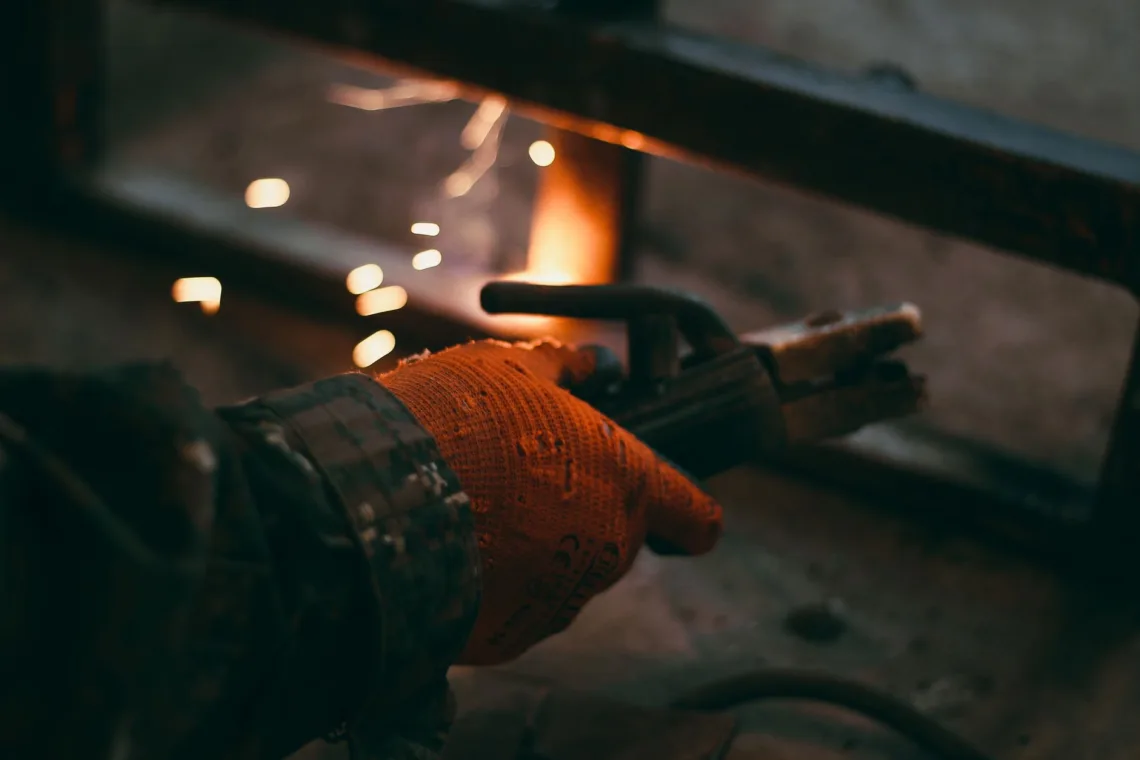
Heated gloves should not be assumed safe for welding, firefighting, electrical work, chemical handling, food processing, or use near open flames. Those applications require equipment selected for the specific hazard and work standard.
Cleaning and Maintenance
Always follow the instructions supplied with the gloves. Care methods vary based on wiring, membranes, leather panels, adhesives, and removable batteries. If the directions are unclear, gentle spot cleaning is generally less risky than machine washing.
- Turn off the heating system and remove both batteries.
- Close charging-port covers, zippers, and hook-and-loop fasteners where directed.
- Brush away dry dirt before applying water.
- Use a damp cloth and mild detergent on dirty areas unless the manufacturer authorizes another method.
- Avoid bleach, fabric softener, dry cleaning solvents, and high heat unless specifically permitted.
- Press out moisture gently rather than twisting or wringing the gloves.
- Air-dry them completely before reconnecting or charging the batteries.
Leather sections may require a compatible conditioner, but it should not be applied to touchscreen material, wiring, membranes, or synthetic grip panels unless the care instructions permit it. During off-season storage, keep the batteries in a cool, dry location and follow the manufacturer’s recommended charge level and recharge schedule.
Common Buying Mistakes
Choosing Solely by the Highest Heat Setting
A high temperature number does not guarantee better cold-weather performance. Heat distribution, insulation, wind resistance, and fit are just as important. Very high output can drain batteries quickly and create uncomfortable sweating.
Expecting Maximum Runtime on High
If a listing claims two to ten hours, plan around the lower end when high heat is required. Long runtimes generally come from low-power operation.
Confusing Heated Winter Gloves With Rated PPE
Cold-weather materials and knuckle padding do not automatically meet workplace standards. Check the relevant protection rating instead of relying on appearance or marketing terms.
Buying a Tight Fit for Better Dexterity
A close fit can improve tactile feedback, but a glove should not restrict circulation. Heated liners also require extra space inside the outer glove.
Ignoring Passive Insulation
Batteries can run out or lose performance in cold weather. A glove with suitable insulation and wind protection continues to provide some warmth after the heating system turns off.
Assuming All Water Claims Mean the Same Thing
Splash resistance may be adequate for brief exposure, while sustained wet work calls for stronger protection. Even waterproof membranes have practical limits at cuffs, seams, and openings.
Overlooking Replacement Batteries
Before relying on heated gloves for daily work, check whether replacement batteries and chargers are available. A proprietary battery system can limit the glove’s useful life if replacements become difficult to find.
Frequently Asked Questions
Are heated gloves safe for work?
They can be suitable for many cold-weather tasks when used according to the manufacturer’s directions. Their suitability depends on the workplace. Battery-powered gloves may be inappropriate around flames, electrical hazards, chemicals, rotating machinery, or environments with specialized PPE rules. Confirm requirements with the employer or safety manager.
How long do heated work gloves last on one charge?
The products in this guide have manufacturer estimates ranging from about two hours on higher settings to as much as ten hours on low. Actual runtime depends on temperature, setting, battery condition, and charging practices. A worker who needs high heat throughout a full shift may require spare compatible batteries.
Do heated gloves warm the fingertips?
Some do, but heating coverage differs. Look for a description stating that elements extend along the fingers rather than heating only the back of the hand. Even with finger coverage, airflow, fit, and insulation affect how warm the fingertips feel.
Are heated glove liners better than full heated gloves?
Liners are better for dexterity and for pairing with an existing protective outer glove. Full gloves are simpler to put on and often provide more built-in insulation and weather protection. The better arrangement depends on the job and whether a suitable outer glove is already available.
Can heated liners be worn under work gloves?
Yes, if the outer gloves have enough room and the combined layers do not restrict movement or circulation. Battery pockets and connectors must sit comfortably without interfering with the cuff. The outer glove should continue to meet all applicable safety requirements.
Can heated gloves be worn in rain or wet snow?
Only when the product’s water protection is appropriate for the exposure. A waterproof membrane or defined water-resistance rating offers more guidance than a general claim. Never immerse heated gloves or connect wet batteries unless the manufacturer explicitly permits it.
Can heated gloves be machine washed?
Some models may allow careful washing after the batteries are removed, while others require hand cleaning or spot cleaning. Follow the product manual. Machine agitation, hot water, and heated drying can damage wiring, membranes, touchscreen panels, and adhesives.
Why do hands still feel cold in heated gloves?
Possible causes include a depleted battery, a poor electrical connection, weak insulation, excessive wind, damp lining, or restricted circulation from tight sizing. If the glove heats unevenly or fails to warm after charging, discontinue use and inspect the battery and connections according to the troubleshooting instructions.
Should heated gloves fit tightly?
No. They should be secure enough to prevent bunching but not so tight that they compress the fingers. Restricted circulation can make the hands colder and may place extra pressure on heating elements. Leave additional space when using a liner beneath an outer glove.
Are heated gloves good for people with Raynaud’s phenomenon or arthritis?
Warmth may feel helpful to some people with cold-sensitive hands, but heated gloves are not a medical treatment. Reduced sensation can make it harder to notice excessive heat. Anyone with a circulation condition, neuropathy, or related concern should consult a qualified health professional before using battery-heated clothing.
Final Recommendations
Among these seven options, the right choice depends primarily on the job. The Impact-Resistant Heated Work Gloves offer the most balanced combination of heating, reinforcement, and weather coverage for general cold-weather labor. The SAVIOR HEAT Heated Work Gloves add Thinsulate and more substantial protective materials for workers willing to accept a higher price and additional bulk.
For driving, controls, scanners, and detailed tasks, a thin system may be more practical. The Royalrose and SAVIOR HEAT liners allow workers to retain a compatible task-specific outer glove. Budget full gloves can handle chores and light work, but they should not be mistaken for industrial hand protection. Select the required safety features first, then compare heating coverage, fit, battery runtime, and weather resistance.