A base layer can feel warm in the living room yet become uncomfortable as soon as you start shoveling snow, hiking uphill, or working outdoors. The problem is often moisture rather than insulation. Sweat that remains next to the skin can produce a cold, clammy feeling when activity slows, which is why cotton is generally a poor choice for winter exertion.
Synthetic base layers address this problem with fabrics designed to move moisture, dry relatively quickly, stretch with the body, and tolerate routine washing. The right choice depends on whether you need a complete set, separate top or bottom, lightweight everyday comfort, or a warmer fleece-lined option. No single garment is ideal for every activity, so this guide compares six useful options with different strengths.
Quick Answer
For men seeking a versatile synthetic top-and-bottom set, the Cuddl Duds Everyday Active Base Layer Set offers a practical balance of low bulk, stretch, moisture management, and everyday usability. Its 170 GSM fabric is better suited to layering and moderate activity than to standing still for long periods in severe cold.
The WEERTI Fleece-Lined Thermal Set is the warmer budget-oriented option for casual cold-weather use, commuting, and low-intensity activities. Men who prefer to buy separates can pair the Carhartt Force Midweight Stretch Crewneck with the Carhartt Force Midweight Stretch Pant. For a lower-cost bottom, the Rocky Thermal Bottom is a straightforward fleece-lined alternative.
If odor management and temperature regulation matter more than avoiding animal fibers entirely, the Carhartt Force Synthetic-Merino Blend Pant combines synthetic performance features with wool. It is not a fully synthetic base layer, so men with wool sensitivity or vegan material preferences should select another option.
Comparison Table
| Product | Best For | Material or Weight | Layering Profile | Notable Trade-Off |
|---|---|---|---|---|
| Cuddl Duds Everyday Active Set | Versatile everyday layering | Synthetic active fabric, 170 GSM | Close-fitting and lightweight | Less insulating than fleece-lined thermals |
| WEERTI Fleece-Lined Thermal Set | Casual warmth on a budget | Stretch synthetic fabric with fleece lining | Warm top-and-bottom set | Can feel too warm during strenuous activity |
| Carhartt Force Stretch Crewneck | Work and active use | Synthetic stretch fabric, 170 GSM | Midweight top with a brushed interior | Top only |
| Carhartt Force Stretch Pant | Active synthetic bottom | Synthetic stretch fabric, 170 GSM | Low-bulk bottom with brushed interior | Must be purchased separately from the top |
| Rocky Fleece-Lined Thermal Bottom | Affordable warmth under everyday pants | Spandex-based fabric, 185 GSM | Snug, fleece-lined bottom | Bottom only and warmer than an active layer |
| Carhartt Force Synthetic-Merino Blend Pant | Odor control and extended wear | Synthetic-merino wool blend | Midweight bottom with flatlock seams | Not fully synthetic |
How We Chose These Base Layers
These recommendations were assessed using the factors that matter most in real-world winter layering rather than warmth claims alone. Manufacturer descriptions were used for garment weight, construction, moisture-management features, and care information. No first-hand wear or laundering claims are made.
- Moisture management: A useful active base layer should help move perspiration away from the skin and dry more readily than cotton.
- Warmth and breathability: Lightweight fabrics work well during movement, while fleece-lined thermals favor warmth during casual or lower-output use.
- Fit and mobility: Stretch, flat seams, tagless construction, and a close fit can reduce bunching under outer layers.
- Layering compatibility: Smooth, relatively low-bulk garments are easier to wear under work pants, snow pants, uniforms, and midlayers.
- Care: Synthetic garments generally suit frequent use because they are commonly easier to wash than delicate wool. Buyers should still follow the label for the specific garment.
- Value: Full sets and separates were considered differently. A set can be economical, but separates make it easier to replace one piece or choose different sizes for the upper and lower body.
- Use case: The list includes options for active work, everyday layering, casual cold, budget shopping, and shoppers open to a synthetic-wool blend.
The six selections below are not ranked solely by insulation. Each serves a different layering need, and the warmest garment may be the wrong choice for someone who sweats heavily or spends the day moving. Compare fabric weight, fleece lining, garment coverage, and care needs before deciding.
Our Top Picks
Cuddl Duds Men’s Everyday Active Base Layer Set
The Cuddl Duds Everyday Active set includes a long-sleeve crewneck and matching leggings made for close-to-body layering. Its 170 GSM synthetic fabric places it on the lighter side of winter thermals, favoring breathability and low bulk over maximum insulation. The interior is soft, while the smoother exterior should slide more easily beneath pants, uniforms, and outer layers. Stretch supports everyday movement, and the leggings include a functional fly. Manufacturer-listed moisture-wicking and odor-resistant properties make the set relevant for commuting, travel, indoor work, hiking in moderate conditions, and other situations where conditions or activity levels may change.
This is the most balanced complete synthetic set in the group for shoppers who want one purchase covering both the upper and lower body. It can work throughout more of the year than a thick fleece-lined set, particularly for men who run warm. It should not be treated as stand-alone weather protection, however. The fabric does not replace an insulating midlayer or a wind-resistant and water-resistant shell. Men spending long periods stationary in deep winter conditions may need a heavier layer, while highly active users may appreciate its lighter construction.
Pros:
- Includes both a long-sleeve top and leggings
- Lightweight 170 GSM fabric layers without substantial bulk
- Stretch construction supports everyday movement
- Manufacturer lists moisture-wicking and odor-resistant performance
- Smooth exterior is practical beneath uniforms and outerwear
Cons:
- May not provide enough insulation for stationary use in severe cold
- A two-piece set does not allow buyers to select different top and bottom sizes
This Cuddl Duds set is a sensible starting point for men who prioritize versatility, easy layering, and a complete synthetic outfit. It is better viewed as a moisture-managing first layer than as heavy thermal underwear. Add insulation and a protective shell according to weather, wind, and activity level.
Best for: Everyday wear, travel, uniforms, transitional weather, and moderate winter activity.
WEERTI Fleece-Lined Thermal Underwear Set

The WEERTI set takes a warmer approach than lightweight active underwear. It combines a long-sleeve top and leggings with a soft fleece lining intended to retain body heat. Four-way stretch helps the garments follow normal movement and reduces the restrictive feeling associated with traditional rigid thermals. The fabric is described by the manufacturer as breathable and moisture-wicking, with odor-control properties. Even so, the fleece interior makes this set more appropriate for casual winter wear, commuting, low-intensity outdoor chores, or wearing beneath loose winter clothing than for sustained running or steep hiking.
Its main appeal is the amount of coverage and warmth offered at a relatively accessible price. Men who become cold easily may prefer this construction to a thin 170 GSM layer, especially when activity involves frequent stops. The trade-off is that fleece can retain more heat and feel bulkier once exertion increases. Because the precise fiber percentages and fabric weight are not provided in the supplied specifications, shoppers should examine the current listing and care label before ordering. Fit also deserves attention, since a thermal set must be close enough to manage moisture without limiting movement.
Pros:
- Complete top-and-bottom set
- Fleece lining provides more insulation than lightweight active fabric
- Four-way stretch supports mobility
- Designed to fit beneath everyday winter clothing
- Can also serve as cold-weather sleepwear or loungewear
Cons:
- Fleece construction may cause overheating during strenuous activity
- Exact fabric weight and fiber composition are not stated in the supplied information
Choose the WEERTI set when affordable warmth matters more than minimum weight or maximum ventilation. It is most convincing for casual and low-output situations. Men planning demanding aerobic activity should generally start with a thinner synthetic layer and adjust warmth through removable midlayers.
Best for: Commuting, casual outdoor use, cold indoor environments, and men who prefer a warmer fleece-lined set.
Carhartt Men’s Force Midweight Stretch Base Layer Crewneck
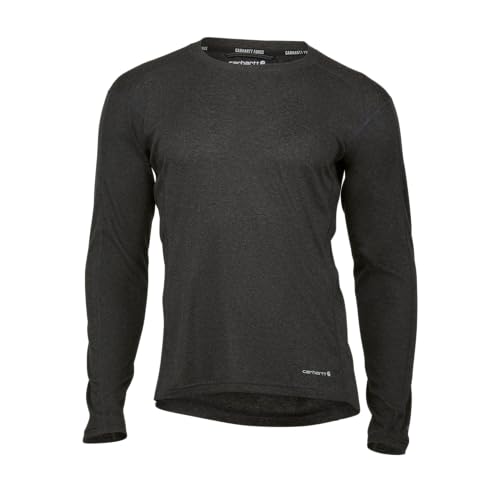
The Carhartt Force Midweight Stretch Crewneck is a separate synthetic base-layer top built around moisture management and freedom of movement. Its 170 GSM fabric has a brushed interior for next-to-skin comfort without the substantial insulation of heavy fleece. Carhartt’s Force and FastDry features are intended to move sweat and help the fabric dry quickly, while odor resistance supports long workdays. Strategically positioned flatlock seams are designed to reduce rubbing, and the tagless construction removes another common irritation point. Concealed thumb loops can keep the sleeves from riding up when another layer is pulled over the top.
This crewneck makes particular sense for outdoor work and active winter use because it provides functional details without excessive bulk. It can be paired with any compatible bottom, which helps men who need different sizes above and below the waist. Buying separates costs more than some budget sets, but it also gives the user more control over the layering system. The 170 GSM weight is versatile rather than heavily insulating, so cold, windy, or wet environments still call for an appropriate midlayer and shell. Check the current size chart instead of assuming a workwear size will match another brand.
Pros:
- 170 GSM fabric balances low bulk with light insulation
- Moisture-wicking and fast-drying features suit active use
- Flatlock seams help limit chafing beneath work clothing
- Concealed thumb loops help hold sleeves in place
- Brushed interior and tagless labels improve next-to-skin comfort
Cons:
- Sold as a top rather than a complete set
- Not warm enough by itself for prolonged stationary cold exposure
This Carhartt crewneck favors movement, sweat management, and practical workwear details. It is a stronger fit for active use than thick fleece thermals, but it depends on the rest of the clothing system for insulation and weather protection. Pair it with a breathable midlayer when conditions require more warmth.
Best for: Outdoor work, winter chores, active commuting, and shoppers who prefer separate tops and bottoms.
Carhartt Men’s Force Midweight Stretch Base Layer Pant

The Carhartt Force Midweight Stretch Pant is the lower-body counterpart to the Force crewneck. It uses 170 GSM synthetic stretch fabric with a brushed interior, providing a modest amount of warmth while remaining relatively easy to layer beneath work pants or winter outerwear. FastDry moisture management is designed to wick sweat, and the fabric is described as odor resistant. Flatlock seams can reduce rubbing during bending and walking, while the brushed elastic waistband should feel softer against the body. A contoured front with a functional fly adds convenience for workdays and extended wear.
Compared with fleece-heavy long johns, this pant places more emphasis on mobility and moisture control. That makes it suitable for shoveling, job-site activity, walking, and other situations in which overheating can be as uncomfortable as feeling cold. The separate-piece format also lets users combine it with a different brand or weight of top. On the other hand, men who remain stationary outdoors may want a more insulating bottom or a warmer outer layer. As with any fitted base layer, the waistband and leg fit should be checked carefully because fabric that sags will manage moisture less effectively, while an excessively tight fit can impede comfort.
Pros:
- Lightweight 170 GSM construction fits beneath outer pants
- Stretch fabric supports bending and active movement
- FastDry moisture management is useful during physical work
- Flatlock seams and a brushed waistband address common friction points
- Functional fly improves everyday convenience
Cons:
- Bottom only, with the matching crewneck sold separately
- Moderate fabric weight may be insufficient for low-output extreme cold
The Force Stretch Pant is a practical synthetic bottom for men who generate heat while working or moving. It avoids the bulk of warmer fleece thermals but cannot substitute for insulated pants in severe conditions. Its separate format is especially useful when upper- and lower-body warmth needs differ.
Best for: Active outdoor work, snow clearing, winter walking, and low-bulk layering beneath work pants.
Rocky Men’s Fleece-Lined Thermal Underwear Bottom

The Rocky Thermal Bottom is a budget-focused long john intended for men who need additional leg insulation without purchasing a complete set. The standard-weight version is listed at 185 GSM and uses a spandex-based fabric with a soft fleece lining. That combination aims to keep the garment close to the body while allowing enough flexibility for daily movement. Manufacturer-listed moisture-wicking fibers address perspiration, and the elastic waistband is designed to hold the bottom in place. Its relatively streamlined construction should fit beneath jeans, sweatpants, work clothing, or ski pants more readily than bulky traditional thermals.
This bottom is useful when lower-body warmth is the priority or when an existing base-layer top is still serviceable. It is also one of the more affordable entries in the group. The fleece lining and 185 GSM weight favor warmth over high-output breathability, however, so it may not be the first choice for running or demanding uphill travel. The manufacturer describes it as machine washable, giving it a simpler care profile than many wool garments. Buyers should still follow the garment label, avoid excessive heat if instructed, and verify the current size chart to obtain a snug but comfortable fit.
Pros:
- Accessible option for lower-body warmth
- 185 GSM fabric with a fleece lining adds insulation
- Spandex-based construction supports a close, flexible fit
- Manufacturer lists moisture-wicking performance
- Machine-washable care is convenient for routine use
Cons:
- Only the bottom is included
- Fleece lining can become too warm during strenuous activity
The Rocky bottom provides straightforward insulation for everyday cold conditions without the cost of a full outfit. It works best beneath casual or work clothing during low-to-moderate activity. Men who sweat heavily should consider a lighter fabric, particularly when the day involves sustained movement.
Best for: Budget shoppers, casual winter wear, cold commutes, and adding warmth beneath jeans or work pants.
Carhartt Men’s Force Midweight Synthetic-Merino Wool Blend Base Layer Pant

The Carhartt Force Midweight Pant combines synthetic fibers with merino wool rather than using an entirely synthetic fabric. The blend is intended to draw on the quick-drying moisture management of Carhartt’s FastDry system while using wool for temperature regulation and natural odor resistance. Flatlock seams are positioned to limit chafing, and the pant includes a brushed elastic waistband, tagless labels, a contoured front, and a functional fly. This construction is suited to long workdays, travel, and outdoor activities where changing effort levels can make moisture and temperature control important.
Its inclusion provides an option for men who began searching for synthetic performance but are comfortable with some wool in the fabric. A blend may offer better odor management for repeated wear than many basic synthetics, although actual results depend on exertion and care. It is not appropriate for shoppers who need a fully synthetic or animal-free garment, and anyone sensitive to wool should consider the Force Stretch Pant instead. The supplied information does not state the exact synthetic-to-wool ratio, so buyers who care about fiber percentages should verify the current product label before ordering.
Pros:
- Combines synthetic moisture management with wool temperature regulation
- Merino content can help control odor during extended wear
- Flatlock seams help reduce friction
- Brushed waistband and tagless design support next-to-skin comfort
- Functional fly suits everyday and work use
Cons:
- Not a fully synthetic base layer
- Unsuitable for shoppers avoiding wool or animal-derived fibers
This Carhartt pant fills the gap between a conventional synthetic layer and an all-wool garment. It is worth considering for odor control and variable activity, but it does not satisfy a strict requirement for synthetic-only clothing. Verify both the fiber content and care label before purchase.
Best for: Extended wear, outdoor work, travel, and men who want synthetic performance with some merino wool.
How to Choose the Best Synthetic Base Layer for Men
Start With Activity Level
Activity level should guide fabric weight more than the outdoor temperature alone. A person hiking uphill produces far more heat and moisture than someone watching a game, operating equipment, or standing at a job site.
- High-output activity: Choose a lightweight or midweight synthetic layer that fits close to the skin and emphasizes moisture transfer. Avoid thick fleece unless conditions and personal cold tolerance justify it.
- Moderate activity: A 170 GSM stretch layer can provide a useful balance for walking, snow clearing, commuting, and active work.
- Low-output use: Fleece-lined thermals can be more comfortable when sitting, standing, or moving slowly because they retain more body heat.
- Changing activity: Use a lighter base layer with removable insulation. It is easier to open or remove a midlayer than to replace an overheated base layer outdoors.
Understand Fabric Weight
Fabric weight is commonly listed in grams per square meter, or GSM. A higher number generally indicates more fabric, but it is not a universal warmth rating. Knit structure, brushing, fit, air permeability, and the rest of the clothing system also affect comfort.
| General Category | Typical Strength | Common Use | Potential Limitation |
|---|---|---|---|
| Lightweight | Breathability and quick drying | Running, hiking, indoor-to-outdoor use | Limited insulation during rest |
| Midweight | Balanced warmth and moisture management | Work, skiing layers, commuting, general winter use | May be too warm for intense exercise |
| Fleece-lined | Greater heat retention | Casual wear and low-output cold exposure | More bulk and higher overheating risk |
Do not compare GSM numbers across unrelated fabrics as if they were temperature ratings. A brushed 170 GSM fabric can feel different from a smooth fabric of the same listed weight.
Choose a Close Fit Without Restriction
A base layer should generally sit close enough to collect moisture from the skin. Loose fabric leaves air gaps, bunches under other clothing, and may move perspiration less efficiently. Excessive compression is also undesirable because it can restrict movement and create pressure around the waist, knees, shoulders, or underarms.
Look for sleeves that reach the wrists without pulling when the arms rise, a hem that remains covered during bending, and leggings that stay near the ankles without twisting. If your upper and lower body require different sizes, buying separates is usually safer than choosing a complete set.
Decide Between a Set and Separates
A two-piece set is convenient and often costs less than purchasing a comparable top and bottom individually. It works well when the same size and insulation level fit both halves of the body.
Separates offer more flexibility. You can use a lighter top with a warmer bottom, replace a worn piece independently, or choose different sizes. They are particularly useful for men with broader shoulders, larger thighs, or other proportions that do not align with a single set size.
Consider Fleece Carefully
A fleece lining increases next-to-skin softness and traps additional air, which can improve comfort during low-intensity cold exposure. It also raises the risk of overheating. Once fleece becomes damp with heavy perspiration, the extra warmth may become a disadvantage during stop-and-go activity.
Fleece-lined underwear is generally better for commuting, casual outdoor time, sleepwear, and stationary work than for winter running. Men who run cold may find it useful at higher activity levels, but ventilation and removable outer layers remain important.
Look for Low-Friction Construction
Seams can become uncomfortable beneath a backpack hip belt, work harness, waistband, or multiple layers. Flatlock seams reduce the raised ridge created by traditional stitching. Tagless labels, smooth waistbands, and strategically positioned panels can also improve comfort.
Thumb loops help keep sleeves in place while adding a midlayer, but they should not pull tightly across the hand. A functional fly is useful for work and everyday use, though athletes may prefer a simpler front with fewer seams.
Remember That Base Layers Are Not Weather Protection
Synthetic thermal underwear is not automatically windproof, water-resistant, or waterproof. Most base layers allow air and moisture vapor to move through the fabric. That is useful for breathability but offers little protection from wind, rain, or wet snow.
A functional winter system usually includes:
- Base layer: Moves moisture away from the skin.
- Midlayer: Adds insulation, such as fleece or another insulating garment.
- Outer layer: Reduces wind exposure and provides the level of precipitation protection appropriate for conditions.
Not every day requires all three layers. During vigorous activity in mild winter weather, a base layer and breathable shell may be sufficient. During low-output cold exposure, one or more insulating layers may be necessary.
Synthetic vs. Merino Wool Base Layers
Synthetic and merino wool layers solve similar problems differently. Polyester-rich synthetic fabrics often dry quickly, resist abrasion reasonably well, stretch effectively when blended with elastane, and tolerate frequent washing. They also tend to cost less. A common limitation is odor retention, although antimicrobial or odor-resistant treatments may help.
Merino wool regulates temperature well and generally controls odor more effectively during repeated wear. It can remain comfortable across changing conditions, but it usually costs more, may require gentler care, and can wear faster in high-friction areas. Some users also find wool irritating, even when the fibers are fine.
A synthetic-merino blend seeks a middle ground. It can improve drying, durability, and stretch while retaining some of wool’s odor and temperature-management benefits. However, it is neither fully synthetic nor suitable for every wool-sensitive shopper.
Care and Maintenance
Always follow the garment’s sewn-in care label because fabric treatments, elastic, fleece, and blends can require different handling. General practices that may help preserve synthetic base layers include:
- Wash after heavy perspiration rather than leaving the garment damp in a bag.
- Use the water temperature and machine cycle stated on the label.
- Avoid fabric softener unless the manufacturer allows it. Softener can leave residue that interferes with moisture management.
- Close hook-and-loop fasteners on other garments before washing to prevent snagging.
- Use lower drying heat when permitted, since excessive heat can damage elastic fibers and odor-control finishes.
- Air-dry when practical if the care label permits it.
- Store garments completely dry to discourage persistent odor.
Persistent odor does not necessarily mean the fabric has failed. Body oils and detergent residue can accumulate in synthetic fibers. Rewashing according to the manufacturer’s instructions may help, but avoid improvised treatments that conflict with the care label.
Common Base-Layer Buying Mistakes
Choosing the Thickest Garment Available
Maximum insulation is not always useful. A heavy fleece-lined layer can cause sweating during active work, leaving the wearer damp when activity stops. Match the garment to expected exertion and use adjustable outer layers for changing conditions.
Wearing Cotton as the First Layer
Cotton absorbs moisture and can remain wet for an extended period. That may be acceptable for relaxed indoor wear, but it is a poor foundation for cold outdoor activity where drying and moisture transfer matter.
Buying an Oversized Fit for Comfort
Roomy winter coats accommodate layers, but base layers work differently. Excess fabric can bunch and reduce effective moisture transfer. Choose a close fit that allows a full range of motion rather than sizing up automatically.
Expecting One Set to Cover Every Condition
A lightweight layer suitable for hiking may not keep someone comfortable while sitting outdoors. A fleece-lined set used for stationary cold may be oppressive during running. Men who spend substantial time outside often benefit from having at least two weights available.
Ignoring the Outer Layers
Even a warm base layer will struggle beneath an uninsulated, air-permeable outfit on a windy day. Evaluate the complete system, including insulation, ventilation, wind resistance, precipitation protection, socks, gloves, and headwear.
Assuming Odor Resistance Means Odor-Free
Odor-resistant fabric can reduce odor development, but it does not eliminate the need for laundering. Results vary with body chemistry, activity, humidity, fabric treatments, and the length of wear.
Frequently Asked Questions
What is the best synthetic base layer for men?
The strongest general-purpose choice is a close-fitting, lightweight-to-midweight set that wicks moisture and allows unrestricted movement. In this group, the Cuddl Duds Everyday Active set offers a useful balance for routine layering. The warmer WEERTI set is more appropriate for casual or low-output cold, while Carhartt Force separates better suit active work and buyers who need different top and bottom sizes.
Is polyester a good base-layer material?
Polyester is widely used because it can move moisture, dry relatively quickly, hold its shape, and provide good value. Its main disadvantage is that it may retain odor more readily than merino wool. Fabric construction and fit matter as much as the fiber name, so a loose or heavily brushed polyester garment will perform differently from a smooth athletic knit.
Should a synthetic base layer be tight?
It should be close-fitting rather than painfully tight. The fabric should maintain contact with the skin without restricting breathing, bending, or arm and leg movement. Wrinkles and sagging suggest the garment may be too large, while stretched seams, pressure, and limited mobility suggest it may be too small.
Are fleece-lined thermals good for hiking?
They can work for slow hiking in cold conditions or for people who consistently run cold. For steep climbs and sustained movement, fleece-lined thermals often retain more heat than necessary. A lighter moisture-managing layer paired with removable insulation is usually easier to regulate.
Can a base layer keep out wind?
Most base layers provide little direct wind protection. Their job is moisture management and modest insulation. Add a wind-resistant or weather-protective outer layer when conditions require it. Do not assume a thermal garment is windproof unless the manufacturer explicitly describes and supports that feature.
Do synthetic base layers stay warm when wet?
Synthetic fabrics generally absorb less water than cotton and often dry more quickly, which makes them more practical for active winter use. However, a wet layer can still feel cold and uncomfortable. Moisture management, ventilation, and changing out of saturated clothing remain important.
How many base layers do I need?
One set may be enough for occasional winter use. Frequent outdoor workers, travelers, or athletes may benefit from multiple sets so a clean, dry layer is available while another is being washed. Owning a lightweight option and a warmer option also provides more flexibility than buying two identical sets.
Are synthetic-merino blends better than fully synthetic fabrics?
Not universally. A blend may control odor and regulate temperature better during extended wear, while a fully synthetic layer may cost less, dry faster, and suit people avoiding wool. Material preference, care needs, activity, and sensitivity should determine the choice.
Can thermal underwear be worn alone?
It can be worn alone indoors or as sleepwear if the fabric provides adequate coverage. Outdoors, a base layer is normally only the first part of a clothing system. It does not replace insulation, wind protection, or rain and snow protection.
Final Recommendations
Choose the Cuddl Duds Everyday Active Set if you want a low-bulk synthetic top and bottom for everyday layering, travel, or moderate activity. The WEERTI Fleece-Lined Set provides more insulation for casual cold and lower-output use, but it may be too warm for strenuous exercise.
For work and active movement, the Carhartt Force Crewneck and Carhartt Force Pant allow a more customized fit and layering system. The Rocky Thermal Bottom is the economical choice when only additional leg warmth is needed. Men comfortable with wool can consider the Carhartt Synthetic-Merino Blend Pant for extended wear and odor management.
The most useful base layer is not necessarily the thickest. Select enough insulation for your expected activity, keep the fit close without restricting movement, and rely on removable midlayers and an appropriate shell for changing winter conditions.