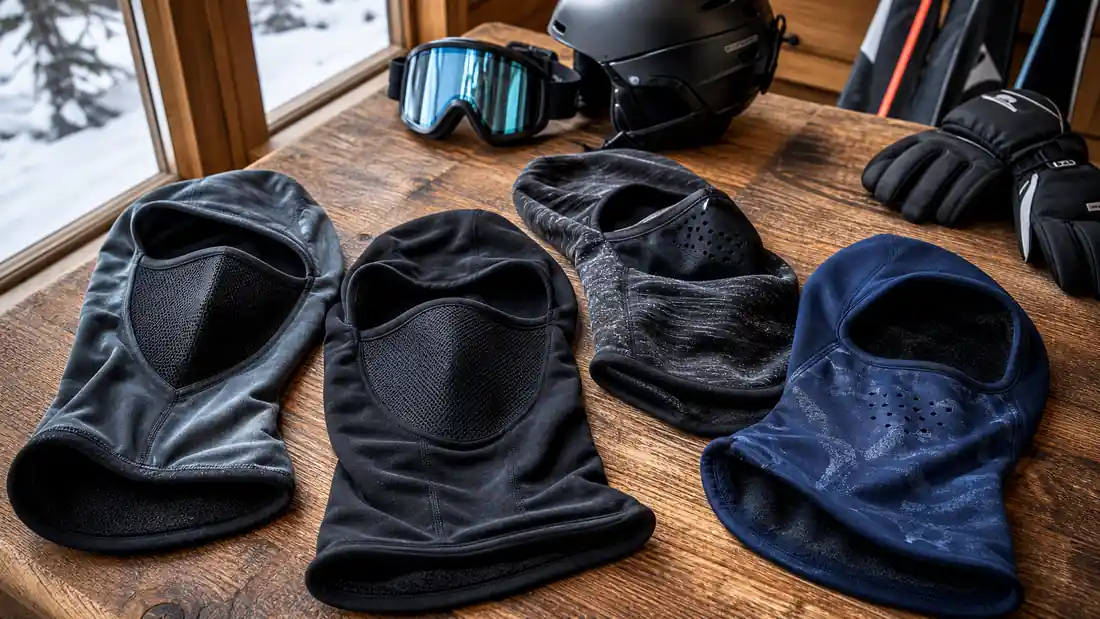
Cold wind, blowing snow, and moisture from breathing can make a ski day uncomfortable even when the rest of your clothing is well layered. The best face mask for skiing should protect exposed skin without making it difficult to breathe, fogging your goggles, or creating pressure beneath a helmet. Some skiers need a thin, breathable liner, while others benefit from fleece, wind protection, or a face covering that can be pulled down during climbs and breaks.
This guide compares eight balaclavas and ski face masks for different conditions and budgets. The selections include lightweight options for active use, warmer fleece-lined designs for cold chairlift rides, and multipacks that work well for families or frequent outdoor use.
Quick Answer: Which Face Mask Is Best for Skiing?
The Tough Headwear Winter Balaclava is a practical choice for skiers who want fleece warmth, helmet compatibility, and breathable paneling in one mask. For mild weather or high-output activities, the Botack Lightweight Balaclava is less bulky. The KGC Winter Balaclava is worth considering if you wear glasses, while the Movable-Face Fleece Balaclava offers more flexibility when you need to uncover your mouth and nose.
No face mask is suitable for every temperature or activity. A thin mesh mask may feel more comfortable while skiing hard but may not provide enough insulation during windy lift rides. A fleece-lined model can block more cold air, yet it may feel warm during strenuous activity and take up more space beneath a close-fitting helmet.
Best Face Masks for Skiing at a Glance
| Product | Best For | Material or Insulation | Weather Protection | Fit and Layering | Notable Trade-Off |
|---|---|---|---|---|---|
| Tough Headwear Winter Balaclava | Cold-weather skiing | Fleece and stretch fabric | Wind, snow, and moisture protection | Helmet-friendly stretch fit | Warmer and bulkier than thin liners |
| GXCROR Thermal Balaclava | Windy conditions and active use | Polyester and spandex | Wind-resistant thermal coverage | Stretch fit with breathing vents | Limited sizing information |
| KGC Winter Balaclava | Skiers who wear glasses | Fleece-lined polyester and spandex | Cold, wind, dust, and snow | Designed for helmet use | Listed for head sizes up to 26 inches |
| Movable-Face Fleece Balaclava | Adjustable coverage | Thermal polar fleece | Cold wind and snow | Fits under many helmets | Hand washing is recommended |
| Tough Headwear Lightweight Winter Mask | Skiing and commuting | Polar fleece and spandex | Cold-weather coverage | Four-way stretch, helmet-friendly | Less suitable for mild conditions |
| Qinglonglin Three-Pack Balaclava | Multiple users or frequent washing | Breathable mesh fabric | Wind and light cold protection | Stretch fit for most users | Not as insulating as fleece |
| Botack Lightweight Balaclava | Breathability and mild weather | Lightweight airflow fabric | Wind and sun protection | Low-bulk under-helmet fit | May feel too thin for severe cold |
| Achiou Lightweight Balaclava | Budget buyers and active use | Breathable stretch mesh | Wind, dust, and UV exposure | Designed for helmets and goggles | Light insulation for colder days |
How We Chose These Ski Face Masks
These recommendations were selected from the supplied product information with attention to coverage, breathability, warmth, helmet compatibility, moisture management, and versatility. Because marketplace listings do not provide standardized warmth ratings, the masks are not assigned specific temperature ranges. Instead, the guide distinguishes between lightweight liners and warmer fleece designs.
The products are not ranked from universally best to worst. Each one serves a slightly different purpose. Before ordering, check the listed dimensions, consider how much room your helmet has, and decide whether you need a thin layer for active skiing or greater insulation for cold, windy conditions.
Our Top Picks
The following products cover a range of skiing situations. Thin mesh balaclavas work well when breathability and low bulk matter most, while fleece-lined options are better suited to cold-weather coverage. Multipacks can also be useful when masks become wet from snow or perspiration during a full day outdoors.
Tough Headwear Balaclava Winter Ski Mask

This Tough Headwear balaclava combines a soft fleece lining with four-way stretch material, giving it more insulation than a lightweight mesh face covering. Its extended neck coverage helps protect the area below the helmet, while the outer shell is described as water-resistant or waterproof in the product information. A breathable mesh panel is positioned to support airflow and reduce moisture buildup around the mouth and nose.
Flat-lock seams and a flexible hinge are useful details for skiing because bulky seams can become uncomfortable under a helmet. The design is also intended to reduce fogging on goggles and glasses, although goggle performance will still depend on fit, ventilation, and how air moves through the helmet. This mask is a sensible option for cold chairlift rides, winter commuting, and skiers who prefer fuller coverage. It may feel warmer than necessary during intense uphill movement or mild spring conditions.
Pros:
- Soft fleece lining for colder conditions
- Breathable mesh panel helps manage moisture
- Extended neck coverage
- Stretch fit designed for use beneath helmets
- Useful for skiing, snowboarding, commuting, and outdoor work
Cons:
- May feel too warm during high-output activity
- More substantial than a thin mesh liner
- Exact warmth depends on the fit and layering system
This is a strong fit for skiers who prioritize warmth and coverage over the lowest possible bulk. Its fleece lining and helmet-oriented construction make it more suitable for cold days than lightweight summer-style balaclavas, but active skiers may prefer a thinner option when temperatures are moderate.
Best for: Cold-weather skiing, snowboarding, winter commuting, and users who want fleece coverage under a helmet.
GXCROR Thermal Balaclava Ski Mask
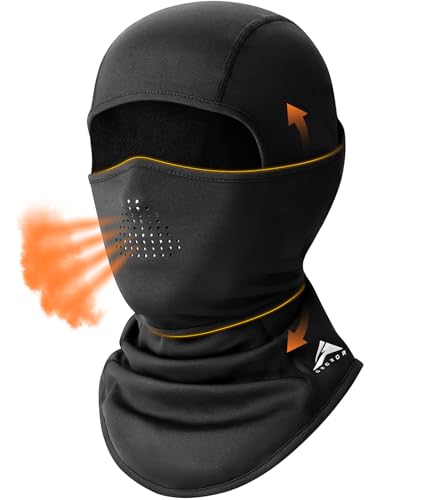
The GXCROR winter balaclava uses a blend listed as 93.5% polyester and 6.5% spandex. That combination provides stretch for a close fit while adding more thermal coverage than a very thin liner. It covers the head, ears, face, and neck, and the manufacturer describes the fabric as windproof and designed to retain warmth. For skiers, the broad coverage can help reduce exposure during windy runs or long periods on a lift.
Breathing vents around the mouth and nose are the main functional feature. They are intended to improve air circulation and reduce moisture that can contribute to goggle fogging. The one-piece stretch design is also intended to stay in place without excessive pressure. This model can be worn as a full face covering, half mask, or neck warmer, which helps it adapt as activity levels and weather change. Buyers should still verify how the head opening and face coverage fit with their particular helmet and goggles.
Pros:
- Thermal stretch fabric with broad coverage
- Designed to block cold wind
- Breathing vents around the mouth and nose
- Several wearing configurations
- Suitable for skiing and other outdoor activities
Cons:
- May be warmer than needed for mild weather
- Limited sizing detail in the supplied information
- Ventilation may not eliminate fogging in every helmet setup
The GXCROR is aimed at skiers who want a warmer, adaptable covering without moving to a heavily lined design. Its vents make it more appropriate for active use than a solid fleece mask, while its thermal fabric gives it more cold-weather purpose than a basic summer liner.
Best for: Windy ski days, active outdoor use, and skiers who want adjustable face and neck coverage.
KGC Winter Balaclava

The KGC Winter Balaclava has a polyester and spandex outer fabric with a warm fleece lining. It covers the face, neck, ears, and nose, making it a more insulating choice for cold-weather skiing than thin, breathable mesh masks. The fleece layer can help reduce the chill from moving air, although it may also hold more heat during strenuous activity than a lightweight liner.
A notable design feature is the pair of openings intended to provide more space around eyeglass temples. That can be useful for skiers who wear prescription glasses beneath goggles or for users who need to accommodate headphones. The mask can be worn as a full or partial face covering and is designed to fit beneath ski, bicycle, motorcycle, and safety helmets. The listed head circumference is up to 26 inches, so buyers near or above that measurement should examine the sizing carefully rather than assuming the stretch will provide a comfortable fit.
Pros:
- Fleece lining for added cold protection
- Eyeglass slots may improve comfort for glasses wearers
- Designed for use under several helmet types
- Can be worn with different face configurations
- Covers the ears, nose, face, and neck
Cons:
- May be too warm for high-output skiing
- Listed head-size limit may not suit every user
- Fleece can add more bulk than a mesh mask
For skiers who struggle with glasses pressing against their temples, the KGC has a practical feature that many simple balaclavas lack. It is best suited to cold, steady use rather than warm spring skiing, and the listed sizing should be checked before purchase to avoid pressure beneath the helmet.
Best for: Cold-weather skiers who wear glasses and need fleece-lined coverage beneath a helmet.
Movable-Face Fleece Balaclava

This fleece balaclava uses a movable face section that can be raised or lowered while the head and neck remain covered. That arrangement is useful when a skier needs full protection on a fast descent but wants to uncover the mouth during a break or lower-intensity section. The product information lists a thermal polar fleece construction with stretch, breathability, and wind protection for winter outdoor activities.
A mesh section around the nose and mouth is intended to make breathing easier and reduce moisture that can fog goggles. The listed approximate head range is 21 to 24 inches, so this design is not necessarily suitable for every adult head size despite its flexible material. It is also relatively practical for skiing, snowboarding, winter work, and motorcycle use because the face covering can be repositioned without removing the entire mask. Hand washing is recommended, which may require more care than machine-washable alternatives.
Pros:
- Movable face panel allows adjustable coverage
- Thermal fleece helps retain warmth
- Mesh around the nose and mouth supports airflow
- Designed to fit beneath helmets
- Useful for skiing and other cold-weather activities
Cons:
- Listed head-size range is relatively specific
- May be too warm for mild conditions
- Hand washing is recommended
The movable panel gives this mask a different role from fixed full-face balaclavas. It is a useful choice for changing conditions and skiers who do not want to remove their mask every time they need more airflow. Check the dimensions carefully, since adjustability does not replace a properly sized fit.
Best for: Skiers who want to switch between full and partial face coverage without removing their helmet.
Tough Headwear Fleece Ski Mask
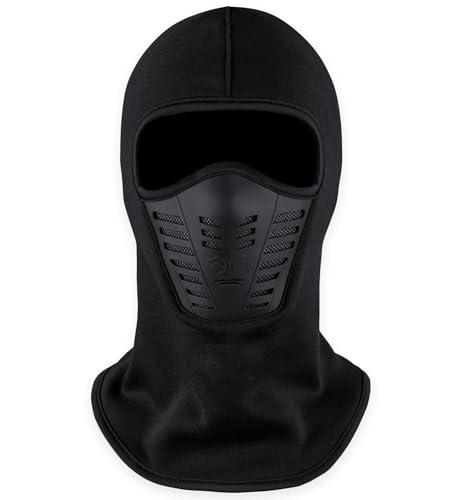
This Tough Headwear model combines polar fleece with spandex and four-way stretch. It is designed as a winter face mask for skiing, snowboarding, commuting, and other outdoor activities where a soft insulating layer is useful. The fleece helps protect the face and neck from cold air, while the stretch material is intended to create a close fit beneath a helmet without sharply limiting movement.
A moisture-wicking fleece section and breathable mesh panel are designed to keep the face drier and help reduce goggle fogging. The helmet-friendly shape makes it more practical for snow sports than a loose scarf, which can bunch beneath a chin strap or interfere with helmet fit. It remains important to check that the mask does not press goggles upward or restrict the helmet’s adjustment system. Compared with the brand’s more heavily described winter model, this version may appeal to shoppers seeking a straightforward fleece balaclava at a lower listed price.
Pros:
- Polar fleece provides winter insulation
- Four-way stretch supports mobility
- Breathable mesh panel helps manage moisture
- Designed for use under ski and snowboard helmets
- Useful for both recreation and commuting
Cons:
- May feel warm during intense activity
- Provides less flexibility than a movable-face design
- Fit should be checked with goggles and helmet together
This is a straightforward fleece option for users who want more warmth than a thin mesh mask without choosing a face covering with several moving parts. It makes the most sense for cold recreational skiing and commuting, while highly active skiers may prefer a lighter fabric with faster moisture release.
Best for: Everyday winter skiing, snowboarding, and commuting where fleece warmth is useful.
Qinglonglin Three-Pack Balaclava

The Qinglonglin set includes three lightweight balaclavas made from breathable mesh fabric. The material is described as sweat-absorbing and quick-drying, which makes the masks more suitable for active skiing, snowboarding, cycling, and other activities where moisture can build up. They cover the head, ears, cheeks, face, and neck, with a double-layer area around the ears intended to provide added protection from cold wind.
The main advantage of a three-pack is practical rather than technical. Skiers can rotate masks during a long trip, keep a spare in a gear bag, or share the set with family members. The soft stretch design is intended to fit most users and can be worn as a full mask, partial covering, or neck mask. Because the fabric is lightweight mesh rather than fleece, it should be treated as a low-bulk liner. It may not provide enough insulation by itself in severe cold, especially during long stationary periods on a chairlift.
Pros:
- Three masks provide convenient rotation or sharing
- Lightweight, breathable, and quick-drying fabric
- Double-layer ear area adds some wind protection
- Several ways to wear the mask
- Low bulk under a helmet
Cons:
- Less insulating than fleece-lined balaclavas
- May require another layer in severe cold
- Universal sizing may not suit every head shape
This set is a practical choice for skiers who value breathability, spare masks, and easy rotation over maximum insulation. It works particularly well as part of a layering system, with a helmet and other cold-weather gear supplying additional protection when conditions become harsher.
Best for: Active skiers, families, groups, and anyone who wants multiple low-bulk masks for regular use.
Botack Lightweight Balaclava, Gray

The gray Botack balaclava is built around lightweight, high-airflow fabric rather than thick winter insulation. It provides coverage for the head, face, and neck while remaining thin enough to wear beneath a ski helmet, cycling helmet, or hard hat. The product is listed with UPF 30+ protection and is intended to help shield the skin from wind, dust, and sun exposure as well as light cold.
This design is best viewed as a breathable liner for active use or milder ski conditions. It can be worn as a full face covering, open balaclava, neck gaiter, or under-helmet layer. The material is also described as suitable for use in warm weather and as a cooling covering when wet, which increases its versatility beyond skiing. That versatility comes with a trade-off: thin, high-airflow fabric will not insulate like fleece during prolonged exposure to cold wind. The manufacturer also describes it as machine washable on a gentle cycle, although care instructions should be checked before laundering.
Pros:
- Lightweight and breathable under a helmet
- Useful for active skiing and other sports
- Provides listed UPF 30+ sun protection
- Several wearing configurations
- Gentle machine washing is described as acceptable
Cons:
- May be too thin for severe cold
- Less insulating than fleece models
- Light fabric may not block strong wind as effectively as a thermal mask
The Botack is a better match for skiers who tend to overheat or need a thin layer beneath a snug helmet. It can also serve as a useful all-season face covering, but anyone skiing in sustained cold should consider pairing it with a warmer neck layer or choosing a fleece-lined design instead.
Best for: Mild conditions, active skiing, warm-weather versatility, and low-bulk helmet layering.
Achiou Lightweight Balaclava

The Achiou balaclava is a lightweight stretch face covering made from breathable mesh fabric. It is designed to cover the head and face while helping manage sweat and moisture during skiing, snowboarding, running, cycling, and motorcycle riding. Its thin construction makes it relatively easy to wear beneath helmets and goggles without adding much bulk, which can be helpful when helmet fit is already close.
Several wearing options are listed, including a full face mask, open balaclava, half mask, neck gaiter, and hat-style configuration. That flexibility allows users to adjust coverage as activity and weather change. The fabric is also intended to protect against wind, dust, and UV exposure. As with other lightweight mesh masks, it offers limited insulation compared with fleece. It is therefore more appropriate for active skiing, mild winter days, or use beneath a separate neck warmer than for extended exposure in very cold wind.
Pros:
- Low-bulk design for helmets and goggles
- Breathable fabric helps move moisture away from the skin
- Multiple wearing configurations
- Useful for skiing and several other outdoor activities
- Low listed price for budget shoppers
Cons:
- Light insulation for harsh winter conditions
- May need an additional layer around the neck
- Universal fit claims should be checked against individual measurements
The Achiou is a sensible budget liner for skiers who need basic coverage without much weight. It should not be confused with a heavily insulated winter mask, but its breathability and flexibility make it useful for active users who prefer to build warmth through separate layers.
Best for: Budget-conscious skiers, active use, mild conditions, and low-profile helmet layering.
What to Look for in a Ski Face Mask
Warmth and Insulation
Fleece-lined balaclavas generally provide more warmth than thin mesh masks because they trap more air close to the skin and reduce the effect of moving cold air. They are useful for cold lift rides, windy runs, and skiers who tend to feel chilled. However, insulation is not always an advantage. A skier working hard on a climb may become damp and uncomfortable in a thick mask.
Lightweight mesh works better for high-output activity, mild conditions, or layering. If a thin mask does not provide enough warmth, add a neck gaiter or choose a helmet with better ear coverage rather than relying on a face covering that restricts breathing.
Breathability and Goggle Fogging
Breathing through a face mask releases warm, moist air. If that air rises toward the goggles, fogging can occur. Mesh panels or vents around the mouth and nose may help direct airflow, but they cannot guarantee clear goggles because helmet ventilation, goggle fit, humidity, and body position also matter.
Look for a mask that sits securely without leaving a large opening beneath the goggles. Avoid pulling fabric so high that it covers the lower ventilation area of the goggles. Test the mask with your complete helmet and goggle setup before a full day on the slopes.
Helmet Compatibility
A ski face mask should sit smoothly beneath the helmet without creating pressure points. Thick seams, folds around the ears, and excess fabric at the back of the head can become uncomfortable over several hours. A mask that is too tight can also make the helmet feel smaller than it did without the covering.
Try the mask with the helmet adjusted to its normal setting. Make sure the chin strap remains positioned correctly and that the mask does not interfere with the helmet’s retention system. A thin liner is often easier to fit beneath a close helmet, while fleece models may require slightly more interior room.
Fit and Sizing
Many balaclavas use stretch fabric and are marketed as fitting most users, but head sizes and face shapes vary. Check listed measurements whenever available. The KGC model specifies a head circumference of up to 26 inches, while the movable-face design lists an approximate range of 21 to 24 inches. These details are more useful than relying only on a general universal-fit description.
The mask should stay in place when you turn your head, but it should not press heavily against the nose, ears, or temples. If you wear glasses, pay close attention to side openings and whether the face covering pushes the frames into your skin.
Scarf Versus Balaclava
A scarf or neck gaiter can provide flexible neck coverage, but it may not protect the cheeks, ears, and nose as consistently as a balaclava. Scarves can also bunch beneath a helmet or loosen during movement. A balaclava offers more secure coverage, while a scarf may be preferable when you want to uncover your face quickly or adjust the amount of insulation throughout the day.
Do not wrap a loose scarf in a way that interferes with the helmet or chin strap. For skiing, a properly fitted neck gaiter is usually easier to manage than a long, loose scarf.
Care and Drying
Moisture from snow and perspiration can accumulate quickly inside a face mask. Allow the mask to dry fully between uses, especially if it has fleece or multiple layers. Follow the manufacturer’s washing instructions. Some supplied products are described as machine washable on a gentle cycle, while the movable-face fleece model recommends hand washing.
Avoid storing a damp balaclava inside a sealed gear bag. Regular washing helps remove sweat and skin oils, but harsh heat or aggressive drying can affect stretch fabric and shorten the useful life of the mask.
Common Mistakes to Avoid
- Choosing insulation without considering activity: A thick fleece mask may be uncomfortable during strenuous skiing.
- Ignoring helmet fit: Extra fabric can create pressure or affect how the helmet sits.
- Assuming vents prevent all fogging: Goggle fit and helmet ventilation remain important.
- Skipping measurements: Stretch fabric does not guarantee a comfortable fit for every head size.
- Using a lightweight liner in severe cold without another layer: Mesh masks may need support from a neck gaiter or warmer outer layer.
- Leaving the mask wet in a gear bag: Dry it fully after skiing to reduce odor and fabric wear.
- Covering the goggles with the mask: Keep the upper edge positioned so it does not disrupt goggle ventilation.
Frequently Asked Questions
What is the best material for a skiing face mask?
The best material depends on the conditions and your activity level. Fleece provides more insulation for cold, windy days, while lightweight polyester or mesh is usually more breathable for active skiing. Stretch fabric helps the mask stay in place beneath a helmet. No single material is ideal for every skier.
Should a ski mask cover your nose?
Covering the nose can reduce exposure to cold wind and blowing snow, particularly during fast descents. However, the mask should have enough ventilation to support comfortable breathing. If covering the nose causes moisture buildup or goggle fogging, try lowering the face panel during climbs or choosing a design with breathing vents.
Can I wear a balaclava under a ski helmet?
Yes, many balaclavas are designed for use beneath ski helmets. The mask should be thin or appropriately fitted so it does not create pressure points or change the helmet’s position. Always check the complete setup with your goggles and chin strap before skiing.
Are fleece balaclavas warmer than mesh ski masks?
Usually, fleece balaclavas provide more insulation because the fabric is thicker and holds more warm air. Mesh masks are lighter and often release moisture more readily. Fleece is generally better for cold, stationary periods, while mesh can be more comfortable during strenuous activity or milder weather.
How do I stop my ski goggles from fogging when wearing a face mask?
Choose a mask with a breathable nose and mouth panel, keep the top edge positioned below the goggle vents, and make sure the goggles fit securely against the face. Use the helmet’s ventilation features and avoid covering the lower goggle area with excess fabric. Some fogging may still occur in humid or rapidly changing conditions.
Can I use a scarf instead of a ski balaclava?
A scarf can protect the neck and lower face, but it may shift, bunch beneath a helmet, or leave the cheeks and ears exposed. A fitted neck gaiter is usually easier to manage than a long scarf. A balaclava is preferable when you want consistent full coverage beneath a helmet.
How should a ski face mask fit?
A ski face mask should sit close to the skin without feeling restrictive. It should cover the intended areas, stay in place when you move, and avoid pressing your glasses or goggles into your face. Check the manufacturer’s measurements, especially when the product is listed as one size or designed for a particular head circumference.
Final Recommendations
Choose a fleece-lined balaclava such as the Tough Headwear Winter Balaclava, KGC Winter Balaclava, or Movable-Face Fleece Balaclava when cold wind protection is your main concern. The KGC is particularly relevant for glasses wearers, while the movable-face model gives you more control over coverage.
For active skiing and low-bulk layering, the Botack, Achiou, or Qinglonglin three-pack offers a lighter approach. These masks are easier to wear beneath a close helmet and may feel more comfortable when you generate considerable heat, but they are not substitutes for thicker insulation in severe cold.
The right choice comes down to the balance between warmth, airflow, fit, and helmet compatibility. Verify measurements, test the mask with your goggles, and select enough insulation for the weather without overlooking moisture management and mobility.