A hat can feel warm in still air yet become ineffective as soon as wind reaches the ears and neck. For severe winter conditions, coverage and weather protection matter as much as insulation. A dependable ear-flap hat should fit closely, stay secure during movement, and protect the sides of the face without creating excessive moisture during active use.
The eight hats below cover several needs, including maximum insulation, wet-weather hunting, larger head sizes, active commuting, and lower-cost protection. None is ideal for every person or activity. Trapper hats generally provide more coverage, while fleece-lined knit hats are lighter and easier to pack.
Quick Answer
The Comhats Rabbit Fur Trapper Hat offers the strongest cold-weather coverage in this group for shoppers comfortable wearing genuine rabbit fur. Its quilted lining, adjustable chin strap, and fur around the ears, forehead, and neck make it suitable for long periods in cold wind.
For wet and windy outdoor use, the EDTREK Navigator Pro is the more specialized option because it combines a billed design with a waterproof membrane, fleece construction, and extended rear coverage. The Comhats Faux Fur Trapper Hat is a practical alternative for larger heads and buyers who prefer synthetic fur. Active commuters may find the lighter Wmcaps Fleece-Lined Ear-Flap Beanie less bulky.
Ear-Flap Hat Comparison
| Product | Best For | Warmth and Materials | Weather Protection | Fit | Main Trade-Off |
|---|---|---|---|---|---|
| Comhats Rabbit Fur Trapper Hat | Maximum insulated coverage | Rabbit fur and quilted cotton lining | Wind-blocking shell and chin strap | Listed in sizes from 22 to 24.4 inches | Bulky and uses genuine fur |
| Wmcaps Ear-Flap Beanie | Active everyday wear | Fleece-lined blended knit | Close-fitting double-layer ear coverage | Stretch fit for a range of head sizes | Less neck and face coverage |
| mysuntown Trapper Hat with Mask | Head and face coverage | Insulated polyester and artificial fur | Weather-resistant shell and removable mask | Unisex design; verify listed measurements | More components and greater bulk |
| ZEXIAN Two-Pack Visor Beanies | Value and everyday commuting | Fleece-lined knit construction | Ear flaps and short visor | Elastic one-size design | Less protective than a full trapper hat |
| Wmcaps Brimmed Ear-Flap Beanie | Glasses wearers and casual use | Plush lining and stretch knit | Brim helps shield the eyes | Elastic fit | No extended neck or face panel |
| Comhats Faux Fur Trapper Hat | Larger head sizes | Soft faux-fur lining | Full ear flaps and wind-resistant coverage | L, XL, and XXL options | Bulky for high-output activities |
| Windproof Russian Trooper Hat | Low-cost occasional use | Cotton insulation and faux-fur lining | Water-resistant three-layer construction | Best suited to 23.6 to 24.4 inches | Narrow listed size range |
| EDTREK Navigator Pro | Wet-weather hunting | Laminated fleece and sherpa-lined flaps | Waterproof, windproof membrane | Medium, large, and extra-large | Hunting-oriented colors and styling |
How We Chose These Hats
These recommendations were evaluated primarily for ear coverage, insulation, wind protection, precipitation resistance, fit options, and suitability for different activity levels. A hat intended for extreme cold also needs to remain secure. Loose flaps can allow wind to enter, while a crown that is too tight can compress insulation and become uncomfortable.
We also considered practical trade-offs. Full trapper hats provide more protection but take up more space and may become hot during hiking or snow clearing. Knit ear-flap beanies offer better mobility and packability, although they leave more of the cheeks and neck exposed. Manufacturer claims were treated cautiously, particularly where no independent temperature rating was provided.
Our Top Picks
These eight recommendations are not arranged as a simple best-to-worst ranking. Each serves a different combination of climate, activity, coverage, and fit. Compare the materials and weather protection with how long you expect to remain outdoors. A heavily lined trapper hat can be appropriate for stationary work or ice fishing, while a lighter fleece beanie may be more comfortable when walking quickly or commuting.
Comhats Rabbit Fur Trapper Hat: Best for Maximum Insulated Coverage

The Comhats Rabbit Fur Trapper Hat uses genuine rabbit fur around the forehead, ear flaps, and neck, supported by a thick quilted cotton lining. This combination prioritizes insulation and broad coverage rather than low weight. A matte outer shell helps block wind and snow, while the adjustable chin strap holds the flaps near the ears. The manufacturer lists a size range of 56 to 62 centimeters, or approximately 22 to 24.4 inches, depending on the selected size. That range is useful for shoppers who have difficulty finding a trapper hat that does not pinch. Its coverage is most relevant for low-output activities such as ice fishing, hunting, spectator events, or cold commutes.
Genuine fur distinguishes this hat from the synthetic options in the guide. Rabbit fur can create a soft, dense insulating layer, but it also requires more careful handling and will not suit buyers who avoid animal-derived materials. The thick construction is likely to feel excessive during running, steep hiking, or vigorous snow removal. It is also less convenient to pack than a knit beanie. Buyers should check both head circumference and the care instructions before ordering, particularly because fur and quilted materials may not be suitable for ordinary machine washing.
Pros:
- Genuine rabbit fur covers the forehead, ears, and neck
- Quilted cotton lining adds insulation for extended outdoor use
- Adjustable chin strap helps keep the flaps secure in wind
- Multiple listed sizes accommodate a broad range of head circumferences
- More protective than a standard knit beanie
Cons:
- Not suitable for shoppers who prefer animal-free materials
- Bulky and potentially too warm for high-output activities
- Likely to require more careful cleaning than a synthetic beanie
This is the most insulation-focused choice among the eight hats, especially for people who remain relatively still in cold, windy weather. Its genuine fur and substantial lining provide extensive coverage, but the extra bulk and material choice should be considered before purchase. Active users may be more comfortable in a lighter design.
Best for: Ice fishing, hunting, cold-weather spectating, and shoppers seeking substantial head, ear, and neck insulation.
Wmcaps Fleece-Lined Ear-Flap Beanie: Best for Active Everyday Wear
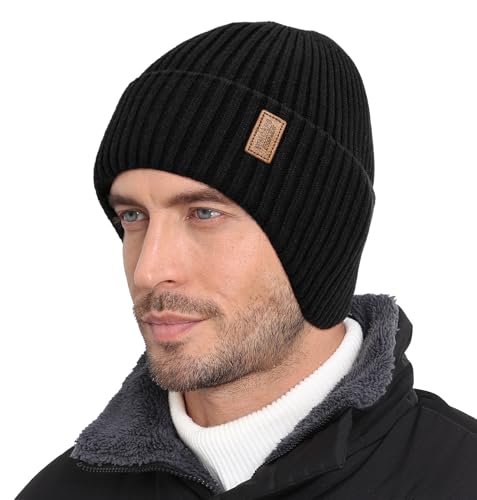
The Wmcaps Ear-Flap Beanie provides a middle ground between a conventional beanie and a full trapper hat. Its knit shell is made from a blend of 50 percent viscose, 30 percent polyester, and 20 percent nylon, with fleece lining for additional warmth. Extended sides cover the ears without adding a long neck panel or a separate chin strap. The elastic construction is designed to conform to different head sizes and remain close during walking, hiking, or other active use. Compared with a large ushanka, the lower-profile shape is easier to fit under a loose hood and more practical to carry in a coat pocket.
This hat makes sense for people who generate some heat while moving but still need dependable ear coverage. The fleece lining should feel less scratchy than coarse wool against bare skin, and the cuff-style edge can reduce gaps around the ears. Its main limitation is exposure. The cheeks, lower face, and back of the neck remain less protected than they would be in a trapper hat. It should therefore be viewed as an active-use or commuting option rather than maximum protection for long, stationary periods in severe weather.
Pros:
- Fleece lining covers the ears without trapper-hat bulk
- Stretch knit accommodates a range of head shapes
- Light enough for walking, commuting, and moderate activity
- Easier to pack than a structured winter hat
- Unisex styling works with casual winter clothing
Cons:
- Does not protect the face or lower neck
- Stretch sizing may fit differently depending on head circumference
- Less suited to prolonged stationary use in exposed conditions
Choose this model when mobility, simple storage, and ear coverage matter more than maximum insulation. It is a practical step up from a basic beanie, but it cannot replace the wind-blocking area of a full trapper hat when the cheeks and neck also need protection.
Best for: Winter commuting, brisk walking, travel, and moderate outdoor activity.
mysuntown Trapper Hat with Removable Mask: Best for Face Coverage

The mysuntown Trapper Hat combines a polyester outer shell, artificial-fur lining, full ear flaps, and a removable face mask. This configuration covers more exposed skin than a standalone hat and can reduce the need to coordinate a separate face covering. The manufacturer describes the layered polyester shell as waterproof and breathable, although buyers should remember that seams, attachment points, and fit also affect real-world protection. The mask is removable and washable, so it can be used only when wind or blowing snow makes additional facial coverage useful. Its pilot-style shape is suited to skiing, sledding, camping, and general cold-weather wear.
The removable mask is the main reason to consider this model over a simpler ushanka. It adds versatility for changing conditions, particularly when moving between sheltered and exposed areas. At the same time, face coverings can collect moisture from breathing, especially during strenuous activity. A damp mask may feel cold during rest stops and should be dried after use. The artificial fur avoids genuine animal fur, but the complete setup is still bulkier than a fleece-lined beanie. Verify the seller’s current sizing information because the supplied specifications do not establish a universal fit.
Pros:
- Removable mask extends protection to the lower face
- Artificial-fur lining provides soft coverage around the ears
- Polyester shell is designed to resist wind and precipitation
- Mask can be washed separately after use
- Useful for changing exposure levels during winter activities
Cons:
- Face mask may accumulate condensation during vigorous activity
- Bulkier than a beanie and more involved to adjust
- Buyers need to confirm current circumference measurements
This mysuntown model is most useful when exposed cheeks and the lower face are a recurring problem. The detachable mask gives it broader coverage than most ear-flap hats, although moisture management becomes more important. It is better suited to intermittent or moderate activity than sustained, high-output exercise.
Best for: Sledding, snow sports, windy commutes, and people who want an integrated removable face covering.
ZEXIAN Two-Pack Visor Beanies: Best Value Set

The ZEXIAN package includes two fleece-lined knit hats, one black and one gray, with extended ear coverage and a short built-in visor. The lining adds insulation throughout the crown, while the visor helps keep falling snow away from the eyes and can reduce direct glare. Its elastic knit construction is intended for adults and keeps the profile closer to the head than a fur-lined trapper hat. The manufacturer describes the hats as windproof and snowproof, but the knit shape and open lower edge do not provide the sealed coverage of a technical hood. They are best considered warm everyday hats for commuting, dog walking, outdoor chores, and casual recreation.
The two-pack format provides useful value for households that need a spare hat, or for someone who wants to keep one in a vehicle and another at home. The visor also differentiates this set from ordinary fleece beanies, particularly for people who dislike snow landing on their glasses. One-size stretch designs are convenient but inherently less precise than measured sizes. A small head may experience movement, while a large head may feel pressure or lose some ear coverage as the knit stretches upward.
Pros:
- Two hats are included in different neutral colors
- Full fleece lining adds warmth across the crown and ears
- Short visor helps shield the eyes from light precipitation
- Lower-profile design is easy to carry and store
- Suitable for casual wear and moderate movement
Cons:
- One-size construction will not fit every head equally well
- No chin strap or lower neck coverage
- Manufacturer weather claims should not be treated as equivalent to a sealed technical hat
This set emphasizes affordability and everyday convenience rather than expedition-level protection. The visor and fleece lining make the hats more functional than basic knit caps, and having a spare can be useful. For prolonged wind exposure or stationary winter work, a secured trapper design offers better coverage.
Best for: Couples, backup winter gear, commuting, dog walking, and shoppers seeking two lined hats at a modest price.
Wmcaps Brimmed Ear-Flap Beanie: Best for Glasses Wearers

The Wmcaps Brimmed Beanie combines a stretch knit crown, long plush lining, extended ear sections, and a short visor. The plush material reaches toward the lower edges of the ears, providing more coverage than a conventional cuffed beanie. Its brim can intercept light snow and rain before it lands directly on eyeglasses, while also offering shade in bright winter sun. The hat remains relatively compact and is intended for activities such as walking, fishing, outdoor work, hiking, and casual winter travel. Its elastic shape can accommodate different head sizes, but the exact fit will depend on head circumference and how much the knit must stretch.
This model is a reasonable choice for shoppers who want a familiar cap-like brim without the bulk or distinctive appearance of an ushanka. It provides a useful balance for everyday use, particularly when visibility and glasses are concerns. However, a visor does not stop precipitation driven from the side, and the open face and neck remain exposed. The plush lining may also retain more perspiration than an unlined performance cap during hard exercise. It is best used for low to moderate activity rather than sustained running.
Pros:
- Brim helps keep light snow away from glasses and eyes
- Plush lining extends over the ear area
- Stretch construction is easy to put on and remove
- Less bulky than a traditional trapper hat
- Suitable for errands, walking, and casual outdoor tasks
Cons:
- Does not protect the cheeks or back of the neck
- Elastic sizing may not provide an equally secure fit for everyone
- Plush lining can feel warm during strenuous activity
The practical brim makes this Wmcaps hat especially relevant for people who wear glasses or prefer a cap-style silhouette. It offers more ear insulation than a standard billed cap, although it remains an everyday option rather than a full-coverage solution for severe, exposed weather.
Best for: Glasses wearers, dog walking, errands, casual outdoor work, and winter travel.
Comhats Faux Fur Trapper Hat: Best for Larger Heads

The Comhats Faux Fur Trapper Hat is offered in several measured sizes rather than relying on a highly elastic universal fit. The manufacturer lists large for approximately 22.8 to 23.6 inches, extra-large for 24 to 24.8 inches, and double extra-large for 24.8 to 25.6 inches. Those options make it particularly relevant for buyers who find standard winter hats uncomfortably tight. Faux fur surrounds the ear area and provides a soft barrier against cold wind, while the trapper shape offers more side coverage than a beanie. It is intended for everyday winter wear, outdoor work, snow trips, and other low- to moderate-output activities.
Measured sizing and synthetic fur are the two clearest reasons to select this hat. It provides an animal-free alternative to the rabbit-fur Comhats model while accommodating head circumferences that many one-size hats do not. Synthetic fur may be easier for some shoppers to maintain, although the complete care label should still be checked before washing. Like other substantial trapper hats, it can feel hot during intense activity and will occupy more luggage space. Measure around the widest part of the head rather than relying on a usual letter size.
Pros:
- Available in large, extra-large, and double extra-large sizes
- Faux-fur lining avoids genuine animal fur
- Trapper construction protects more of the ears than a knit cap
- Soft lining is designed to reduce itch against bare skin
- Suitable for outdoor chores and cold casual use
Cons:
- More cumbersome to pack than a folding beanie
- May trap excessive heat during strenuous movement
- Accurate head measurement is necessary before choosing a size
For larger head circumferences, this Comhats model offers a more deliberate sizing approach than elastic one-size hats. Its faux-fur construction provides substantial ear coverage without genuine fur. The trade-off is the familiar bulk of a trapper hat, making it more suitable for cold, steady use than fast-paced exercise.
Best for: Larger heads, outdoor chores, cold commutes, and shoppers seeking a synthetic-fur trapper hat.
Windproof Russian Trooper Hat: Best Budget Trapper Style

This unbranded Russian-style trooper hat uses a three-layer arrangement consisting of a water-resistant exterior, cotton insulation, and plush faux-fur lining. Full ear flaps and an adjustable chin strap create more coverage than similarly priced knit beanies. The seller lists it as most suitable for head circumferences between 23.6 and 24.4 inches, so it is primarily an option for shoppers who fall within that relatively narrow range. Its materials and secured flaps make it useful for occasional snow clearing, camping, walking, or recreational winter outings where a basic beanie leaves the ears too exposed.
The main appeal is accessible full-coverage construction at a low listed price. Still, expectations should remain measured. The shell is described as water-resistant in the layered specification, which is not the same as verified waterproof protection during prolonged precipitation. The limited sizing information also means it is unsuitable for many smaller or larger heads. Compared with more established or specialized choices, buyers have fewer details about long-term fabric performance and care. It makes the most sense as occasional-use gear or an inexpensive spare, provided the listed measurements match.
Pros:
- Full trapper shape at a relatively low listed price
- Three-layer construction combines insulation and weather resistance
- Faux-fur lining covers the ears
- Adjustable chin strap helps stabilize the flaps
- Useful as a spare hat for occasional winter tasks
Cons:
- Listed fit range is limited to approximately 23.6 to 24.4 inches
- Water-resistant construction should not be assumed to be fully waterproof
- Less detailed durability and care information than specialized options
This is a budget-focused way to gain more coverage than a standard beanie. Its chin strap, insulation, and faux-fur lining are practical features, but fit should be checked carefully. People expecting frequent exposure to wet weather may be better served by a hat with documented waterproof specifications.
Best for: Occasional snow chores, backup winter gear, and budget shoppers within the stated size range.
EDTREK Navigator Pro Hunting Hat: Best for Wet and Windy Conditions
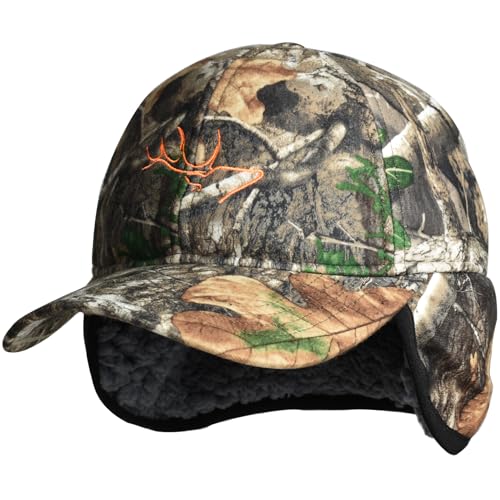
The EDTREK Navigator Pro is a technical hunting cap with a brushed poly-tricot face, a PTFE membrane, fleece lining, sherpa-lined ear flaps, and an extended rear panel that reaches toward the collar. According to the manufacturer, the membrane has a 10,000 mm waterproof rating and a breathability figure of 10,000 g/m². Those specifications make it the most weather-focused hat in this guide, particularly for rain, wet snow, and wind. The ear flaps use elastic edges to remain close during movement, and the regular bill provides shade and precipitation coverage. Camo and blaze-orange options are oriented toward hunting rather than everyday urban styling.
This model is better suited to damp, exposed environments than fur-lined fashion trapper hats. The longer rear panel also helps close the gap between a jacket collar and the crown. Breathable membranes can reduce moisture buildup, but no insulated waterproof hat will feel equally comfortable at every activity level. During demanding hikes, venting the flaps may still be necessary. The cap comes in medium, large, and extra-large, with large listed for approximately 22.75 to 23.25 inches. Buyers should follow the size chart rather than assuming their usual cap size will transfer directly.
Pros:
- Manufacturer-rated waterproof and breathable PTFE membrane
- Windproof sherpa-lined ear flaps with elastic edges
- Extended rear panel protects the upper neck
- Bill shields the eyes from glare and falling precipitation
- Multiple measured sizes are available
Cons:
- Hunting colors and patterns may not suit everyday wardrobes
- Technical layered construction can feel warm during intense activity
- Care is likely to require more attention than a basic knit hat
The Navigator Pro is the strongest wet-weather option among these eight hats. It sacrifices casual versatility for a more technical membrane, close ear flaps, and extended neck coverage. Hunters and outdoor workers are the clearest audience, while city commuters may prefer a less specialized appearance.
Best for: Hunting, outdoor work, wet snow, cold rain, and prolonged exposure to wind.
How to Choose an Ear-Flap Hat for Extreme Cold
Prioritize Coverage, Not Just Thickness
A thick crown does little for exposed ears if the flaps ride upward or allow wind to enter. Look for ear panels that extend below the earlobes and lie close to the sides of the head. For stationary outdoor use, coverage extending toward the cheeks or upper neck can be particularly helpful.
Chin straps, elastic flap edges, and integrated masks each solve different problems. A chin strap secures loose flaps. Elastic edges create a closer seal without dangling hardware. A removable mask adds facial protection but can retain moisture from breathing.
Match Insulation to Activity Level
Standing at a winter event, sitting in a hunting blind, and hiking uphill create very different insulation needs. Low-output activities generally benefit from thick linings and broad fur or fleece coverage. During vigorous movement, the same hat can lead to perspiration. Moisture held near the scalp eventually reduces comfort and may cause rapid cooling when activity stops.
- Stationary use: Consider quilted trapper hats, dense fur, and extended neck panels.
- Moderate movement: A fleece-lined beanie or adjustable-flap cap can balance warmth and ventilation.
- High-output activity: Choose a lighter, moisture-managing hat and carry additional face protection for stops.
Understand Weather-Protection Terms
Wind-resistant materials reduce airflow but may not stop it completely. Windproof fabrics use tighter construction or a membrane to block wind more thoroughly. Fit remains important because wind can still enter beneath loose ear flaps.
Water-resistant hats are intended to handle light snow or brief moisture. Waterproof materials provide stronger protection, but seams and openings can still admit water. A documented waterproof rating is more useful than an unsupported marketplace description, although laboratory ratings cannot account for every real-world fit issue.
Measure Before Ordering
Use a flexible tape around the widest part of the head, typically just above the eyebrows and ears. Keep the tape level and comfortably snug. Compare the measurement with the specific seller’s chart, since letter sizes are not consistent across brands.
If the measurement falls between sizes, consider how the hat is built. A stretch knit can adapt more readily, while a quilted trapper hat has less give. Thick hair, hearing protection, thin liner caps, and eyeglass arms can also affect fit.
Consider Compatibility with Other Winter Gear
Large trapper hats may not fit beneath close jacket hoods or ski helmets. If helmet use is required, choose headwear specifically designed for that helmet rather than forcing a thick hat underneath it. Excess bulk can alter helmet position and reduce comfort.
For non-helmet use, check whether the ear flaps overlap the jacket collar. A small gap at the back of the neck can become uncomfortable in wind. Scarves, neck gaiters, and balaclavas can close gaps, but too many overlapping layers may restrict head movement.
Check Care Requirements
Synthetic knit and fleece hats are often easier to clean than genuine-fur models, but care instructions vary. Removable masks should be washed and dried regularly because they collect breath moisture. Waterproof membranes can be damaged by unsuitable detergents, fabric softeners, or high heat.
After wet use, open the ear flaps and let the hat dry completely before storage. Avoid placing genuine fur or membrane-lined hats directly on a heater. Store structured trapper hats without crushing the lining for long periods.
Common Buying Mistakes
- Choosing only by appearance: A warm-looking fur trim does not guarantee that the flaps fit closely or that the shell blocks wind.
- Ignoring head measurements: A loose hat allows drafts, while an undersized hat may ride upward and expose the ears.
- Assuming every “waterproof” claim is equal: Look for material details or documented ratings, and remember that seams and openings matter.
- Buying too much insulation for active use: Excess warmth can cause perspiration during hiking, running, or snow clearing.
- Forgetting face and neck exposure: Ear flaps do not automatically protect the cheeks, chin, or the gap above a jacket collar.
- Putting a bulky hat under a helmet: Use only headwear compatible with the helmet and follow the helmet manufacturer’s fit guidance.
- Storing the hat while damp: Trapped moisture can cause odor, damage insulation, and make the hat unpleasant to wear the next day.
Frequently Asked Questions
Are ear-flap hats warmer than beanies?
They usually provide more coverage around the ears, sides of the head, and sometimes the neck. That can make them more protective in wind. Warmth still depends on insulation, fit, shell construction, and activity level. A loose trapper hat may perform worse than a close-fitting fleece beanie.
Is real fur necessary for extreme cold?
No. Genuine fur can provide dense insulation, but high-quality synthetic fleece, faux fur, quilted insulation, and windproof membranes can also perform well. The better choice depends on weather, care preferences, ethics, moisture exposure, and fit.
Should ear flaps be worn up or down?
Wear them down when wind, cold, or precipitation threatens the ears. Some hats allow the flaps to be secured above the crown in milder weather. During active use, raising the flaps can help release heat, provided conditions remain safe.
Can an ear-flap hat replace a balaclava?
Not always. Most ear-flap hats leave the mouth, nose, chin, and parts of the cheeks uncovered. A model with an integrated mask offers more facial protection, but a separate balaclava or neck gaiter may provide a closer and more adjustable fit.
What is the best lining for a winter hat?
There is no universal answer. Fleece is soft, practical, and relatively easy to maintain. Quilted insulation can provide greater warmth but adds bulk. Fur and faux fur create insulating loft around the ears, while smooth synthetic linings may manage moisture more comfortably during movement.
How tight should an extreme-cold hat fit?
It should remain stable without causing pressure, headaches, or deep marks. The ear flaps should lie close enough to limit drafts. An excessively tight hat can compress insulating material, while a loose one may shift and expose skin.
Can these hats be worn for skiing or snowboarding?
They can be used before or after skiing, but thick trapper hats generally should not be forced beneath a ski or snowboard helmet. Use a thin, helmet-compatible liner if permitted by the helmet manufacturer, and confirm that the helmet still fits correctly.
What should I wear with an ear-flap hat in severe wind?
A high jacket collar, scarf, or neck gaiter can protect gaps around the neck and lower face. Avoid arranging layers in a way that obstructs vision or breathing. In exposed conditions, cover bare skin and monitor for numbness, pale or waxy skin, and other possible signs of cold injury.
Final Recommendations
Among these eight options, the Comhats Rabbit Fur Trapper Hat is the insulation-focused choice for prolonged, low-output exposure, provided genuine fur and extra bulk are acceptable. The EDTREK Navigator Pro is better aligned with wet, windy hunting or outdoor work, while the Comhats Faux Fur Trapper Hat provides measured options for larger heads.
For commuting and moderate activity, a lighter design such as the Wmcaps Fleece-Lined Ear-Flap Beanie is easier to carry and less likely to feel cumbersome. Whatever style you choose, measure your head, account for your activity level, and examine how the flaps meet your ears and jacket collar. Secure coverage and an appropriate fit are more useful than insulation thickness alone.