When the temperature drops hard, a regular scarf can leave gaps, loosen as you move, or feel bulky under a jacket collar. A good neck warmer for extreme cold solves a different problem. It should seal the space between your jacket and face, stay in place in wind, and still let you breathe comfortably when you are walking, skiing, shoveling snow, riding, or working outside.
The best neck warmer for extreme cold depends on how you plan to use it. A thick fleece gaiter may be warmer for standing still or commuting, while a vented half mask may be more comfortable for skiing, cycling, or motorcycle riding. For active use, breathability matters almost as much as insulation. For low-output use, coverage and thickness become more important.
Quick Answer
For most cold-weather users, the Tough Headwear Half Ski Mask is the strongest all-around choice because it combines fleece warmth, face coverage, breathing panels, and ear coverage in a design that works better than a loose scarf in wind. If you want a more traditional neck warmer for daily winter wear, the MSDC Winter Neck Gaiters 3 Pack offers thick fleece-lined warmth and good value. For helmet use, glasses, or goggles, the WTACTFUL Winter Neck Gaiter is worth considering because of its vented breathing design.
No single neck warmer is ideal for every winter situation. For extreme cold, choose based on coverage, fabric thickness, wind exposure, breathability, helmet compatibility, and how much moisture you expect from your activity level.
Comparison Table
| Product | Best For | Material or Warmth Design | Face Coverage | Notable Trade-Off |
|---|---|---|---|---|
| Tough Headwear Half Ski Mask | Cold, windy activity with face and ear coverage | Fleece fabric with stretch and mesh breathing panels | Neck, lower face, nose, and ears | Manufacturer lists suitability down to 30°F, so it may need layering in colder conditions |
| MSDC Winter Neck Gaiters 3 Pack | Everyday winter use and value buyers | Acrylic knit outer layer with plush polyester fleece lining | Neck and lower face | Thicker knit construction may feel warm during high-output activity |
| KGC 2 Pack Winter Neck Warmer Gaiter | Lightweight layering under helmets or jackets | Polyester and spandex fleece-style fabric | Neck, lower face, ears, and nose depending on wear style | Less structured than a shaped half mask |
| Rothco Polar Fleece Neck Warmer | Simple fleece warmth and outdoor work | 100% polyester fleece tube | Neck, mouth, and ears when pulled up | Basic design without dedicated breathing vents |
| NovForth Winter Neck Warmer | Casual winter wear, commuting, and snow chores | Two-ply soft fabric with fleece-style warmth | Neck and lower face | Hand-washing is recommended by the manufacturer |
| WTACTFUL Winter Neck Gaiter | Helmet users, glasses wearers, and active winter sports | Thermal face-covering design with air holes | Neck, lower face, and nose | Vented design improves breathing but may feel less sealed than solid fleece |
How We Chose These Neck Warmers
For extreme cold, warmth alone is not enough. A neck warmer also needs to control drafts, stay positioned over the neck and lower face, and avoid trapping too much moisture from breath or sweat. Wet fabric loses comfort quickly in cold weather, especially during skiing, cycling, running, or outdoor work.
These picks were selected based on practical winter clothing criteria, including:
- Coverage: How well the gaiter protects the neck, chin, lower face, nose, and ears.
- Warmth design: Whether the product uses fleece, knit construction, double-layer fabric, or a shaped mask design.
- Wind management: How well the warmer appears suited to blocking drafts compared with a loose scarf.
- Breathability: Whether the design includes vents, stretch fabric, or moisture-wicking properties.
- Layering compatibility: Whether it can fit under a hood, helmet, jacket collar, or winter coat.
- Activity match: Whether the warmer is better for commuting, skiing, shoveling, riding, running, or general outdoor use.
- Care and practicality: Whether the design is easy to pack, replace, wash, and use regularly.
Temperature claims are treated carefully. Only one product in this group includes a manufacturer-stated temperature reference, and that rating should not be read as a guarantee for every person or every weather condition. Wind chill, moisture, activity level, layering, and personal cold tolerance all affect comfort.
Our Top Picks for the Best Neck Warmer for Extreme Cold
The products below are not ranked from best to worst. Each one serves a slightly different type of winter user. Some are better for active sports, some for daily cold-weather wear, and others for simple fleece coverage when you want less bulk than a scarf. Compare the intended use, coverage, and trade-offs before choosing.
Tough Headwear Half Ski Mask

The Tough Headwear Half Ski Mask is designed for people who need more coverage than a basic neck tube but do not want a full balaclava. It uses the brand’s FurnaceFleece fabric and has a shaped half-mask design that can cover the neck, mouth, nose, and ears. The manufacturer describes it as suitable for conditions down to 30°F, which makes it better framed as a cold-weather mask for winter activity rather than a stand-alone solution for severe subzero exposure.
Its main advantage over a traditional scarf is stability. A scarf can loosen while skiing, riding, or shoveling, while this mask is shaped to stay in place and includes mesh breathing panels to reduce the stuffy feeling that can come with fleece over the mouth. The ear slots are also useful in windy conditions, especially if your hat or helmet leaves small gaps around the ears.
Pros:
- Shaped half-mask design offers better face coverage than a loose scarf.
- Mesh breathing panels help manage moisture and reduce trapped breath.
- Ear coverage improves protection in wind and exposed conditions.
- Four-way stretch helps it sit securely without feeling overly rigid.
- Can be worn over the face or pulled down as a neck gaiter.
Cons:
- Manufacturer-stated suitability down to 30°F may not be enough for the coldest conditions without additional layers.
- Less versatile as casual wear than a plain knit neck warmer.
- Some users may prefer a full balaclava for forehead and head coverage.
This is the most balanced choice here for active cold-weather use because it covers the neck, lower face, and ears while still addressing breathability. It is especially useful when wind is the main issue, but in deeper cold, it should be paired with a warm hat, hood, or full layering system.
Best for: Skiing, snowboarding, motorcycle riding, winter commuting, and windy outdoor activity where lower-face coverage matters.
MSDC Winter Neck Gaiters 3 Pack

The MSDC Winter Neck Gaiters 3 Pack is a practical option for people who want warm neck coverage for daily winter use without relying on a bulky scarf. Each gaiter uses an acrylic knit outer layer with a soft polyester fleece lining, giving it a thicker, more insulated feel than thin stretch tubes. The pull-on design can sit around the neck or be raised over the mouth and nose when the wind picks up.
This set makes sense for households, commuters, or anyone who wants backups for a car, work bag, or coat pocket. Because it comes as a three-pack, it is easier to rotate between wears and washes. The trade-off is that the knit and fleece-lined design may feel too warm or moisture-holding during intense activity such as running. It is better suited to walking, commuting, light snow chores, casual winter wear, and lower-output outdoor time.
Pros:
- Three-pack offers strong value and easy rotation between uses.
- Fleece lining adds softness and warmth against the skin.
- Can be worn as a neck warmer or pulled up as a lower-face cover.
- Reversible design gives two appearance options.
- Light enough to keep in a bag, vehicle, or coat pocket.
Cons:
- Not as structured as a dedicated face mask for fast movement or high wind.
- Thicker knit construction may trap moisture during hard exercise.
- One-size design may fit differently depending on neck size and preferred tightness.
This is a good choice if you want a warmer scarf alternative for everyday winter routines. It is not the most technical option for goggles, helmets, or heavy breathing, but it provides useful coverage and value for regular cold-weather wear.
Best for: Commuting, walking, casual winter use, keeping spares in multiple jackets, and replacing a traditional scarf for everyday cold.
KGC 2 Pack Winter Neck Warmer Gaiter

The KGC 2 Pack Winter Neck Warmer Gaiter is a lighter, stretchier option made from a polyester and spandex blend. It is designed to be used in several ways, including as a neck warmer, face cover, half balaclava, scarf-style tube, or helmet liner. That makes it more adaptable than a thick knit gaiter, especially for people who move between skiing, cycling, hiking, and general winter wear.
Its strength is flexibility rather than maximum insulation. The fabric is described as breathable and moisture-wicking, which is helpful for active use where a heavy fleece tube can become damp. It can work under a ski helmet or jacket collar without adding as much bulk as a thick scarf. For extreme cold, however, it is best viewed as part of a layering system. On its own, it may not feel warm enough for standing still in harsh wind for long periods.
Pros:
- Stretch fabric allows multiple wear styles and easier layering.
- Two-pack provides backup for frequent winter use.
- Breathable design is better suited to active movement than heavy knit options.
- Can fit under helmets more easily than bulkier neck warmers.
- Useful across winter, fall, and cool spring conditions.
Cons:
- May not provide enough insulation by itself for very low-output extreme cold.
- Less wind-sealing structure than a shaped half mask.
- Multi-use tube design can require adjustment during activity.
This gaiter is a good fit for people who value mobility, packability, and breathability. It is not the warmest option in this guide, but it layers well and works for active winter use when a heavy scarf would feel restrictive.
Best for: Skiing, cycling, hiking, helmet layering, and users who want a lightweight two-pack for active winter conditions.
Rothco Polar Fleece Neck Warmer

The Rothco Polar Fleece Neck Warmer is a straightforward fleece tube made from 100% polyester fleece. It measures 11 by 15 inches according to the manufacturer, giving it enough length to sit around the neck or pull up over the mouth and ears. Compared with a scarf, the tube format is simpler, less likely to unwind, and easier to tuck under a jacket collar.
This option is most appealing for people who want basic fleece warmth without extra styling, vents, or multiple layers of knit fabric. It can be worn as a neck gaiter, open balaclava, or half face mask, depending on how much coverage you need. The simple construction also means fewer adjustment points. The main limitation is breath management. Because it does not have dedicated breathing vents, it may collect moisture faster when worn over the mouth during heavy activity.
Pros:
- Simple 100% polyester fleece construction provides soft insulation.
- Tube shape is easier to manage than a traditional scarf in wind.
- Can cover the neck, mouth, and ears when pulled up.
- Works for outdoor work, snowboarding, running, and general winter use.
- Lightweight design is easy to keep in a coat pocket or gear bag.
Cons:
- No dedicated breathing panel or vented mouth area.
- Basic styling may not appeal to users looking for a more casual scarf-like appearance.
- May need frequent adjustment depending on face shape and activity level.
The Rothco is a practical pick if you want a basic fleece warmer that does its job without much complexity. It is better for moderate activity and everyday outdoor use than for high-output sports where venting and moisture control are major concerns.
Best for: Outdoor work, snow chores, winter walks, simple fleece layering, and users who prefer a basic neck tube over a scarf.
NovForth Winter Neck Warmer
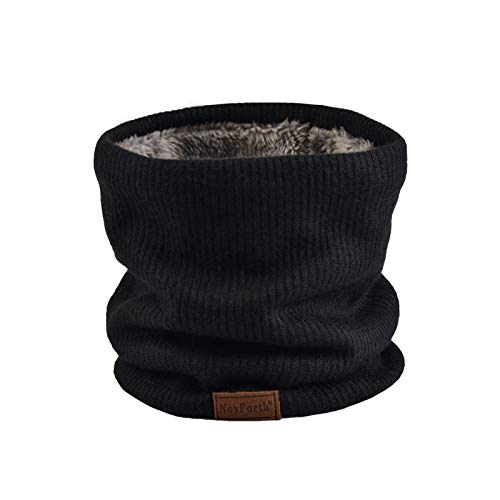
The NovForth Winter Neck Warmer is a thick, soft neck gaiter designed for warmth and everyday cold-weather coverage. It uses a two-ply construction and is described by the manufacturer as soft, fast drying, and sweat absorbing. It is intended for winter activities such as skiing, snowboarding, snowmobiling, cycling, hiking, motorcycling, hunting, construction work, walking the dog, and shoveling snow.
This is a useful middle ground between a casual scarf and a more technical face mask. It has a warmer, cozier feel than thin active gaiters, but it remains easier to wear under a jacket than a long scarf. Buyers should note the care guidance, since the manufacturer recommends hand washing below 58-degree water. That is not difficult, but it may matter if you prefer winter accessories that can be tossed into a regular machine wash without much thought.
Pros:
- Two-ply design gives more warmth than many thin gaiters.
- Soft fabric is suited to casual wear and repeated winter use.
- Elastic construction helps it sit around the neck without tying.
- Works for many cold-weather activities, from commuting to shoveling.
- Less bulky and easier to secure than a traditional scarf.
Cons:
- Hand-washing is recommended, which adds care effort.
- May feel too warm during sustained high-output activity.
- No dedicated mouth vent for glasses or goggle fog management.
The NovForth is a sensible choice for people who want a warm, soft neck gaiter for everyday winter use and light outdoor activity. It is not the most technical option here, but it offers a practical blend of warmth, comfort, and scarf-like coverage.
Best for: Commuting, dog walking, snow shoveling, casual winter wear, and users who want a thick neck warmer without scarf bulk.
WTACTFUL Winter Neck Gaiter
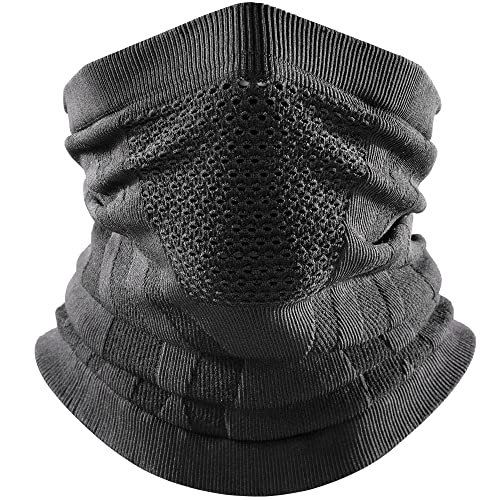
The WTACTFUL Winter Neck Gaiter is built around a vented half-face design. It includes air holes around the nose and mouth area, which helps address one of the most common problems with winter face coverings: moisture buildup that can fog goggles, glasses, or helmet visors. That makes it especially relevant for skiing, snowboarding, cycling, and motorcycle riding in cold weather.
Compared with a solid fleece neck warmer, this design prioritizes breathing comfort and visibility management. The ergonomic fit is intended to stay in place under helmets, which is useful for active users who do not want to keep pulling a scarf or gaiter back over the nose. The trade-off is that vents can let in more cold air than a fully covered fleece panel. In extreme cold, that may be worth it for active movement, but less ideal for standing still.
Pros:
- Air-hole design helps reduce trapped breath and moisture buildup.
- Better suited to glasses, goggles, and helmet use than solid fleece tubes.
- Ergonomic shape is designed to stay positioned during movement.
- Works for skiing, snowboarding, cycling, running, and motorcycle riding.
- Less bulky under helmets than a scarf or thick knit gaiter.
Cons:
- Vented face area may feel less sealed in strong wind or very low temperatures.
- More sport-focused appearance than a casual neck warmer.
- May not be as cozy for low-activity use as thick fleece-lined options.
This is the best match in this group for people who struggle with fogging or damp fabric over the mouth. It is not the warmest-feeling neck warmer for standing around, but it is practical when movement, helmets, and breathability matter.
Best for: Skiing, snowboarding, cycling, motorcycle riding, glasses wearers, and helmet users who need better breath management.
How to Choose a Neck Warmer for Extreme Cold
Choose Coverage Before Style
In mild winter weather, a scarf or thin gaiter may be enough. In extreme cold, exposed skin becomes uncomfortable quickly, especially around the neck, chin, ears, and nose. A neck warmer that can pull up over the lower face usually provides better protection than a decorative scarf.
Look for enough height to bridge the gap between your jacket collar and hat or helmet. If wind is a major issue, a shaped half mask or snug fleece tube will usually seal better than a loose scarf.
Think About Wind, Not Just Temperature
A neck warmer may feel warm in still air but inadequate in wind. Wind pushes cold air through gaps and can make the neck and lower face feel exposed even when the fabric is thick. For windy conditions, choose a warmer that fits close to the skin and stays in place when you turn your head.
For motorcycle riding, skiing, snowmobiling, and open-area winter work, stability matters. A long scarf can shift, flap, or interfere with gear, while a gaiter or half mask is usually more controlled.
Match Breathability to Your Activity Level
For walking slowly, commuting, or standing outside, thicker fleece and plush linings are useful. For running, skiing, cycling, or hiking uphill, a very thick neck warmer can become damp from sweat and breath. Once wet, it can feel colder against the skin.
If you are active, consider a vented mask or breathable stretch gaiter. If you are mostly stationary, choose more insulation and coverage.
Consider Helmet and Hood Compatibility
If you wear a ski helmet, bike helmet, motorcycle helmet, or tight hood, bulk becomes important. Thick knit gaiters can bunch around the jaw or collar. A thinner stretch gaiter or shaped half mask may fit more comfortably under protective gear.
Before buying, check whether the neck warmer is tall enough to cover your face but not so bulky that it interferes with helmet straps, jacket zippers, or goggles.
Know When a Scarf Still Makes Sense
Scarves are still useful for casual wear, especially when style and adjustability matter. They can be wrapped loosely or tightly depending on the weather. However, they are not always the best choice for extreme cold activity because they can shift, loosen, or create bulky layers under a jacket.
For commuting in dress clothing, a scarf may be fine. For skiing, cycling, shoveling, outdoor work, or high wind, a neck gaiter or half mask is usually more practical.
Common Mistakes When Buying a Neck Warmer
- Buying the thickest option without considering moisture: Heavy fabric can become damp during activity, which may reduce comfort in cold weather.
- Ignoring face coverage: A neck-only warmer may leave the chin, cheeks, and nose exposed in severe wind.
- Choosing a loose fit for windy conditions: A loose gaiter may feel comfortable indoors but allow drafts outdoors.
- Assuming “windproof” always means fully sealed: Marketplace wording varies. Look at the design, fabric, and face coverage rather than relying only on product claims.
- Forgetting about glasses or goggles: Solid fabric over the mouth can direct warm breath upward and fog lenses.
- Using one neck warmer for every situation: A thick fleece gaiter may be good for commuting, while a vented mask may be better for active sports.
Frequently Asked Questions
What is the warmest type of neck warmer for extreme cold?
The warmest options are usually fleece-lined gaiters, thick fleece tubes, or shaped half masks that cover the neck and lower face. For very cold and windy conditions, coverage and fit matter as much as fabric thickness. A snug warmer that seals gaps will usually feel better than a loose scarf that lets wind through.
Is a neck warmer better than a scarf?
For active winter use, a neck warmer is often better because it stays in place and fits more easily under jackets, helmets, and hoods. A scarf can still be useful for casual wear, but it may loosen or feel bulky during skiing, cycling, riding, or snow shoveling.
Can I wear a neck warmer over my nose and mouth?
Many neck warmers can be pulled over the nose and mouth, but not all manage breath moisture equally well. If you wear glasses or goggles, look for a vented design or a shaped mask that directs breath away from lenses.
What material is best for a winter neck warmer?
Fleece is common because it is soft, warm, and relatively lightweight. Knit acrylic with fleece lining can feel warmer for casual use. Polyester and spandex blends are often better for active movement because they stretch, breathe, and layer more easily under helmets.
Should a neck warmer fit tight or loose?
For extreme cold, it should fit close enough to reduce drafts but not so tight that it restricts breathing or feels uncomfortable around the neck. If you plan to pull it over your face, make sure it has enough stretch and height to stay in place.
Do neck warmers help prevent goggle fog?
Some do, but others can make fogging worse. Solid fabric over the mouth may push warm breath upward into goggles or glasses. Vented masks, such as designs with air holes around the nose and mouth, are generally better for fog management.
Can one neck warmer handle subzero temperatures?
A neck warmer can help, but subzero comfort usually depends on the full layering system. You may need a warm hat, hood, insulated jacket, face protection, and wind-resistant outer layers. Avoid relying on a neck warmer alone for severe exposure.
Final Recommendations
If you want the best balance of warmth, coverage, and breathability, the Tough Headwear Half Ski Mask is the most versatile choice for cold, windy activity. For everyday winter wear and value, the MSDC Winter Neck Gaiters 3 Pack makes sense, especially if you want multiple warmers for different coats or family members. For helmets, goggles, and glasses, the WTACTFUL Winter Neck Gaiter is the better pick because its vented design helps manage breath moisture.
For extreme cold, treat a neck warmer as one part of your winter clothing system. The right choice should seal the neck, protect the lower face when needed, fit comfortably with your jacket or helmet, and match your activity level. A thick fleece gaiter may be best for slow, cold days, while a breathable or vented mask is usually better when you are moving hard in winter weather.