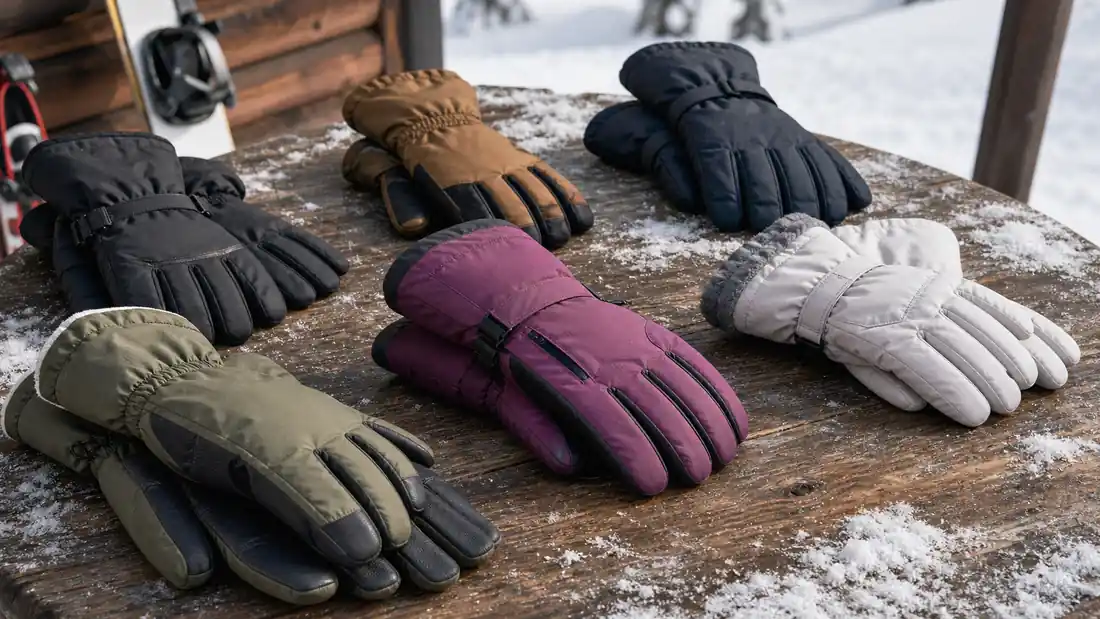
Cold hands can make an otherwise comfortable winter run feel miserable, but the thickest gloves are not always the right answer. Running raises body temperature quickly, so gloves that work for standing at a bus stop may become damp and restrictive after the first mile. The best running gloves for women balance light warmth, moisture management, dexterity, and enough grip to manage a phone, water bottle, leash, or running poles.
Fit matters as much as fabric. A glove that is too loose leaves air gaps and can bunch around the palm, while an overly tight pair may restrict circulation and make hands feel colder. Most runners will be better served by a close-fitting, breathable glove for cool conditions, then a wind-resistant or convertible design when temperatures and wind exposure increase.
Quick Answer
For many women running in cool to moderately cold weather, the TrailHeads Women’s Running Gloves offer a well-rounded combination of four-way stretch, a brushed moisture-wicking interior, touchscreen fingertips, and silicone grip. Runners facing wind, light precipitation, or temperatures closer to freezing may prefer the more protective Aerynx X2 Winter Gloves. If your fingers become cold quickly but you still need to check a running watch, the convertible RIGWARL Convertible Running Gloves provide more flexibility.
None of the lightweight gloves in this guide should be treated as a substitute for insulated mittens in severe cold, prolonged rain, or snow. In those conditions, a thin running glove can work as a liner beneath a weatherproof shell mitten.
Comparison of the Best Running Gloves for Women
| Product | Best For | Material or Construction | Weather Protection | Fit and Layering | Notable Trade-Off |
|---|---|---|---|---|---|
| TrailHeads Women’s Running Gloves | Active winter running | Stretch outer fabric with brushed lining | Light cold-weather coverage | Close fit, also useful as a base layer | Not intended as a standalone glove in the coldest conditions |
| Nike Lightweight Tech Running Gloves | Mild, high-output runs | Lightweight Dri-FIT construction | Designed to manage perspiration and light dampness | Fitted cuff and flexible fingers | Limited insulation for cold, windy runs |
| Aerynx X2 Winter Gloves | Windy runs near freezing | Three-layer construction with 320 gsm fleece | Wind-blocking mid-layer and water-repellent outer | Stretch fit, can layer under a shell | May be warmer than needed for mild weather |
| RIGWARL Convertible Running Gloves | Changing conditions and watch users | Fleece-lined glove with flip-over mitten cover | Water-resistant finish for light moisture | Flexible glove-to-mitten design | Added features create more bulk than a simple liner |
| HEAD Women’s Touchscreen Running Gloves | Simple cool-weather training | Four-way stretch fleece | Light weather coverage | Tapered wrist, works alone or as a liner | No stated water-resistant shell |
| Unigear Lightweight Running Gloves | Budget-conscious runners and layering | Soft, stretchy liner fabric | Best in dry cool weather | Trim liner-style fit | Not designed for heavy wind or wet conditions |
| Aegend Lightweight Winter Gloves | Grip-focused everyday use | Polyester-spandex stretch fabric with soft lining | Manufacturer describes wind-resistant material | Snug fit, suited to layering | Only three listed sizes |
| ihuan Winter Warm Running Gloves | Light rain, snow flurries, and liner use | Nylon knit outer with soft fiber lining | Water-resistant material and elastic cuff | Thin, flexible liner profile | Seams may allow moisture through in sustained wet weather |
How We Chose These Running Gloves
These picks were selected for the needs that matter most during cold-weather running: warmth without excessive bulk, a secure fit, practical grip, touchscreen access, moisture management, and the ability to layer when weather turns harsher. Product descriptions and manufacturer-provided construction details were used to distinguish lightweight liners from more protective cold-weather options.
Because people experience cold differently, the list includes gloves for mild runs, windy days, light precipitation, and runners who need a mitten-style backup. A listed temperature range is included only where the manufacturer provides one. Fit should always be checked against the current size chart, particularly with unisex gloves, since hand length and palm width can vary substantially.
Our Top Picks
These eight gloves are not ranked from best to worst. Each fills a different role, from a women-specific running glove for aerobic activity to a warmer convertible option for changing weather. Consider the usual temperature, wind exposure, pace, and whether you tend to run warm or cold. The right pair is the one that protects your hands without leaving them sweaty or limiting natural arm movement.
TrailHeads Women’s Running Gloves
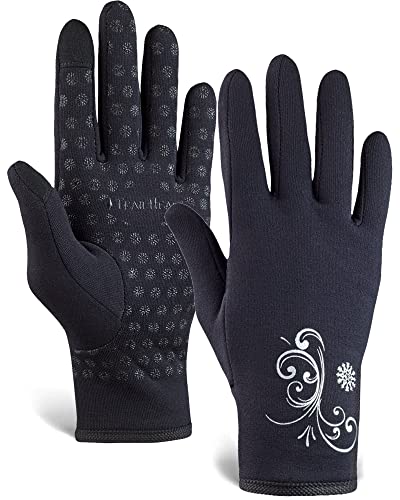
The TrailHeads Women’s Running Gloves are purpose-built for aerobic cold-weather activity rather than stationary outdoor use. Their construction combines a smooth four-way stretch exterior with a brushed inner layer designed to move moisture away from the skin. That approach is useful for runners whose hands start cold but warm up quickly once their pace settles. Conductive material on the thumb and forefinger allows basic touchscreen use, while the silicone snowflake-pattern palm grip can help when holding a phone, keys, or a small bottle. The close, flexible profile should allow natural finger movement and makes these gloves practical for running, walking, cycling, and other activities where dexterity matters.
These are the strongest fit for runners looking for a women-specific, uncomplicated glove for cool to cold training days. The manufacturer notes that they are intended for aerobic pursuits and may also serve as a base layer under a heavier glove for less active use. That distinction is important. The fabric and brushed interior are more appropriate for generating warmth through movement than for protecting hands during long periods of standing still. The gloves use REPREVE recycled material, which may appeal to shoppers who want recycled-content fabric. Buyers should consult the size chart carefully, especially if they are between sizes or want enough room to add a thin liner underneath.
Pros:
- Women-specific running glove design with a close, flexible fit
- Brushed interior is designed to wick moisture during aerobic activity
- Four-way stretch supports finger and hand mobility
- Touchscreen material on the thumb and forefinger
- Silicone palm pattern helps improve grip on small items
Cons:
- Not designed as a standalone option for the coldest conditions
- No stated waterproof or windproof membrane
- Touchscreen coverage is limited to two fingers
For runners who need a light but functional glove rather than a bulky winter mitt, this is a sensible starting point. It prioritizes breathability, mobility, and everyday running practicality. Add a shell mitten or heavier outer glove if your route is very windy, wet, or well below your usual comfortable running range.
Best for: Women seeking a dedicated running glove for cool-weather workouts, with the option to use it as a liner in colder conditions.
Nike Lightweight Tech Running Gloves

Nike Lightweight Tech Running Gloves are geared toward runners who want minimal coverage during mild winter conditions, cool mornings, or fast-paced training sessions. The listed Dri-FIT technology is intended to help manage perspiration and damp conditions, which can be especially helpful if your hands tend to get clammy in thicker fleece gloves. Flexible fingertips and a fitted cuff aim to retain dexterity and reduce drafts at the wrist without adding much bulk. The gloves also include touchscreen compatibility and reflective graphics, a useful feature for runners who train near roads before sunrise or after dark.
This option differs from fleece-lined or three-layer gloves by putting a greater emphasis on lightness and mobility. It may suit runners in moderate climates, those who naturally run warm, or people who want a pair that can stay in a vest pocket until the first mile. The relatively slim construction may also be useful for wearing under another glove when weather changes. However, lightweight moisture-managing fabric is not the same as substantial insulation. Runners who regularly face freezing temperatures, exposed bridges, or strong wind will likely want a warmer option, such as a glove with a fleece lining or a convertible mitten cover. Confirm the listed women’s size before ordering.
Pros:
- Lightweight construction supports high-output running
- Dri-FIT technology is designed to help manage perspiration
- Reflective graphics may improve visibility in low light
- Touchscreen-compatible fingertips reduce the need to remove gloves
- Fitted cuff helps reduce exposed skin at the wrist
Cons:
- Limited insulation compared with fleece-lined gloves
- Not the strongest choice for sustained wind or near-freezing conditions
- Reflective details do not replace a complete visibility plan
These gloves make the most sense when bulk is the main concern and the weather is cool rather than severe. They can be a practical training pair for runners who heat up quickly, but those with consistently cold fingers should consider a warmer fleece or convertible alternative for midwinter use.
Best for: Women who run warm, train at a brisk pace, or need lightweight gloves for cool mornings and shoulder-season mileage.
Aerynx X2 Winter Gloves
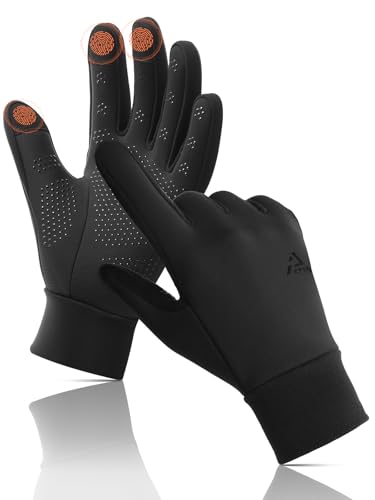
The Aerynx X2 Winter Gloves add more weather protection than a basic running liner. The manufacturer describes a three-layer design that combines a wind-blocking middle layer with 320 gsm fleece, a water-repellent exterior, and four-way stretch. It lists the gloves as most suitable for roughly 32 to 50 degrees Fahrenheit, while recommending an additional shell below 25 degrees for extended outings. A silicone palm is intended to improve grip on a phone, bottle, or handlebars, and conductive yarn on the thumb, index finger, and middle finger gives more touchscreen access than gloves with only two conductive fingertips.
This is a compelling option for runners who often start before dawn, cover exposed routes, or feel the effect of wind more than runners in sheltered neighborhoods. The added layers may help retain warmth, but they can also feel less airy than a thin polyester-spandex running glove during a fast tempo run. Its water-repellent construction is appropriate for light rain, road spray, and brief snow exposure, not prolonged rain or saturated snow. The close-fitting stretch design appears appropriate for running and can be used beneath a larger shell glove when conditions are harsher. As with any fitted glove, compare hand measurements with the manufacturer’s sizing guidance before purchasing.
Pros:
- Three-layer construction provides more protection than a simple liner
- Manufacturer lists a wind-blocking mid-layer and 320 gsm fleece
- Water-repellent outer can help in light rain or snow
- Conductive yarn on three fingers supports phone and GPS use
- Silicone palm pattern can improve grip
Cons:
- May feel too warm for mild-weather or high-intensity runs
- Water-repellent construction is not waterproof for sustained exposure
- For extended outings below 25 degrees Fahrenheit, the manufacturer recommends layering with a shell
For runners who need more than a lightweight glove but do not want the bulk of a full mitten, the X2 offers a useful middle ground. Its stated weather protection and manufacturer-provided temperature guidance make it particularly relevant for blustery runs around freezing, provided expectations remain realistic in heavy precipitation.
Best for: Windy, damp, or near-freezing runs where a thin liner does not provide enough protection.
RIGWARL Convertible Running Gloves
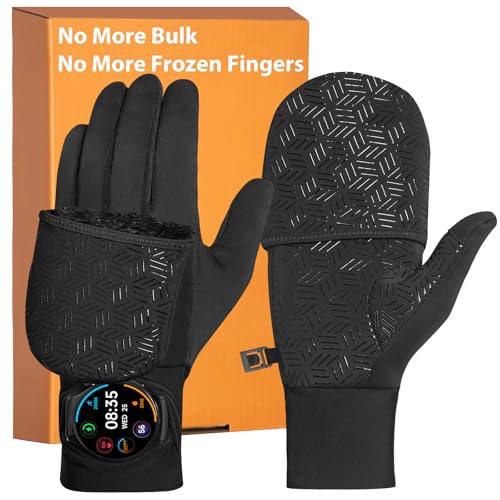
The RIGWARL Convertible Running Gloves are designed for runners who need to adapt to changing conditions without packing a second pair. They function as full-finger gloves when you need dexterity, then the flip-top can cover the fingers to create a mitten-style layer when the wind picks up or hands cool down. The design also includes a watch opening intended to make it easier to check training data without repeatedly pulling a cuff down. A plush fleece lining, water-resistant coating, silicone grip areas, reflective print, and conductive fingertips create a feature set aimed at longer runs, dog walks, hiking, and other outdoor movement in variable weather.
The mitten cover is the key difference here. Keeping fingers together can reduce heat loss more effectively than a standard five-finger glove, while the flap can be folded back for a phone, zipper, or hydration task. That versatility may be worth the added material for runners whose hands become cold after stopping at lights or slowing their pace. Still, a convertible design is inevitably more complex and bulkier than a plain liner glove. The water-resistant finish may help with light rain or snow, but it should not be viewed as a waterproof barrier. Check whether the watch opening works with your particular watch size and placement before selecting this model.
Pros:
- Convertible glove-to-mitten design adapts to changing warmth needs
- Watch opening can make workout tracking more convenient
- Fleece lining adds insulation without requiring a separate mitten
- Silicone grip areas support handling phones, bottles, and leashes
- Reflective print may help visibility in low-light conditions
Cons:
- More bulk and moving parts than a standard running glove
- Water-resistant coating is not intended for heavy rain
- Watch-window fit may vary with watch size and band placement
This is the most adaptable choice for runners who begin in cold conditions but warm up later, or who frequently encounter wind during a route. It is particularly useful for people who dislike removing gloves to operate a watch. Runners who prioritize the lightest possible feel may prefer a simpler fleece glove instead.
Best for: Women who run in variable weather, get cold fingers easily, or want mitten warmth without giving up access to a running watch.
HEAD Women’s Touchscreen Running Gloves

HEAD Women’s Touchscreen Running Gloves take a straightforward approach to cool-weather training. The listed four-way stretch fleece is intended to provide light warmth while allowing the fingers and palm to move freely. A high-grip silicone palm can help with small items, while the elasticized, tapered wrist is designed to retain warmth at the cuff. The gloves also include a reflective logo and are described as suitable both on their own and as liner gloves beneath a larger outer pair. That dual-purpose construction is useful for runners who need one pair for fall runs, winter layering, and everyday walking.
For women who prefer a familiar fleece feel and do not need water-repellent fabric or a convertible mitten flap, these gloves are a practical, lower-complexity option. Stretch fleece can be comfortable for continuous movement and is generally easier to layer than a heavily insulated glove. At the same time, fleece alone does not offer the wind protection of a dedicated wind-blocking membrane. These gloves are likely most appropriate for dry, cool conditions, neighborhood runs, treadmill-to-outdoor transitions, and active errands. They may also be useful as a next-to-skin layer under ski mittens or shell gloves, but buyers should make sure that a second glove is roomy enough to avoid compressing the fleece.
Pros:
- Women’s sizing helps provide a more targeted fit option
- Four-way stretch fleece supports mobility
- Tapered, elasticized wrist helps reduce drafts
- High-grip silicone palm supports secure handling
- Can be worn alone or used as a liner
Cons:
- No stated water-resistant or waterproof treatment
- Fleece may offer limited protection on exposed windy routes
- Reflective logo provides only a small visibility detail
The HEAD gloves are a good match for runners who want uncomplicated fleece coverage with grip and layering flexibility. They are not intended to solve every cold-weather problem, but they can work well for routine dry-weather training and as a foundational layer when winter conditions become more demanding.
Best for: Women looking for simple fleece running gloves for cool, dry weather and occasional layering.
Unigear Lightweight Running Gloves

The Unigear Lightweight Running Gloves are a budget-oriented liner-style option for cool runs, walks, cycling, and commuting. The manufacturer describes a soft interior, four-way stretch fabric, and moisture-wicking properties intended to retain body warmth without creating excessive bulk. Conductive fabric is placed on the thumbs and forefingers for touchscreen use, and silicone printing across the palms adds grip for a phone or other gear. Their close-fitting construction is designed to work independently in fall and early winter or underneath ski gloves, heavier cycling gloves, and other outer layers when conditions require more protection.
At their listed price, these gloves are particularly relevant for runners who want a basic pair to keep in a coat pocket, running belt, or car. They address core needs well: lightweight warmth, dexterity, touchscreen operation, and a non-slip palm. However, the liner profile also sets their limitation. There is no stated water-resistant treatment, dedicated wind-blocking layer, or substantial insulation for exposed deep-winter runs. The trim fit can be valuable under mittens, but shoppers should use the size chart rather than assume a unisex medium will fit every hand. They are most useful for dry weather and active movement, where breathability is often more important than maximum insulation.
Pros:
- Affordable lightweight option for running and daily outdoor activity
- Four-way stretch supports a close, mobile fit
- Touchscreen material on thumb and forefinger
- Silicone palm print improves grip
- Thin enough to use as a liner under larger gloves or mittens
Cons:
- No stated water-resistant or waterproof treatment
- Limited weather protection for strong wind or deep cold
- Unisex sizing requires careful measurement
These Unigear gloves fit the role of an accessible, versatile running liner rather than a winter expedition glove. They can be a sensible value for mild conditions and can remain useful later in the season as part of a layered handwear system. Choose a wind-blocking outer layer when routes are exposed.
Best for: Budget-minded women who need a lightweight running glove for dry cool weather, walking, and layering.
Aegend Lightweight Winter Gloves

Aegend Lightweight Winter Gloves combine a 94% polyester and 6% spandex fabric blend with a soft thermal lining for runners who want a stretchy, close-fitting glove that can also serve in day-to-day use. The manufacturer describes the material as breathable and moisture-wicking, with wind-resistant characteristics and a thin, flexible feel. Silicone lines cover the palm and fingers to improve grip and abrasion resistance, which may be useful for runners carrying a bottle, pushing a stroller, walking a dog, or moving between running and cycling. Touchscreen materials on the thumb and index finger allow basic device use without exposing bare hands.
This pair earns a place because the silicone grip extends beyond the palm, and because it is designed to work as either a standalone light winter glove or an under-layer for thicker handwear. That makes it suitable for runners who have several outdoor hobbies and do not want separate gloves for every activity. It is available in multiple color options, though color should not outweigh fit and weather suitability. The manufacturer lists small, medium, and large sizes, so people with especially small or large hands may have fewer fit choices than with brands offering more size increments. Like other thin thermal liners, it is more appropriate for movement than for long inactive periods in low temperatures.
Pros:
- Stretch polyester-spandex fabric supports a flexible fit
- Soft thermal lining adds warmth without a bulky profile
- Silicone coverage on palm and fingers may improve grip
- Touchscreen-compatible thumb and index finger
- Can function as a standalone glove or layering piece
Cons:
- Only three listed sizes may limit fit precision
- Thin construction is not ideal for severe cold or stationary outdoor use
- No stated water-resistant coating for wet runs
The Aegend gloves are a versatile choice for runners who want noticeable grip and a soft, fitted feel without moving to a bulky insulated glove. They are most appropriate for dry, active use and can extend into colder conditions when paired with a shell mitten or roomier outer glove.
Best for: Women who want a grippy, stretchy lightweight glove for running, dog walking, cycling, and layering.
ihuan Winter Warm Running Gloves

The ihuan Winter Warm Running Gloves are thin thermal liners with features aimed at runners and walkers who encounter occasional damp weather. Their listed construction includes a nylon knit outer layer, a soft fine-fiber lining, elastic cuffs, conductive thumb and index fingertips, and silicone dots across the palm. The manufacturer describes the outer material as water-resistant and specifically notes that the gloves are not intended for underwater use or heavy rain, with some seepage possible at the seams. This is an important limitation, but the light water resistance may still be useful for a brief drizzle, snow flurries, or wet surfaces during a routine run.
The glove’s thin design is its main advantage for active use. It should allow fingers to bend naturally and can be placed under ski or snowboarding gloves when more insulation and waterproof protection are needed. That makes it a practical choice for runners whose conditions vary from cool fall days to occasional wet winter outings. The silicone dots can improve handling of a phone or bottle, but they do not turn the glove into a specialized trail-running or work glove. Since water resistance is not the same as waterproofing, runners planning long routes in steady rain should use a waterproof shell mitten instead. Verify sizing and intended use before ordering, especially when choosing a liner for another glove.
Pros:
- Thin, flexible profile supports running and other active pursuits
- Water-resistant material may help in brief light moisture
- Soft lining and elastic cuff add light warmth and draft protection
- Conductive thumb and index finger support touchscreen use
- Can be used as a liner beneath ski or snow gloves
Cons:
- Not waterproof for prolonged rain or saturated snow
- Seams may allow some moisture through
- Light insulation may be insufficient for very cold, windy runs alone
These gloves are most useful as a flexible, light-weather option with the added benefit of water-resistant material. They offer more wet-weather consideration than a basic fleece liner, but they still need a protective shell for sustained precipitation. They are a practical choice for runners who value layering flexibility.
Best for: Women who want thin running gloves for light rain or snow flurries and a liner for snow-sport mittens.
How to Choose Running Gloves for Winter
Match Warmth to Your Pace and Weather
Running generates heat, so gloves that feel comfortable before leaving the house may become too warm after 10 to 15 minutes. Lightweight stretch gloves work well for many runners in cool weather because they trap a small amount of warmth while allowing sweat to escape. For windier routes, choose a glove with a wind-resistant outer layer or carry a shell mitten that can be added when needed.
Cold sensitivity varies. If your fingers become numb easily, prioritize a fleece lining, a longer cuff, or a convertible mitten design. If you run warm, a thin moisture-wicking glove may be more comfortable and less likely to become damp.
Do Not Confuse Water-Resistant With Waterproof
Water-resistant gloves can shed light rain, road spray, or a brief snow shower. They are not designed to keep hands dry during prolonged rain or repeated contact with wet snow. Once a lightweight glove becomes soaked, its insulation value can drop and cold hands become more likely.
For wet winter conditions, a useful system is a thin wicking glove underneath a waterproof shell mitten. The liner keeps some dexterity available, while the shell provides the actual weather barrier. Remove the shell once your hands warm up to avoid overheating.
Look for Grip Where You Actually Need It
Silicone palm patterns are helpful when holding a phone, water bottle, trekking pole, leash, or stroller handle. A full palm pattern may provide a more secure hold than small dots, though neither is a replacement for slowing down when surfaces are icy. If you frequently use a phone to change music or check directions, look for both grip and reliable touchscreen panels.
Consider Cuff Length and Layering
A tapered or extended cuff helps close the gap between a glove and jacket sleeve. This can make a meaningful difference on windy days, especially when sleeves ride up during arm swings. For layering, choose a glove that is thin enough to fit beneath an outer mitten without compressing your fingers or restricting circulation.
Compression can make hands colder, not warmer. If you intend to layer, size both gloves with enough space to move your fingers comfortably.
Check the Size Chart Before Ordering
Women-specific gloves may offer a more targeted fit, but sizing still varies by brand. Unisex gloves can work well, particularly for layering, though hand length, palm circumference, and finger length should be checked against the manufacturer’s chart. A close fit is desirable for dexterity, but it should not cause tightness across the knuckles or fingertips.
Common Mistakes When Buying Running Gloves
- Buying heavy gloves for every run: Thick insulation can trap sweat and become uncomfortable during high-output activity.
- Ignoring wind: A moderate temperature can feel much colder on open paths, bridges, waterfronts, and exposed trails.
- Expecting a touchscreen glove to work like bare fingers: Conductive panels can be convenient, but responsiveness varies with phone screen protectors, moisture, and fit.
- Using water-resistant gloves in sustained rain: Light precipitation protection is different from a fully waterproof shell.
- Choosing a size that is too tight: Restricted circulation can lead to colder hands and reduced comfort.
- Forgetting a backup plan: Packable shell mittens or hand warmers can be useful for long runs, races, or rapidly changing weather.
Frequently Asked Questions
What temperature is cold enough for running gloves?
There is no single temperature because wind, humidity, pace, sunlight, and individual cold sensitivity all matter. Many runners reach for lightweight gloves when temperatures feel cool enough to make their hands uncomfortable at the start of a run. Add more protection when there is wind, precipitation, or a slower planned pace.
Are mittens warmer than running gloves?
Usually, yes. Mittens allow fingers to share warmth, which reduces exposed surface area. The trade-off is less dexterity. Convertible glove-mitten designs can be useful because they provide finger access for a watch or phone, then add mitten coverage when warmth becomes the priority.
Should running gloves be tight or loose?
They should fit close enough to avoid bunching and preserve dexterity, but not so tightly that they restrict circulation or press fingertips against the ends of the glove. If you plan to layer them beneath mittens, leave enough room for both layers to move naturally.
Can I use ski gloves for running?
Ski gloves can work during very cold, slow, or wet outings, but they are often too warm and bulky for normal running. A thin liner glove plus a packable shell mitten is often more adaptable because you can adjust your coverage after warming up.
How should I wash running gloves?
Follow the care label first. Many lightweight synthetic gloves can be hand-washed or gently washed in cool water, then air-dried. Avoid high dryer heat unless the manufacturer specifically permits it, since heat can affect stretch fibers, coatings, and touchscreen materials.
Final Recommendations
The best running gloves for women depend on how you run and what winter looks like where you live. Choose the TrailHeads Women’s Running Gloves for a balanced women-specific option built around aerobic activity. The Nike Lightweight Tech Running Gloves are better suited to runners who prioritize low bulk and moisture management in mild conditions.
For more wind and light moisture protection, consider the Aerynx X2 Winter Gloves. The RIGWARL Convertible Running Gloves are the more adaptable choice when a route changes from tolerable to cold. The HEAD Women’s Touchscreen Running Gloves, Unigear Lightweight Running Gloves, and Aegend Lightweight Winter Gloves each offer practical lightweight coverage for dry active use. For occasional drizzle or snow flurries plus liner versatility, the ihuan Winter Warm Running Gloves are worth considering. Choose enough protection for the forecast, but avoid so much insulation that your hands overheat before the run is over.