A snowboard jacket has to do more than keep you warm in a parking lot. It needs to block wind on the lift, manage snow when you fall, allow enough shoulder and arm movement for riding, and release excess heat when your activity level rises. The right balance depends on where you ride, how cold you tend to feel, and what you wear underneath.
This guide compares nine women’s snowboard jackets and winter coats with different strengths. Some provide technical features such as powder skirts, underarm vents, and higher waterproof ratings. Others emphasize affordability, adaptable three-in-one construction, inclusive sizing, or crossover use away from the mountain. None is the right choice for every rider, so weather protection, fit, ventilation, and intended use should guide the decision.
Quick Answer
The Roxy Dawnrae Parka offers the most complete snowboard-specific feature set among these nine options. Its 10K waterproof construction, taped seams, body-mapped insulation, underarm vents, powder skirt, wrist gaiters, and lift-pass pocket address the conditions riders commonly encounter at a resort.
For wetter conditions, the GSOU SNOW Insulated Snowboard Jacket lists a higher 15,000 mm waterproof rating and combines it with pit vents, a powder skirt, and generous storage. Riders who want a modular jacket for changing weather can consider the MAGCOMSEN 3-in-1 Jacket, while the Wantdo Plus-Size 3-in-1 Jacket provides a similar layering system in sizes listed from 1X through 5X.
- Best snowboard-specific balance: Roxy Dawnrae Parka
- Best for wet mountain conditions: GSOU SNOW Insulated Snowboard Jacket
- Best modular design: MAGCOMSEN 3-in-1 Snow Jacket
- Best plus-size option: Wantdo Plus-Size 3-in-1 Ski Jacket
- Best budget-oriented insulated option: MOERDENG Softshell Winter Jacket
- Best relaxed everyday snow jacket: MOERDENG Waterproof Ski Jacket
- Best lightweight crossover jacket: Roxy Quinn Puffer
- Best casual winter parka: BINACL Down-Alternative Jacket
- Best neutral-color modular option: MAGCOMSEN Black 3-in-1 Jacket
Women’s Snowboard Jacket Comparison
| Product | Best For | Insulation or Material | Weather Protection | Fit or Layering | Notable Trade-Off |
|---|---|---|---|---|---|
| Roxy Dawnrae Parka | Resort snowboarding | WarmFlight Eco insulation with different weights by area | 10K DryFlight fabric and taped seams | Slim fit; verify room for layers | Less adaptable than a removable-liner jacket |
| GSOU SNOW Insulated Jacket | Wet snow and riders wanting a loose fit | Polyester construction with insulation | 15,000 mm listed waterproof rating | Loose fit suited to layering | Likely bulkier than a trim resort jacket |
| MAGCOMSEN 3-in-1 Jacket | Changing weather and versatile layering | Removable fleece inner jacket | 5,000 mm listed waterproof shell | Three wearable configurations | No listed powder skirt or pit vents |
| Wantdo Plus-Size 3-in-1 Jacket | Plus-size riders | Removable insulating liner | 5,000 mm listed waterproof exterior | Sizes listed from 1X to 5X | Fewer technical resort details are specified |
| MOERDENG Softshell Winter Jacket | Budget-conscious occasional use | Warm, breathable materials | Waterproof and windproof claims; no rating listed | Adjustable cuffs and removable hood | Limited technical specifications |
| MOERDENG Waterproof Ski Jacket | Casual snow sports and winter wear | Fluff lining and softshell exterior | Waterproof coating and wind-blocking adjustments | Relaxed fit | No published waterproof rating or ventilation system |
| Roxy Quinn Puffer | Mild riding days and town-to-mountain use | WarmFlight Eco insulation | 10K DryFlight and PFC-free water-repellent treatment | Stretch fabric supports movement | No listed powder skirt, wrist gaiters, or pit vents |
| BINACL Down-Alternative Jacket | Casual winter use with occasional snow activities | Down-alternative cotton padding | Water-repellent and wind-resistant exterior | Long, shaped cut | Not designed like a technical snowboard shell |
| MAGCOMSEN Black 3-in-1 Jacket | Neutral styling and year-round versatility | Detachable fleece liner | 5,000 mm listed waterproof shell | Shell and fleece can be separated | Functionally similar to the Lake Blue version |
How We Chose These Picks
These recommendations were assessed using the product information supplied by each manufacturer or seller. No first-hand testing is claimed. The main criteria were waterproofing, insulation, wind protection, ventilation, mobility, snow-blocking features, pocket design, layering flexibility, fit information, and suitability for actual snowboard use.
A strong snowboard jacket is not simply the thickest coat. Riders generate heat, particularly on long runs or while walking across a base area, so breathability and venting can be as important as insulation. Features such as a powder skirt, wrist gaiters, adjustable cuffs, and a well-fitting hood also help prevent wind and loose snow from entering.
The nine products were retained because they address different budgets, body types, climates, and levels of use. The list includes technical resort jackets, modular systems, affordable insulated coats, and casual crossover pieces. A water-repellent parka can work for light recreational use, but it should not be treated as equal to a jacket with a published waterproof rating and snowboard-specific snow barriers.
Our Top Picks
The jackets below are organized by intended use rather than ranked from first to ninth. Compare the waterproof construction, insulation, ventilation, fit, and snow-specific features before deciding. A dedicated resort rider may benefit from a powder skirt and pit vents, while an occasional rider may place more value on price, removable layers, or a jacket that also works for everyday winter wear.
Roxy Women’s Dawnrae Parka Jacket

The Roxy Dawnrae is the most snowboard-focused women’s jacket in this selection. Its DryFlight fabric has a listed 10K waterproof rating, and taped seams help limit moisture entry where fabric panels join. WarmFlight Eco insulation is distributed at 120 grams in the body, 100 grams in the sleeves, and 60 grams in the hood. That arrangement puts more insulation around the torso while reducing bulk around moving areas. Mesh-lined underarm vents provide a way to release heat during active runs. The slim silhouette may appeal to riders who prefer a closer shape, but buyers should check the size chart and account for the base and midlayers they plan to wear.
Mountain-oriented details distinguish the Dawnrae from general winter coats. It includes a fixed powder skirt, a jacket-to-pant connection, internal stretch wrist gaiters, a sleeve pass pocket, and dedicated media and goggle storage. The three-way adjustable hood and removable faux-fur trim let riders adapt its coverage and appearance. Its main limitation is that the insulation cannot be removed, so it is less versatile across warm weather than a three-in-one design. Riders who run hot should make regular use of the underarm vents and avoid overly thick midlayers.
Pros:
- 10K waterproof DryFlight construction with taped seams
- Body-mapped WarmFlight Eco insulation limits unnecessary bulk
- Mesh-lined underarm vents help manage heat
- Fixed powder skirt, wrist gaiters, and jacket-to-pant connection improve snow protection
- Includes lift-pass, goggle, media, and hand-storage options
Cons:
- Slim fit may leave limited space for thick layers unless sizing is carefully checked
- Fixed insulation is less adaptable than a removable liner
The Dawnrae offers the strongest balance of weather protection, ventilation, insulation, and resort-specific details in this group. It is most appropriate for riders who want an integrated insulated jacket rather than a shell-and-liner system. Confirm the listed size and color before ordering, since the supplied product listing refers to a particular variant.
Best for: Resort riders who want an insulated, fitted jacket with a complete set of snowboarding features.
GSOU SNOW Women’s Insulated Snowboard Jacket

The GSOU SNOW jacket combines an insulated polyester build with a listed 15,000 mm waterproof rating, the highest published rating among these selections. Its loose fit should provide more room for movement and layering than a trim jacket, although buyers should use the listing’s size chart rather than assume their usual size will fit. A powder skirt helps block snow at the waist, while storm cuffs with thumbholes reduce gaps between sleeves and gloves. The stand-up hood and collar add coverage in windy lift conditions. Underarm openings use zippers and mesh, allowing riders to vent built-up warmth without exposing the interior directly to snow.
Storage is another practical strength. Two zippered chest pockets, two zippered hand pockets, two internal security pockets, and an arm pocket provide places for a pass, phone, goggles, and small accessories. This jacket is a sensible candidate for riders who prioritize wet-weather protection and a roomier shape. The trade-off is bulk. An insulated loose-fitting jacket is not likely to pack as easily as a lightweight shell or low-profile puffer. The product is also marketed to both men and women, making careful measurement especially important for sleeve length, torso room, and hem placement.
Pros:
- 15,000 mm listed waterproof rating is suited to wetter snow conditions
- Underarm zip vents support active temperature management
- Powder skirt and thumbhole storm cuffs help keep snow out
- Loose fit provides space for layering and movement
- Seven-pocket layout offers ample on-mountain storage
Cons:
- Roomy insulated design may feel bulky for travel or mild-weather riding
- Unisex marketing makes size-chart checks particularly important
This GSOU SNOW model is the more weather-oriented alternative for riders who prefer a relaxed shape. Its waterproof rating, venting, and snow barriers are useful mountain features, while the extra pockets reduce reliance on a backpack. It may be more jacket than needed for short, mild-weather sessions.
Best for: Riders expecting wet snow who want a loose fit, pit vents, and substantial storage.
MAGCOMSEN Women’s 3-in-1 Snow Jacket

The MAGCOMSEN 3-in-1 combines a waterproof outer shell with a removable fleece inner jacket. Both pieces can be worn separately, or they can be connected for colder and wetter conditions. This arrangement is useful for riders whose winter activities extend beyond the ski area. The shell has a listed 5,000 mm waterproof rating, while an adjustable detachable hood, stand collar, adjustable cuffs, and covered front closure help limit wind exposure. The fleece provides warmth without requiring the wearer to use the complete system on every outing. Four pockets include two zippered hand pockets, a chest pocket, and an internal pocket.
Its adaptability is the main reason to choose this jacket over a fixed-insulation model. The shell can serve as a rain or snow layer in milder weather, and the fleece can function as a casual midlayer. When combined, the system offers a straightforward setup for occasional snowboarding, hiking, and everyday winter use. Serious riders should note that the supplied specifications do not mention a powder skirt, wrist gaiters, lift-pass pocket, or underarm vents. A 5,000 mm rating can handle ordinary snow exposure, but riders who regularly encounter prolonged wet precipitation may prefer a higher-rated technical jacket.
Pros:
- Shell and fleece can be worn together or separately
- Published 5,000 mm waterproof rating
- Adjustable hood and cuffs help reduce wind entry
- Four secured storage pockets
- Useful beyond snowboarding for hiking and casual winter wear
Cons:
- No listed powder skirt or wrist gaiters
- No underarm ventilation for releasing heat
This MAGCOMSEN is best viewed as a versatile winter system that can also handle recreational snowboarding. Its removable fleece broadens its usefulness across seasons, but dedicated riders may miss technical snow barriers and ventilation. Check the product measurements with both the shell and fleece in mind.
Best for: Occasional riders who want one modular jacket for snowboarding, hiking, rain, and everyday winter use.
Wantdo Women’s Plus-Size 3-in-1 Ski Jacket

The Wantdo 3-in-1 is designed to offer more inclusive sizing, with the manufacturer listing options from 1X through 5X. It combines a 5,000 mm waterproof outer jacket with a removable insulating liner, creating three possible configurations. Wearing both layers provides the most warmth and weather protection, while the outer shell can be used alone in rain or milder snow. The liner can also serve as a separate jacket in dry conditions. Its 150D mechanical-stretch fabric is described as resistant to water and grease, and the design uses a detachable hood, adjustable drawstring, and elastic cuffs to reduce wind intrusion.
This is a practical alternative for riders who have difficulty finding modular snow jackets in a broad plus-size range. Zip-secured pockets provide storage for small essentials, and the removable layers make it easier to adjust for changing conditions or different activity levels. As with any three-in-one system, the combined layers may feel bulkier than a purpose-built low-profile snowboard jacket. The specifications also do not identify underarm vents, a powder skirt, or wrist gaiters. Buyers should compare body measurements to Wantdo’s current chart and allow enough space for movement without leaving the jacket so loose that the hem or cuffs admit snow.
Pros:
- Sizes are listed from 1X through 5X
- Three-in-one construction supports different weather conditions
- 5,000 mm listed waterproof outer fabric
- Detachable hood and adjustable features help manage wind exposure
- Zip-secured pockets keep small items contained
Cons:
- No listed powder skirt, pit vents, or integrated wrist gaiters
- Combined shell and liner may feel bulky during active riding
The Wantdo is the clearest plus-size choice in this group and offers more seasonal flexibility than a fixed-insulation coat. It is better suited to recreational riding and mixed winter use than highly technical mountain demands. Fit should be checked in a riding stance, with arms extended and intended layers underneath.
Best for: Plus-size riders seeking a removable-liner jacket in a listed 1X to 5X size range.
MOERDENG Women’s Waterproof Softshell Winter Jacket

This MOERDENG jacket is an affordable insulated softshell-style option intended for snow sports, hiking, and general winter activity. The seller describes the exterior as waterproof and windproof, but no numerical waterproof or breathability rating is provided. That makes it difficult to compare its moisture protection directly with 5K, 10K, or 15K jackets. A detachable hood allows the coverage to be adjusted, while hook-and-loop cuffs help close the sleeves around gloves. Zippered pockets keep a phone, keys, and other small items more secure than open hand pockets. Reinforced stitching is also listed as a durability feature.
The jacket’s role in this guide is primarily budget-oriented. It covers the basic needs of warmth, wind protection, hood coverage, adjustable cuffs, and secure storage without adding a long list of specialized resort components. That may be sufficient for a beginner taking occasional lessons or someone using the same coat for hiking and everyday wear. However, the lack of a published waterproof rating, powder skirt, pit vents, and wrist gaiters makes it a less certain choice for sustained wet snow or frequent falls. Layering should remain moderate because no dedicated ventilation openings are identified.
Pros:
- Accessible option for occasional winter recreation
- Detachable hood adapts to changing conditions
- Adjustable cuffs help close gaps around the wrists
- Zippered pockets secure small essentials
- Suitable for mixed use, including hiking and casual winter wear
Cons:
- No numerical waterproof or breathability rating is supplied
- No listed powder skirt, wrist gaiters, or underarm vents
This MOERDENG model covers the fundamentals at the value-oriented end of the selection. It makes the most sense for occasional snowboarding in ordinary conditions, especially when the same jacket will see everyday use. Frequent riders or those expecting wet storms should consider a more fully specified alternative.
Best for: Beginners and occasional riders looking for a low-cost insulated winter jacket with basic adjustable features.
MOERDENG Women’s Waterproof Ski Jacket

The MOERDENG Waterproof Ski Jacket uses a coated, quick-drying softshell exterior and a warm fluff lining. Its relaxed fit should offer more room for a base layer or light fleece than a slim jacket, although the manufacturer recommends choosing according to its US sizing information. Adjustable hook-and-loop cuffs, an internal drawcord hem, and a detachable adjustable storm hood help reduce wind penetration. The seller describes the zippers and outer fabric as designed to resist rain and snow, but it does not provide a numerical waterproof rating. This means the jacket is easier to assess by its basic construction than by direct technical comparison.
Compared with the other MOERDENG model, this version emphasizes a relaxed cut, fluff lining, drawcord hem, and quick-drying material. It can work for casual downhill use, snowboarding lessons, and everyday winter conditions when a rider wants a simple insulated coat. The roomier shape may also make layering easier for someone who runs cold. On the other hand, no underarm venting, powder skirt, wrist gaiters, or dedicated pass pocket is listed. The fluff lining and lack of vents could become warm during high-output riding, particularly in mild weather.
Pros:
- Relaxed fit provides useful room for layering
- Fluff lining adds insulation for cold-weather use
- Adjustable cuffs, hem, and storm hood help block wind
- Quick-drying coated outer material
- Simple design works for snow sports and daily winter wear
Cons:
- No numerical waterproof rating is provided
- No dedicated venting system is listed
This jacket suits shoppers who prefer a conventional insulated winter coat with a roomier fit. It offers useful adjustments around the hood, wrists, and hem, but its technical limits are less clearly documented. It is more convincing for casual resort days than demanding, wet mountain conditions.
Best for: Recreational riders who want a relaxed, lined jacket with room for light or medium layers.
Roxy Women’s Quinn Puffer Jacket

The Roxy Quinn Puffer blends the appearance and warmth of a puffer with weather-resistant materials intended for mountain and urban use. It uses recycled stretch fabric with 10K DryFlight waterproof technology and a PFC-free durable water-repellent treatment. WarmFlight Eco insulation supplies low-bulk synthetic warmth, while the stretch exterior should be less restrictive than a rigid casual puffer. A concealed hood can be deployed when conditions change. Two zippered hand-warmer pockets provide basic storage, and the front closes with YKK zippers and snaps. Roxy also includes its HydroSmart fabric technology, which is intended to reduce discomfort associated with cold, dry conditions.
The Quinn is a useful crossover option for riders who want one jacket for mild mountain sessions, travel, and daily winter wear. It offers a stronger published waterproof rating than many casual puffers, but its listed features are less snowboard-specific than those of the Dawnrae. There is no identified powder skirt, jacket-to-pant connector, wrist gaiter, lift-pass pocket, or underarm vent. Those omissions matter for deep snow, frequent falls, and warm spring riding. The Quinn therefore fits best where mobility, appearance, and off-mountain versatility take priority over a complete technical resort setup.
Pros:
- 10K DryFlight weather protection
- Recycled stretch fabric supports movement
- WarmFlight Eco insulation provides low-bulk warmth
- Concealed hood keeps the design adaptable
- Works as a mountain-to-town crossover jacket
Cons:
- No listed powder skirt or wrist gaiters
- No underarm ventilation is specified
The Quinn is better treated as a weather-capable puffer than a fully equipped snowboard jacket. It can handle casual riding and everyday winter use while avoiding the appearance of a highly technical shell. For frequent resort days or deeper snow, the Dawnrae provides more useful riding features.
Best for: Riders who want a low-bulk puffer for mild snowboard days, winter travel, and everyday wear.
BINACL Women’s Thickened Down-Alternative Jacket
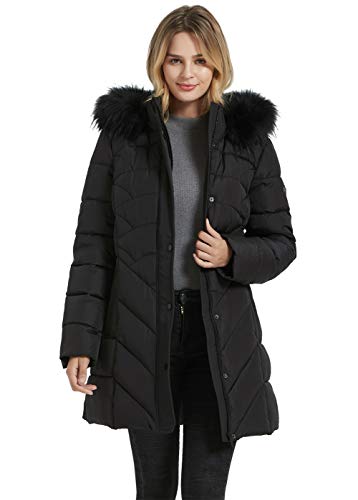
The BINACL jacket is a long, padded winter parka rather than a technical snowboard shell. It uses down-alternative cotton padding, a wind-resistant and water-repellent outer fabric, elastic knit cuffs, and a deep detachable hood. The faux-fur trim is fixed to the hood and cannot be removed separately. Its longer cut extends across the waist, hips, and upper thighs, which can provide useful coverage during casual winter use. Two lined outer pockets warm the hands, while an internal security pocket stores valuables. The manufacturer lists a broad range of sizes and colors, but recommends comparing measurements and other listing information before choosing.
This parka is included for shoppers who prioritize everyday warmth and styling but may snowboard only occasionally. Its water-repellent finish can help with light snow, yet water repellency should not be confused with the rated waterproof construction found on technical resort jackets. The long, shaped cut could also affect crouching or unrestricted leg movement, depending on the wearer’s proportions. With no powder skirt, pit vents, pass pocket, or specified waterproof membrane, it is not the strongest choice for wet storms or repeated days on the mountain. Care is manageable, though the hood should be removed and hand-washed to protect the faux fur.
Pros:
- Long cut provides additional torso and upper-leg coverage
- Down-alternative padding offers everyday winter insulation
- Elastic knit cuffs help reduce drafts
- Detachable deep hood and three practical pockets
- Machine-washable body according to the supplied care instructions
Cons:
- Water-repellent rather than technically rated waterproof
- Long shaped fit may limit mobility for some riders
The BINACL works best as a casual winter parka that can cover a short, fair-weather snow outing. Its warmth and longer coverage are useful around town, but riders should not expect the weather protection or mobility of a dedicated snowboard jacket. The separate hood-care instructions also add a maintenance step.
Best for: Everyday winter wear and occasional light snow activity where technical resort features are not essential.
MAGCOMSEN Women’s Black 3-in-1 Snow Jacket
This black MAGCOMSEN model offers the same basic three-in-one approach as the Lake Blue listing: a 5,000 mm waterproof outer jacket paired with a removable fleece liner. The components can be combined for cold and snow, or worn independently when conditions are milder. The shell includes a detachable hood with an adjustable drawstring, adjustable cuffs, a stand collar, and a protected front closure intended to reduce wind entry. Two zippered hand pockets, one zippered chest pocket, and one internal pocket provide storage for a phone, cards, and small travel items. Its neutral color may also be easier to coordinate with different snow pants and casual clothing.
There is little functional reason to buy both MAGCOMSEN versions, but offering the separate black listing can help shoppers who prefer a neutral jacket or need the specific size available through this product page. The modular construction remains useful for snowboarding, hiking, camping, and travel. Its limitations are also unchanged. The specifications do not identify a powder skirt, underarm vents, wrist gaiters, or a dedicated lift-pass pocket. Riders who choose it should rely on well-fitted snow pants and careful layering to compensate for the simpler resort feature set.
Pros:
- Removable fleece and shell create three wearing options
- 5,000 mm listed waterproof protection
- Neutral black exterior works for resort and casual settings
- Detachable hood and adjustable cuffs help manage wind
- Four pockets provide practical storage
Cons:
- No listed powder skirt or integrated wrist gaiters
- Lacks underarm vents for high-output riding
Choose this version over the Lake Blue model primarily for color, size availability, or current price. It provides the same adaptable fleece-and-shell system and the same technical compromises. For occasional riders who also hike or travel, that versatility may matter more than specialized snowboard details.
Best for: Shoppers who want a neutral black three-in-one jacket for recreational snowboarding and varied winter use.
How to Choose the Best Snowboard Jacket for Women
Start With Your Typical Snow Conditions
Waterproofing becomes more important in wet snow, sleet, and long periods of precipitation. A waterproof rating is commonly expressed in millimeters. Within this group, ratings range from 5,000 mm to 15,000 mm where published. A higher number generally indicates greater resistance to water pressure, but the rating is only part of the jacket’s performance.
Seam construction, zipper design, hood fit, cuffs, and hem protection also affect how dry a jacket keeps its wearer. Taped seams help prevent moisture from entering through stitching. A powder skirt can block snow pushed upward during a fall, and wrist gaiters reduce gaps around gloves.
Products without a published rating are harder to compare. A seller’s use of the word waterproof does not reveal the test method, waterproof level, or how long the protection will last. Likewise, a water-repellent casual coat may shed light snow but should not be assumed to withstand sustained wet weather.
Match Insulation to Activity Level
Insulated snowboard jackets combine an outer weather barrier with synthetic fill or a warm lining. They simplify dressing and can suit riders who become cold on lifts. However, fixed insulation can become too warm during active riding or mild spring conditions.
A shell-and-liner system offers more flexibility. A three-in-one jacket can be worn with both components, the shell alone, or the insulating layer alone. The compromise is that connected layers may feel heavier and bulkier than a streamlined technical jacket.
Do not choose insulation by thickness alone. A thick jacket without vents may trap sweat, and damp base layers can make a rider feel colder later. Riders who run warm may prefer moderate insulation and underarm vents. Those who run cold can use a moisture-managing base layer and breathable fleece under a compatible shell.
Look for Useful Ventilation
Underarm vents, often called pit zips, let heat escape without requiring the jacket to be removed. Mesh-backed openings can also reduce the chance of loose snow entering. Among these picks, the Roxy Dawnrae and GSOU SNOW jacket explicitly list underarm ventilation.
Ventilation matters most for active riders, warmer resort days, and anyone wearing a backpack. A jacket without pit zips can still work, but layering requires more care. Avoid heavy cotton garments beneath it because cotton absorbs moisture and dries slowly.
Check Snowboard-Specific Features
Technical details can make a noticeable difference on the hill:
- Powder skirt: Creates an internal barrier around the waist to limit snow entry.
- Jacket-to-pant connection: Links compatible garments for more continuous coverage.
- Wrist gaiters: Extend over the wrist and reduce gaps between gloves and sleeves.
- Pass pocket: Keeps an RFID lift pass accessible on the sleeve.
- Goggle pocket: Holds goggles or a spare lens without crowding small hand pockets.
- Helmet-compatible hood: Provides coverage without restricting head movement. Compatibility should be verified in the current product specifications.
- Adjustable hem and cuffs: Help close openings while accommodating gloves and layers.
Occasional riders may not need every feature. Frequent snowboarders, riders learning in wet conditions, and those who spend full days at a resort are more likely to appreciate them.
Allow for a Functional Riding Fit
A snowboard jacket should permit a full range of shoulder, elbow, and torso movement. Raise both arms, rotate the shoulders, and bend into a riding stance when evaluating fit. The sleeves should continue to cover the wrists, and the hem should not rise excessively.
A slim jacket can reduce bulk but may leave less room for insulation. A relaxed or loose jacket allows layering and may suit the movement associated with freestyle riding, though excess fabric can feel cumbersome. Product labels such as slim, standard, or relaxed are only starting points. Compare your body measurements and intended layers with the current brand chart.
If measurements fall between sizes, consider the garment’s cut and the thickness of planned layers. Sizing up is not automatically the right answer because an overly loose hood, hem, or cuff can admit wind and snow.
Consider Hood and Collar Design
A hood should adjust closely enough to limit wind without blocking peripheral vision. Riders who wear a helmet should verify that the hood is designed to fit over one. A hood that fits only over a bare head or thin beanie may pull at the shoulders when raised over a helmet.
Detachable hoods are useful for casual use, but attachment points can create more seams and bulk. Fixed hoods are common on technical shells because they are less likely to be misplaced. A tall collar adds lift-line protection, though the interior should feel comfortable against the chin and face.
Evaluate Pocket Placement, Not Just Pocket Count
Hand pockets should remain accessible while wearing gloves. An internal goggle pocket is useful because goggles can be bulky, while a sleeve pass pocket prevents repeated searches at the lift gate. Secure chest or interior pockets are generally better for phones because they keep electronics closer to body warmth.
A large number of pockets can add weight and complexity. Riders who use a backpack may need fewer jacket pockets, while those who prefer to ride without one may value dedicated storage.
Think About Care and Long-Term Water Protection
Always follow the garment’s care label. Dirt, body oils, and detergent residue can interfere with the outer fabric’s ability to shed water. Technical outerwear usually benefits from a detergent made for performance fabrics, but the manufacturer’s instructions take priority.
A durable water-repellent finish may gradually lose effectiveness. If clean fabric begins absorbing surface water rather than forming droplets, the finish may need to be reactivated or renewed using a compatible treatment. This does not repair a damaged waterproof membrane or untaped seam.
Close zippers and hook-and-loop tabs before washing to reduce abrasion. Remove detachable faux fur when instructed, and dry the jacket only using approved settings. Store it clean and fully dry rather than compressed in a damp gear bag.
Common Snowboard Jacket Buying Mistakes
Assuming the Warmest Jacket Is Automatically Better
Heavy insulation can be comfortable on a cold chairlift but uncomfortable during active runs. Excess warmth leads to perspiration, and moisture trapped against the body can cause chilling later. Insulation should match climate, activity level, and layering habits.
Treating Water-Repellent and Waterproof as the Same
A water-repellent finish helps light precipitation bead on the surface. A waterproof jacket uses construction intended to resist greater and more sustained moisture exposure. Published ratings and taped seams provide more useful information than broad marketing terms alone.
Buying a Tight Fit Without Testing Layering Room
A jacket can fit well over a T-shirt and become restrictive over a base layer and fleece. Check shoulder mobility, sleeve reach, and hem position while wearing the layers intended for riding. A close fit should not restrict bending or arm movement.
Ignoring Ventilation
Insulation receives more attention, but ventilation is vital for active use. Riders who overheat easily should prioritize pit zips or choose lighter layers. Opening the main zipper can release heat, but it also exposes the torso directly to wind and snow.
Choosing Casual Styling for Demanding Conditions
A long fashion parka can be warm around town yet lack waterproof ratings, powder protection, mobility, and ventilation. Casual coats are reasonable for brief fair-weather sessions, but regular riders benefit from equipment designed around movement and snow exposure.
Relying Only on a Usual Clothing Size
Fit varies between brands and between slim, standard, relaxed, and unisex designs. Consult the current size chart and compare body measurements. Also review garment length and sleeve measurements when available, especially for a unisex or long-cut jacket.
Frequently Asked Questions
What waterproof rating is suitable for a snowboard jacket?
The appropriate rating depends on precipitation, snow moisture, and how long the jacket will be exposed. A 5,000 mm jacket can be reasonable for ordinary recreational conditions, while 10,000 mm or higher generally provides more margin for wet snow and longer days. Ratings should be considered alongside seam taping, zippers, hood design, cuffs, and a powder skirt.
Should a snowboard jacket fit loose or fitted?
It should fit closely enough to keep the hood, hem, and cuffs functional while still allowing full movement and planned layers. Slim fits reduce excess fabric but offer less layering room. Relaxed fits make layering easier and may support unrestricted movement, though too much volume can feel bulky. The best fit depends on body shape and riding preference.
Is an insulated jacket better than a shell?
Neither is universally better. An insulated jacket simplifies the clothing system and can suit cold riders or consistently cold conditions. A shell provides greater control because insulation can be added or removed separately. Three-in-one jackets offer both approaches but are often bulkier than a dedicated shell.
Can a ski jacket be used for snowboarding?
Yes. Ski and snowboard jackets share many useful features, including waterproof shells, insulation, powder skirts, adjustable hoods, and vents. Snowboarders may prefer a slightly longer or more relaxed cut for movement and coverage, but fit and features matter more than the product label.
Can a regular winter coat be used for snowboarding?
A regular coat may be adequate for a short beginner session in dry, mild conditions. It becomes less suitable when snow is wet, falls are frequent, or the rider is active. Casual coats often lack a powder skirt, wrist gaiters, pit zips, rated waterproofing, and a cut designed for riding movement.
What should be worn under a snowboard jacket?
Begin with a moisture-managing synthetic or wool base layer. Add a breathable fleece or synthetic midlayer when conditions require more insulation. Avoid cotton next to the skin because it retains moisture. The thickness of each layer should reflect the jacket’s insulation and the rider’s activity level.
Are pit zips necessary?
They are not essential for every rider, but they are highly useful for people who run warm, ride actively, or encounter changing temperatures. Pit zips release heat more effectively than relying only on the front zipper. Riders using jackets without vents should choose layers conservatively.
Does a snowboard jacket need a powder skirt?
A powder skirt is especially valuable in deep snow or for beginners who fall frequently. It limits snow entering at the waist. Riders can manage without one by pairing a longer jacket with high-rise snow pants or bibs, but a proper snow barrier offers more reliable coverage.
How often should a snowboard jacket be washed?
Wash it when dirt, oils, odors, or reduced surface water beading indicate that cleaning is needed. Unnecessary washing can increase wear, but allowing heavy buildup to remain can also reduce performance. Follow the care label, use appropriate detergent, and make sure the garment is completely dry before storage.
How many pockets does a snowboard jacket need?
There is no required number. A pass pocket, secure phone pocket, hand pockets, and space for goggles cover common needs. Riders carrying a backpack may prefer a simpler layout. Pocket location, zipper operation with gloves, and security are more important than the total count.
Final Recommendations
Among these nine jackets, the Roxy Dawnrae Parka is the strongest all-around resort option because it combines a 10K waterproof rating with taped seams, underarm vents, a powder skirt, wrist gaiters, and organized mountain storage. The GSOU SNOW Insulated Jacket is better suited to riders prioritizing a 15,000 mm listed waterproof rating, a loose fit, and abundant pockets.
For adaptable layering, either MAGCOMSEN 3-in-1 Jacket provides a removable fleece and 5,000 mm shell. The Wantdo Plus-Size 3-in-1 offers the same general flexibility in a range listed from 1X through 5X. The two MOERDENG jackets are more appropriate for budget-conscious, occasional use, while the Roxy Quinn and BINACL parka make more sense when everyday winter wear is nearly as important as time on the snow.
Before ordering, compare the current size chart with your measurements while accounting for base and midlayers. Then prioritize the features that address your actual riding conditions. Waterproofing and snow barriers matter most in wet weather, ventilation matters during active riding, and modular insulation is useful when one jacket must cover several seasons and activities.