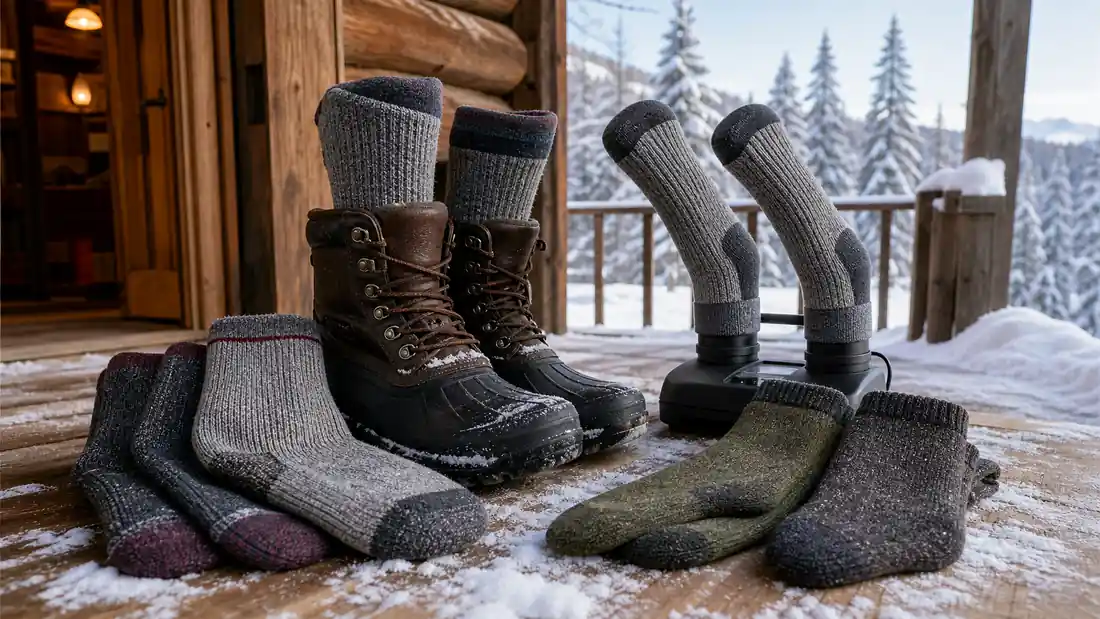
Cold feet can make a winter walk, work shift, or day on the slopes uncomfortable long before the rest of the body feels cold. Choosing the best thermal socks for extreme cold is not just about buying the thickest pair available. A sock that is too bulky can compress inside a boot, restrict circulation, and leave less room for insulating air. The right choice depends on the boot fit, how active you will be, whether conditions are wet, and whether you need a soft cabin sock or a more supportive option for outdoor use.
For low-activity situations such as ice fishing, standing at work, shoveling, or watching outdoor events, a thick brushed thermal sock can provide welcome insulation. For hiking and winter sports, moisture management, cushioning, and a secure fit become more important. Feet that sweat inside heavy socks and non-breathable boots can become cold later, so dry socks and properly fitted boots matter just as much as insulation.
Quick Answer
The Polar Extreme Thermal Hiking Socks are a practical choice for people who need a thick insulated sock for roomy winter boots and general outdoor use. Those who hike or walk actively may prefer the wool-blend construction and footbed cushioning of the Alvada Merino Wool Hiking Socks. For a soft, thick option intended primarily for casual wear, home use, or low-output outdoor tasks, the Busy Socks Winter Warm Thermal Socks offer a lower-cost single-pair option.
Keep in mind that several socks in this guide use the word “heated” in marketplace titles. They are not battery-powered heated socks. Their warmth comes from thick yarns, brushed interiors, cushioning, and thermal loop construction.
Comparison Table
| Product | Best For | Material or Construction | Fit and Layering | Notable Trade-Off |
|---|---|---|---|---|
| Polar Extreme Thermal Hiking Socks | Roomy boots and cold-weather outdoor use | Insulated acrylic blend, reinforced heel and toe | Thick boot-sock profile | May be too bulky for close-fitting footwear |
| Alvada Merino Wool Hiking Socks | Winter hiking and walking | Merino wool blend with cushioned footbed | Crew height for hiking boots | Less plush than fleece-lined thermal socks |
| 35° BELOW Thermal Insulated Socks | Outdoor chores and casual winter wear | Aluminized thermal loops and plush cushioning | Designed for boots or indoor use | Black-only pack may not suit every preference |
| Dickies Heavy Weight Wool Blend Thermal Crew Socks | Work boots and everyday winter wear | Wool blend, full cushioning, arch compression | Structured crew fit | Men’s sizing and less plush than brushed styles |
| Welwoos Thermal Socks | Ski trips, camping, and shared household use | Brushed acrylic blend with full cushioning | Medium and large size options | Very thick construction needs roomy boots |
| Velice Winter Warm Thermal Socks | Women seeking a multi-pair thermal pack | Fleece-lined acrylic blend with cushioning | Listed for women’s US sizes 5 to 10 | May crowd narrow boots or ski boots |
| Busy Socks Winter Warm Thermal Socks | Budget-focused low-activity warmth | Heavily brushed thermal lining | Medium and large sizes available | Sold as one pair |
| HOT FEET Thermal Socks | Men’s casual winter wear and boot use | Brushed acrylic blend with stretch | Listed for men’s sizes 6 to 12.5 | Limited sizing range and thick profile |
How We Chose These Thermal Socks
These picks were selected to cover different cold-weather needs rather than to name one universal winner. We considered the listed fiber blends, thermal lining or loop construction, cushioning, sizing information, intended use, pack quantity, and features that can matter in winter boots, including reinforced wear areas, arch support, and moisture-wicking claims. We also looked for meaningful differences between products, such as wool-blend hiking comfort, structured work-sock support, and plush low-activity warmth.
Manufacturer descriptions can help identify materials and intended use, but they cannot predict how a particular sock will feel inside every boot. Check the product’s current size chart, and make sure your footwear has enough volume for a thicker sock before ordering. If your toes feel crowded after changing socks, use a less bulky pair or a roomier boot.
Our Top Picks for Extreme Cold
Each option below fills a different role, from cushioned wool-blend hiking socks to heavily brushed styles for outdoor chores and indoor comfort. None is automatically right for every climate or activity. Compare the thickness with your boots, consider whether you will be moving or standing still, and prioritize a fit that does not squeeze the foot or calf. Keeping a dry spare pair available is also a sensible plan for long days outside.
Polar Extreme Thermal Hiking Socks
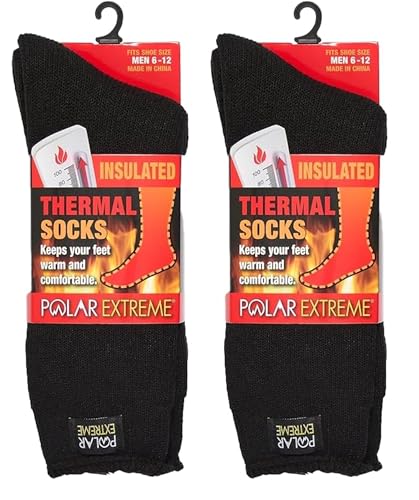
The Polar Extreme Thermal Hiking Socks are a two-pair insulated option designed for cold-weather boots and activities such as hiking, skiing, snowboarding, camping, and general winter wear. The listed fabric is primarily acrylic with elastane for stretch. Acrylic is commonly used in thermal socks because it feels soft and can trap insulating air, while the stretch content helps the sock conform to the foot. Reinforced heel and toe areas are useful details for people who wear heavy boots regularly, where friction can shorten the life of less structured socks.
This is a sensible pick for someone who prioritizes insulation and cushioning over a slim, technical fit. The thick construction may be useful for low-output outdoor tasks, winter walks, and cold trips where boots have adequate interior space. It also comes in a practical two-pack. However, buyers should verify the current listing’s size details carefully, especially because the title and supplied sizing information may not align completely. These socks are likely a better match for roomier boots than for narrow work boots or close-fitting ski boots.
Pros:
- Two pairs included for rotation on multi-day winter use
- Primarily acrylic construction intended for thermal warmth
- Reinforced heel and toe panels for boot wear
- Stretch fibers help support a secure fit
- Designed for a broad range of cold-weather activities
Cons:
- Thick profile may feel crowded in fitted footwear
- Primarily synthetic fabric may not appeal to wool-sock shoppers
- Current sizing information should be checked before purchase
For outdoor users with properly sized winter boots, this pair balances substantial insulation, durability-focused reinforcement, and useful pack quantity. It is less appropriate when boot volume is limited or when a thinner sock is needed for higher-output activity.
Best for: People who need thick insulated socks for roomy hiking boots, snow boots, and cold-weather outdoor tasks.
Alvada Merino Wool Hiking Socks

Alvada Merino Wool Hiking Socks are a three-pair crew-height option for people who plan to walk, hike, or spend active time outdoors in winter. Unlike the heavily brushed acrylic styles in this guide, these socks use a merino wool blend with nylon. Wool is often favored for active cold-weather wear because it can help manage moisture while remaining insulating when damp. The manufacturer also highlights an itch-conscious blend and shaped cushioning in the footbed, both relevant to long periods in hiking boots.
These socks fill a different role from a plush cabin-style thermal sock. Their focus is more on comfort and support while moving, not simply maximum thickness for standing still. The nylon content may add durability and help the socks retain their shape through regular use. They can be a practical middle ground for cold hikes, winter travel, and everyday boot wear. Still, people who are highly sensitive to wool should consider their personal comfort preferences, and anyone facing very wet conditions should pair them with waterproof footwear rather than expecting the sock itself to provide weather protection.
Pros:
- Merino wool blend supports warmth and moisture management
- Nylon blend is intended to improve durability
- Cushioned footbed can add comfort on long walks
- Crew height works well with many hiking boots
- Three-pair pack supports regular rotation
Cons:
- Not as thick and plush as heavily fleece-lined thermal socks
- Wool blends can require more careful laundering than basic cotton socks
- Fit should be confirmed against the current size option
Active winter users often benefit more from a sock that manages moisture and stays comfortable during movement than from the thickest available design. This Alvada pack is a practical choice when hiking comfort, cushioning, and repeat wear matter.
Best for: Winter hiking, walking, travel, and everyday boot wear where moisture management matters.
35° BELOW Thermal Insulated Socks

35° BELOW Thermal Insulated Socks use thermal looping and woven aluminized fibers as part of their insulation approach. According to the manufacturer, the loops are designed to help retain warmth while maintaining a relatively lightweight, breathable feel. The three-pair black pack is marketed for both men and women and is intended for indoor comfort as well as outdoor activities such as camping, hiking, hunting, and snow shoveling. Plush cushioning can be particularly welcome for people who spend time standing on cold ground or hard surfaces.
The aluminized-loop design makes this option notably different from ordinary brushed acrylic socks and conventional wool-blend hiking socks. It may appeal to shoppers who want a thick thermal sock but do not want an excessively heavy, fleece-like feel. Machine-washable and dryer-safe care is convenient for frequent winter use. As with any thermal sock, warmth depends heavily on the rest of the system, including dry feet, insulated boots, and enough toe room. Avoid doubling up thick socks inside a tight boot, since compression can reduce comfort and circulation.
Pros:
- Thermal loop construction with aluminized fibers
- Plush cushioning for boots or indoor wear
- Three-pair pack is useful for regular rotation
- Listed as machine washable and dryer-safe
- Unisex design for several cold-weather activities
Cons:
- Only offered here in a black large pack
- Thick cushioning may not suit close-fitting boots
- Not a substitute for insulated waterproof footwear in wet snow
This is a versatile thermal choice for people who move between house, car, work, and outdoor chores in winter. Its design aims to balance insulation with less bulk than some fully fleece-lined socks, though boot fit remains important.
Best for: Shoveling, camping, winter errands, and casual boot wear where cushioned thermal insulation is useful.
Dickies Heavy Weight Wool Blend Thermal Crew Socks

Dickies Heavy Weight Wool Blend Thermal Crew Socks are built around features that can be useful in work boots and everyday winter footwear: a soft wool blend, heavyweight cushioning through the leg and foot, moisture-wicking fibers, and arch compression. The reciprocated heel and toe construction is intended to improve fit by shaping those high-contact areas more closely around the foot. Compared with looser, brushed thermal socks, this design appears more structured and support-oriented.
For people who work outdoors, walk on concrete, or wear boots for much of the day, that structure may be more helpful than a very fluffy interior. Arch compression can make a sock feel more secure, although people who dislike a close fit around the midfoot should take this into account. The wool blend is also a useful feature for managing everyday moisture. It is not presented as a dedicated expedition sock, and the men’s sizing may limit its appeal for some shoppers, but it is a grounded option for durable cold-weather workwear.
Pros:
- Wool blend adds warmth for daily winter use
- Heavyweight cushioning in the leg and foot
- Moisture-wicking fibers are intended to help keep feet drier
- Arch compression provides added support and stability
- Shaped heel and toe construction supports fit
Cons:
- Men’s sizing may not work for every shopper
- Compression may feel restrictive to those who prefer a relaxed sock
- Less plush than heavily brushed thermal options
These Dickies socks are best viewed as a structured, work-ready winter option rather than a soft sleeping or cabin sock. They make sense for boots with enough room for full cushioning and for users who value support during a long day.
Best for: Men who wear work boots, stand for long periods, or want a supportive wool-blend thermal crew sock.
Welwoos Thermal Socks

Welwoos Thermal Socks are a three-pair unisex pack made primarily from acrylic, with polyester and spandex added for durability and stretch. They have a thick brushed interior and full cushioning, characteristics aimed at creating a warm, soft barrier between the foot and cold-weather footwear. The product is available in medium and large sizes, with the listing providing separate men’s and women’s shoe-size ranges. That sizing choice can be more practical than a single broad size for households with different foot sizes.
These socks are positioned for winter activities including skiing, hiking, trekking, camping, hunting, and daily wear. In practice, the thick brushed design is likely most comfortable in boots with ample volume. They may work well for slower activities, commuting, and warming up after time outdoors, while fast-moving users should monitor moisture and avoid overdressing their feet. The manufacturer calls them “heated,” but there is no stated battery or electric heating component. Their warmth comes from insulation and the brushed lining, not active heat.
Pros:
- Three pairs included for convenient rotation
- Thick brushed interior for thermal comfort
- Full cushioning can improve comfort in roomy boots
- Stretch fabric helps the sock stay in place
- Medium and large size options are listed
Cons:
- Not electrically heated despite the product title
- Bulky profile may not fit well in narrow boots
- High-output activities may require more attention to moisture control
Welwoos is a useful multi-pair option for shoppers who want traditional thick thermal socks in clearly listed size ranges. It is a stronger match for roomy footwear and moderate activity than for narrow performance boots.
Best for: Camping, winter travel, ski-lodge use, and cold-weather boot wear with enough room for a thick sock.
Velice Winter Warm Thermal Socks for Women

Velice Winter Warm Thermal Socks for Women are an extra-thick five-pair pack made with an acrylic, polyester, and spandex blend. Their key feature is a plush fleece lining paired with full cushioning, so they are intended to feel soft and insulated in cold conditions. The listing identifies a women’s US shoe-size range of 5 to 10 and suggests use with several types of footwear, including snow boots, rain boots, duck boots, clogs, and casual shoes.
The five-pair quantity makes this option particularly useful for regular home and everyday winter rotation, especially when socks need time to dry between uses. The soft fleece interior may appeal to people whose main concern is feeling cold while sitting, commuting, walking the dog, or doing light outdoor work. It is important to distinguish these from a slim ski sock. Their thick lining can take up considerable boot space, which may create pressure in fitted ski boots or narrow footwear. The term “heated” in the listing refers to thermal warmth from the fabric, not an electrical heating system.
Pros:
- Five-pair pack offers strong everyday rotation value
- Plush fleece lining for soft thermal comfort
- Full cushioning can reduce pressure from boot interiors
- Stretch blend supports a flexible fit
- Listed women’s size range is clearly defined
Cons:
- Not battery-powered or electrically heated
- Extra thickness can crowd fitted boots
- Listed sizing may not accommodate all foot sizes
For women who want several soft, warm pairs for routine winter use, the Velice pack offers a practical balance of quantity and insulation. It is most suitable for casual boots and low-to-moderate activity, not precision-fit footwear.
Best for: Women seeking soft fleece-lined thermal socks for everyday winter wear, home comfort, and roomy boots.
Busy Socks Winter Warm Thermal Socks

Busy Socks Winter Warm Thermal Socks are a single-pair option with a heavily brushed fuzzy lining and an extra-thick crew construction. They are offered in medium and large sizes, with the manufacturer listing medium for men’s US sizes 6 to 9.5 and women’s sizes 7 to 9.5, while large is listed for men’s sizes 9 to 12 and women’s sizes 10 to 13. This makes them a straightforward option for buyers who want to try a thick thermal style before committing to a larger multipack.
These socks are intended for a wide range of uses, including outdoor work, hiking, skiing, camping, and indoor wear. Their greatest strength is likely simple low-activity warmth and softness. A fluffy interior can be comfortable around the house or inside roomy winter boots, but it is not automatically better for every outdoor activity. If you are hiking hard or wearing a tightly fitted boot, a less bulky wool-blend sock may offer better moisture control and fit. The product title uses “heated,” but no active electrical heating system is specified.
Pros:
- Heavily brushed lining provides a plush feel
- Medium and large size choices are listed
- Can be used indoors or with roomy winter boots
- Single-pair format keeps initial cost lower
- Suitable for people who prefer a thick, soft thermal sock
Cons:
- Only one pair is included
- Not electrically heated
- Very thick design may be unsuitable for narrow or fitted boots
Busy Socks are a reasonable budget-oriented choice for someone who needs a warm, plush pair for occasional cold weather or home use. Buy more than one pair if you expect damp conditions or consecutive days outdoors.
Best for: Low-activity outdoor tasks, cabin use, and buyers who want a single thick thermal pair at a lower entry cost.
HOT FEET Thermal Socks for Men

HOT FEET Thermal Socks for Men are a two-pair pack made from 93% acrylic, with polyester and spandex included for added structure and stretch. The brushed inner lining is designed to hold warm air near the foot, while the manufacturer also describes the fabric as moisture-wicking. These socks are listed for men’s shoe sizes 6 to 12.5 and are intended for use in cold-weather outfits, hiking, skiing, and relaxed home wear. The gradient gray and black colorway gives them a more casual everyday appearance than some plain utility socks.
This is a practical option for men who want a traditional thick thermal sock in a two-pair pack without moving to a wool blend. The acrylic-heavy construction should feel soft, and the stretch fiber can help prevent bunching when worn with suitable boots. They are likely best for casual winter conditions, light outdoor activity, and insulated work or snow boots. For extended, high-output trekking, a wool-blend hiking sock may be the better choice because active feet benefit from close attention to moisture. Follow the listed care advice, including cold washing and low heat or air drying when possible.
Pros:
- Two pairs included for convenient rotation
- Brushed lining is designed to retain warmth
- Acrylic-rich blend offers a soft feel
- Spandex adds stretch for a more secure fit
- Listed moisture-wicking construction supports everyday comfort
Cons:
- Men’s size range is limited to the listed 6 to 12.5 range
- Thick design may reduce room in fitted boots
- Primarily synthetic construction may not suit wool-focused shoppers
HOT FEET is a sensible everyday thermal sock option for men with appropriately roomy boots and moderate cold-weather needs. It offers soft brushed insulation and a useful two-pair format, but it is not the most specialized choice for demanding winter hiking.
Best for: Men who want thick, soft thermal socks for commuting, casual winter wear, and roomy snow or work boots.
How to Choose Thermal Socks for Extreme Cold
Match Sock Thickness to Your Boots
More thickness is not always more warmth. Thick socks need enough room inside the boot to retain insulating air without squeezing the foot. If the boot becomes tight around the toes, blood flow and comfort can suffer. Try on thermal socks with the boots you plan to wear, particularly if you use fitted hiking, ski, or work boots. A moderately cushioned sock in a properly fitted insulated boot is often more useful than an extra-thick sock in a cramped one.
Choose Materials for Your Activity Level
Brushed acrylic socks are often very soft and warm-feeling, making them a sensible choice for stationary activities, short errands, and home use. Wool blends generally make more sense for walking, hiking, and other active use because wool can help manage moisture while insulating. Synthetic blends can also dry relatively quickly and provide stretch, but the performance varies by construction. Carry a dry spare pair when snow, sweat, or wet boots are likely.
Consider Cushioning and Support
Full cushioning can improve comfort in heavy boots and help reduce pressure from hard ground. For work or longer walks, look for purposeful features such as shaped heels, reinforced toes, and arch support. However, heavy cushioning adds bulk. For skiing or technical hiking, select a sock thickness that works with the boot’s intended fit rather than choosing a plush sock solely for its warmth claims.
Use a Rotation System
Wet socks lose much of their insulating value. A two-, three-, or five-pair pack can be helpful because it allows one pair to dry fully while another is worn. On extended trips, pack spare socks in a waterproof bag. Change promptly if your feet are wet from sweat, snow, or water entering the boot.
Remember That Socks Are Only One Part of the System
Thermal socks cannot compensate for leaking, uninsulated, or overly tight boots. For serious cold, use dry socks with footwear that provides enough insulation and weather protection for the conditions. Avoid cotton socks as a base layer for extended winter activity because cotton tends to retain moisture. If numbness, pain, pale skin, or persistent tingling develops, get indoors, warm gradually, and seek medical guidance when symptoms are severe or do not improve.
Common Mistakes When Buying Cold-Weather Socks
- Buying the thickest sock for every activity: Thick fleece-lined socks can be excellent for low activity, but they may overheat and crowd boots during strenuous hiking.
- Wearing two pairs inside tight boots: This can compress insulation and make feet colder rather than warmer.
- Ignoring shoe and boot fit: Socks should be tested with the specific footwear used outdoors.
- Assuming “heated” means battery-powered: Many thermal sock listings use the term for brushed or insulated fabric. Check for an actual battery system if you need active heating.
- Staying in damp socks: Bring dry replacements for snow, slush, high activity, and multi-day trips.
- Expecting socks to provide waterproofing: Socks can help manage moisture, but waterproof protection must come from the footwear and, when needed, gaiters.
Frequently Asked Questions
Are thermal socks good for extreme cold?
Thermal socks can improve comfort in extreme cold, particularly when paired with insulated boots that have enough room for the sock’s thickness. They work best when feet stay dry and circulation is not restricted. For long periods in severe conditions, carry spare socks and use footwear suited to the weather.
Are wool socks warmer than acrylic thermal socks?
Neither material is universally warmer in every situation. Thick acrylic socks with a brushed interior can feel very warm during low activity. Wool blends are often preferred for active use because they can help manage moisture while still providing insulation. The sock’s thickness, fit, and boot compatibility matter as much as fiber content.
Should thermal socks fit tightly?
They should fit securely without tightness, bunching, or pressure at the toes, ankle, or calf. A sock that is too tight can be uncomfortable and may reduce the air space needed for insulation. Check that you can move your toes easily once the sock and boot are on.
Can I wear thermal socks with ski boots?
You can, but choose thickness carefully. Many ski boots are designed around a relatively specific sock volume, so a very thick fleece-lined thermal sock can create pressure points and affect fit. A less bulky wool-blend ski or hiking sock is often more appropriate for fitted ski boots.
How should I wash thermal socks?
Follow the care label and current manufacturer instructions. Many acrylic thermal socks can be machine washed cold, while wool blends may benefit from a gentler cycle and lower heat. Avoid high heat when the manufacturer advises against it, as it can affect stretch fibers and shorten the useful life of the socks.
Final Recommendations
For roomy boots and general outdoor winter use, the Polar Extreme Thermal Hiking Socks offer thick insulation, reinforcement in high-wear areas, and a useful two-pair format. The Alvada Merino Wool Hiking Socks are the better direction for people who expect to hike or walk actively and want wool-blend comfort with footbed cushioning. If work boots and structured support are priorities, the Dickies Heavy Weight Wool Blend Thermal Crew Socks deserve consideration.
For softer, low-activity warmth, compare the Busy Socks, Welwoos Thermal Socks, and Velice Winter Warm Thermal Socks based on pack quantity and listed sizing. The 35° BELOW Thermal Insulated Socks offer a distinct thermal-loop construction for versatile indoor and outdoor use, while the HOT FEET Thermal Socks are a practical men’s two-pair choice for casual cold-weather wear. Whichever pair you choose, prioritize dry feet, correctly sized boots, and enough room to move your toes comfortably.