Shopping for the best heated shirt for work can be confusing because search results often mix battery-powered heated garments with ordinary moisture-wicking shirts. That distinction matters. A genuine heated shirt has built-in heating elements, a compatible battery connection, and adjustable heat controls. A standard polyester work shirt may help manage sweat or provide a light base layer, but it does not generate heat.
The products available for this guide are not electrically heated shirts. They are lightweight athletic and sun-protection shirts that may be useful underneath a heated vest, insulated jacket, or work coat. They should not be purchased by anyone expecting integrated heating panels. The recommendations below are therefore evaluated as work-friendly layering shirts, followed by guidance on choosing an actual heated shirt safely.
Quick Answer
None of the listed shirts qualify as a true heated shirt. Among the available non-heated options, the MAGCOMSEN long-sleeve shirt has work-friendly details such as raglan sleeves, flatlock seams, quick-drying polyester, and UPF 50+ protection. Workers who need multiple shirts for a weekly rotation may prefer the MLYENX seven-pack or OYGSieg six-pack.
For cold conditions, use these lightweight shirts only as moisture-managing base layers. Pair one with an actual heated garment or insulating midlayer and a weather-resistant outer shell. A thin polyester shirt alone provides limited warmth and does not block significant wind, rain, or snow.
Comparison of Non-Heated Work Layering Shirts
| Product | Best For | Material or Construction | Work-Relevant Feature | Important Trade-Off |
|---|---|---|---|---|
| MAGCOMSEN Long-Sleeve Shirt | Mobility and active work | Quick-drying polyester | Raglan sleeves and flatlock seams | No heating or insulation |
| MLYENX Seven-Pack Long-Sleeve Shirts | Weekly work rotation | Moisture-wicking synthetic fabric | Seven shirts with UPF 50+ coverage | Limited cold-weather warmth |
| OYGSieg Six-Pack Long-Sleeve Shirts | Outdoor work in mild weather | 100% polyester | Raglan sleeves and tag-free neck | Line drying is recommended |
| LalaHook Three-Pack Long-Sleeve Shirts | Low-cost layering | Four-way-stretch polyester | Lightweight and flexible | Not weather-resistant |
| Boladeci Long-Sleeve Sun Shirt | Single-shirt purchase | Lightweight polyester | UPF 50+ and wrinkle resistance | Designed more for cooling than warmth |
| BOOJO Seven-Pack Long-Sleeve Shirts | High-volume value | Soft, stretch-oriented synthetic fabric | Breathable UPF 50+ design | Few detailed workwear specifications |
| AM Six-Pack Long-Sleeve Shirts | Flexible undershirt use | 95% polyester and 5% spandex | Stretch and moisture management | Not an insulating thermal layer |
| Men’s Active Five-Pack T-Shirts | Indoor and warm-workplace use | Polyester-spandex blend | Four-way stretch and loose mobility | Short sleeves provide less coverage |
Prices and availability can change. More importantly, none of these products includes heating panels, a battery, or electronic heat controls.
How These Options Were Evaluated
Because the available products are not heated, they were assessed as potential base layers rather than substitutes for battery-powered workwear. The most relevant factors were moisture management, mobility, sleeve coverage, layering compatibility, care requirements, sun protection, and value for workers who need several clean shirts during the week.
- Moisture management: Synthetic fabric can move perspiration away from the skin more effectively than absorbent cotton during active work.
- Mobility: Raglan sleeves, stretch fabric, and nonrestrictive cuts can make reaching and lifting more comfortable.
- Layering: Thin shirts generally fit under heated clothing and insulated outerwear without adding much bulk.
- Outdoor coverage: Long sleeves and a stated UPF rating can be useful for workers exposed to sunlight.
- Care: Multipacks and quick-drying fabric can simplify workweek clothing rotation.
- Cold-weather limitations: None has meaningful insulation, wind protection, water resistance, or active heating.
Recommended Non-Heated Shirts for Work Layering
These products serve different layering and warm-weather work needs rather than ranking from strongest to weakest. Some prioritize mobility, while others offer more shirts per pack or greater sleeve coverage. Compare the intended use and limitations carefully. Anyone specifically seeking powered heat should skip this section and use the heated-shirt buying guidance below.
MAGCOMSEN Men’s Long-Sleeve UPF 50+ Athletic Shirt

The MAGCOMSEN is a lightweight polyester shirt designed to dry quickly and manage moisture during active use. Its long sleeves provide more coverage than a standard work T-shirt, while the stated UPF 50+ rating is relevant for jobs involving extended sun exposure. Flatlock seam lines may reduce the bulk created by conventional seams, and raglan sleeves are intended to support a broad range of arm movement. Based on those construction details, it appears best suited to active outdoor work, landscaping, delivery routes, or use as a thin layer under a work jacket.
This shirt is the most practical single-item option in the group for workers who value mobility and do not need a multipack. It can also function as an undershirt beneath a heated vest because the polyester fabric adds little bulk. However, the manufacturer also positions it for running, swimming, and warm-weather activities. That signals a priority on breathability and quick drying rather than insulation. It should not be treated as thermal underwear unless combined with warmer layers appropriate for the conditions.
Pros:
- Raglan sleeves support unrestricted arm movement
- Flatlock seams may feel smoother beneath another garment
- Quick-drying polyester is suitable for active work
- UPF 50+ coverage is useful for outdoor jobs
- Thin construction should layer without substantial bulk
Cons:
- Contains no heating system or battery
- Lightweight fabric offers limited insulation
- No stated wind or water resistance
The MAGCOMSEN offers a useful balance of coverage, movement, and moisture management for physically active workers. Its primary limitation is equally clear: this is an athletic sun shirt, not heated workwear. It makes the most sense as the first layer in a broader cold-weather clothing system.
Best for: Active outdoor workers seeking a lightweight, long-sleeve base layer with good mobility.
MLYENX Seven-Pack Long-Sleeve UPF 50+ Shirts

The MLYENX package contains seven long-sleeve synthetic shirts intended for workouts, hiking, fishing, and casual work. The fabric is described as breathable, moisture-wicking, and quick drying, with UPF 50+ sun protection. Having seven shirts is practical for workers who want a clean base layer for each day without doing laundry several times during the week. The shirts are also machine washable, according to the manufacturer, which makes them more convenient for regular rotation than a single garment that must be washed repeatedly.
Quantity is the main reason to consider this set. It may be especially useful for indoor workers, warehouse staff, landscapers, or tradespeople who perspire during the day and need frequent changes. Long sleeves provide useful coverage, but the lightweight fabric is designed to release heat and moisture. It will not replace a fleece, thermal base layer, heated shirt, or insulated coat in genuinely cold conditions. Buyers should also check the current size chart instead of assuming that athletic-shirt sizing will match their usual workwear.
Pros:
- Seven shirts support a full workweek rotation
- Moisture-wicking fabric is appropriate for active tasks
- Quick-drying construction simplifies frequent washing
- UPF 50+ protection benefits outdoor workers
- Long sleeves provide broad skin coverage
Cons:
- No battery, heating panels, or heat settings
- Breathable fabric provides little insulation by itself
- Fit and fabric weight should be confirmed before ordering
This MLYENX set favors quantity and easy care over specialized cold-weather performance. It is a sensible option when the goal is maintaining a supply of lightweight work layers. For winter use, each shirt needs to be combined with insulation and an outer layer suited to the wind and precipitation.
Best for: Workers who need multiple lightweight long-sleeve shirts for regular rotation.
OYGSieg Six-Pack Long-Sleeve Moisture-Wicking Shirts

The OYGSieg set includes six long-sleeve shirts made from 100% polyester. The manufacturer describes the material as soft, breathable, and moisture-wicking. Raglan sleeves are a useful feature for work that involves reaching, carrying, or repetitive arm movement, while the printed tag-free neckline may reduce irritation beneath a jacket or safety vest. The shirts are also intended to reduce exposure to UVA and UVB rays, although no numerical UPF rating is provided in the supplied specifications.
Compared with basic multipack shirts, this set gives more attention to upper-body movement and neckline comfort. Those characteristics may suit construction, property maintenance, yard work, or other active jobs in mild or warm weather. The shirts can also serve as thin liners under warmer clothing. The stated care recommendation is to wash in cold water and hang or line dry, which may be less convenient for workers accustomed to machine drying everything. As with the other products here, the fabric itself does not create or retain substantial heat.
Pros:
- Six-pack supports frequent workwear changes
- Raglan sleeves are suited to active movement
- Tag-free neckline may reduce rubbing
- Moisture-wicking polyester dries relatively quickly
- Long sleeves provide sun and skin coverage
Cons:
- Not electrically heated or insulated
- No specific UPF number is supplied
- Hang or line drying is recommended
The OYGSieg six-pack is better suited to active, mild-weather work than stationary jobs in deep cold. Its raglan construction and tag-free neckline are useful under additional layers, but workers should plan on adding a thermal midlayer, heated garment, or insulated jacket as temperatures fall.
Best for: Outdoor workers who prioritize arm mobility, sleeve coverage, and a multipack format.
LalaHook Three-Pack Long-Sleeve UPF 50+ Shirts

This three-pack uses lightweight polyester with four-way stretch, giving it a useful combination of flexibility and low bulk. The fabric is described as moisture-wicking and quick drying, and the shirts carry a stated UPF 50+ rating. Those qualities make the set appropriate for outdoor work in sunny conditions or physically demanding indoor jobs where perspiration management matters. Because the fabric stretches in multiple directions, it may also fit comfortably beneath bib overalls, a safety vest, or a more substantial winter jacket.
The smaller three-shirt package may suit someone who does not need a full week of identical work tops. It also provides an economical way to add synthetic base layers to an existing wardrobe. The trade-off is minimal cold-weather protection. Four-way-stretch polyester can improve movement, but it does not imply thermal insulation, wind resistance, or abrasion resistance. Workers handling rough materials should not assume these athletic shirts will be as durable as purpose-built workwear, and a size-chart check remains important before purchase.
Pros:
- Four-way stretch supports bending and reaching
- Lightweight fabric fits easily beneath other layers
- UPF 50+ protection is useful for daytime outdoor work
- Moisture-wicking material suits high-activity tasks
- Three-pack is practical for occasional use
Cons:
- Does not include active heating
- No stated wind, water, or abrasion resistance
- Light material is not a substitute for thermal underwear
The LalaHook set is a flexible, low-bulk option for workers who need only a few base shirts. It works better for moisture control and layering than for warmth on its own. Use it beneath appropriate insulation rather than relying on the fabric as the primary defense against winter weather.
Best for: Budget-conscious workers seeking a small multipack of flexible base layers.
Boladeci Men’s Long-Sleeve UPF 50+ Athletic Shirt
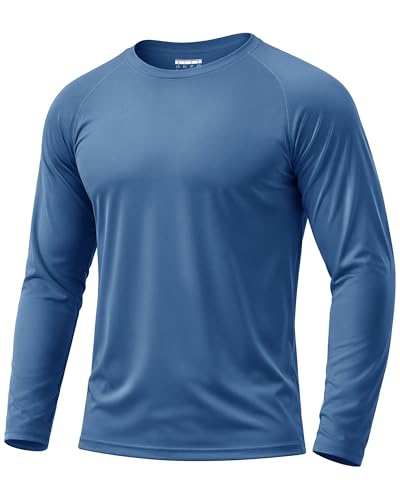
The Boladeci is a single long-sleeve polyester shirt with slight stretch, quick-drying performance, and a stated UPF 50+ rating. It is designed primarily for activities such as hiking, fishing, running, gardening, and water sports. Those intended uses suggest a light, breathable construction that favors warm-weather comfort. A printed tag is intended to avoid the irritation that can occur with a sewn-in label, while wrinkle resistance may help the shirt remain presentable with relatively simple care.
Unlike the multipacks in this guide, the Boladeci lets buyers try one shirt before committing to several. It may work for occasional yard maintenance, travel, or as an undershirt beneath a heated vest. Although the product description refers to all-season use, that should not be interpreted as evidence of strong winter insulation. A lightweight cooling shirt can contribute to a layering system by moving sweat, but it offers little protection when exposed directly to cold wind or wet snow.
Pros:
- Single-shirt format requires less initial commitment
- UPF 50+ rating is useful for sun exposure
- Slight stretch supports everyday movement
- Printed tag may reduce neckline irritation
- Wrinkle-resistant, quick-drying polyester is easy to manage
Cons:
- Provides no powered heat
- Cooling-oriented fabric offers limited winter warmth
- No work-specific abrasion or weather protection is stated
The Boladeci makes sense as a simple sun shirt or low-bulk base layer for occasional work. Its easy-care design is convenient, but it should remain close to the skin and underneath warmer clothing during winter. It is not a direct alternative to an electrically heated shirt.
Best for: Buyers who want one lightweight shirt for occasional outdoor work or layering.
BOOJO Seven-Pack Long-Sleeve UPF 50+ Shirts

The BOOJO package provides seven lightweight long-sleeve shirts made from soft, moisture-wicking fabric. The listed features include UPF 50+ protection, breathable construction, four-way stretch at the cuffs and hem, and reinforced seaming. These details are oriented toward movement and comfort rather than insulation. The shirts are intended for activities ranging from hiking and fishing to fitness and casual work, making them more appropriate for active or mild-weather environments than cold, stationary job sites.
This set competes with the MLYENX package on quantity, but its stated stretch at the cuffs and hem may appeal to workers who dislike rigid sleeve openings. Seven shirts can reduce laundry pressure, and the available color combinations may help separate work clothing from casual clothing. The manufacturer recommends cold-water washing and separating light and dark colors. No heating hardware, weatherproof shell, or thermal lining is included, so additional layers remain necessary whenever warmth is the priority.
Pros:
- Seven shirts provide a substantial workweek supply
- UPF 50+ rating supports outdoor use
- Stretch at the cuffs and hem may improve mobility
- Lightweight fabric manages moisture without much bulk
- Suitable for hand or machine washing in cold water
Cons:
- Not a heated clothing product
- Breathable material has limited insulating value
- Light and dark colors may require separate washing
The BOOJO seven-pack emphasizes quantity, stretch, and sun protection. It is most useful as a supply of everyday athletic work shirts rather than specialized winter clothing. Workers in cold environments should combine it with a warm midlayer and protective shell selected for the actual weather.
Best for: Workers who want a seven-shirt rotation with stretch and long-sleeve sun coverage.
AM Six-Pack Men’s Quick-Dry Long-Sleeve Shirts

These AM long-sleeve shirts use a blend of 95% polyester and 5% spandex. Compared with plain polyester, the spandex content should provide additional give for bending, reaching, and wearing the shirt beneath close-fitting outer layers. The manufacturer describes the fabric as quick drying and breathable, with UPF 50+ sun protection. The shirts are promoted for construction, workouts, hiking, fishing, golf, and casual use, so they appear intended to cross between work and recreation rather than function as heavy-duty job-site clothing.
The blend makes this six-pack worth considering for workers who prioritize stretch and prefer a fabric that sits closer to the body. A closer base-layer fit can help manage moisture, although buyers should consult the size chart and leave enough freedom for their normal tasks. The product description mentions use from fall through winter, but these remain lightweight synthetic shirts without a thermal lining. Seasonal versatility depends on combining them with insulation, not on warmth supplied by the shirts themselves.
Pros:
- Polyester-spandex blend offers useful flexibility
- Six shirts are practical for a regular work rotation
- UPF 50+ coverage benefits outdoor jobs
- Quick-drying material can manage perspiration
- Thin construction is suitable beneath heavier clothing
Cons:
- No heating elements or battery system
- Lightweight material is not a true thermal base layer
- Buyers must verify whether the fit allows comfortable work movement
This six-pack is most relevant when stretch and layering compatibility matter more than stand-alone warmth. The fabric blend should suit active use, but calling it an all-season shirt does not make it sufficient for winter exposure. Its role is moisture management beneath more protective clothing.
Best for: Workers seeking flexible long-sleeve undershirts for use beneath vests, jackets, or uniforms.
Men’s Active Five-Pack Quick-Dry Crew-Neck T-Shirts

This five-pack differs from the other recommendations by using short sleeves. The polyester-spandex blend is described as breathable and moisture-wicking, with four-way stretch and a nonrestrictive cut. A tag-free neckline may be comfortable under a uniform shirt, sweatshirt, or heated vest. Because the shirts leave the forearms uncovered, they are better suited to indoor workplaces, heated warehouses, kitchens, gyms, or warm-weather jobs than to exposed winter work.
Short sleeves can be an advantage beneath heated garments when a worker wants direct warmth around the torso without several layers bunching at the arms. They can also be easier to wear under fitted uniform tops. On the other hand, reduced coverage means less warmth and no sun protection for the forearms. These are athletic T-shirts rather than flame-resistant, high-visibility, weather-resistant, or abrasion-rated work garments. Workplace clothing rules should take priority where specialized protective apparel is required.
Pros:
- Four-way stretch supports broad movement
- Five-pack is useful for frequent changes
- Short sleeves reduce bulk beneath fitted outerwear
- Moisture-wicking blend suits warm indoor work
- Tag-free neckline may improve comfort
Cons:
- No active heating or insulation
- Short sleeves provide limited cold and sun coverage
- Not specified as protective industrial workwear
This five-pack is the most suitable option here for warm indoor settings or workers who prefer short sleeves under a heated vest. It is less appropriate for outdoor winter exposure, where long sleeves, insulation, and weather protection become more important than minimal bulk.
Best for: Indoor workers who need breathable short-sleeve layers beneath uniforms or heated vests.
How to Choose a Genuine Heated Shirt for Work
A true heated shirt combines conventional fabric with electrical resistance elements powered by a rechargeable battery. Those elements are commonly positioned around the chest, back, shoulders, or abdomen. The right design depends on whether the wearer is moving continuously, standing in one place, working outdoors, or moving between cold and heated spaces.
Confirm That the Garment Is Actually Heated
Look for clear information about all of the following:
- Integrated heating zones
- A power button or separate controller
- Multiple heat settings
- A compatible rechargeable battery
- Battery voltage and capacity
- Charging equipment
- Operating and care instructions
If a product description discusses only polyester, moisture wicking, UPF protection, or thermal layering, it is probably not electrically heated. The word warm by itself does not indicate powered heating.
Heating-Zone Placement
More heating zones do not automatically provide a better work shirt. Placement matters. A worker who spends long periods outside may value coverage across both the chest and upper back. Someone wearing a tool belt or harness should check whether heating panels, battery pockets, or cables will sit beneath pressure points.
Heating elements should warm the torso without limiting shoulder movement. They should also remain covered by another layer when exposed to wind, since moving air can remove heat faster than the garment can supply it.
Battery Runtime and Replacement Options
Manufacturers typically advertise runtime as a range because battery life changes with heat level, ambient conditions, battery age, and garment design. High heat normally drains the battery faster than low heat. Treat maximum runtime claims as conditional rather than guaranteed for an entire shift.
For work use, determine whether:
- The battery is included
- A replacement or spare battery is readily available
- The connector is proprietary
- The battery can be charged at the workplace
- The expected runtime covers the planned shift and commute
- The battery pocket remains accessible beneath outerwear
A spare compatible battery may be more useful than choosing a shirt with an unverified maximum-runtime claim.
Fit and Contact With the Body
Heated shirts generally work most efficiently when they fit close enough for warmth to reach the body. A very loose shirt can create air gaps, while an excessively tight shirt may restrict movement or strain the wiring and seams.
Check the manufacturer’s size chart and garment measurements carefully. Consider chest size, torso length, arm movement, and the clothing worn underneath. If the shirt is designed as a base layer, it may fit more closely than an ordinary work T-shirt. Workers who prefer a relaxed fit may find a heated vest easier to integrate into their clothing system.
Moisture Management
Active workers can perspire even in cold weather. Once activity slows, damp clothing can cause rapid chilling. A heated shirt should manage moisture rather than trapping it directly against the skin.
Synthetic or wool-blend base layers are generally more practical than absorbent cotton for cold, active work. If the heated garment cannot be worn directly against the skin, place a thin moisture-wicking layer underneath it. Avoid adding so many layers between the body and heating panels that the warmth becomes difficult to feel.
Wind and Water Protection
Most heated shirts are not substitutes for a weatherproof work jacket. Their fabric may provide little resistance to wind, rain, or wet snow. Powered warmth is more effective when protected by an outer shell that limits heat loss.
Use a layering system with distinct jobs:
- Base layer: Moves perspiration away from the skin.
- Heated or insulating layer: Adds controlled warmth.
- Outer layer: Reduces heat loss from wind and precipitation.
If the job involves rain, select an outer layer with appropriate waterproofing rather than assuming a heated shirt is water-resistant. Water resistance and waterproofing are not interchangeable.
Controls That Work With Gloves
Small or poorly placed controls can be frustrating on a job site. A large, accessible button is easier to operate while wearing gloves, but a bright illuminated button may be undesirable in some workplaces. Confirm whether the shirt remembers the previous heat setting and whether accidental button presses are likely beneath a jacket or safety harness.
Compatibility With Work Equipment
Before buying, consider everything worn over the torso. A battery or control module should not interfere with:
- Fall-arrest harnesses
- Tool belts
- Backpacks
- Seat belts
- High-visibility vests
- Protective body armor
- Uniform requirements
Pressure against a battery pack can be uncomfortable and may conflict with the manufacturer’s operating instructions. Workers who use specialized safety equipment should consult their employer’s policies before adding battery-powered clothing.
Heated Shirt, Heated Vest, or Heated Jacket?
| Garment | Main Advantage | Main Limitation | Better Suited To |
|---|---|---|---|
| Heated shirt | Close-to-body warmth with low bulk | Requires careful fit and laundering | Layering beneath uniforms and jackets |
| Heated vest | Good torso mobility and easier layering | Does not warm the arms | Active work and changing conditions |
| Heated jacket | Combines heat with broader coverage | Bulkier and less flexible indoors | Long periods outdoors in cold weather |
A shirt is not always the most practical heated garment for work. A vest can be easier to remove, may place less stress on heating elements during arm movement, and can fit over an existing base layer. A jacket provides more complete coverage but may become too warm during strenuous tasks. Match the garment to activity level and layering needs rather than choosing solely by advertised heat output.
Safety Considerations for Heated Workwear
Battery-powered clothing should be used according to the manufacturer’s instructions. Stop using the garment if the battery is swollen, damaged, unusually hot, wet, or physically compromised. Do not substitute an incompatible battery or charger simply because the connector appears to fit.
- Inspect the battery, cable, connector, and garment before use.
- Remove the battery before washing or storing the shirt.
- Do not use damaged heating elements or exposed wiring.
- Avoid folding or crushing the garment in ways prohibited by its care instructions.
- Do not place the battery where work equipment will compress it.
- Use only the charging equipment specified by the manufacturer.
- Do not operate powered heating when the garment is soaked unless the instructions expressly allow it.
Workers with reduced heat sensation, circulation concerns, implanted medical devices, or other relevant health conditions should seek appropriate medical guidance before using heated clothing. A heated shirt can become uncomfortably warm even when surrounding air remains cold.
Care and Maintenance
Heated clothing requires more care than an ordinary polyester shirt. Always remove the battery and close or protect the connector as directed before washing. Some garments are machine washable on a gentle cycle, while others require hand washing. Dryer use may be prohibited because high heat and tumbling can damage wiring, adhesives, or connectors.
Store the garment dry and loosely folded. Do not leave a lithium-ion battery in a vehicle exposed to extreme heat or cold. For longer storage, follow the battery manufacturer’s charging guidance rather than leaving the battery fully depleted for months.
Common Buying Mistakes
Confusing Moisture-Wicking Shirts With Heated Shirts
A moisture-wicking fabric helps control perspiration. It does not produce heat. Product listings that mention only UPF protection, quick drying, breathable polyester, or winter layering are not evidence of an electrical heating system.
Focusing Only on Maximum Temperature
A high temperature claim provides little context without information about heating-zone placement, runtime, fit, and control. A moderately warm shirt that lasts through the required work period may be more useful than a hotter garment that quickly exhausts its battery.
Ignoring Activity Level
Stationary security work and snow shoveling create very different warmth needs. High-output activity can lead to sweating and overheating, even in cold conditions. Adjustable heat settings are valuable because they allow the wearer to reduce heat as activity increases.
Expecting the Heated Layer to Block Weather
Heating elements add warmth, but they do not automatically make fabric windproof or waterproof. An appropriate outer shell is still necessary in exposed conditions.
Buying Without Checking the Battery
Some garments are sold without a battery, while others use a proprietary battery that may be expensive or difficult to replace. Confirm exactly what is included and whether spare batteries are available before purchasing.
Using Heated Clothing Where It Conflicts With Safety Rules
Battery-powered apparel may not be appropriate in every industrial environment. Jobs involving combustible materials, electrical hazards, high heat, welding, or specialized protective equipment can have strict clothing requirements. Employer policy and required protective standards take priority over personal comfort gear.
Frequently Asked Questions
Are the recommended shirts electrically heated?
No. All eight recommendations are conventional athletic shirts without heating panels, batteries, or electronic controls. They are included only as possible moisture-wicking layers for work.
Can a polyester shirt keep me warm at work?
A thin polyester shirt can help manage sweat and add a small amount of trapped air beneath other clothing. It is not heavily insulating, however. In cold conditions, combine it with a warm midlayer and an outer layer that addresses wind and precipitation.
Can I wear a base shirt under a heated shirt?
That depends on the heated garment’s fit and instructions. A thin moisture-wicking layer may improve comfort and hygiene, but a thick layer can reduce heat transfer. The heated garment should not become so tight that it restricts movement or stresses its wiring.
Is a heated shirt better than a heated vest for work?
A heated shirt offers close-to-body warmth with little bulk, while a vest is often easier to layer and leaves the arms unrestricted. Workers who move frequently or transition indoors may prefer a vest. A shirt may suit uniforms or fitted outerwear when its battery and controls do not interfere with equipment.
How long should a heated-shirt battery last?
There is no universal runtime. Battery capacity, heat setting, ambient temperature, battery condition, and heating-zone size all affect operating time. Compare runtime at the setting you expect to use, not just the maximum figure typically associated with the lowest setting.
Can heated clothing be worn in rain or snow?
Only if the manufacturer’s instructions permit those conditions, and even then an appropriate outer shell may be necessary. Do not assume that a heated garment is waterproof. Remove power and stop use if the battery or electrical connection becomes wet contrary to the instructions.
Should a heated shirt fit tightly?
It should generally sit close enough for efficient heat transfer without restricting movement, compressing the body, or straining the garment. Follow the product-specific size chart because sizing conventions vary among manufacturers.
Are heated shirts suitable for construction work?
They may be useful on some job sites, but suitability depends on employer rules, required protective clothing, and compatibility with harnesses or tool belts. Ordinary heated apparel should never replace flame-resistant, high-visibility, arc-rated, or other required safety clothing.
Final Recommendations
Anyone specifically looking for the best heated shirt for work should choose only a garment that clearly documents its heating zones, battery requirements, controls, runtime conditions, care process, and safety instructions. None of the eight products reviewed above meets that definition.
As non-heated layering options, the MAGCOMSEN long-sleeve shirt offers the most relevant combination of mobility and low-bulk construction. The MLYENX seven-pack is more practical for a full workweek rotation, while the Men’s Active five-pack suits warm indoor workplaces where short sleeves are acceptable. For winter work, use any of these shirts only as one part of a complete system that includes appropriate insulation and protection from wind, rain, or snow.