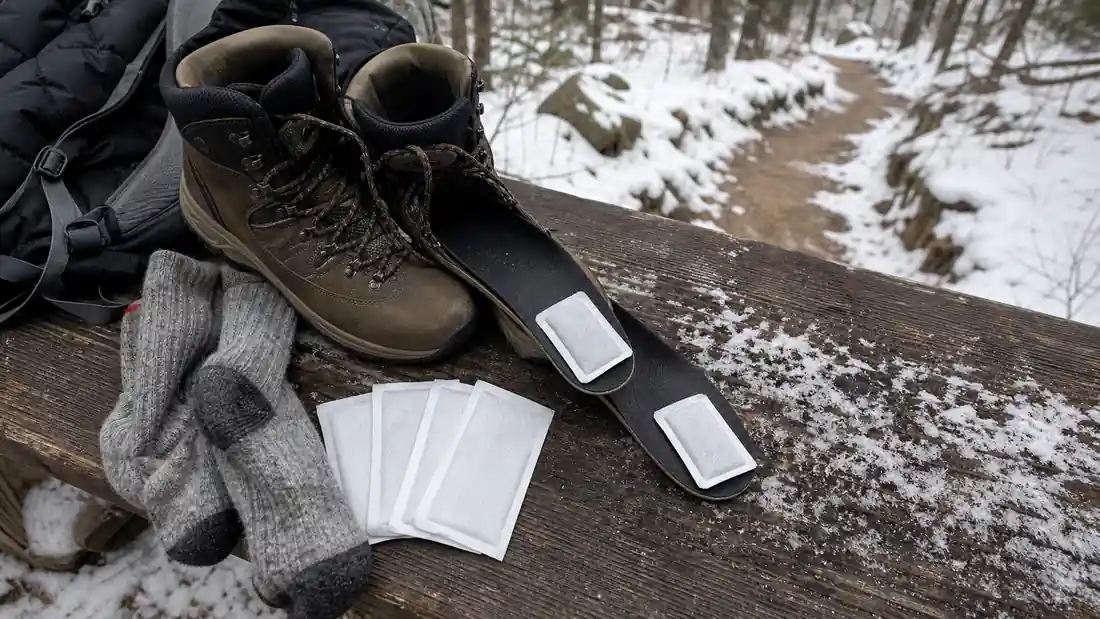
Cold toes can turn an otherwise manageable winter hike into a painful, distracting experience. The usual response is to add thicker socks, but that can make matters worse when extra bulk compresses the foot and reduces circulation. Toe warmers work best when they add heat or insulation without making hiking boots uncomfortably tight.
The best toe warmers for hiking generally fall into three categories: disposable air-activated warmers, reusable neoprene covers, and insulating toe socks. Disposable warmers provide active heat for cold day hikes, while neoprene covers retain body heat over repeated outings. Full-length insole warmers cover more of the foot but require additional room inside the boot.
Quick Answer
For occasional cold-weather hiking, HotHands Toe Warmers offer a practical combination of targeted heat, compact packaging, and up to eight hours of manufacturer-rated warmth. Hikers who head outside frequently may prefer reusable Hot Sockee Neoprene Toe Warmers. They do not produce heat, but their 1.5mm neoprene adds insulation without covering the entire foot.
The eight recommendations below address different situations, including long hikes, bulk purchases, tight-fitting footwear, reusable insulation, and full-foot warmth. No option works equally well in every boot. Fit, circulation, moisture management, trip length, and sensitivity to heat should all influence the decision.
Toe Warmer Comparison
| Product | Best For | Type | Coverage | Notable Trade-Off |
|---|---|---|---|---|
| HotHands Toe Warmers | Most day hikes | Disposable, air activated | Toe area | Single-use design creates waste |
| Bramble Adhesive Toe Warmers | Long hikes and group trips | Disposable, air activated | Toe area | Bulk package is excessive for occasional use |
| Hot Sockee Neoprene Toe Warmers | Reusable lightweight insulation | 1.5mm neoprene | Toes and forefoot | Retains heat rather than generating it |
| HotHands Insole Foot Warmers | Full-foot heat | Disposable, air activated | Most of the sole | Requires more boot volume |
| Sport Temp Toe Warmers | Frequent winter hiking | Disposable, air activated | Toe area | Large 45-pair supply |
| 3mm Neoprene Toe Warmers | More substantial reusable insulation | 3mm neoprene | Toes and forefoot | Thicker construction may crowd boots |
| Meister Thermal Neoprene Toe Booties | Active hiking and running | 2.5mm neoprene | Toes and forefoot | One-size design may not suit every foot |
| ORVYTHA Merino Wool Toe Socks | Moisture management and toe separation | Merino wool-blend socks | Entire foot and individual toes | No active heat |
How We Chose These Picks
These selections were evaluated by considering the factors that matter inside hiking footwear rather than simply comparing maximum heat-duration claims. The main criteria included:
- Heat or insulation method: Air-activated packets generate heat, while neoprene and wool retain existing body warmth.
- Boot compatibility: A warmer should fit without compressing the toes or restricting circulation.
- Coverage: Targeted packets take less room, while insoles and socks provide broader coverage.
- Trip duration: Manufacturer-rated heating time was considered for disposable products, although actual performance can vary with airflow and conditions.
- Moisture management: Hiking creates perspiration, so warmth should not come at the expense of excessively damp feet.
- Reusability: Neoprene covers and wool-blend socks may offer better long-term value for frequent hikers.
- Packability: Spare warmers should be easy to carry in a daypack or winter emergency kit.
- Safety: Products that generate heat must be used according to their package directions and should not touch bare skin.
Our Top Picks
These products are not arranged as a simple best-to-worst ranking. Each addresses a different hiking need, from active warmth on an occasional winter outing to reusable insulation for regular trail use. Compare the warmer’s thickness, coverage, heating method, and expected duration against the available room in your boots. A lower-profile option that preserves circulation may keep feet more comfortable than a warmer product that creates pressure.
Best for Most Day Hikes: HotHands Toe Warmers

HotHands Toe Warmers are disposable, air-activated packets intended to provide targeted warmth around the toes. The six-pair package is manageable for occasional hiking without committing to a large seasonal supply. According to the manufacturer, each pair can provide heat for up to eight hours and generally takes 15 to 30 minutes to warm after opening. The thin packets fit more easily in hiking boots than full-length heated insoles, although hikers still need enough space to avoid compressing the forefoot. The warmer should be placed as directed on the packaging, with a sock or another layer separating it from bare skin.
This option offers a sensible balance for day hikers who want active heat but do not need dozens of pairs. Individually sealed packets are easy to divide between a daypack, vehicle emergency kit, and winter gear bin. Airflow inside a boot affects the chemical reaction, so heat output may not remain completely uniform throughout a hike. Unlike neoprene covers, these warmers work without relying solely on body heat. The trade-off is that every pair is disposable and cannot be reactivated for another trip once spent.
Pros:
- Provides targeted active heat around the toes
- Manufacturer-rated for up to eight hours
- Compact six-pair package suits occasional hikers
- Thin shape takes less room than a full insole warmer
- Individually packaged pairs are convenient to carry
Cons:
- Requires approximately 15 to 30 minutes to warm fully
- Single-use construction creates recurring cost and waste
- Heat output can vary with airflow inside the boot
HotHands Toe Warmers are a practical starting point for cold day hikes, especially when thicker socks would make boots too tight. They provide active warmth in a compact format, but proper placement and adequate toe room remain important. Frequent winter hikers may eventually find a bulk package or reusable neoprene cover more economical.
Best for: Occasional cold-weather hikers who want a compact, targeted source of active heat.
Best for Long Hikes and Groups: Bramble Adhesive Toe Warmers

Bramble Adhesive Toe Warmers come in a 40-pair package designed for hikers who use disposable warmers regularly or need to equip several people. These air-activated packets use adhesive to help maintain their position inside footwear. Bramble lists a maximum heating duration of up to 10 hours, making them potentially suitable for long trail days when conditions and airflow allow. Their toe-focused shape occupies less space than a full-foot insole. As with other chemical warmers, they should not be placed directly against skin, and hikers should follow the package instructions for placement and activation.
The large quantity distinguishes this option from smaller trial packs. It can make sense for families, hiking groups, outdoor workers, or anyone who spends much of winter outside. The sealed pairs are also convenient to distribute among emergency kits. However, a 40-pair box is unnecessarily large for someone who takes only one or two cold hikes per season. The stated heating time is a maximum rather than a guarantee. Boot airflow, storage age, outdoor temperature, and placement can all influence how warm an air-activated packet feels.
Pros:
- Includes 40 pairs for frequent use or group outings
- Manufacturer lists up to 10 hours of heat
- Adhesive backing helps limit movement inside footwear
- Targeted shape uses less space than full-length insoles
- Individually sealed pairs are easy to divide among gear kits
Cons:
- Large quantity is excessive for occasional hikers
- Disposable packets produce more waste than reusable covers
- Actual heating duration depends on conditions and airflow
Bramble warmers are most useful when buying a few pairs at a time would be inconvenient. The combination of adhesive placement and a long manufacturer-rated duration suits extended outings, but the bulk quantity requires dry storage. Hikers who are uncertain about fit or heat sensitivity may want to try a smaller package first.
Best for: Long winter hikes, families, hiking groups, and frequent users who need a bulk supply.
Best Reusable Lightweight Option: Hot Sockee Neoprene Toe Warmers
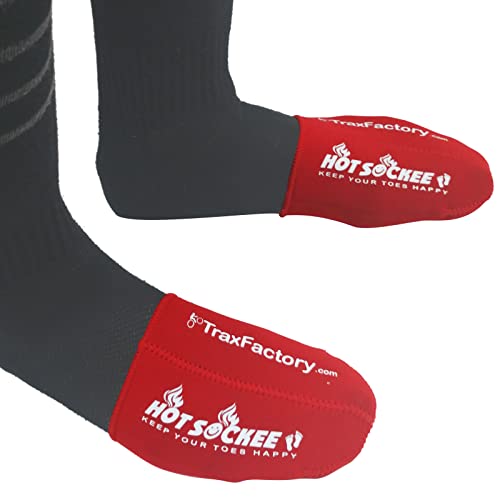
Hot Sockee Toe Warmers use 1.5mm neoprene to create an insulating layer around the toes and forefoot. Unlike chemical packets, they do not generate heat. Instead, the material reduces heat loss and adds a barrier against cold air. The design has no side seams, while reinforced entry stitching is intended to improve comfort and durability. Because the cover only surrounds the front of the foot, it may occupy less total space than doubling up on full-length socks. This listing is for the large size, and the manufacturer recommends measuring foot width and consulting its fit chart before ordering.
This reusable design is well suited to hikers who want consistent insulation without opening a new packet on every outing. It can also be paired with an appropriate hiking sock, allowing the sock to handle moisture while the neoprene adds warmth around vulnerable toes. Neoprene is less breathable than typical sock fabric, however, so some hikers may notice additional dampness during sustained climbs. Fit deserves particular attention. If the cover folds, pinches, or makes the boot tight, any insulating benefit may be offset by pressure and reduced circulation.
Pros:
- Reusable alternative to disposable chemical warmers
- Thin 1.5mm neoprene adds targeted insulation
- Toe-only coverage may be less bulky than a second full sock
- No side seams around the forefoot
- Available in multiple sizes for a more deliberate fit
Cons:
- Retains body heat but does not generate warmth
- Neoprene may hold moisture during high-output hiking
- Incorrect sizing can create pressure or bunching
Hot Sockee covers make the most sense for regular hikers who prefer reusable insulation and have enough forefoot space in their boots. Their thinner neoprene balances warmth and bulk better than many heavier covers. They are less suitable for hikers expecting strong active heat or those whose footwear already fits closely around the toes.
Best for: Frequent hikers seeking thin, washable, reusable insulation around the forefoot.
Best for Full-Foot Heat: HotHands Insole Foot Warmers

HotHands Insole Foot Warmers differ from small toe packets by extending warmth beneath more of the foot. These ultra-thin, air-activated insoles use adhesive to reduce shifting and are manufacturer-rated for up to nine hours of heat. The five-pair package is sized for several outings rather than an entire winter season. Broader coverage can help hikers whose cold discomfort extends through the sole instead of remaining limited to the toes. It also changes how the boot fits, however. Even a thin additional layer may affect heel position, arch feel, and available vertical space inside closely fitted hiking footwear.
Full-length coverage is the main reason to choose these over targeted packets. It may be useful for low-output winter walking, long breaks, wildlife observation, or hikers who routinely experience cold across the whole foot. For demanding terrain, the insole must remain flat and stable so it does not create pressure points. Hikers should test the fit during a short local walk before relying on it during a long trip. Those who only experience cold toes will generally find a smaller toe warmer less intrusive and easier to position.
Pros:
- Warms a larger area than a toe-only packet
- Manufacturer-rated for up to nine hours
- Ultra-thin construction limits unnecessary bulk
- Adhesive helps hold the insole in place
- Five-pair package is practical for occasional outings
Cons:
- Changes the fit across the entire boot interior
- May affect underfoot feel on uneven terrain
- Provides more coverage than some hikers need
These insole warmers are a specialized choice for hikers who need warmth beyond the toe box. They offer broader heat without rechargeable batteries, but they demand more attention to boot fit than a small adhesive packet. Testing them before a remote hike is particularly important because wrinkles or movement beneath the foot can become uncomfortable over distance.
Best for: Hikers whose entire foot feels cold and whose boots have room for a thin additional insole layer.
Best Bulk Supply for Frequent Hikers: Sport Temp Toe Warmers

Sport Temp Toe Warmers are adhesive, air-activated packets sold in a 45-pair supply. The manufacturer lists up to 10 hours of heat, with activation generally taking 15 to 30 minutes after the outer package is opened. Their thin, targeted format is designed to fit near the toes without filling the entire boot. This makes them easier to carry and potentially less disruptive to fit than full-length insole warmers. They are also described as TSA compliant, which may be useful for hikers traveling to a winter destination, although travelers should still check current airline and security rules before departure.
This package is aimed at people who expect to use toe warmers throughout a cold season. Forty-five pairs can cover regular hikes, outdoor workdays, or multiple members of a household. Buying in quantity reduces the inconvenience of replacing small packs, but it also requires appropriate storage. Unopened packets should be kept sealed and dry so air does not start the reaction prematurely. As with all disposable warmers, the rated duration may not match every hike, and direct skin contact should be avoided. Occasional users may prefer a smaller box.
Pros:
- Large 45-pair supply suits frequent winter use
- Manufacturer lists up to 10 hours of heat
- Adhesive design helps maintain placement
- Thin packets are easy to pack as spares
- Targeted coverage is less intrusive than a heated insole
Cons:
- Large package is impractical for infrequent hikers
- Every pair is disposable
- Requires advance activation before dependable warmth develops
Sport Temp is a reasonable option for hikers who already know that adhesive chemical warmers work well in their boots. The quantity offers convenience across a busy winter, while the targeted shape helps limit bulk. New users should first confirm that their footwear has sufficient space and that they are comfortable with air-activated heat.
Best for: Frequent cold-weather hikers who want a season-sized supply of disposable toe warmers.
Best for Thicker Reusable Insulation: 3mm Neoprene Toe Warmers

These neoprene toe covers use 3mm material, making them thicker than the 1.5mm Hot Sockee option. The package contains two pairs in medium, giving regular users a spare set while one pair dries. They can be worn inside hiking footwear, either over or under socks depending on fit and the manufacturer’s directions. Neoprene traps a layer of warmth and provides a barrier against cold air, but it does not create active heat. The thicker construction is better suited to roomy boots than close-fitting trail shoes. Buyers should measure across the forefoot and review the listed dimensions before choosing this medium-size product.
The two-pair package and washable construction make these covers appealing for repeated winter outings. They may provide more insulation than thinner neoprene, particularly during slower-paced hiking or long stops. That advantage comes with more bulk and reduced breathability. Sweat can accumulate when hiking uphill, and damp skin may feel colder after activity slows. Hikers should pair the covers with moisture-managing socks and allow them to air-dry completely after use. They are not the right choice if adding 3mm around the forefoot causes the boot to feel snug.
Pros:
- Reusable and washable construction
- Thicker 3mm neoprene provides substantial toe insulation
- Includes two pairs for alternating between hikes
- Targeted coverage avoids adding a second full-length sock
- Useful for slower activities as well as hiking
Cons:
- May be too thick for closely fitted hiking boots
- Neoprene can trap perspiration during active use
- Available sizing must be checked carefully
These 3mm covers prioritize insulation over minimal bulk. They are most appropriate for boots with a roomy forefoot and hikers who tend to move at a moderate pace. Anyone using close-fitting footwear or climbing continuously may be more comfortable with thinner neoprene, breathable wool socks, or a low-profile chemical packet.
Best for: Hikers with roomy winter boots who want thicker, reusable insulation and two pairs for rotation.
Best for Active Use: Meister Thermal Neoprene Toe Warmer Booties

Meister Thermal Neoprene Toe Warmer Booties are 2.5mm insulating covers designed for cycling, running, walking, and hiking in cold weather. They surround the toe area to retain body heat while leaving the rest of the foot free of an additional neoprene layer. At 2.5mm, they sit between lightweight 1.5mm covers and heavier 3mm alternatives. This middle thickness can provide a useful balance for active outings, provided the footwear has enough forefoot room. The booties are sold as one pair in a single size, so shoppers need to consider whether the listed dimensions and stretch are appropriate for their feet.
These covers suit hikers who want reusable warmth without relying on a timed chemical reaction. They can be put on before leaving home and continue insulating as long as they remain properly positioned. That simplicity is useful during active winter exercise, but the single-size construction is less precise than a multi-size system. Neoprene also limits evaporation compared with ordinary hiking socks. On long climbs, hikers who perspire heavily may need to adjust their sock system or carry a dry replacement pair for the return trip.
Pros:
- Reusable 2.5mm neoprene construction
- Intermediate thickness balances insulation and bulk
- Designed for active pursuits, including hiking and running
- Toe-focused coverage leaves the rest of the foot less restricted
- Does not require activation or batteries
Cons:
- Single-size design may not fit every foot securely
- Can make a close-fitting toe box restrictive
- Less breathable than wool or synthetic hiking socks
The Meister booties fill the gap between very thin toe covers and heavier neoprene insulation. Their straightforward design suits active hikers who value reusability, but fit should be confirmed before a long outing. They will not provide the noticeable active warmth of a chemical packet, especially when a hiker is standing still.
Best for: Active hikers and winter runners who want moderate, reusable forefoot insulation.
Best Sock-Based Option: ORVYTHA Merino Wool Toe Socks

ORVYTHA Merino Wool Toe Socks take a different approach from packets and neoprene covers. Each toe sits in an individual sleeve, while a merino wool-blend fabric provides insulation and moisture management across the foot. The socks include cushioned footbeds, ribbed ankles, and reinforced heel and toe areas. Three pairs are included. The manufacturer lists medium and large size ranges for men and women, so buyers should consult the current chart rather than relying only on their usual casual-sock size. These socks produce no active heat, but keeping moisture controlled can help feet remain more comfortable during sustained hiking.
Toe separation may appeal to hikers who experience skin-on-skin friction, although individual sleeves also create a fit that feels unfamiliar to some people. The merino blend is more breathable than neoprene and better suited to changing activity levels. It can function as the primary hiking sock or as part of a carefully fitted system, depending on boot volume. These are not a substitute for chemical warmers in severe cold or during long stationary periods. Their role is to provide baseline insulation, cushioning, and moisture control rather than a strong source of added heat.
Pros:
- Merino wool blend helps manage warmth and moisture
- Individual toe sleeves reduce direct toe-to-toe contact
- Includes cushioned footbeds and reinforced wear areas
- Three pairs support regular use and rotation
- More breathable than neoprene toe covers
Cons:
- Does not generate active heat
- Individual toe sleeves may feel unusual or take longer to put on
- Fit depends on both overall size and individual toe shape
These socks are the most appropriate option here for hikers focused on moisture management and toe separation rather than added heat packets. They can form the foundation of a cold-weather footwear system, but conditions may still call for an adhesive warmer. Check the size chart and test the socks on a short hike before using them over long distances.
Best for: Active hikers who want breathable baseline warmth, cushioning, and separation between the toes.
How to Choose Toe Warmers for Hiking
Choose Between Active Heat and Passive Insulation
Air-activated warmers use an oxidation reaction to generate heat after their sealed package is opened. They are useful when the body is not producing enough warmth on its own, such as during very cold hikes, rest stops, or low-output activity. Their disadvantages include disposable construction, variable output, and a limited operating period.
Neoprene covers do not create heat. They slow heat loss around the forefoot and can be washed and reused. They are often more economical for frequent hikers, but they can trap perspiration and require enough boot volume for their thickness.
Merino wool-blend toe socks provide insulation while helping move moisture away from the skin. They are generally more breathable than neoprene but less protective against cold air. For many hikers, a good sock is the first step, while an active warmer is reserved for colder conditions.
Protect Circulation Before Adding More Warmth
Warm footwear should allow the toes to move. When thick socks, neoprene covers, and heat packets are crowded into the same boot, pressure can restrict circulation and leave the foot colder. Compression can also create rubbing, numbness, and pressure points over long distances.
Put on the complete sock-and-warmer system before the hike. Lace the boots normally, walk on an incline if possible, and check whether the toes can still wiggle. A thinner warmer is the better choice when the alternative makes the boot tight.
Match Coverage to the Cold Area
A small adhesive packet makes sense when only the toes become cold. A full-length insole warmer may be more appropriate when discomfort extends along the sole. Broader coverage is not automatically better because it changes the fit and feel of more of the boot.
For hiking, avoid creating lumps beneath weight-bearing areas. Follow the product instructions, keep packets flat, and stop if a warmer shifts or causes pressure.
Consider Hiking Intensity
High-output hiking generates heat and sweat. A thick neoprene cover may feel comfortable at the trailhead but become damp during a steep climb. Conversely, a low-profile chemical warmer may be useful during a slow snowshoe hike or a trip with extended stops.
- Fast, sustained hiking: Prioritize moisture management and low bulk.
- Moderate day hiking: Thin adhesive warmers or lightweight neoprene can work well.
- Slow winter travel: Active heat may be more useful because the body produces less warmth.
- Trips with long breaks: Carry sealed warmers as backup, even if they are not needed while moving.
Do Not Treat Maximum Heating Time as Guaranteed
A claim such as “up to 10 hours” describes a maximum under suitable conditions. Air-activated warmers depend on oxygen, and a hiking boot is an airflow-restricted environment. Temperature, storage history, placement, and the fit of the boot can affect output.
Activate disposable toe warmers before exposure to severe cold, allowing the time stated on the package for the reaction to begin. Carrying a spare pair is sensible on remote trips, but warmers should supplement appropriate boots, socks, and trip planning rather than replace them.
Account for Moisture
Sweat conducts heat away from the skin and can make feet feel cold when activity slows. Start with clean, dry socks made for hiking. Cotton generally holds moisture longer than merino wool or suitable synthetic fabrics, which can be uncomfortable in cold conditions.
Reusable neoprene covers should be dried completely between outings. On a long or overnight trip, carry dry socks in a waterproof bag. Changing into a dry pair can sometimes improve comfort more than adding another insulating layer over damp fabric.
Check Care and Storage Requirements
Keep disposable warmers sealed until they are needed. A punctured or damaged package should not be used. Store unopened packets in a dry location and check any printed expiration information before placing them in an emergency kit.
Wash reusable covers according to their care directions, then air-dry them thoroughly. Merino-blend socks should also be cleaned according to the label because excessive heat or aggressive washing may affect fit and fabric life.
How to Use Air-Activated Toe Warmers Safely
- Read the package directions. Placement and activation instructions can differ among brands and warmer types.
- Do not place the warmer directly against bare skin. Use the warmer with the recommended sock barrier.
- Activate it before heading into the cold. Many products require 15 to 30 minutes to develop heat.
- Check the boot fit. Remove the warmer if it causes tightness, bunching, or pressure.
- Monitor skin comfort. Stop using the warmer if it feels excessively hot, painful, or irritating.
- Use additional caution with reduced sensation. People with diabetes, circulation problems, nerve damage, or other conditions affecting temperature awareness should seek medical guidance before using heat products.
- Never use a warmer on frostbitten skin. Suspected frostbite requires appropriate first aid and medical evaluation, not direct chemical heat.
- Follow disposal instructions. Allow a used packet to cool and discard it as directed by the manufacturer.
Common Toe Warmer Mistakes
Using a Warmer to Compensate for Tight Boots
A heat packet cannot fix poor circulation caused by tight footwear. If the toes are compressed before the warmer is inserted, adding another layer is likely to increase pressure. Winter hiking boots may need more internal volume than warm-weather shoes because the sock and warmer system occupies additional space.
Wearing Two Thick Socks
Two bulky socks can bind the toes and hold moisture. A well-fitted hiking sock combined with a thin targeted warmer is often more comfortable than stacking thick layers. If a liner sock is used, the complete system should still fit without compression.
Applying a Chemical Warmer Directly to Skin
Air-activated warmers can become hot enough to irritate or burn skin, especially when pressure holds them in place. Follow the product directions and maintain the required fabric barrier.
Opening the Package Too Late
Many warmers do not reach useful heat immediately. Opening one only after the toes are already painfully cold may leave a long wait for relief. Account for the stated activation time and put warmers in place before entering demanding conditions.
Ignoring Damp Socks
Adding heat over a wet sock does not address the source of the problem. Moisture management begins with breathable footwear, suitable hiking socks, and pacing that limits unnecessary sweating. Carrying dry socks is useful on long winter outings.
Relying on Warmers as Emergency Protection
Toe warmers are accessories, not substitutes for insulated footwear, weather awareness, navigation equipment, and a turnaround plan. A packet may fail, cool sooner than expected, or provide inadequate warmth in severe conditions. Winter hikers should be prepared to return safely without depending on disposable heat.
Frequently Asked Questions
Are toe warmers safe for hiking?
They can be used safely when the manufacturer’s directions are followed. Chemical warmers should not touch bare skin, and they should be removed if they become painfully hot or cause pressure. Extra caution is necessary for anyone with impaired circulation or reduced skin sensation.
Should toe warmers go above or below the toes?
Placement depends on the product’s instructions. Many small adhesive toe warmers are intended to attach to the outside of a sock near the top of the toe area, which keeps them away from weight-bearing pressure beneath the foot. Full-length insole warmers are specifically designed for underfoot use. Do not assume that a toe packet can be used as an insole.
Can toe warmers make hiking boots too tight?
Yes. Even an ultra-thin packet takes up some room, while neoprene covers can add 1.5mm to 3mm around the forefoot. If the toes feel compressed, switch to a thinner system or use roomier footwear. Preserving circulation is more important than adding another layer.
How long do disposable toe warmers last?
The products in this guide have manufacturer-listed maximum durations ranging from approximately eight to 10 hours. Actual duration and perceived warmth vary with airflow, outdoor temperature, placement, and storage conditions. Treat the printed time as a maximum, not a guarantee.
Are neoprene toe warmers better than disposable warmers?
They serve different purposes. Neoprene is reusable and retains body heat without a chemical reaction. Disposable warmers actively generate heat but work for only one outing. Neoprene is often suitable for active hiking, while chemical warmers may be more helpful during slow movement, rest periods, or colder conditions.
Can toe warmers be reused?
Disposable air-activated packets cannot generally be restored to their original performance after the reaction is complete. Neoprene toe covers and wool-blend socks are reusable when cleaned and dried according to their care instructions.
Will toe warmers help with frostbite?
Toe warmers should not be applied to frostbitten or potentially frostbitten tissue. Numb, pale, waxy, hard, or unusually colored skin can indicate a cold injury. Protect the area from further exposure, avoid rubbing it, and seek appropriate medical assistance.
Should hikers wear thicker socks with toe warmers?
Not automatically. The correct sock should manage moisture, provide suitable cushioning, and leave room for toe movement. A thicker sock can reduce warmth if it makes the boot tight. Test the complete footwear system before hiking in remote or severe conditions.
Final Recommendations
Among these eight options, HotHands Toe Warmers are the most straightforward choice for occasional day hikes because they provide targeted active heat in a modest six-pair package. Bramble Adhesive Toe Warmers and Sport Temp Toe Warmers better suit frequent users who need a larger supply, while HotHands Insole Foot Warmers address cold across more of the foot.
For reusable insulation, select thickness according to available boot space. The 1.5mm Hot Sockee covers minimize bulk, the 2.5mm Meister booties balance insulation and mobility, and the 3mm neoprene covers favor warmth in roomier footwear. ORVYTHA Merino Wool Toe Socks are the breathable sock-based choice rather than an active heating product.
Whichever option fits the trip, test it with the intended boots before hiking far from the trailhead. Warm toes depend on more than the warmer itself. Adequate circulation, dry socks, appropriate footwear, and a realistic cold-weather plan remain the foundation of foot comfort and safety.